For over a decade, building a personal knowledge management (PKM) system meant spending dozens of hours creating complex folder taxonomies, wrestling with bidirectional links, and manually summarizing book highlights. In 2026, manual note organization is officially obsolete.
An AI-powered Second Brain replaces manual tagging and filing with an autonomous 4-stage pipeline: Omnichannel Capture (via Readwise Reader, Fathom AI, and Raycast), Zero-Friction Organization (using embeddings and semantic auto-tagging), AI Distillation (via Notion AI or Google NotebookLM), and Universal Retrieval & Expression (via local RAG or Cursor/Claude).
Why Traditional Second Brains Fail in 2026
Tiago Forte’s original Building a Second Brain revolutionized how knowledge workers store information using the CODE framework (Capture, Organize, Distill, Express) and PARA (Projects, Areas, Resources, Archives).
However, over 80% of knowledge workers who try to maintain a manual Second Brain abandon it within six months due to three systemic points of failure:
- The Organization Tax: Spending 30 minutes every Sunday filing web clips into hierarchical folders produces "productivity theater" rather than creative output.
- The Search Bottleneck: Exact-keyword search fails when you remember the *concept* of an insight (e.g., "that article about pricing psychology in B2B SaaS") but forget the author's name or exact terminology.
- Static Silos: Traditional notes sit inert in databases without actively synthesizing new connections across meetings, reading highlights, and task trackers.
By integrating Large Language Models (LLMs), dense vector embeddings, and autonomous agent loops, we transform a static digital filing cabinet into a dynamic, queryable intellectual co-pilot.
CODE 2.0: The Modern AI Knowledge Engine
How information flows effortlessly from ingestion to creative synthesis without manual friction.
Readwise Reader, mymind, instant web clips
Vector auto-tagging, zero manual folder sorting
Cross-note clustering & atomic takeaway extraction
AI-augmented drafts, executive memos & briefs
Stage 1: Omnichannel Intelligent Capture
The golden rule of an AI Second Brain is zero capture resistance. If capturing an idea requires opening a specific desktop app, waiting 10 seconds to load, and choosing a folder, you will lose the thought.
1. Web & Document Ingestion: Readwise Reader
Readwise Reader remains the undisputed king of reading capture. Using its browser extension and iOS/Android app, any newsletter, PDF, YouTube video, or web article is saved with one click.
- Ghostreader AI: Instantly summarizes long academic papers, extracts the main thesis, and auto-generates high-yield Q&A flashcards.
- Automated Sync: Automatically routes every highlight and note directly into your core knowledge vault (Notion AI or Obsidian) via webhooks.
2. Audio & Spoken Thoughts: Voice Memos to Structured Text
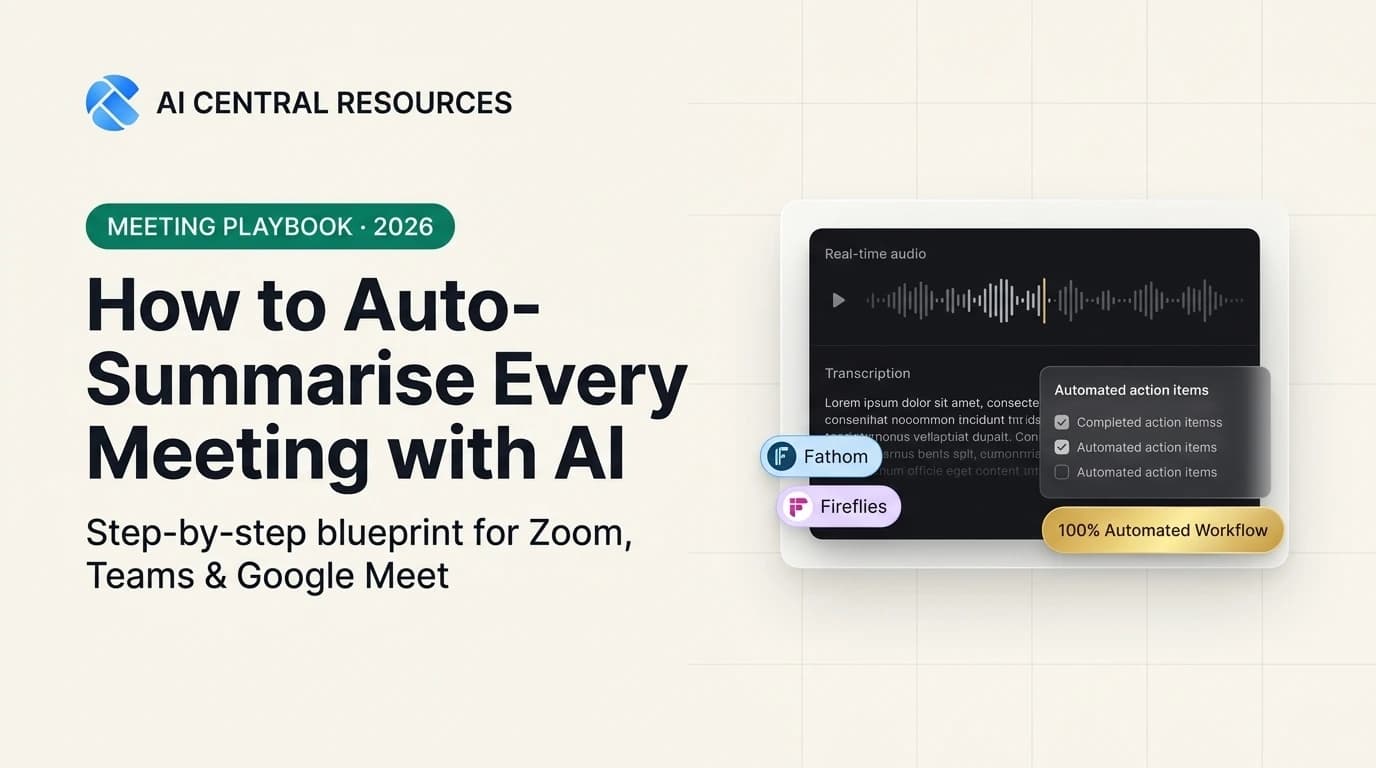
Your best ideas happen away from your desk. In 2026, tools like Jamie AI, Wispr Flow, or AudioPen convert rambling 3-minute voice notes into crisp, structured markdown summaries categorized by topic. For automated meeting capture, see our complete guide on How to Auto-Summarise Every Meeting with AI.
3. Universal Desktop Scratchpad: Raycast AI
Using Raycast on macOS (or PowerToys on Windows), press ⌥ + Space to trigger an AI scratchpad. You can draft a quick thought, attach context from your active clipboard, and push it directly into a Notion or Obsidian vault in less than 2 seconds.
Stage 2: Choosing Your Core Brain Vault (The 3 Archetypes)
Different workflows require different vault architectures. Here are the three proven Second Brain stacks in 2026:
Notion AI + Q&A
Best for professionals, founders, and cross-functional teams who want databases, project boards, and company wikis under one unified roof.
- ✓ Universal workspace search (Slack, Google Drive, Jira)
- ✓ Database AI property auto-fill
- ✓ Zero configuration required
Obsidian + Smart Connections
Best for developers, researchers, and privacy-conscious thinkers who require 100% local markdown files and offline knowledge graph RAG.
- ✓ 100% Local data ownership (.md files)
- ✓ Local vector embeddings via Ollama/Whisper
- ✓ Zero subscription lock-in
Mem.ai + Autonomous RAG
Best for busy executives who refuse to organize folders and want AI to automatically cluster related notes and surface relevant context.
- ✓ Autonomous self-organizing collections
- ✓ Real-time related notes sidebar
- ✓ Native calendar meeting notes linkage
Stage 3: Progressive AI Distillation & Synthesis
The most powerful capability of an AI Second Brain is its ability to synthesize disparate pieces of knowledge into actionable mental models. Instead of manually bolding sentences, use these three automated distillation patterns:
Pattern 1: The Executive Synthesis Prompt
Notion AI / Claude Prompt# ROLE: Expert Knowledge Synthesizer
# INPUT: Attached 12 reading highlights, 3 meeting notes, and 2 research bookmarks on [Topic].
## INSTRUCTIONS:
1. Identify the Top 3 Non-Obvious Insights that connect these sources.
2. Formulate a Contrarian Perspective: Where do these sources disagree or challenge conventional wisdom?
3. Create a 1-Paragraph Mental Model: Explain how to apply this framework in practical decision-making.
4. Extract Actionable Heuristics: Bullet points starting with concrete verbs (e.g., 'Audit...', 'Eliminate...').
Tone: Analytical, dense, zero fluff.Pro Tip: Google NotebookLM for Complex Document Analysis
If you are analyzing dense 100-page PDF reports, research papers, or legal contracts, pair your Second Brain with Google NotebookLM. Powered by Gemini 1.5 Pro's 2-million-token context window, NotebookLM grounds every single answer with clickable citation footnotes to exact page numbers in your source files, eliminating hallucination risks entirely.
Stage 4: Universal Retrieval & Creative Expression
Your Second Brain is only valuable when it produces creative output: writing articles, preparing proposals, designing architecture specs, or solving business bottlenecks.
1. Multi-App Semantic Search (The Connected Workspace)
In 2026, enterprise knowledge is fragmented across Google Docs, Slack channels, Notion wikis, Linear tickets, and Figma files. Using Notion AI Q&A or enterprise search agents, you can ask a question like:
"What were the exact pricing concessions we offered Enterprise Client X in June, and what did engineering decide regarding the custom SSO integration?"
The AI crawls across your Notion notes, Slack conversations, and meeting minutes to return a verified, cited 3-paragraph answer in under 4 seconds.
2. Generative Output: First Draft in Seconds
When writing a comprehensive proposal or strategy brief, pull your curated Second Brain notes directly into your workspace. In tools like Claude 3.5 or Cursor, feed your raw notes into the context window and prompt:
"Draft a 1,500-word product specification based strictly on the architectural decisions in @Sprint-Notes and customer pain points in @Q3-Feedback."
You instantly skip the dreaded blank page syndrome and start at the 80% mark. For a complete look at our end-to-end workflow, check our breakdown of The Best AI Productivity Stack in 2026.
Second Brain AI Tools Compared (2026)
Here is how the top AI knowledge platforms compare across storage type, privacy, semantic search depth, and pricing:
| Platform | Storage Architecture | Semantic Search | Cross-App Connectors | Pricing | Ideal User |
|---|---|---|---|---|---|
| Notion AI | Cloud Database | Native Q&A + Vector RAG | Slack, Google Drive, Jira, GitHub | $10 / user / mo | Teams, founders, power note-takers |
| Obsidian (Smart Connections) | 100% Local Markdown | Local Vector Embeddings | Community Plugins (1,800+) | 100% Free / Open | Developers, researchers, privacy purists |
| Mem.ai | Cloud Auto-Cluster | Autonomous Knowledge Graph | Zapier, Make, Email Inbound | $14.99 / mo | Executives who hate manual folders |
| Google NotebookLM | Google Cloud Vault | Grounded Citations (Gemini 1.5) | Google Docs, Slides, Drive | Free | Heavy PDF, research, and book analysis |
| Evernote AI | Cloud Notes | Basic Keyword + OCR AI | Web Clipper, Email Forwarding | $14.99 / mo | Legacy Evernote users with large PDF archives |
Frequently Asked Questions
Can I build an AI Second Brain for free in 2026?
Yes. You can build a completely free, 100% private AI Second Brain using Obsidian paired with the open-source Smart Connections plugin and a local LLM via Ollama (such as Llama 3 or Mistral). Alternatively, Google NotebookLM is completely free and allows you to upload up to 50 extensive research sources per notebook with zero subscription fees.
Is Notion AI better than Obsidian for a Second Brain?
It depends on your workflow priorities. Notion AI is significantly better for multi-person teams, relational databases, automated project management, and connecting external apps like Slack and Google Drive. Obsidian is superior for solo thinkers, researchers, and developers who require complete offline privacy, local markdown files, and complex graph visualization without vendor lock-in.
How does an AI Second Brain handle confidential personal data?
If privacy is your top concern, use a local-first stack like Obsidian with local embeddings (Nomad / Ollama) where no data leaves your hard drive. If using cloud tools like Notion AI or Mem, verify that their enterprise compliance terms (SOC-2 Type II) explicitly state that customer vault data is never used to train foundational AI models.
Do I still need the PARA method with AI tools?
You do not need rigid, nested PARA folders in 2026. Because modern AI Second Brains use semantic vector embeddings and universal Q&A search, they can instantly retrieve any note based on contextual meaning regardless of where it is stored. However, keeping simple top-level status tags (Active Projects vs Inactive Resources) helps your AI agent prioritize current sprint context when generating drafts.
The Bottom Line: Stop Organizing, Start Creating
The ultimate objective of a Second Brain is not to become a professional digital librarian—it is to eliminate cognitive overload and give you instant, friction-free access to your life's best insights. By adopting the CODE 2.0 AI workflow, you offload the tedious mechanics of filing, tagging, and memorizing to intelligent software so you can focus entirely on high-leverage creative execution.
To explore complementary productivity blueprints, read our complete guides on How to Automate Your Entire Work Life with AI (Zero Coding) and How to Run Productive Team Meetings with AI.