














The search engine for scientific research querying 200M+ peer-reviewed papers with Consensus Meter agreement synthesis.
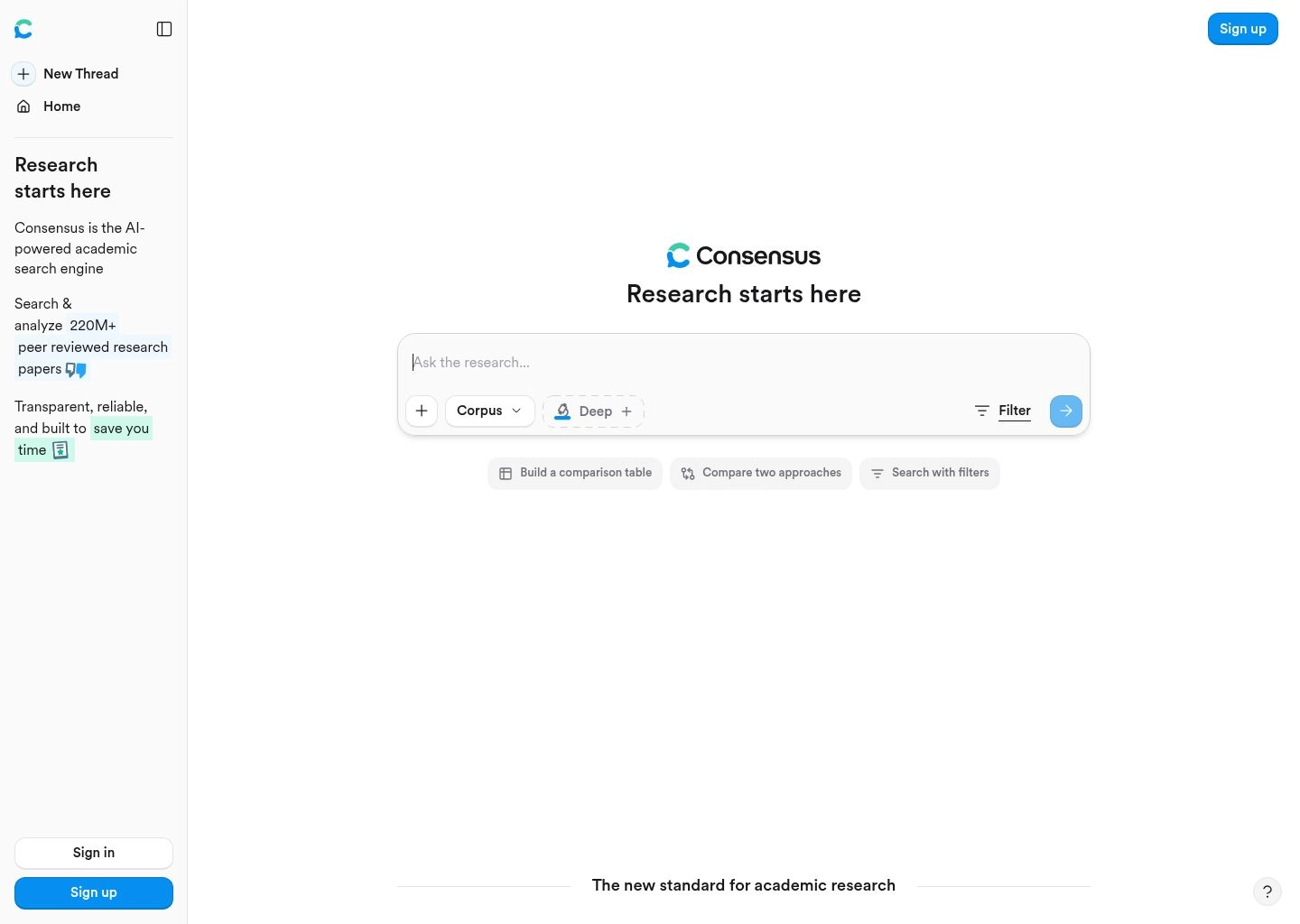
Consensus AI solves the single greatest limitation of traditional large language models: citation hallucination. While general AI assistants regularly invent fictitious journal references and non-existent DOIs, Consensus searches directly against the Semantic Scholar academic database containing over 200 million peer-reviewed scientific studies across medicine, psychology, economics, biology, and climate science.
When you ask a research question such as *'Does creatine improve cognitive performance?'*, Consensus synthesizes the findings across dozens of relevant randomized controlled trials. It presents a groundbreaking Consensus Meter—an automated breakdown displaying the percentage of published literature that answers Yes, No, or Inconclusive.
Every single insight includes structured Study Snapshots highlighting the sample size, study design (e.g., meta-analysis vs. animal model), publication venue, and direct quotes. It empowers university students and graduate researchers to draft evidence-based literature reviews in hours rather than weeks.
Key Features & Academic Strengths
Undergraduate and PhD students writing literature reviews, thesis background chapters, and argumentative research essays requiring real peer-reviewed scientific citations.
Generating creative fictional prose or brainstorming non-scientific consumer opinions not documented in published research literature.