


For over two decades, Merlin Mann’s concept of Inbox Zero has been treated like a mythical productivity holy grail. Most professionals aspire to it, but the overwhelming reality of modern knowledge work—averaging 120+ incoming emails, newsletters, receipts, and client pings every single day—turns email management into an exhausting second job. Knowledge workers spend upwards of 28% of their entire workweek simply reading, sorting, and answering messages.
The traditional advice—rigid color-coded folders, complex manual filtering rules, and obsessive calendar blocking—completely collapsed under the sheer volume of digital communication. In 2026, manual folder sorting is officially dead.
The modern breakthrough is AI-augmented email architecture. By combining intelligent background triage, semantic search engines, contextual ghostwriting models, and sub-100ms keyboard navigation, you can cut your daily email processing time by 75% and maintain a spotless inbox in less than 15 minutes per day. In this comprehensive guide, we present the battle-tested 2026 blueprint to achieve and permanently sustain Inbox Zero using state-of-the-art AI email tools.
⚡ The 30-Second Executive Verdict: The 2026 AI Inbox Zero Stack
Best Overall Stack: Combine SaneBox (for automated background triage across any email client) with either Superhuman (for sub-100ms keyboard speed and VIP client focus) or Shortwave (for deep AI thread synthesis, semantic search, and contextual ghostwriting).
For Microsoft 365 Enterprise Users: Leverage Copilot for Outlook alongside Mailbutler to add AI task tracking, smart scheduling, and contact insights directly inside your desktop or web Outlook app.
The Core Rule: Never use folders again. Use AI to auto-quarantine 80% of low-priority noise into daily digests, process actionable messages using the 4 D's Protocol (Delete, Delegate, Defer, Do with AI), and archive everything else.
1. Why Traditional Inbox Zero Failed (And How AI Fixes It)
When Inbox Zero was first formulated in 2007, email was primarily a direct messaging system between human colleagues. Today, human-to-human correspondence represents less than 20% of an average knowledge worker's incoming volume. The remaining 80% consists of:
- Automated Machine Alerts: CI/CD deployment notifications, Jira ticket assignments, Stripe charge notifications, and security alerts.
- Marketing & Newsletters: Substack digests, software updates, product announcements, and cold sales outreach.
- Internal Operational Noise: Calendar acceptances, automated meeting transcripts, and thread reply loops where people simply write "Thanks!".
Traditional email clients force you to treat every single notification as an equal citizen in your main feed. You are forced to make active cognitive decisions on 100+ low-stakes items before reaching the three emails that actually impact your revenue, career, or team deliverables.
The AI Paradigm Shift: Modern AI email tools flip this dynamic on its head. Machine learning models analyze historical communication graphs, sender relationships, thread context, and linguistic urgency to automate the cognitive burden of triage. Instead of you sorting the inbox, the AI sorts the inbox for you—presenting only what requires human judgment.
2. The 4-Stage AI Inbox Zero Architecture
To establish a sustainable workflow, you need a cohesive system that handles communication across four distinct phases: Triage, Synthesis, Execution, and Maintenance.
| Stage | Core Objective | Recommended AI Tool | Time Saved |
|---|---|---|---|
| 1. Autonomous Triage | Filter non-urgent noise, newsletters, and receipts before reaching your view | SaneBox | 2.5 hrs / week |
| 2. Thread Synthesis | Generate 2-sentence bullet recaps of 50-message threads and retrieve past facts | Shortwave AI | 1.8 hrs / week |
| 3. Fast Execution | Sub-100ms keyboard navigation, 1-click AI ghostwriting, and split inboxes | Superhuman | 2.1 hrs / week |
| 4. Smart Tracking & Follow-up | Auto-remind unreplied emails, track read receipts, and extract action items | Mailbutler AI | 1.0 hrs / week |
3. Stage 1: Autonomous Triage (Quarantine the Noise)
The first rule of Inbox Zero is that non-urgent emails should never trigger visual notifications or sit in your primary inbox. This is where server-side AI filtering tools shine.
SaneBox is the gold standard for background triage because it operates directly on your email server (IMAP, Exchange, Office 365, or Google Workspace) without requiring you to switch email clients. SaneBox uses machine learning to analyze header metadata, past reply rates, and sender interactions to organize incoming mail into smart folders:
- @SaneLater: Holds non-urgent personal or business emails that do not require immediate action. You review this folder once per day in a single bundled pass.
- @SaneNews: Automatically intercepts marketing broadcasts, product updates, and newsletters, aggregating them into a clean daily digest email.
- @SaneCC: Catches emails where you are merely CC'd rather than directly addressed on the
To:line. - @SaneBlackHole: Permanently deletes unwanted sender sequences without requiring manual unsubscribe links that often confirm active email validity to spammers.

4. Stage 2: Thread Synthesis & Semantic Retrieval
Once non-essential mail is quarantined, your primary inbox contains only high-stakes correspondence. However, long email threads with multiple stakeholders frequently turn into cognitive quagmires. Reading a 35-message email chain to understand what is being asked of you takes 10 to 15 minutes of precious focus.
Shortwave (built by former Google engineers who worked on Google Inbox) solves this with world-class LLM synthesis and semantic search capabilities:
- Instant Thread Summaries: At the top of every multi-party thread, Shortwave displays an AI executive summary highlighting key decisions made, pending questions, and assigned action items.
- Natural Language Email Assistant: You can chat with your entire email history. Prompts like "What were the quarterly budget numbers Sarah sent last month?" or "Summarize all pending client feedback on Project Titan" return precise answers with direct links to source messages in seconds.
- AI Ghostwriting with Voice Matching: Shortwave’s AI analyzes your sent folder to mimic your actual communication cadence, vocabulary, and sign-offs, generating draft replies that sound like you rather than generic robotic boilerplate.

E).
5. Stage 3: High-Velocity Execution (The Sub-100ms Standard)
When you have 30 actionable emails in front of you, speed of execution is everything. If opening an email takes 1.5 seconds and navigating back to the list takes another second, you lose momentum and focus.
Superhuman is engineered specifically around the psychological concept of flow state and sub-100ms responsiveness:
- Keyboard-Driven Workflow: You never need to touch a mouse. Hit
JandKto move between messages,Eto mark done/archive,Hto snooze until later, andCmd+K(Command Palette) to perform any action instantly. - Split Inboxes: Superhuman splits your incoming stream into dedicated focus streams (e.g., Important VIPs, Team Messages, Google Docs Comments, Calendar Invites). This allows you to knock out all calendar RSVPs in 30 seconds without getting distracted by complex project requests.
- Superhuman AI Instant Reply: Highlight a section of an email, hit
Tab, and type "Confirm Tuesday at 2pm, ask if we need to invite David". Superhuman crafts a polished, context-aware reply in under two seconds.

6. Stage 4: Tracking & Intelligent Follow-Ups
Reaching Inbox Zero today is meaningless if 20 important pending items slip through the cracks tomorrow because recipients forgot to reply. A complete AI email system must manage background accountability.
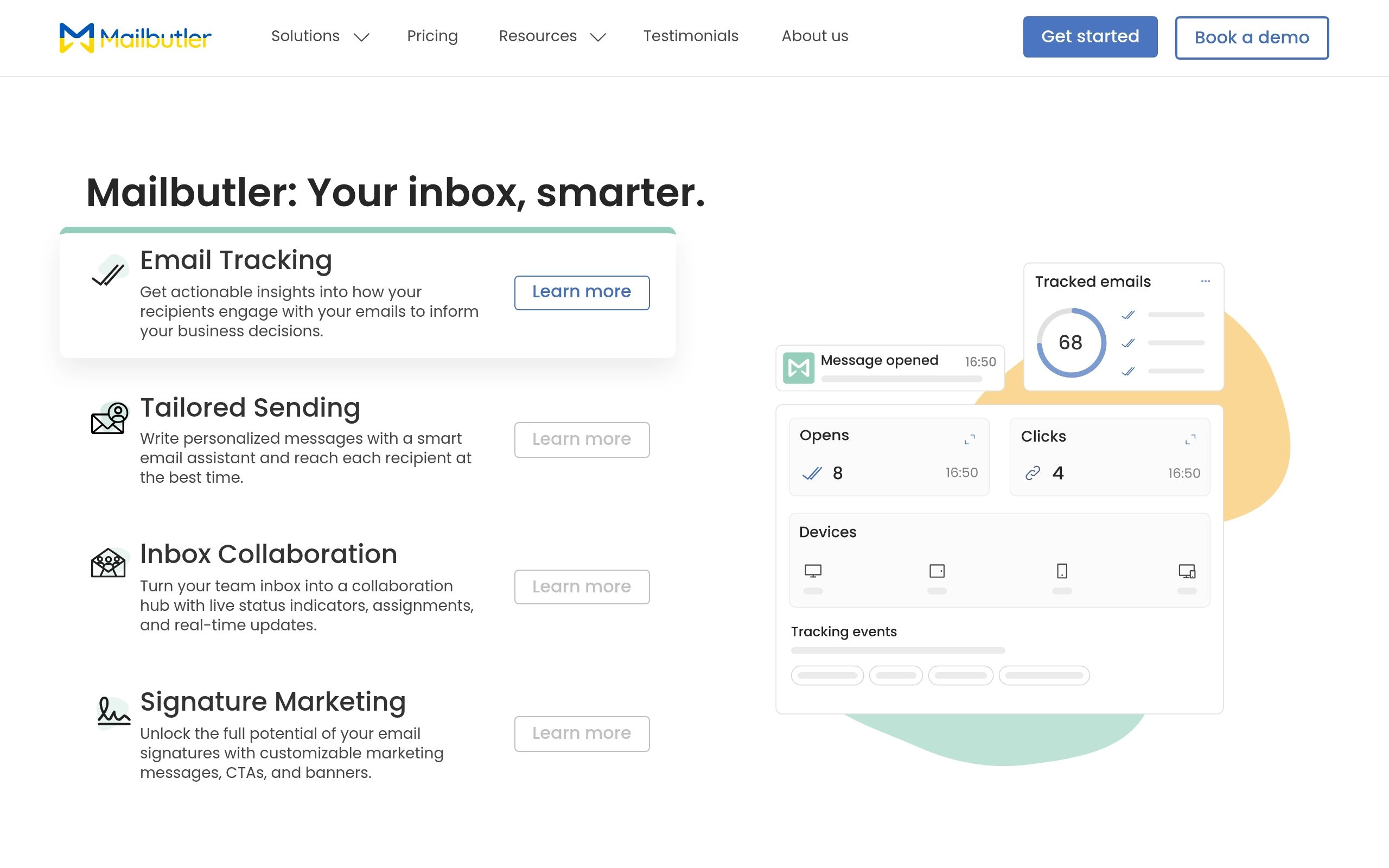
Mailbutler acts as an intelligent sidecar for Apple Mail, Gmail, and Microsoft Outlook:
- Smart Task Extraction: Mailbutler's AI scans incoming emails and automatically extracts actionable tasks, dates, and commitments into a neat sidebar checklist.
- Autonomous Follow-Up Reminders: If you send an important proposal and receive no response within 3 business days, Mailbutler automatically bumps the thread back into your primary view with a suggested polite follow-up draft.
- Smart Send Time Optimization: Mailbutler analyzes the recipient's historical open patterns and schedules your email to deliver at the exact minute they are most likely to be at their computer.
7. The Step-by-Step Implementation Blueprint (From 10,000 Unread to Zero)
If you are currently staring at an inbox with 4,500 unread messages, trying to process them one-by-one is an exercise in futility. Follow this exact 4-step execution protocol to reset your email baseline in under 30 minutes.
Step 1: Execute the Strategic "Email Bankruptcy" Protocol
Accept this reality: if an email sent 21 days ago was genuinely critical to your business, the sender has already messaged you on Slack, called you, or followed up. Everything older than 14 days in your primary inbox is informational baggage.
- Select your entire inbox.
- Filter for all emails received before 14 days ago (e.g., in Gmail:
older_than:14d). - Click Select all conversations that match this search.
- Hit Archive (DO NOT Delete).
Why Archiving is Safe: Archiving removes the messages from your active view while keeping them 100% searchable. With modern AI semantic search engines in Shortwave or Superhuman, you can find any archived document or conversation in seconds without needing it cluttering your screen.
Step 2: Connect Background AI Triage Filters
Connect SaneBox or activate Shortwave's automated bundle rules. Route all automated receipts, software updates, newsletters, and social notifications into non-urgent folders. Ensure your primary inbox is reserved strictly for humans directly addressing you.
Step 3: Establish the 15-Minute "4 D's" Daily Ritual
Commit to checking email only 2 or 3 times per day (e.g., 10:00 AM and 4:30 PM). When you open your inbox, touch every message exactly once using the 4 D's Framework:
- 1. Delete / Archive (50% of volume): Read the one-line AI summary. If no action is required, hit
E(Archive) immediately. - 2. Delegate with AI (15% of volume): Forward the message to a team member or your AI project agent with a quick context prompt.
- 3. Defer / Snooze (20% of volume): If the item requires focused deep work or depends on an external event, hit
H(Snooze) and set it to reappear at a specific date and time when you can actually handle it. - 4. Do with AI (15% of volume): If a reply takes less than 2 minutes, use AI instant ghostwriting to generate the draft, review for accuracy, and hit
Cmd+Enterto send.
Step 4: The End-of-Day Zero Lockdown
At the conclusion of your afternoon triage session, your main inbox count must display 0. Seeing an empty screen provides immediate psychological closure, preventing email anxiety from bleeding into your evenings.
8. Can Copilot or Gemini Clean Up My Inbox? (Direct Question Analysis)
A frequent question asked by enterprise knowledge workers is whether native corporate AI tools—namely Microsoft Copilot in Outlook and Google Gemini in Gmail—can handle Inbox Zero without third-party software.
Can Microsoft Copilot clean up my inbox in Outlook?
The Reality: Copilot for Microsoft 365 can summarize long email threads, generate draft replies based on enterprise files in OneDrive/SharePoint, and highlight flagged messages from key executives. However, Copilot cannot autonomously reorganize your inbox folders or automatically triage incoming mail streams in real-time.
To achieve true Inbox Zero in Outlook, Copilot must be paired with automated Outlook inbox rules, Focused Inbox settings, or an intelligent companion tool like SaneBox or Mailbutler.
Can Google Gemini clean up my Gmail inbox?
The Reality: Gemini in Google Workspace provides helpful contextual drafting ("Help me write") and summarizes long threads on mobile and desktop. However, Gmail’s native categorization tabs (Primary, Social, Promotions, Updates) rely on static heuristics rather than dynamic LLM reasoning.
If you receive hundreds of cold sales pitches or complex multi-project threads, Gemini alone will not clean your inbox. Dedicated AI clients like Shortwave or Superhuman deliver far superior batch processing and keyboard-driven speed.
9. Comprehensive Tool Comparison Matrix: 2026 AI Email Leaders
Here is how the leading AI email tools compare across performance benchmarks, triage capabilities, ecosystem support, and pricing:
| Tool | Best Use Case | Primary Mechanism | Ecosystem Support | Starting Price |
|---|---|---|---|---|
| Superhuman | Fastest Execution & VIP Focus | Sub-100ms client + Split Inboxes + Instant AI Drafts | Gmail, Outlook, iOS, Android, Mac, Windows | $25 / user / mo |
| Shortwave | Deep Synthesis & AI Chat Search | LLM thread recaps + Semantic search + Voice ghostwriter | Gmail, Google Workspace, iOS, Android, Web | Free tier / $7 / user / mo |
| SaneBox | Universal Server Triage | Server-side ML header sorting + Smart newsletter digest | Universal (Works with any client & server) | $7 / mo (Lunch plan) |
| Mailbutler | Apple Mail & Outlook Power Plugin | Smart sidebar + Task extraction + Auto follow-ups | Apple Mail, Outlook, Gmail | $4.95 / user / mo |
| Microsoft Copilot | M365 Enterprise File Integration | In-app ribbon LLM drafting + SharePoint context | Microsoft 365 / Outlook Desktop & Web | $30 / user / mo (Add-on) |
10. Data Privacy & Security Considerations with AI Email
Connecting artificial intelligence models to your corporate email account introduces legitimate security and compliance questions. Email inboxes contain sensitive customer records, financial statements, proprietary trade secrets, and legally privileged communications.
When evaluating AI email tools in 2026, enforce the following security criteria:
- Zero-Data Retention for LLM Training: Verify that the vendor has contractual agreements with model providers (e.g., OpenAI, Anthropic, Google) confirming that your email data is never used to train foundational AI models. Both Superhuman and Shortwave explicitly maintain zero-training privacy policies.
- SOC 2 Type II Certification: Ensure the vendor undergoes regular third-party security audits validating data encryption in transit (TLS 1.3) and at rest (AES-256).
- Granular OAuth Permissions: Modern AI email tools use scoped OAuth 2.0 tokens rather than storing raw email passwords. You can revoke access at any time through your Google Workspace or Microsoft Azure admin console.
- Metadata-Only Processing (SaneBox Advantage): For ultra-sensitive enterprise environments, SaneBox offers a unique architectural advantage: it only inspects email headers (to, from, subject, timestamp) and never reads or stores the actual body text or attachments of your emails.
11. Frequently Asked Questions (FAQ)
What is the fastest way to achieve Inbox Zero if I have thousands of unread emails?
The fastest method is executing the Strategic Email Bankruptcy Protocol: search for all emails older than 14 days (older_than:14d in Gmail) and click Archive All. This clears your visual clutter instantly without deleting records, preserving full searchability while leaving only genuine recent items to process.
How do AI email tools protect my confidential business emails?
Reputable AI email tools like Superhuman, Shortwave, and SaneBox operate under strict enterprise privacy agreements. They use AES-256 encryption at rest, TLS 1.3 in transit, maintain SOC 2 Type II certifications, and explicitly guarantee that your private emails and attachments are never used to train public LLMs.
Is Superhuman worth the $25/month price tag for personal email?
Superhuman is generally overpowered for purely casual personal email. However, for executives, founders, sales leaders, and consultants whose income depends on rapid client responsiveness and high email volume, saving 4 to 6 hours per week delivers an extraordinary return on investment.
Can I use AI email tools with Apple Mail or Microsoft Outlook?
Yes. SaneBox works server-side across any email client including Apple Mail and Outlook. Additionally, Mailbutler provides a direct native plugin for Apple Mail and Outlook desktop, adding smart AI summaries, task extraction, and smart send time scheduling directly inside your existing interface.
How does AI triage differ from traditional Gmail filter rules?
Traditional Gmail filters rely on rigid keyword and sender matching, which break whenever formatting changes. AI triage analyzes semantic intent, linguistic urgency, historical reply rates, and sender relationship graphs, allowing it to adapt dynamically and categorize incoming mail with over 98% accuracy.
12. Final Verdict: Taking Back Control of Your Day
Inbox Zero was never about the obsessive pursuit of an empty folder for its own sake. It is about protecting your cognitive bandwidth so you can dedicate your best mental energy to high-leverage deep work, strategic thinking, and meaningful human relationships.
By delegating automated background sorting to SaneBox, thread synthesis to Shortwave, and high-speed execution to Superhuman, email transforms from an exhausting daily roadblock into a streamlined, high-leverage communications engine.
Ready to Upgrade Your Daily Workflow?
Explore our hands-on directory reviews of the top AI productivity tools, browser automations, and intelligent assistants.
Browse AI Productivity Tools Directory →Frequently Asked Questions
What is the fastest way to achieve Inbox Zero if I have thousands of unread emails?
The fastest method is executing the Strategic Email Bankruptcy Protocol: search for emails older than 14 days and click Archive All. This clears visual clutter instantly without deleting records, preserving full searchability while leaving only genuine recent items to process.
How do AI email assistants prevent email overload from re-accumulating?
AI assistants like SaneBox and Shortwave automatically segregate incoming emails into VIP priority, newsletters (@SaneNews), and bulk notifications (@SaneLater). This ensures that only high-priority messages from real humans reach your primary inbox during the workday.
Can AI draft personalized email responses that sound like my authentic voice?
Yes, modern AI email clients like Superhuman and Shortwave analyze your sent folder to emulate your tone, sign-offs, and typical response length. With one-click instant replies, you can approve or tweak a fully formulated, context-aware draft in seconds.
What is the recommended daily routine for maintaining Inbox Zero in under 15 minutes?
Adopt a two-session daily batching routine (e.g., 11:00 AM and 4:30 PM) using the 4D framework: Delete, Delegate, Do (if <2 min), or Defer. Using keyboard shortcuts in tools like Superhuman, process incoming bundles rapidly instead of keeping your email client open all day.
Related Tags

AUTHORED BY
Hamza Khaliq
Student, Author, Learner, Developer and Researcher
Passionate about AI technology and its applications. dedicated to bringing you the latest insights and trends from the world of artificial intelligence.
You might also like
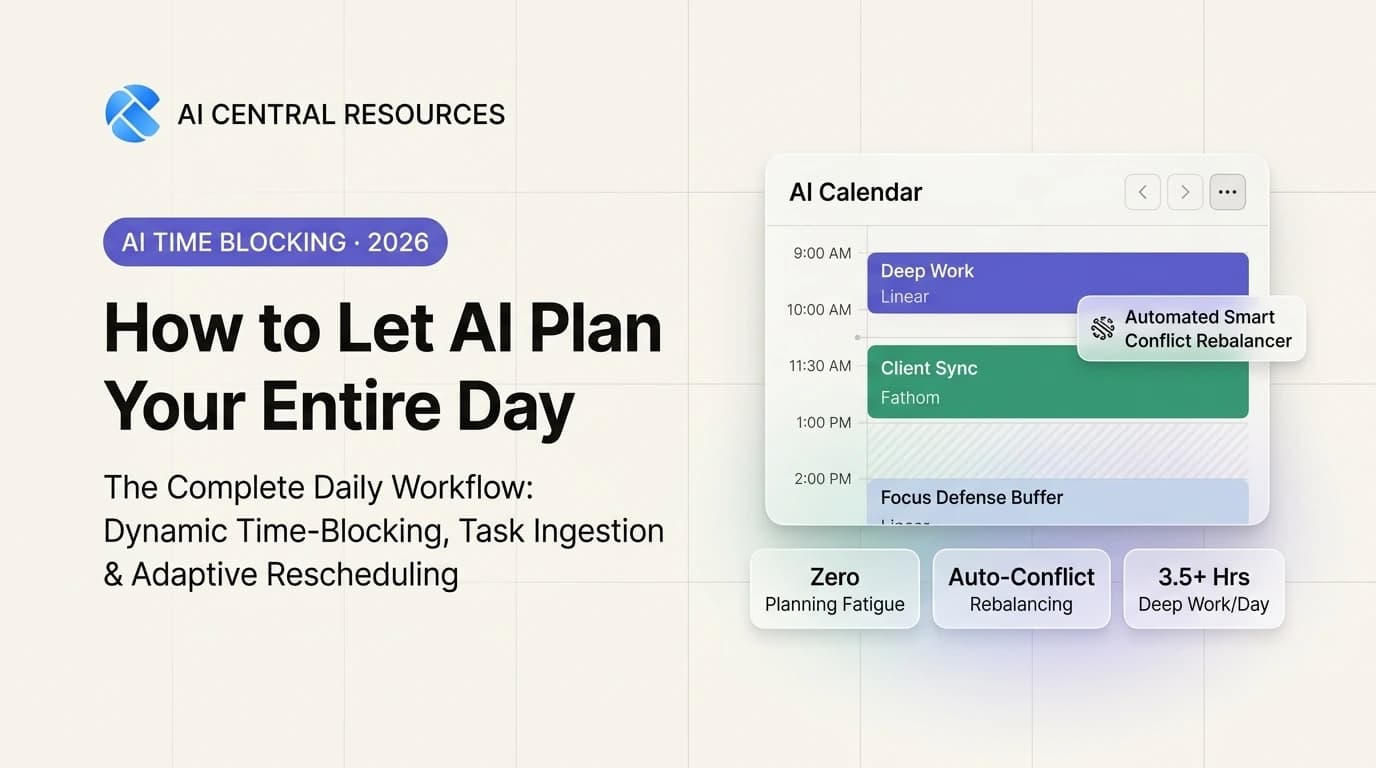
How to Let AI Plan Your Entire Day (The Ultimate Daily Workflow)
Eliminate planning fatigue. Learn how to let AI auto-schedule your to-do list, defend 3.5+ hours of daily deep work, and adaptively rebalance your calendar.

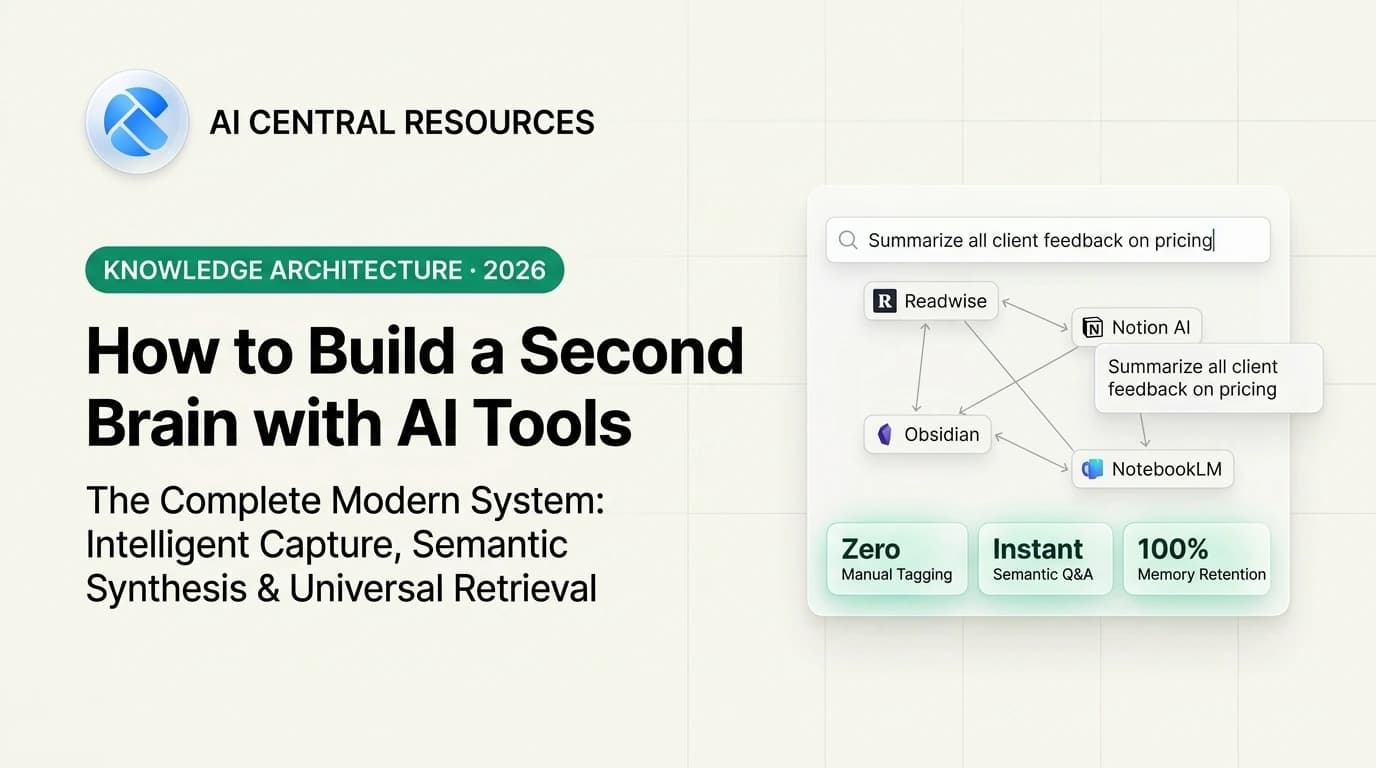
How to Build a Second Brain with AI Tools in 2026 (Full System)
Build a self-organizing Second Brain in 2026 using AI tools. Learn the CODE 2.0 system combining Readwise, Notion AI, Obsidian, and NotebookLM for effortless recall.
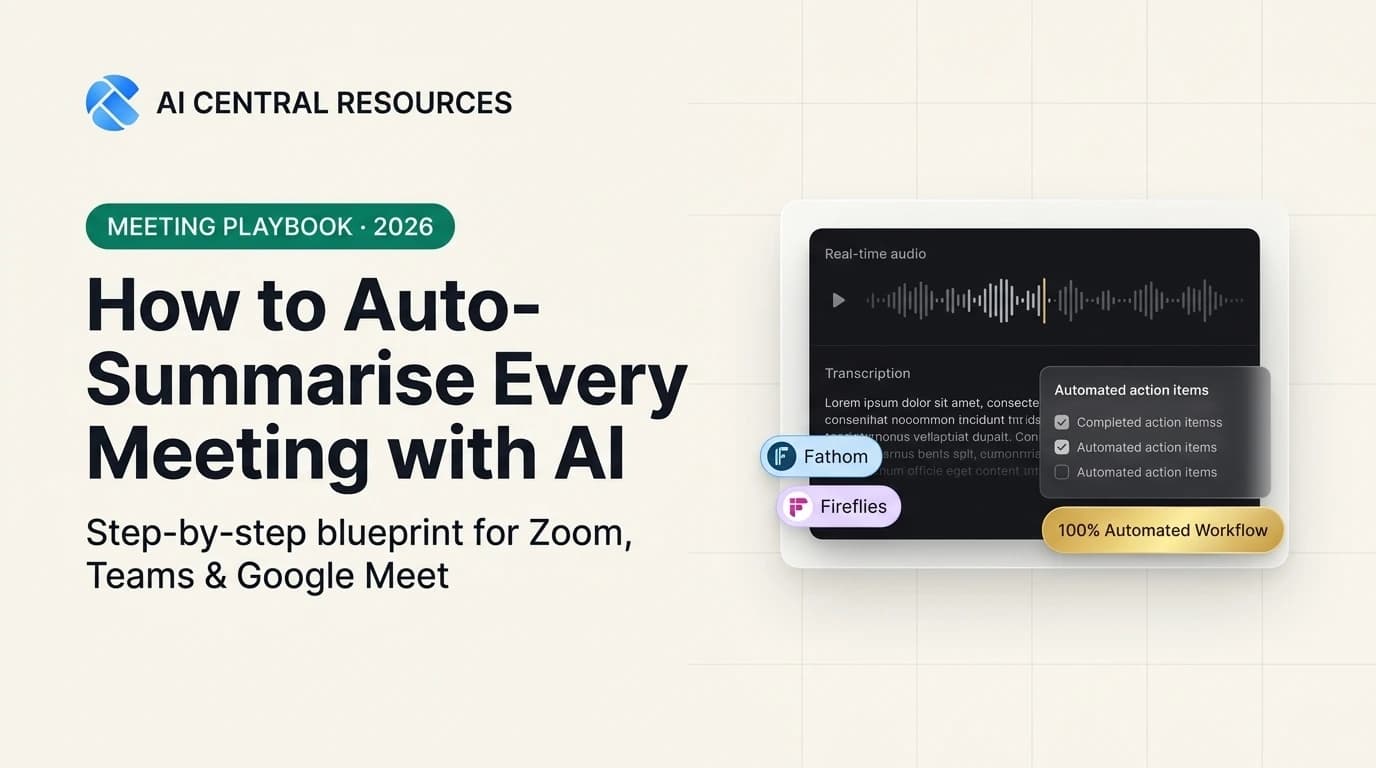
How to Auto-Summarise Every Meeting with AI (Step-by-Step 2026 Guide)
Stop taking manual meeting notes. Learn how to auto-summarise Zoom, Teams, and Meet calls using AI notetakers, custom prompt templates, and no-code CRM sync.
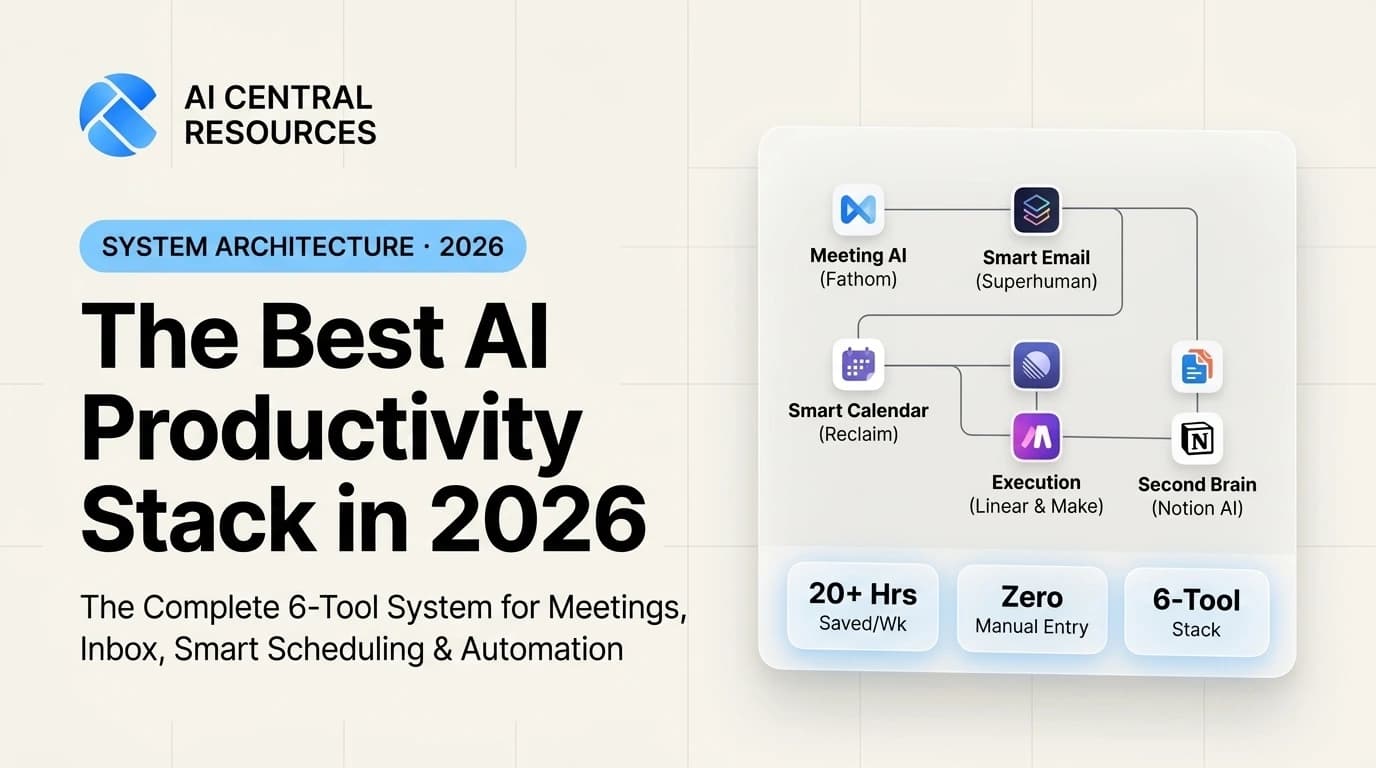
The Best AI Productivity Stack in 2026: The Complete 6-Tool System
Build the ultimate AI productivity stack in 2026. Discover the tested 6-tool system for meeting notes, inbox triage, task management, and no-code automation.