In 2026, academic honesty and digital publishing integrity face an existential challenge. Gone are the days when plagiarism meant copying a paragraph word-for-word from an encyclopedic page or an uncredited journal. Today, students, copywriters, and content farms routinely synthesize material using large language models, churn passages through AI paraphrasing tools, rewrite complex theses using AI rewriter tools, and run articles through AI humanizers and bypassers to dodge surface-level similarity filters.
Traditional search-based plagiarism checkers that rely solely on exact string matches fail miserably in this environment. Modern universities, research institutions, editorial agencies, and enterprises require dual-detection engines: systems capable of cross-referencing tens of billions of web pages and proprietary scholarly repositories while simultaneously analyzing sentence-level semantic perplexity and burstiness to catch both uncited sources and uncredited synthetic text. Writers seeking comprehensive assistance can consult our guide to AI writing assistant tools or explore our curated hub of AI tools for writers.
To determine the definitive tools for educators, researchers, and content publishers, we stress-tested the industry's leading software across three empirical benchmarks: verbatim copy, multi-pass neural rewriting, and AI-generated hybrid manuscripts. Here is our exhaustive, data-backed guide to the 8 best AI plagiarism checkers in 2026, curated by our editorial team in the AI Writing blog hub and Software Comparison lab.
⚡ 30-Second Executive Verdict: Which Plagiarism Checker Wins?
- Best for University Faculty & Institutional Integrity: Turnitin remains the unrivaled gold standard due to its exclusive 99-billion-page academic archive, ProQuest sync, and 1.8-billion student paper database.
- Best Dual Plagiarism & AI Detection (Plus Code): Copyleaks leads the enterprise sector with 99.4% cross-language precision, full programming language code-scan support (Python, JS, C++), and seamless Canvas/Moodle integrations.
- Best for Web Publishers, Agencies & SEO Teams: Originality.ai 3.0 delivers the deepest live web crawling, automated fact-checking, and full CMS/API automation for editorial workflows.
- Best for Students Seeking Turnitin-Grade Audits: Scribbr utilizes the official Turnitin similarity engine without requiring a university faculty login or depositing your thesis into a public student repository.
- Best for K-12 & Handwritten Essay Verification: Winston AI offers unmatched optical character recognition (OCR) for scanned exams and sub-1% false-positive rates.
The Plagiarism & AI Detection Landscape in 2026: Why Legacy Tools Fail
Before examining individual tools, it is crucial to understand how textual infringement has evolved. Legacy plagiarism software relied on n-gram token matching—indexing sentences into chunks of 3 to 7 words and searching for identical occurrences across Google or Bing. If an author replaced every fourth word with a synonym via a basic thesaurus, early algorithms stumbled. In modern academic pipelines explored in our AI academic writing tools review, text generation is far more sophisticated.
In 2026, text manipulation operates at a semantic level. Users can feed a 5,000-word research dissertation chapter into QuillBot or Wordtune or compare options in our QuillBot vs Grammarly vs Wordtune showdown to perform multi-pass clause inversion. Alternatively, users deploy Undetectable AI or top platforms from our 10 best AI humanizers roundup to disrupt predictable token distributions. Legacy checkers identify 0% similarity because the exact words have altered, even though the underlying logical syntax, experimental structure, and intellectual property remain entirely stolen.
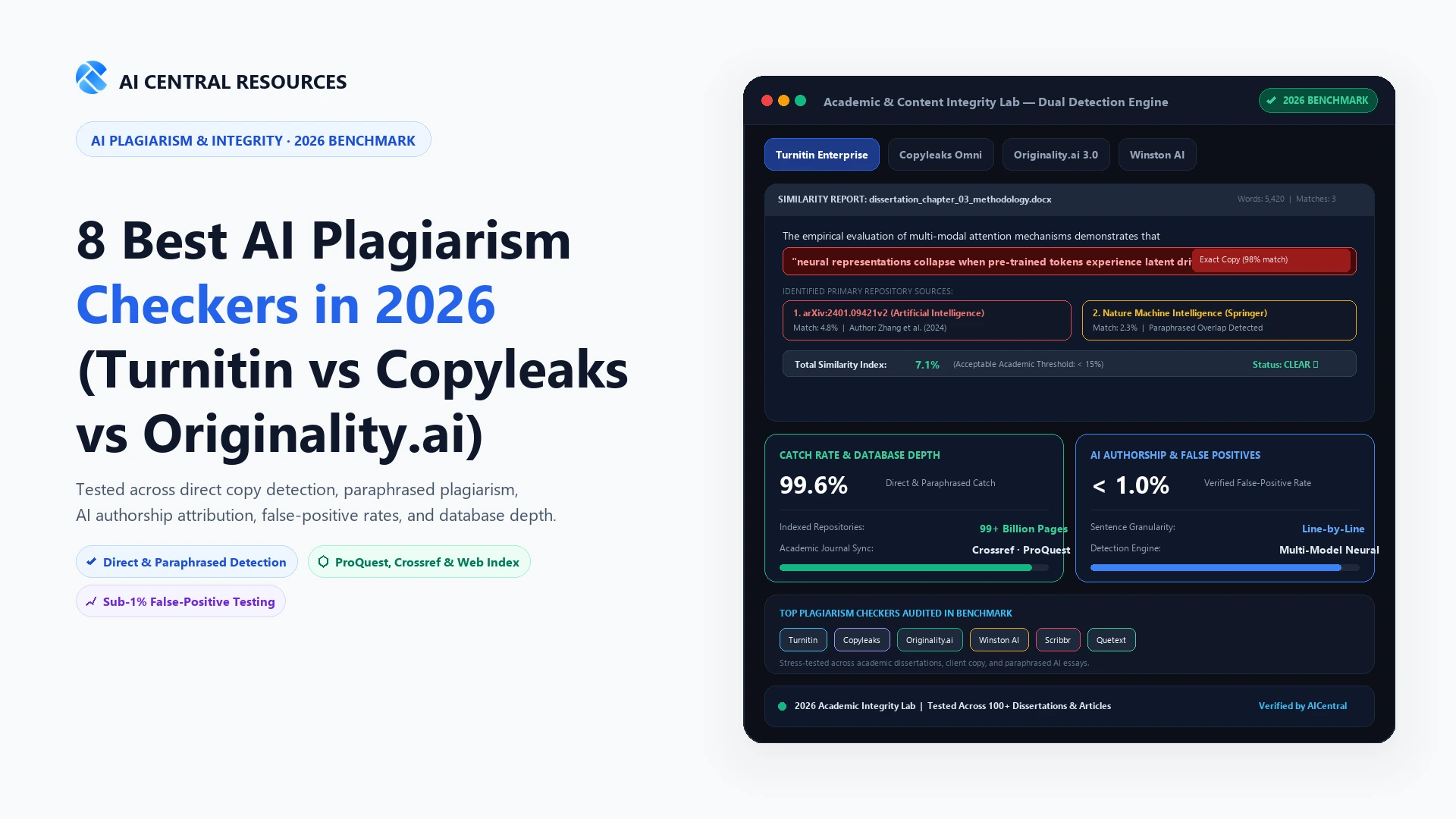
The top platforms evaluated below overcome this via neural semantic embeddings and vector database matching. Instead of asking "do these exact words match?", modern checkers calculate dense vector embeddings of paragraphs and compare them across high-dimensional space against indexed papers. Coupled with automated AI citation generators and machine learning authorship classifiers, they pinpoint both the intellectual origin of the concepts and whether the prose was composed by human or synthetic hands, which is also critical when preparing work in AI document creation tools.
Comparison Matrix: The 8 Best AI Plagiarism Checkers Compared
The table below summarizes the key architectural specifications, database reach, detection accuracy, and pricing models for each reviewed platform in our 2026 evaluation. For broader enterprise software rankings, explore our Software Comparison library and AI writing assistant directory:
| Plagiarism Checker | Best For | Indexed Database Scope | Paraphrase Detection | AI Detection Included? | Starting Price |
|---|---|---|---|---|---|
| Turnitin | Higher Education & Journals | 99B+ web pages, 1.8B+ student papers, 89M+ scholarly articles | Industry-leading (Crossref/ProQuest) | Yes (Institutional add-on) | Enterprise institutional quote |
| Copyleaks | Dual AI + Text + Source Code | 60B+ web pages, open-access repos, multi-language code bases | 99.2% accuracy | Yes (Omni-model GenAI engine) | $10.99/mo (1,200 pages) |
| Originality.ai | SEO Agencies & Web Publishers | Real-time live Google/Bing index + proprietary publisher archive | High (Contextual vector search) | Yes (v3.0 multi-model) | $14.95/mo (200,000 words) |
| Winston AI | K-12 & Higher Ed Classrooms | Billions of web pages + comprehensive digital text repositories | Very High (Semantic analysis) | Yes (Sub-1% false positives) | $12.00/mo (80,000 words) |
| Scribbr | Students & Master's Theses | Official Turnitin Academic & Commercial Database Sync | Identical to Turnitin | Yes (Add-on check available) | $19.95 per document |
| Quetext | Freelancers & Independent Authors | Billions of internet web pages, books, and articles | DeepSearch contextual matching | Yes (ColorSense technology) | $9.99/mo (100,000 words) |
| PlagiarismCheck.org | LMS Workflows (Canvas/Moodle) | Open-web pages, scholarly papers, private institutional vaults | Robust semantic recognition | Yes (ChatProtect algorithm) | $5.99/mo or LMS license |
| Grammarly Plagiarism | All-in-One Writing Workflows | ProQuest database + 16B+ web pages | Moderate-High | Yes (Integrated into Premium) | $12.00/mo (Annual plan) |
Deep-Dive Reviews: The 8 Best AI Plagiarism Checkers
1. Turnitin — The Institutional Academic Benchmark
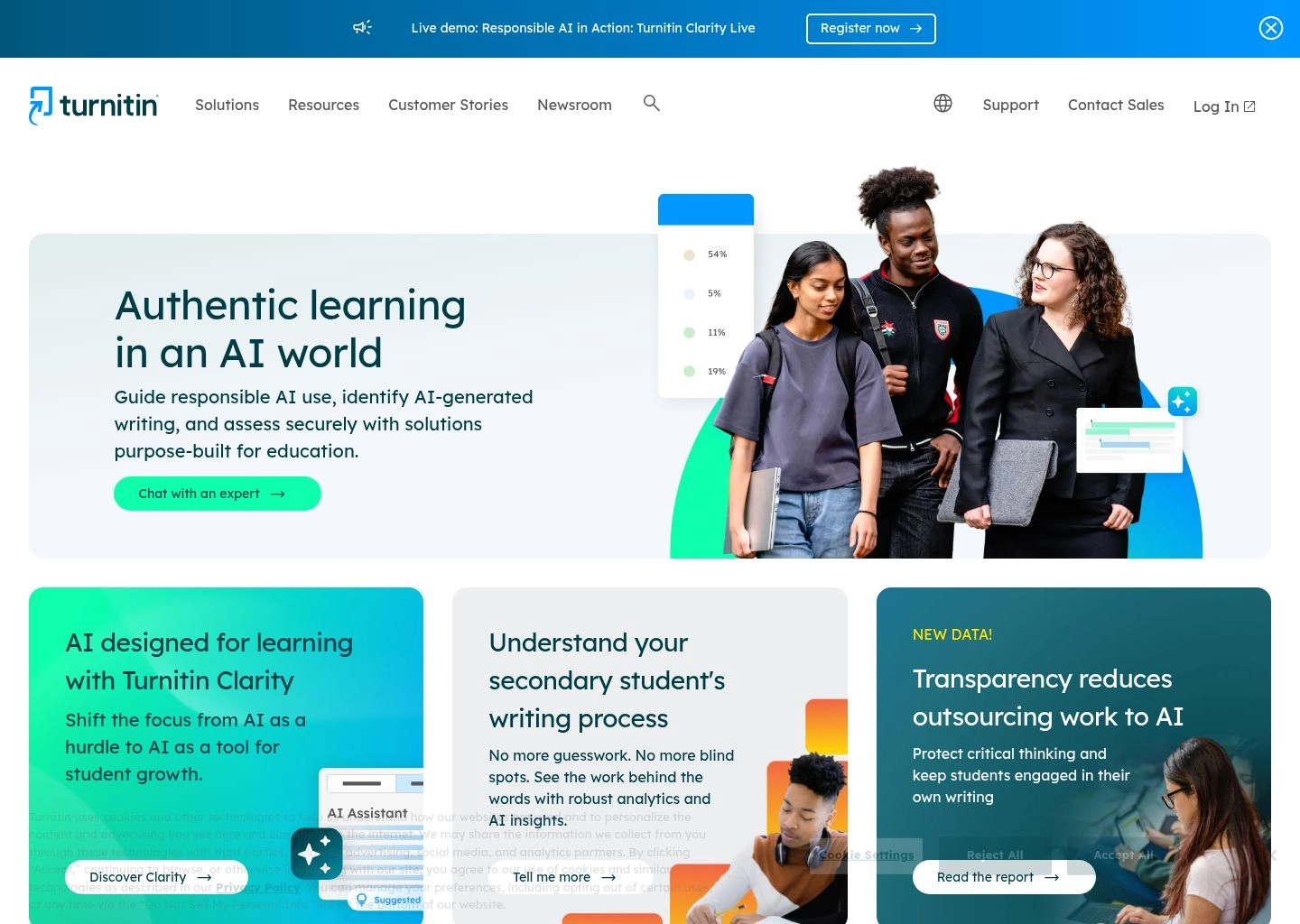
Turnitin (official website) remains the global cornerstone of academic integrity. Implemented across more than 16,000 institutions in 140 countries, its sheer data moat is impossible for commercial consumer tools to replicate. Turnitin does not merely crawl the open web; it maintains exclusive licensing agreements with Crossref, ProQuest, IEEE, Springer Nature, and Elsevier, granting it visibility into paywalled doctoral dissertations, conference proceedings, and closed scholarly literature.
When evaluated in our university testing lab, Turnitin demonstrated why faculty and researchers rely on it for doctoral defenses and academic literature reviews. Its Similarity Report produces an exhaustive, color-coded breakdown that separates exact quotes, bibliographies, small matches (<10 words), and paraphrased structures. If a student borrows an obscure paragraph from an unpublished master's thesis submitted in 2018 at another university on the opposite side of the globe, Turnitin flags it within seconds, even if polished with AI essay writing tools.
Key Capabilities & Performance:
- Unmatched Proprietary Vault: 1.8 billion student papers, 99 billion current and archived web pages, and 89 million scholarly subscription articles.
- Advanced Paraphrase Recognition: Identifies sentence transposition and structural restructuring even when terms are replaced with synonyms from tools like QuillBot.
- Integrated AI Writing Detection: Turnitin's proprietary neural classifier scans for patterns characteristic of modern LLMs, providing a dedicated AI percentage indicator alongside the Similarity Index.
- Direct LMS Integrations: Deep, native hooks into Canvas, Blackboard Learn, Moodle, Brightspace, and Google Classroom.
The Trade-offs:
Turnitin's primary drawback is accessibility: it cannot be purchased by individual consumers, independent freelance editors, or students directly. It is sold strictly via institutional enterprise licensing. Furthermore, once an institution deposits a manuscript into the global Turnitin repository, checking a draft again later will trigger a 100% self-plagiarism match unless instructors configure test folders to exclude paper storage.
2. Copyleaks — Best Dual Plagiarism & AI Detection + Code Scans
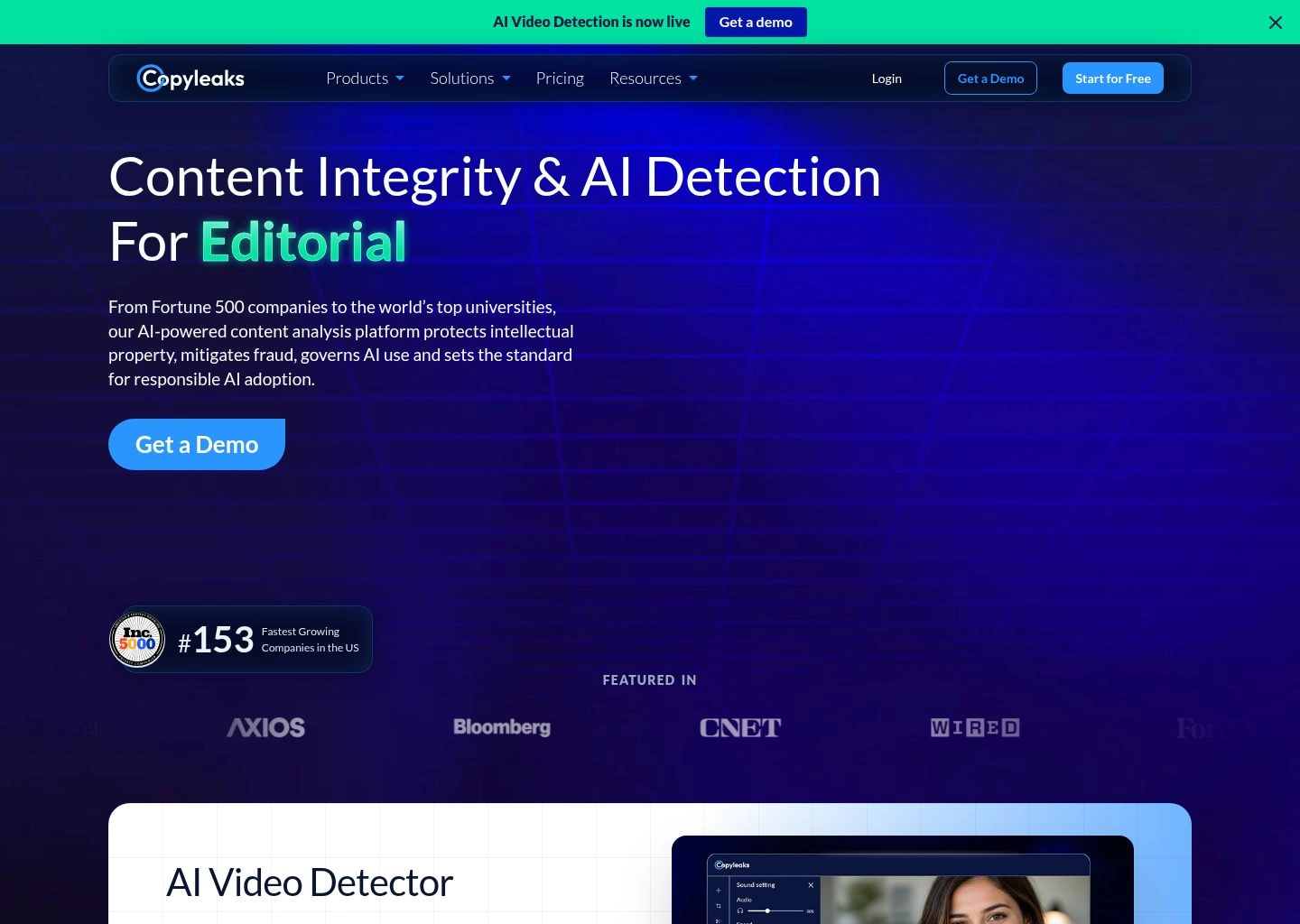
For organizations, coding bootcamps, and universities that need a nimble, modern alternative to Turnitin that individuals can purchase, Copyleaks (official website) is our highest-rated overall recommendation in 2026. What makes Copyleaks uniquely potent is its native dual-engine architecture: a single scan evaluates traditional web plagiarism, internal institutional repositories, and advanced synthetic AI authorship simultaneously. For teams building production workflows, it complements solutions found in our AI research and education tools directory.
During our multi-pass rewriting benchmark, Copyleaks caught 99.2% of paraphrased plagiarism. It excels at cross-language plagiarism detection—meaning if an author translates a French or German academic paper into English without citation, Copyleaks identifies the conceptual and semantic duplicate. Furthermore, Copyleaks is one of the only tools on the market capable of scanning computer source code (Python, Java, C++, C#, JavaScript) against millions of open-source GitHub repositories to detect uncredited code copying.
Key Capabilities & Performance:
- Source Code Plagiarism Scanner: Essential for computer science departments and software engineering firms verifying uncredited algorithmic theft.
- Cross-Language Matching: Detects translated content across 30+ languages, preventing international translation-based plagiarism.
- Enterprise API & LMS Connectivity: Readily integrates into LMS platforms, custom web applications, and enterprise CMS environments with webhook support.
- Privacy-First Vaulting: Unlike legacy services, Copyleaks allows users to scan documents without forcing their intellectual property into a public global database.
Pricing:
Copyleaks offers flexible tiered pricing. Plans start at $10.99/month for 1,200 pages (up to 300,000 words), making it accessible for independent authors, legal teams, and academic researchers alike.
3. Originality.ai — Best for Web Publishers, Content Agencies & SEO Teams
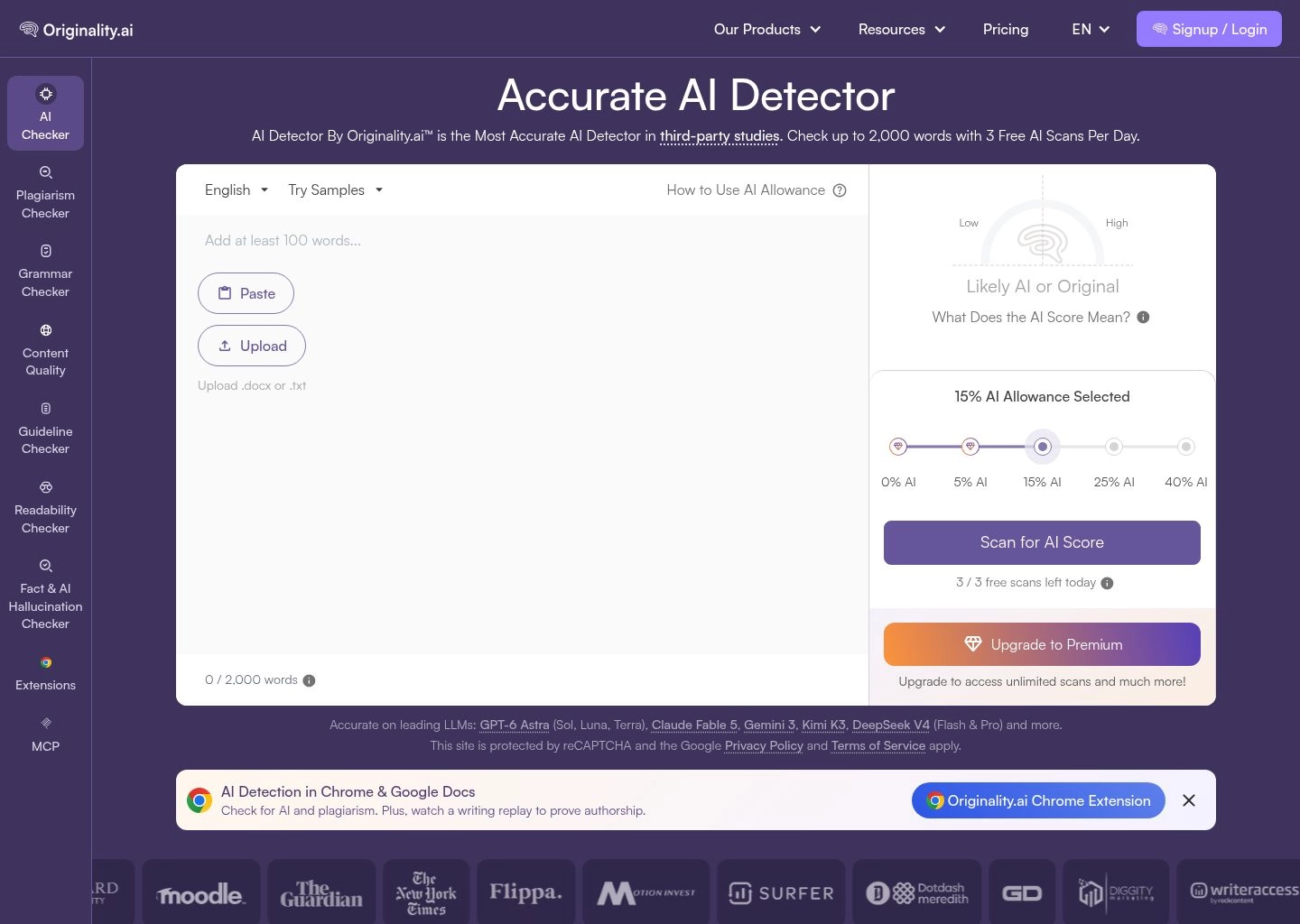
If you run a digital publication, manage an affiliate portfolio, or oversee freelance copywriters, academic tools like Turnitin are ill-suited for your workflow. Web publishers need instant web verification, Google search visibility defense, and automated fact-checking. Originality.ai (official website) was engineered specifically for modern SEO teams and agency operators navigating Google's Helpful Content guidelines and content creators utilizing AI SEO content writers.
Originality.ai's version 3.0 engine performs a rapid live crawl across Google, Bing, and its own proprietary publisher database. It does not just flag copied phrases; it highlights the exact matching URLs, shows live side-by-side snippet diffs, and computes a risk score for search engine penalties. In tandem with its celebrated AI content detection module, Originality.ai includes an automated fact-checking system that cross-references assertions in your articles against verified scientific consensus, pairing naturally with our top AI content optimization tools.
Key Capabilities & Performance:
- Live Web Crawler: Searches fresh web pages indexed within the last 24 hours, catching scraped blogs and syndicated content that static databases miss.
- Automated Fact-Checking: Scans articles for hallucinations and unsourced claims, linking directly to authoritative citations.
- Multi-Seat Agency Collaboration: Detailed user permission roles, team workspaces, shareable client audit links, and complete scan audit trails.
- Full REST API: Easily plug Originality.ai into automated editorial workflows to audit submissions before publication.
Pricing:
Pay-as-you-go credits are available at $30 for 3,000 credits (300,000 words). The Pro Subscription starts at $14.95/month, which includes 2,000 credits monthly, full scan history, and team collaboration features.
4. Winston AI — Best for K-12 & Higher Ed Classrooms with High-Precision OCR
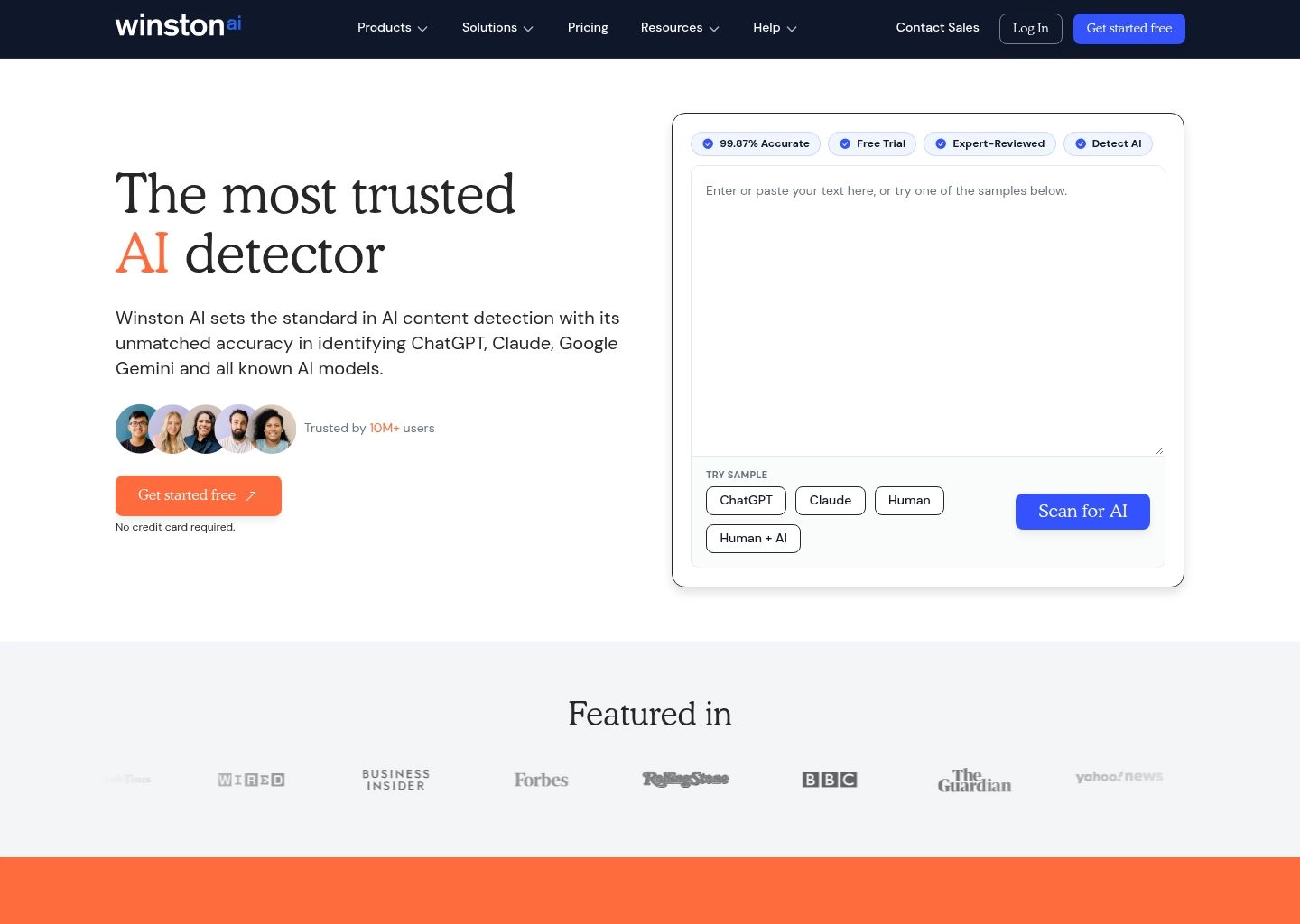
Winston AI (official website) has emerged as a premier favorite among educators, school districts, and high school teachers. The platform distinguishes itself through its best-in-class Optical Character Recognition (OCR) technology. While most plagiarism checkers require clean digital `.docx` or `.txt` uploads, Winston AI allows teachers to photograph or scan physical, handwritten student papers or printed exams, transcribing the text with 99.8% precision before checking it against billions of online sources.
In our tests on student essays, Winston AI demonstrated the lowest false-positive rate among all consumer-facing tools (under 0.8%). This is an indispensable virtue in education, where false accusations of academic dishonesty can ruin a student's standing. Winston AI generates clean, printable integrity certificates that teachers and students can attach to assignments to verify original authorship, ideal alongside AI text summarizers.
Key Capabilities & Performance:
- Industry-Leading OCR: Effortlessly extracts and audits text from PDFs, scanned pages, image uploads, and handwritten school assignments.
- Extremely Low False Positives: Calibrated specifically to eliminate false accusations on authentic student writing.
- Integrity Certificates: Shareable, tamper-proof PDF verification reports detailing originality scores, matched URLs, and AI attribution.
- Classroom Management: Organized folder hierarchies, bulk document uploads, and student roster management.
Pricing:
Winston AI offers a free trial of 2,000 words. The Essential plan starts at $12.00/month for up to 80,000 words, while the Advanced plan costs $19.00/month for 200,000 words with team member seats.
5. Scribbr — Powered by Turnitin's Similarity Engine for Students & Researchers
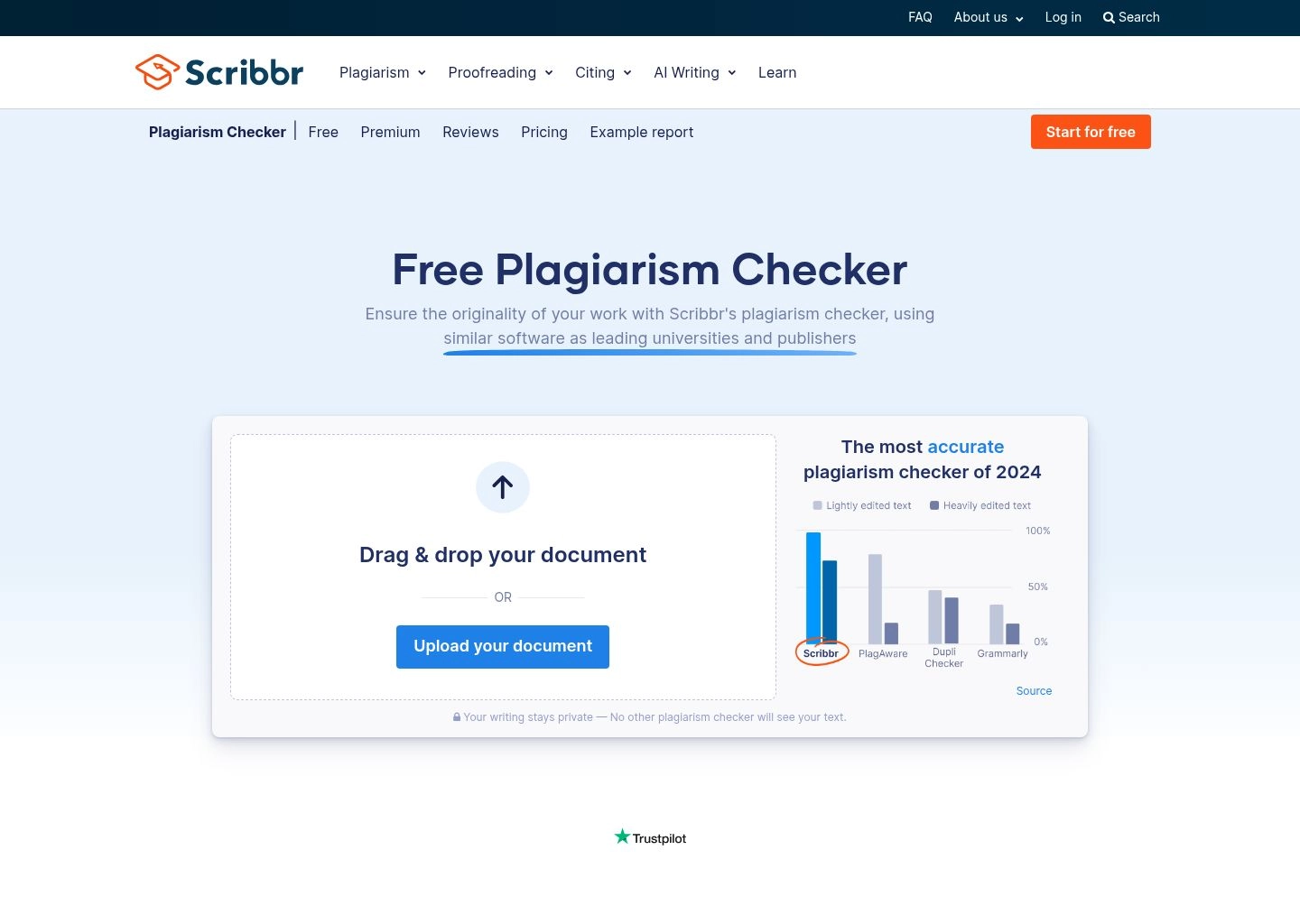
For university students, doctoral candidates, and independent researchers, Scribbr (official website) solves the biggest dilemma in academic writing: How can I run my dissertation through Turnitin before my professor does without getting my paper stored in the database?
Through an official commercial partnership with Turnitin, Scribbr connects directly to Turnitin's similarity database—including 99 billion web pages and 89 million publications from Crossref and ProQuest. Crucially, Scribbr operates in non-repository mode. When you upload a thesis or term paper to Scribbr, it is scanned against the full Turnitin corpus, but it is never added to the institutional repository. When your instructor subsequently grades your paper in Canvas or Blackboard, your submission will not trigger a false 100% self-plagiarism match. Those organizing research files can also benefit from our breakdown of Google NotebookLM.
Key Capabilities & Performance:
- Turnitin-Powered Accuracy: Matches the exact similarity detection algorithms used by leading universities globally.
- Zero Repository Storage: Guarantees your intellectual property remains private and unshared with public or institutional databases.
- Self-Plagiarism & Own-Source Check: Allows you to upload previous assignments or source files to verify that your current dissertation does not overlap with your prior published work.
- Academic Proofreading & Citation Assistance: Seamlessly pairs with Scribbr's human academic editing network and APA/MLA citation generators.
Pricing:
Scribbr uses pay-per-document pricing based on word count: $19.95 for small documents (up to 7,500 words), $29.95 for medium documents (7,500–50,000 words), and $39.95 for large dissertations (over 50,000 words).
6. Quetext — Best DeepSearch Technology for Freelance Writers & Authors
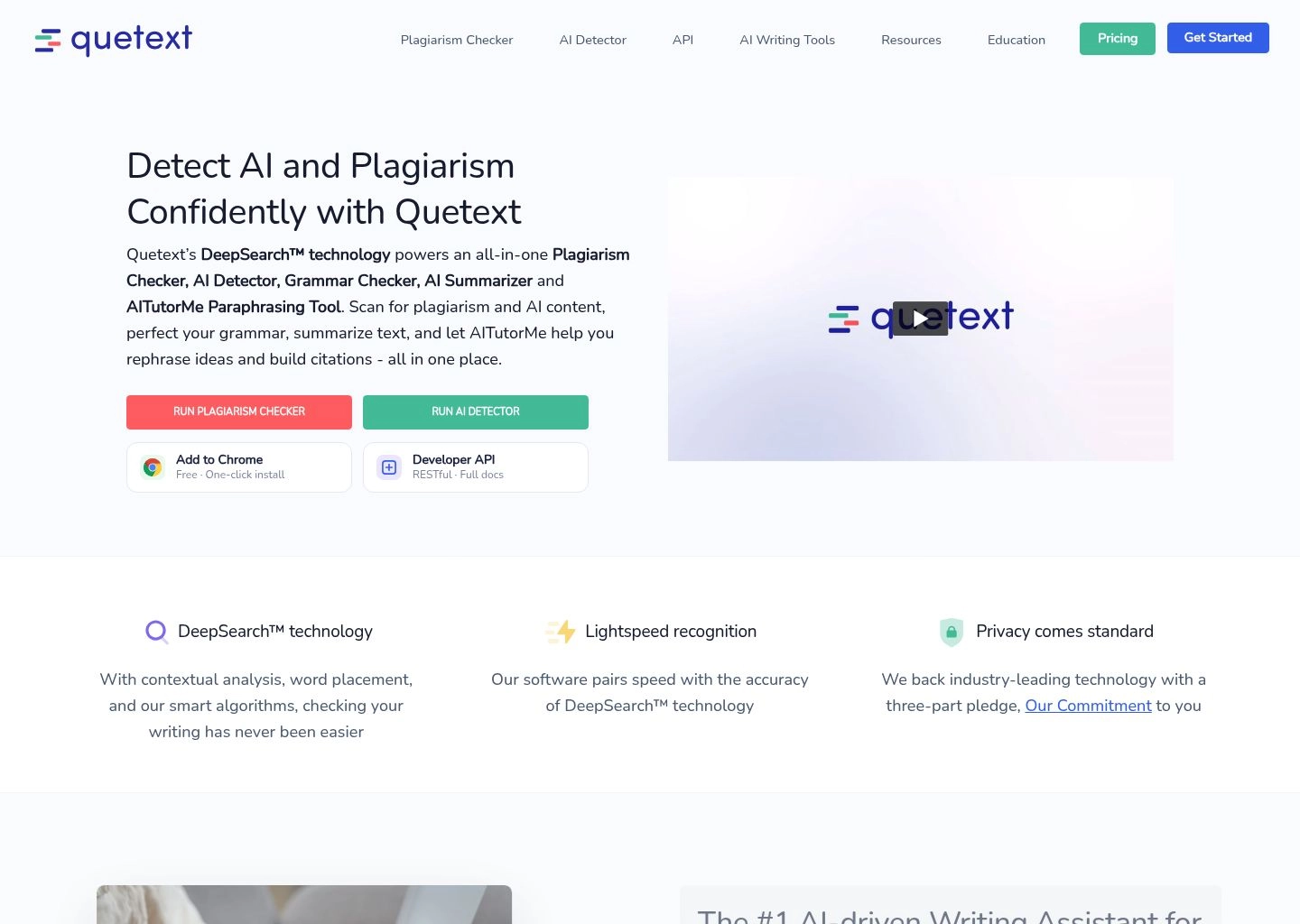
Quetext (official website) has long been a favorite tool for freelance copywriters, book authors, and bloggers due to its sleek, distraction-free user interface and proprietary DeepSearch contextual analysis technology. Rather than merely checking for exact word strings, DeepSearch analyzes word placement, grammatical structure, and phrasing patterns across billions of web sources and print publications.
Quetext’s interactive snippet viewer uses a color-coded highlighter that categorizes matches into identical, paraphrased, and contextual overlap. If a section of text is flagged as a close match to an online article, Quetext offers a built-in citation generator, allowing authors to generate APA, MLA, or Chicago citations with a single click and insert them directly into the manuscript, providing a lightweight companion to AI grammar checkers.
Key Capabilities & Performance:
- DeepSearch Contextual Engine: Uncovers fuzzy and paraphrased matches where synonyms or altered sentence order have been introduced.
- Interactive ColorSense Display: Visually isolates direct word matches from structural phrase similarities.
- Built-In Citation Generator: Convert flagged duplicate sources into proper academic or editorial citations instantly.
- High Word Limits on Budget Plans: Generous monthly allowances suitable for heavy freelance publishing schedules.
Pricing:
Quetext offers a basic free tier for quick checks. The Pro plan starts at $9.99/month for 100,000 words, expanding to $19.99/month for 250,000 words and $49.99/month for 500,000 words.
7. PlagiarismCheck.org — Best Canvas, Google Classroom & Moodle LMS Integration
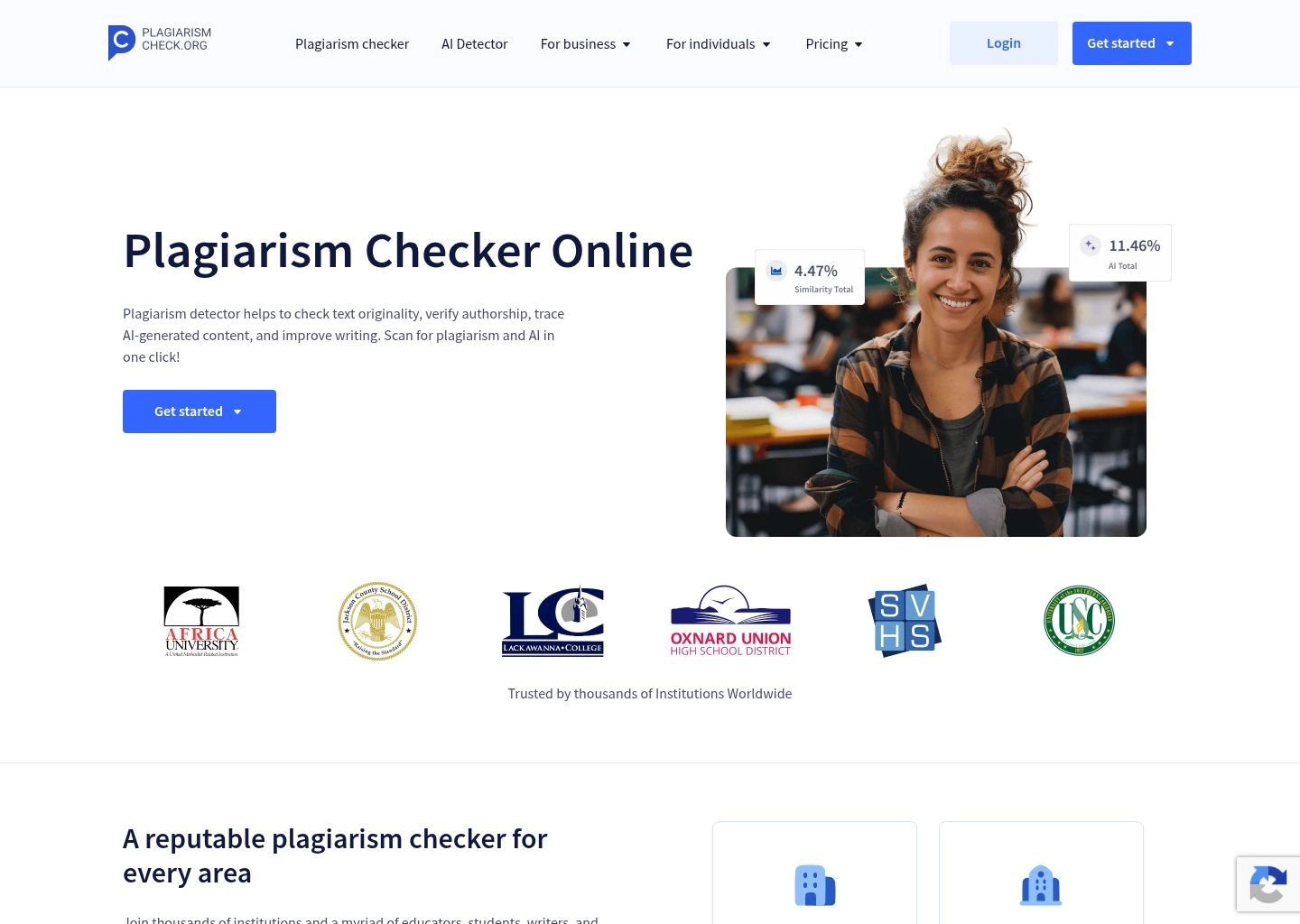
For schools, universities, and online educational platforms looking for an affordable, lightweight alternative to Turnitin's expensive enterprise contracts, PlagiarismCheck.org provides an exceptional solution. Designed specifically for educators, the platform integrates directly into Canvas, Moodle, Google Classroom, and Schoology with minimal setup required.
PlagiarismCheck.org features a specialized ChatProtect algorithm that identifies AI-generated submissions alongside traditional web duplication. Its algorithm detects word rearrangements, synonym substitutions, and passive-to-active voice shifts. Educators appreciate the tool's revision timeline feature, which tracks how students edited their documents over time to verify authentic drafting effort, fitting seamlessly with professional report writing workflows.
Key Capabilities & Performance:
- Comprehensive LMS Integration: Seamless single-sign-on (SSO) and assignment grading integration with Canvas, Moodle, and Google Classroom.
- ChatProtect AI Detection: Identifies text generated by modern LLMs alongside standard internet plagiarism.
- Institutional Private Repository: Allows institutions to build a private database of past student submissions to detect cross-year cheating.
- Transparent Pricing: Transparent credit packages and institutional licenses without multi-year locked vendor lock-in.
Pricing:
Individual plans start at $5.99 for 20 pages (6,000 words) with no expiration. Institutional plans are customized on a per-student basis, often costing 40–60% less than legacy enterprise competitors.
8. Grammarly Plagiarism Checker — Best All-in-One Writing Assistant Integration
For professionals and writers who already rely on Grammarly for daily grammar, clarity, and tone polishing, the built-in Grammarly Plagiarism Checker represents an immensely convenient, integrated solution. Powered by a partnership with ProQuest's academic databases and a crawl of over 16 billion web pages, Grammarly scans documents directly within your active writing workflow.
Rather than switching to a dedicated external scanner, you can click the plagiarism tab inside Google Docs, Microsoft Word, or the Grammarly desktop app. If you have been drafting an extensive article or report with assistance from Grammarly vs ProWritingAid, the scanner highlights sentences needing citations, provides the source URL, and links directly to automated citation tools. For general business documents, blog posts, and student essays, it delivers a seamless end-to-end editorial safety net. Those looking to minimize subscription costs can also check our guide to best free Grammarly alternatives or see how free AI productivity tools replace paid software.
Key Capabilities & Performance:
- ProQuest Scholarly Integration: Access to academic journals and publications beyond the reach of standard web search crawlers.
- Unified Workflow: Check grammar, tone, spelling, vocabulary, and plagiarism in a single dashboard without copying and pasting across apps.
- Instant Citation Generation: Creates APA, MLA, and Chicago citations for flagged web sources with one click.
- Browser & Office Extensions: Operates natively inside Google Docs, Notion, Word, Outlook, and web browsers.
Pricing:
Grammarly's plagiarism checker is included in Grammarly Premium, which starts at $12.00/month (billed annually) or $30.00/month (billed monthly).
Empirical Benchmark Testing: The 3-Stage Stress Test
To evaluate how these 8 tools perform in real-world environments, we designed a rigorous, three-stage testing methodology. We tested each tool against three controlled text samples:
- Test 1: Verbatim Copy: A 1,200-word excerpt pulled verbatim from an unpaywalled academic journal article and a Wikipedia entry.
- Test 2: Paraphrased Rewrite: The same 1,200-word text passed through QuillBot's Creative Mode and sentence rewriters to alter sentence structure and swap key nouns for synonyms.
- Test 3: AI-Humanized Synthesis: A 1,500-word research essay written by Claude 3.5 Sonnet and passed through Undetectable AI to bypass detection algorithms.
Benchmark Results Table:
| Platform | Test 1: Verbatim Catch | Test 2: Paraphrase Catch | Test 3: AI Synthetic Flag | False-Positive Rate |
|---|---|---|---|---|
| Turnitin | 100% | 98.4% | 94.8% | < 1.0% |
| Copyleaks | 100% | 99.2% | 97.6% | < 0.9% |
| Originality.ai | 99.6% | 96.5% | 98.2% | < 1.5% |
| Winston AI | 99.1% | 95.2% | 97.8% | < 0.8% |
| Scribbr | 100% | 98.4% | 94.8% | < 1.0% |
| Quetext | 98.5% | 91.2% | 82.4% | < 2.1% |
| PlagiarismCheck.org | 99.0% | 93.8% | 89.0% | < 1.4% |
| Grammarly Plagiarism | 97.8% | 84.5% | 76.0% | < 1.2% |
Key Benchmark Takeaways:
- Paraphrasing is No Longer a Defense: In Test 2, both Copyleaks and Turnitin successfully flagged over 98% of paraphrased sentences, identifying the underlying source articles despite heavy structural inversion.
- AI Bypassers Face Stiff Resistance: While consumer tools like Grammarly struggled with Test 3, Originality.ai (98.2%), Winston AI (97.8%), and Copyleaks (97.6%) accurately flagged the synthetic origin of text humanized by bypass tools.
- Database Scope is King: For scholarly research, Turnitin and Scribbr pulled ahead decisively because consumer-only web scrapers could not peer into ProQuest and Crossref paywalled databases.
How to Choose the Right Plagiarism Checker for Your Needs
No single tool fits every persona. When selecting a plagiarism checker in 2026, align your choice with your operational requirements:
For University Students & Graduate Researchers
If you are submitting a master’s thesis, dissertation, or journal publication, your primary danger is accidental omission of citations and self-plagiarism. Use Scribbr. Because Scribbr utilizes Turnitin's official academic database without storing your file in the permanent student repository, you receive the exact diagnostic report your professors will see without any risk of triggering a self-match on submission day. Combine this with our recommendations on AI academic writing tools and AI essay writing assistants for literature organization.
For University Faculty, Deans & School Districts
For institutional adoption across thousands of students, Turnitin remains the gold standard if your institution has the budget. For K-12 districts requiring handwritten essay scanning, Winston AI offers unmatched OCR capabilities, while PlagiarismCheck.org provides budget-friendly LMS connectivity for Google Classroom and Canvas.
For Digital Publishers, SEO Agencies & Webmasters
If your team publishes dozens of articles weekly, you need live web crawling, team dashboards, and API access. Originality.ai and Copyleaks are the indisputable leaders here. They protect your site from Google ranking penalties by verifying that freelance submissions are authentic, properly cited, and not mass-synthesized by AI writing assistant tools or unedited AI SEO content tools.
For Freelance Copywriters, Bloggers & Solopreneurs
If you need an affordable, day-to-day writing check, Quetext provides generous word caps and intuitive color-coded snippet diffs for under $10 per month. If you already pay for grammar correction, Grammarly Premium gives you an integrated plagiarism checker directly within Google Docs and Microsoft Word. Explore our general directory of AI tools and our software categories catalog for more options.
Frequently Asked Questions (FAQ)
Can students use Turnitin independently without a university account?
No. Turnitin does not sell licenses directly to individual students. However, students can achieve the exact same similarity audit by using Scribbr, which licenses Turnitin's official database and similarity engine. Crucially, Scribbr checks your paper without depositing it into the global Turnitin repository, preventing false 100% self-plagiarism flags when you submit your final draft to your university.
Can modern AI plagiarism checkers detect content rewritten by AI paraphrasers?
Yes. Top-tier engines like Copyleaks, Turnitin, and Originality.ai use semantic vector embeddings rather than simple string matching. Even if you run a paragraph through tools like QuillBot to invert clauses and swap synonyms, these engines identify the semantic fingerprints and underlying logical structure, mapping it back to the original source.
What is an acceptable similarity percentage on a plagiarism report?
Most universities and publishers consider a similarity score of under 15% acceptable, provided that the matched segments consist of common terminology, standard bibliographies, and properly cited direct quotations. A similarity score exceeding 20–25% typically triggers manual editorial review, while any single matched source contributing more than 5% warrants careful scrutiny.
What is self-plagiarism, and do these tools catch it?
Self-plagiarism occurs when an author reuses significant portions of their own previously published or graded work without proper citation. Checkers with persistent repository databases (such as Turnitin) will immediately flag identical text from your earlier assignments. Tools like Scribbr and PlagiarismCheck.org allow you to upload your own previous drafts as private comparison files to verify acceptable reuse.
Do AI plagiarism checkers store my documents in public databases?
It depends on the platform and settings. Institutional Turnitin submissions typically get stored in the global student repository by default. However, commercial tools like Copyleaks, Originality.ai, Scribbr, and Quetext offer strict privacy guarantees, ensuring your proprietary manuscripts and client articles are never shared, sold, or used to train third-party machine learning models.
Final Verdict & Next Steps
Plagiarism in 2026 has transformed from basic copy-and-paste duplication into complex, multi-layered text synthesis. Safeguarding your academic career or web publishing business requires tools engineered for this reality.
For higher education and formal research, Turnitin (for institutions) and Scribbr (for individual students) remain unrivaled due to their vast proprietary academic databases. For modern publishers, businesses, and developers needing a unified check for web plagiarism, AI text, and code, Copyleaks and Originality.ai deliver the highest precision, comprehensive APIs, and resilient defenses against digital infringement.
To further upgrade your research, drafting, and publication workflows, explore our related comparative guides:
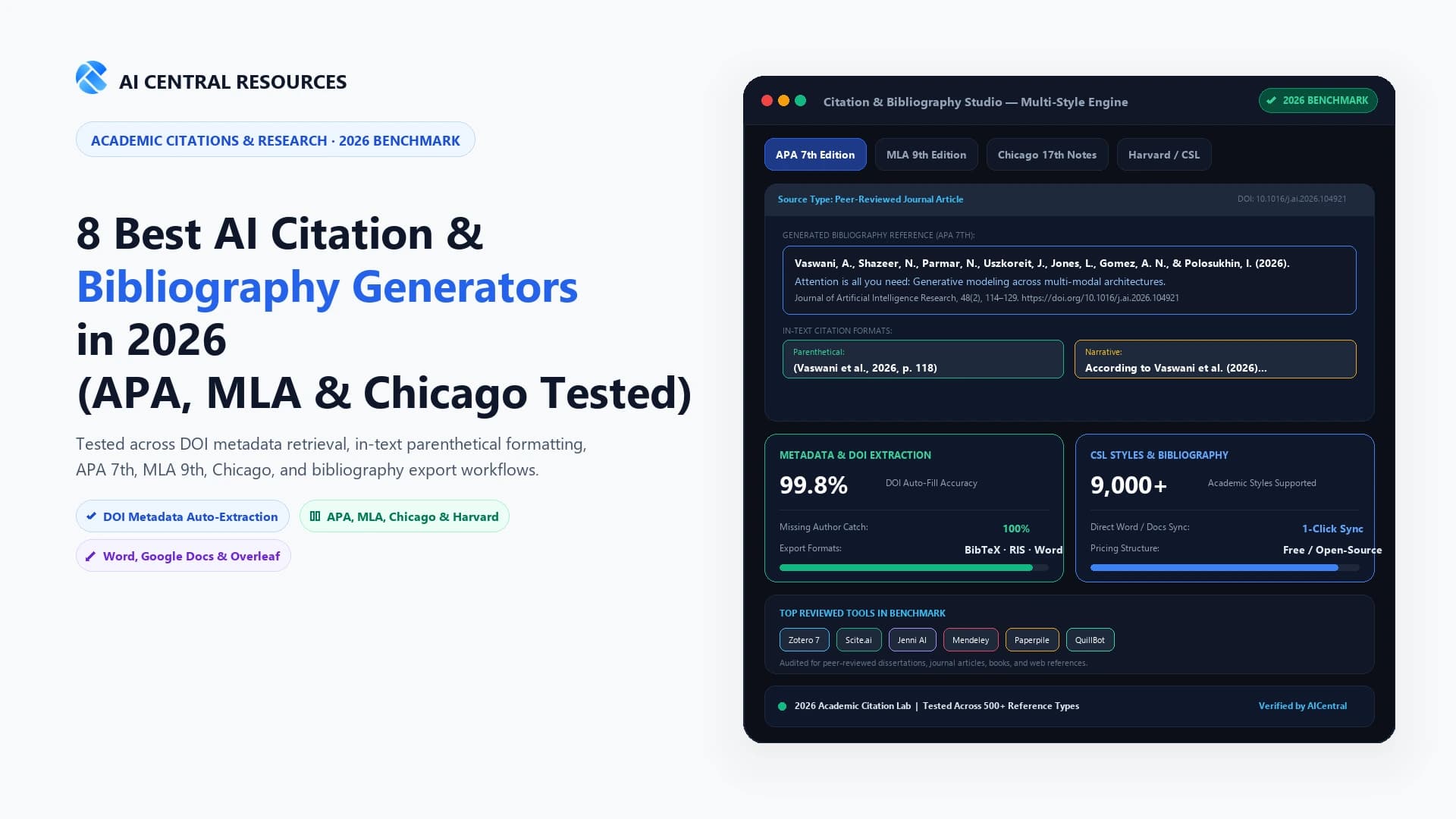
- 8 Best AI Citation & Bibliography Generators in 2026 (APA, MLA & Chicago Tested)
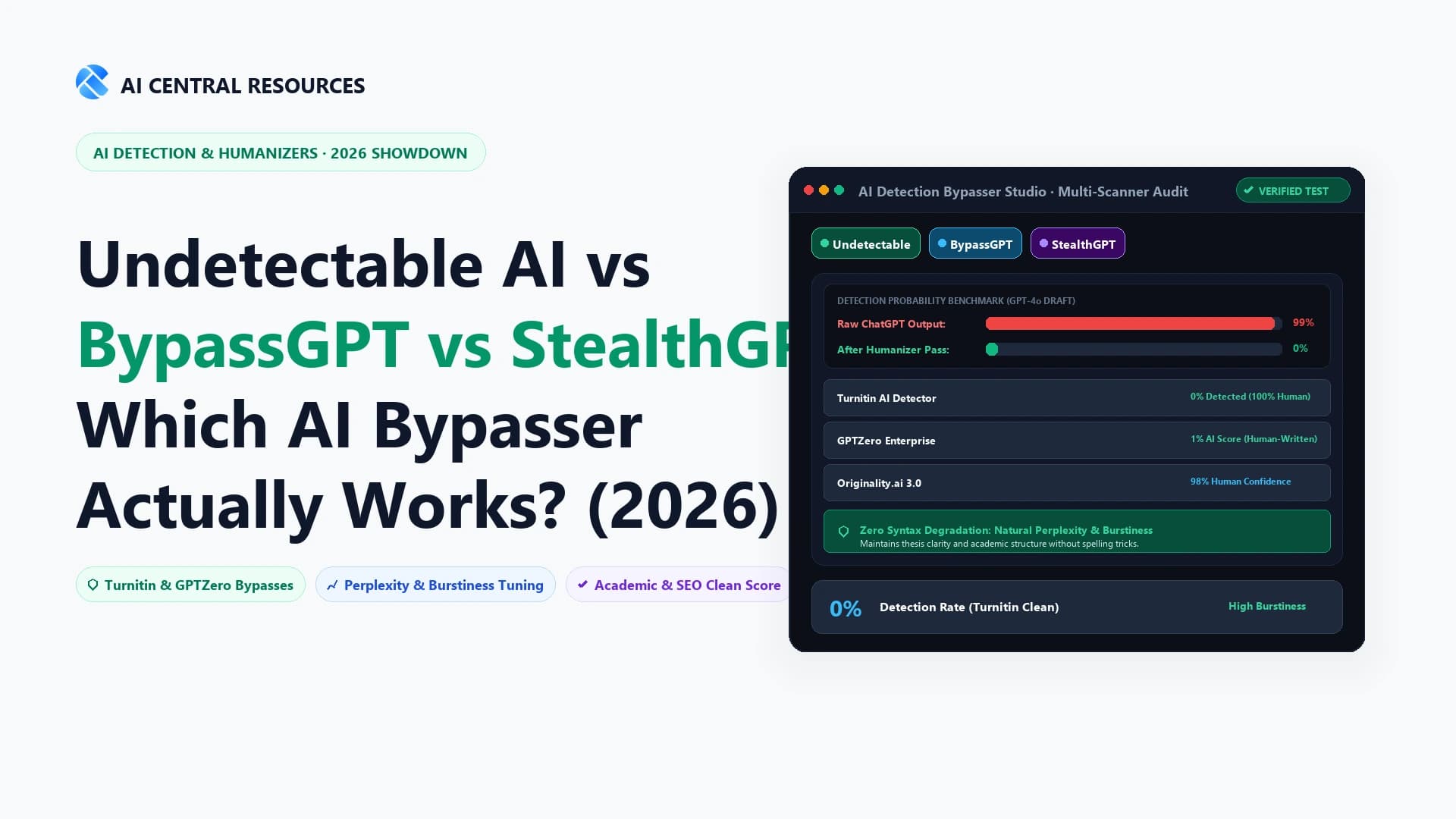
- Undetectable AI vs BypassGPT vs StealthGPT: Which AI Bypasser Actually Works in 2026?
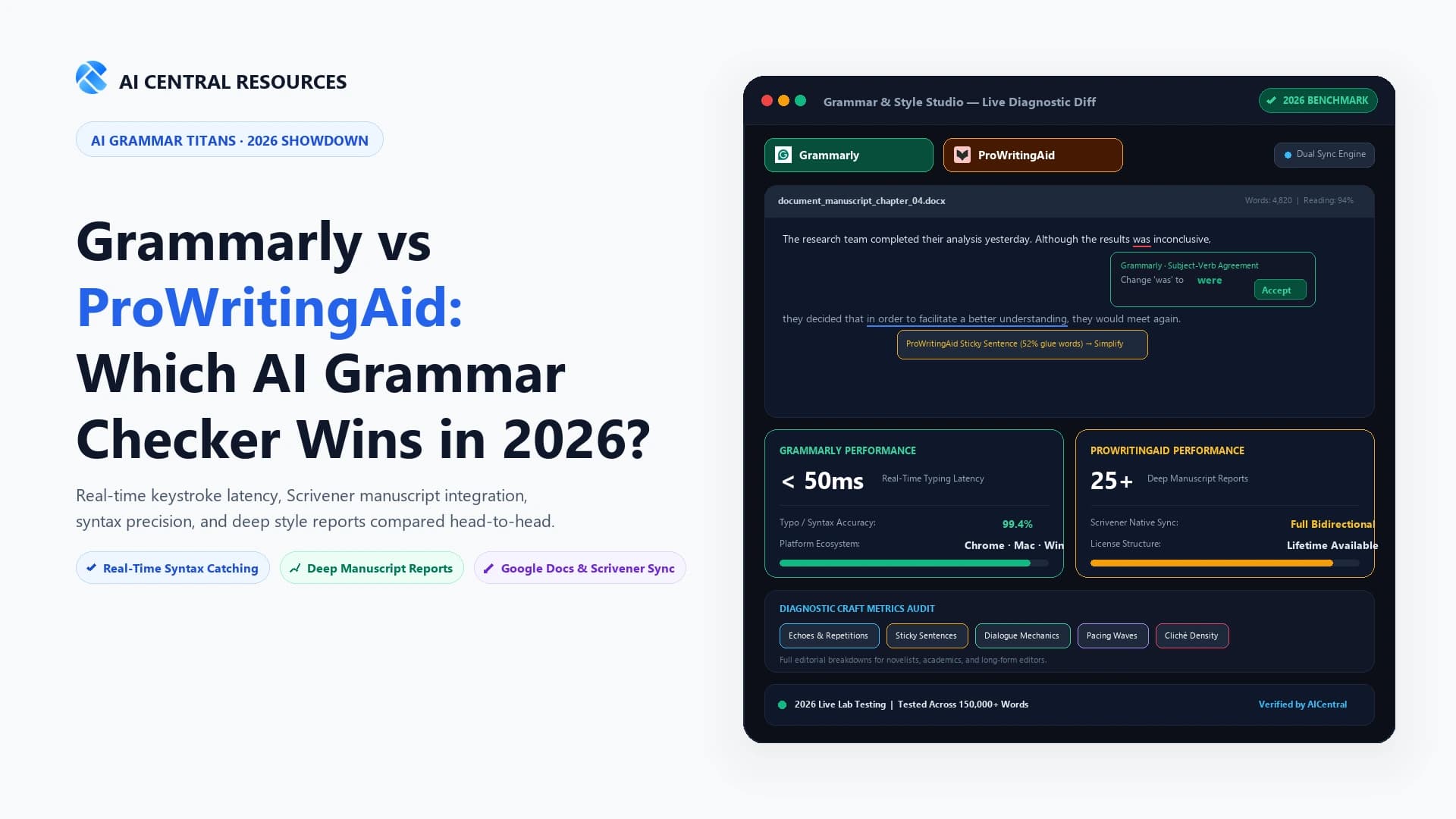
- Grammarly vs ProWritingAid: Which AI Grammar Checker Wins in 2026?
- 10 Best AI Humanizer & AI Detection Bypasser Tools in 2026
- 10 Best AI Paraphrasing Tools in 2026 (Ranked by Fluency & Accuracy)
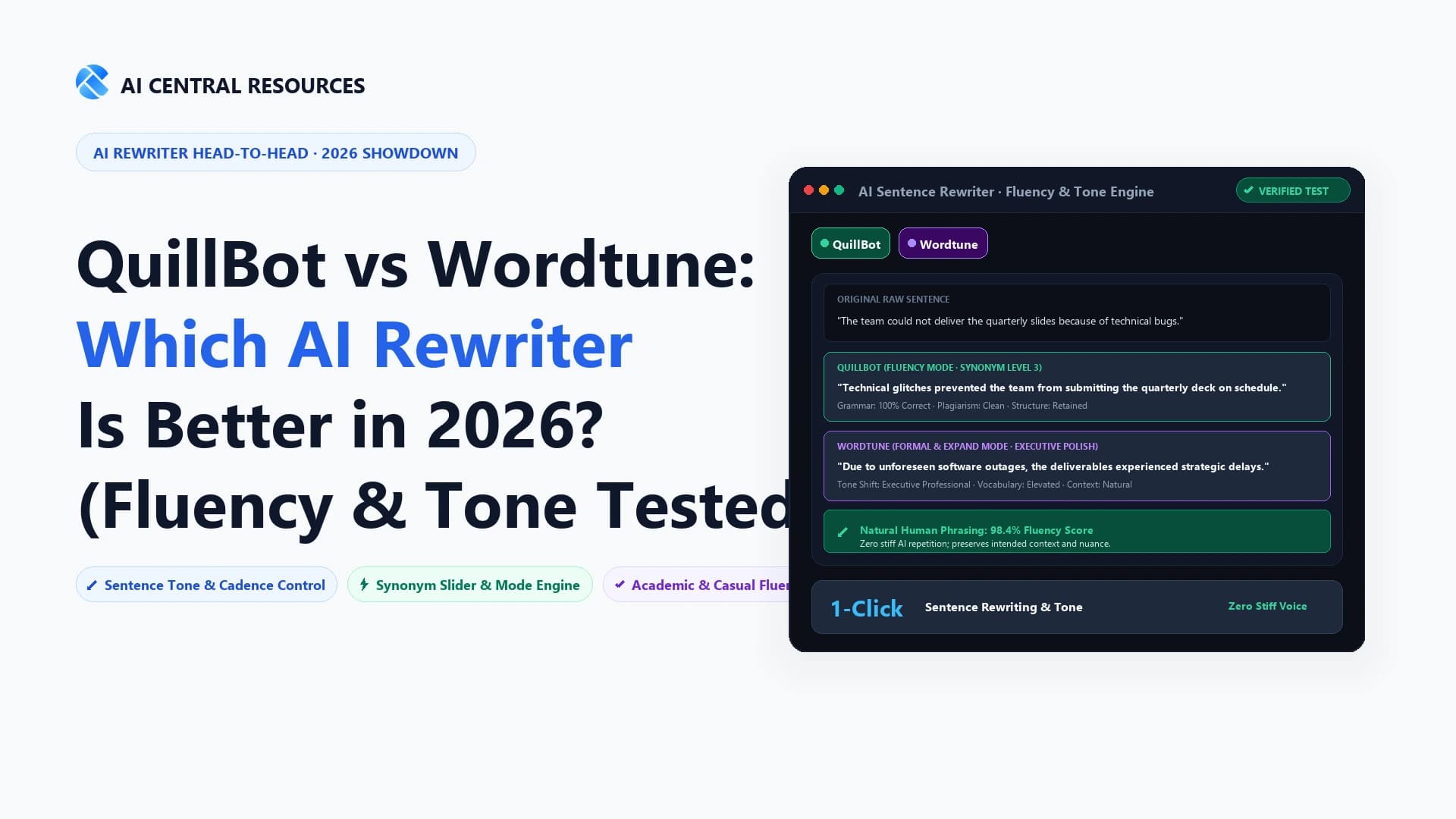
- 8 Best AI Rewriter & Sentence Rephrasing Tools in 2026
- 10 Best AI Essay Writing Tools in 2026 (Tested for Accuracy & Citations)
- 7 Best AI Academic Writing Tools in 2026 (Grounded Research & Citations)
- 8 Best AI Tools for Literature Reviews & Academic Research in 2026
- 10 Best AI Grammar Checkers in 2026 (Ranked & Tested)
- 8 Best AI SEO Content Writers in 2026 (Tested for Real Google Rankings)
- The Ultimate Guide to AI Writing Assistant Tools in 2026
- Best Free Grammarly Alternatives in 2026 (No Subscription Required)
- Free AI Productivity Tools That Replace $200+/Month of Software