For high school seniors, undergraduate scholars, graduate researchers, and lifelong learners, writing a compelling, well-argued academic essay is one of the most demanding cognitive tasks. Synthesizing disparate research papers, organizing a cohesive thesis structure, avoiding repetitive phrasing, and formatting dozens of in-text citations in APA, MLA, or Chicago format consumes dozens of hours per assignment.
However, relying on generic AI chatbots to write entire essays introduces immense academic risks: fabricated references, hollow arguments, hallucinated statistics, and severe penalties from Turnitin and institutional honor boards. In 2026, the landscape of AI essay writing tools has evolved dramatically. Today's top scholarly AI platforms act as intelligent research assistants—helping students brainstorm thesis arguments, discover verified peer-reviewed literature, rephrase complex ideas, and check for accidental plagiarism while keeping the human author in total control.
Our editorial team spent four weeks rigorously evaluating the market's leading academic writing tools across literature grounding, citation accuracy, thesis outlining capabilities, and plagiarism prevention. Below are the 10 best AI essay writing tools tested and ranked for 2026.
⚡ The 30-Second Executive Verdict: Which Essay Tool Wins?
Best Overall Essay Writing Assistant: Jenni AI is the #1 scholarly co-writer, featuring verified in-text citations (APA, MLA, Harvard), research autocomplete, and an AskJenni PDF assistant.
Best for Thesis Structuring & Deep Prose: Claude 3.5 Sonnet provides the most sophisticated literary and analytical reasoning for complex philosophical, historical, and argumentative essays.
Best for Citation Validation & Fact-Checking: Scite.ai evaluates over 1.2 billion Smart Citations to verify whether cited research claims have been supported or disputed.
Best for Paraphrasing & Sentence Polishing: QuillBot offers Academic mode paraphrasing, an APA/MLA citation generator, and a built-in grammar checker.
Best for Evidence-Based Claims & Literature: Consensus AI extracts direct consensus findings from 200M+ peer-reviewed papers to back up essay arguments.
2026 Benchmark Scorecard: Top 10 AI Essay Writing Tools
The table below compares the 10 leading essay writing assistants across citation capabilities, database grounding, primary strengths, and pricing models.
| Tool | Primary Essay Focus | Citation Support | Plagiarism Check | Starting Price | Best For |
|---|---|---|---|---|---|
| 1. Jenni AI | AI Co-Writing & Autocomplete | APA, MLA, IEEE, Harvard | Yes (Built-in) | Free / $12 / mo | 🏆 #1 Overall Essay Co-Writer |
| 2. Claude 3.5 Sonnet | Thesis Outlining & Deep Argumentation | Prompt-Driven | External | Free / $20 / mo | Complex Argumentative Essays |
| 3. Scite.ai | Smart Citations & Fact-Checking | 1.2B+ Contextual Citations | Reference Audit | $12 / mo (annual) | Citation Integrity & Source Vetting |
| 4. QuillBot | Academic Paraphrasing & Citations | APA, MLA, Chicago Generator | Yes (Premium) | Free / $4.17 / mo | Sentence Polishing & Paraphrasing |
| 5. Consensus AI | Scientific Evidence & Claims | Direct DOI / Semantic Scholar | N/A (Search) | Free / $8.99 / mo | Finding Peer-Reviewed Sources |
| 6. Paperpal | Academic Register & Style Polishing | Journal Style Guides | Yes (Prime) | Free / $9.92 / mo | Academic Vocabulary & MS Word |
| 7. ChatGPT (GPT-4o) | Brainstorming & Counter-Arguments | Web Browsing (Bing) | External | Free / $20 / mo | Brainstorming & Essay Structuring |
| 8. Trinka AI | STEM & Technical Proofreading | AMA, IEEE, APA Standards | Yes (1 Free/mo) | Free / $6.67 / mo | Scientific & Medical Terminology |
| 9. Elicit | Literature Reviews & Paper Matrices | 125M+ Paper Corpus | N/A (Extraction) | Free / $10 / mo | Systematic Literature Synthesis |
| 10. LanguageTool | Multilingual Proofreading & Privacy | 30+ Languages | N/A (Proofreading) | Free / $4.99 / mo | Multilingual Essays & Privacy |
In-Depth Reviews: The 10 Best AI Essay Writing Tools
1. Jenni AI — The Gold Standard in Scholarly Co-Writing & Live Citations
#1 Top Rated Essay AI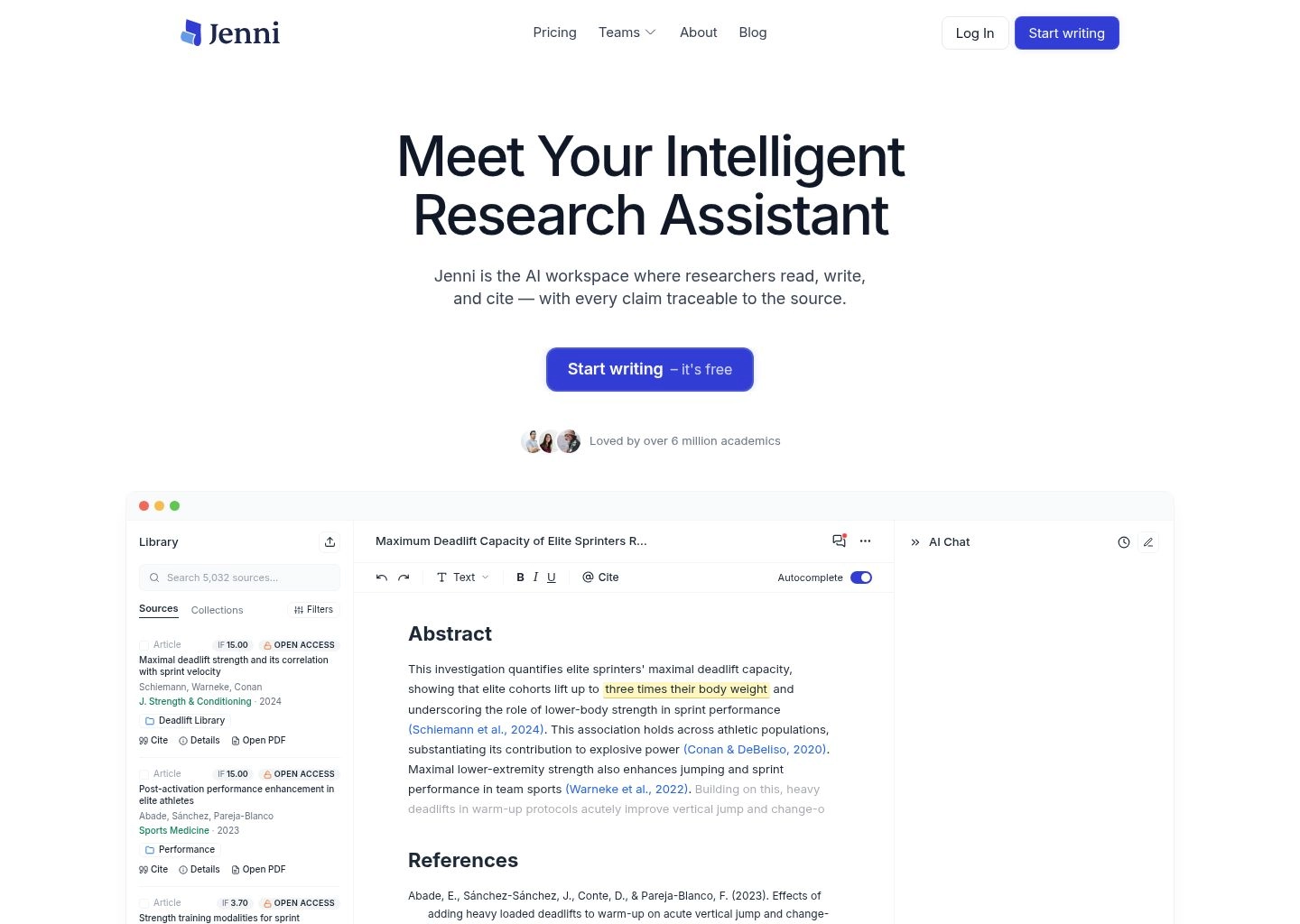
Trusted by over 4 million students and academic researchers, Jenni AI is engineered from the ground up specifically for scholarly essays, literature reviews, and research dissertations. Unlike generic chatbots that write ungrounded prose, Jenni operates as an interactive co-writer: as you type your thesis, Jenni suggests sentence-by-sentence continuations that you can accept with the right arrow key (`→`) or modify on the fly.
Jenni’s standout capability is its Automated Citation Engine. Whenever Jenni suggests a factual statement, it queries academic databases (Crossref and PubMed) to append a real, verified in-text citation in APA 7th, MLA 9th, Harvard, IEEE, or Chicago style. Users can also upload custom PDF research papers into the AskJenni Library, allowing the AI to cite directly from their course syllabus or assigned reading list.
Jenni also features built-in paraphrasing, outline generation, academic tone shifting, and an integrated plagiarism scanner that checks your completed draft against billions of web pages and published scholarly journals.
- Grounded Academic Autocomplete: Suggests context-aware sentences backed by verified peer-reviewed sources.
- Multi-Format Citation Generator: Instant in-text citations and bibliographies in APA, MLA, IEEE, and Chicago.
- AskJenni PDF Assistant: Chat directly with your uploaded PDF papers to extract arguments and quotes.
- Integrated Plagiarism Checker: Scan drafts before submission to ensure original phrasing.
Smooth, distraction-free co-writing flow; eliminates fabricated AI citations; great PDF library support.
Free tier is limited to 200 AI words per day.
Pricing & Verdict: Free tier includes 200 AI words/day. Unlimited Plan costs $12/month (billed annually at $144/year) or $20/month monthly, unlocking unlimited AI generations, PDF uploads, and plagiarism checks. The #1 recommendation for college and graduate essays.
2. Claude 3.5 Sonnet — Best for Complex Thesis Outlining & Analytical Essays
Deep Reasoning Champion
When tackling complex philosophical, historical, political, or literary essays that demand rigorous logical progression and sophisticated prose, Anthropic's Claude 3.5 Sonnet is in a league of its own. Unlike generic models that produce repetitive, formulaic five-paragraph essays, Claude excels at understanding nuanced prompt constraints and constructing complex multi-tier arguments.
Claude’s 200,000-token context window allows students to paste entire primary historical documents, multiple academic papers, or lengthy book chapters into a single prompt. Students can ask Claude to identify subtle thematic contradictions, draft counter-arguments, and structure a detailed 10-page essay outline with transitional arguments between sections.
With Claude's Artifacts UI, you can review essay outlines, introductory hooks, and body paragraph drafts side-by-side with your conversational chat window, making iterative editing seamless.
- Superior Analytical Reasoning: Constructs sophisticated thesis statements, counter-arguments, and rebuttals.
- 200K Token Context Window: Ingests full books, historical archives, and research papers for synthesis.
- Artifacts Side-by-Side Editor: Refine and polish essay sections in a dedicated interactive panel.
- Exceptional Human Fluency: Generates natural, cadence-rich prose free of typical AI clichés.
Highest quality philosophical and argumentative prose; great at identifying logical fallacies.
Does not connect to a live citation database like Jenni AI; citations must be verified manually.
Pricing & Verdict: Free access available with daily message limits. Claude Pro costs $20/month for 5x usage capacity. The ultimate tool for brainstorming, outlining, and constructing deep essay arguments.
3. Scite.ai — Best for Fact-Checking Claims & Smart Citations
Evidence Vetting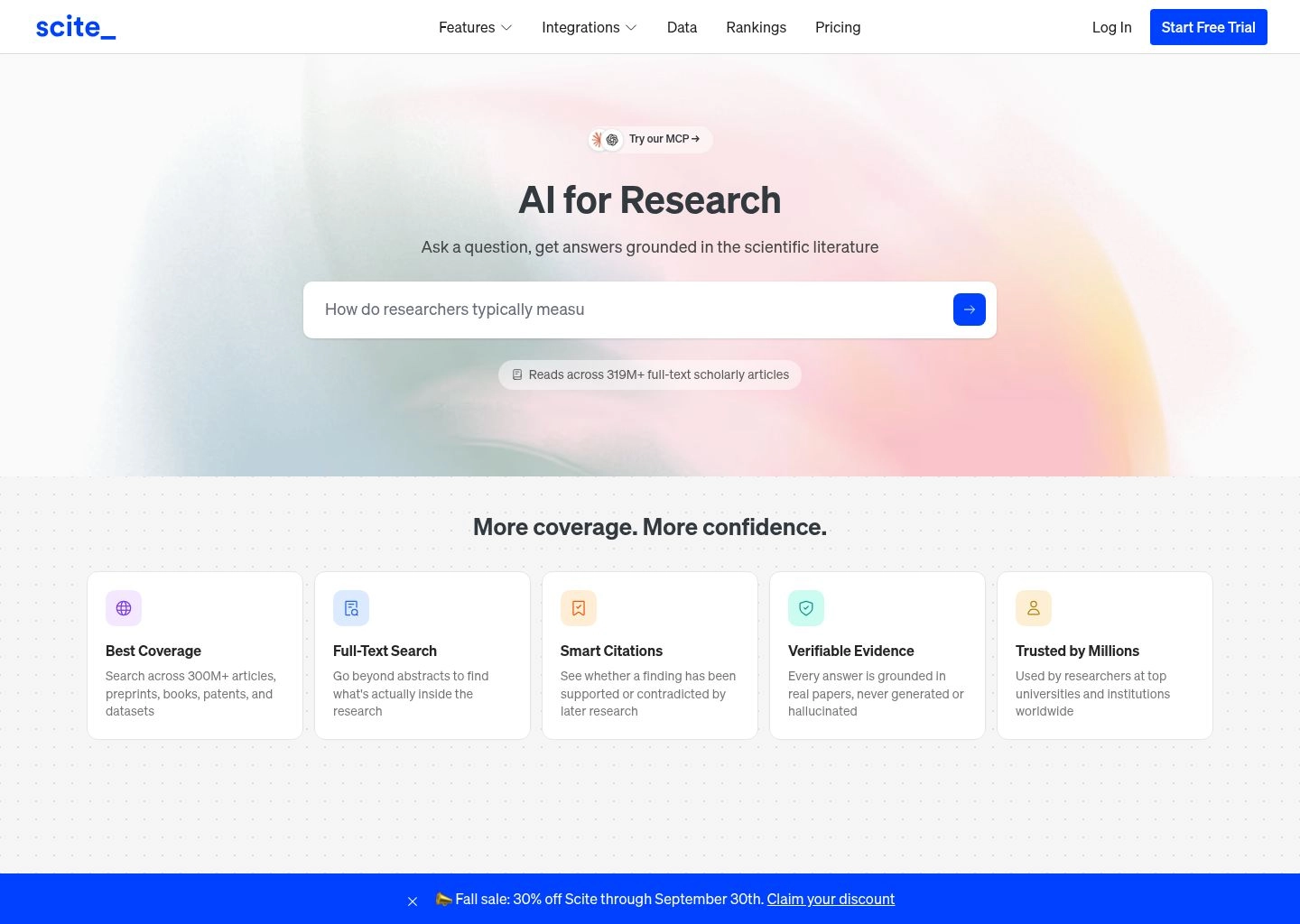
One of the most catastrophic mistakes in college essay writing is citing an outdated paper whose findings have since been debunked or retracted. Scite.ai solves this through its revolutionary Smart Citations database containing over 1.2 billion extracted citation statements.
When researching a topic for your essay, Scite classifies how subsequent researchers cited a specific study—categorizing citations into Supporting (replicated findings), Mentioning (background reference), or Contrasting (disputed evidence).
Scite's Reference Check allows you to upload your finished essay draft to scan your entire bibliography in seconds, flagging any cited sources that have been retracted, disputed, or flagged with editorial concern.
- 1.2 Billion+ Smart Citation Statements: Verify if your essay's supporting evidence is genuinely accepted by the scientific community.
- Retraction & Dispute Alerts: Automatically flags problematic, retracted, or disputed citations in your bibliography.
- Scite Assistant: Ask research questions and get answers grounded exclusively in peer-reviewed literature.
- Zotero & Mendeley Plugins: Seamlessly integrate citation validation into your reference manager.
Essential protection against citing debunked or flawed research; deep contextual citation snippets.
Focused on evidence discovery and verification rather than full-length text co-writing.
Pricing & Verdict: 7-day free trial; Individual plans cost $12/month (billed annually at $144/year) or $20/month billed monthly. An essential tool for evidence validation and rigorous research essays.
4. QuillBot — Best for Academic Paraphrasing & Free Citation Formatting
All-in-One Writing Suite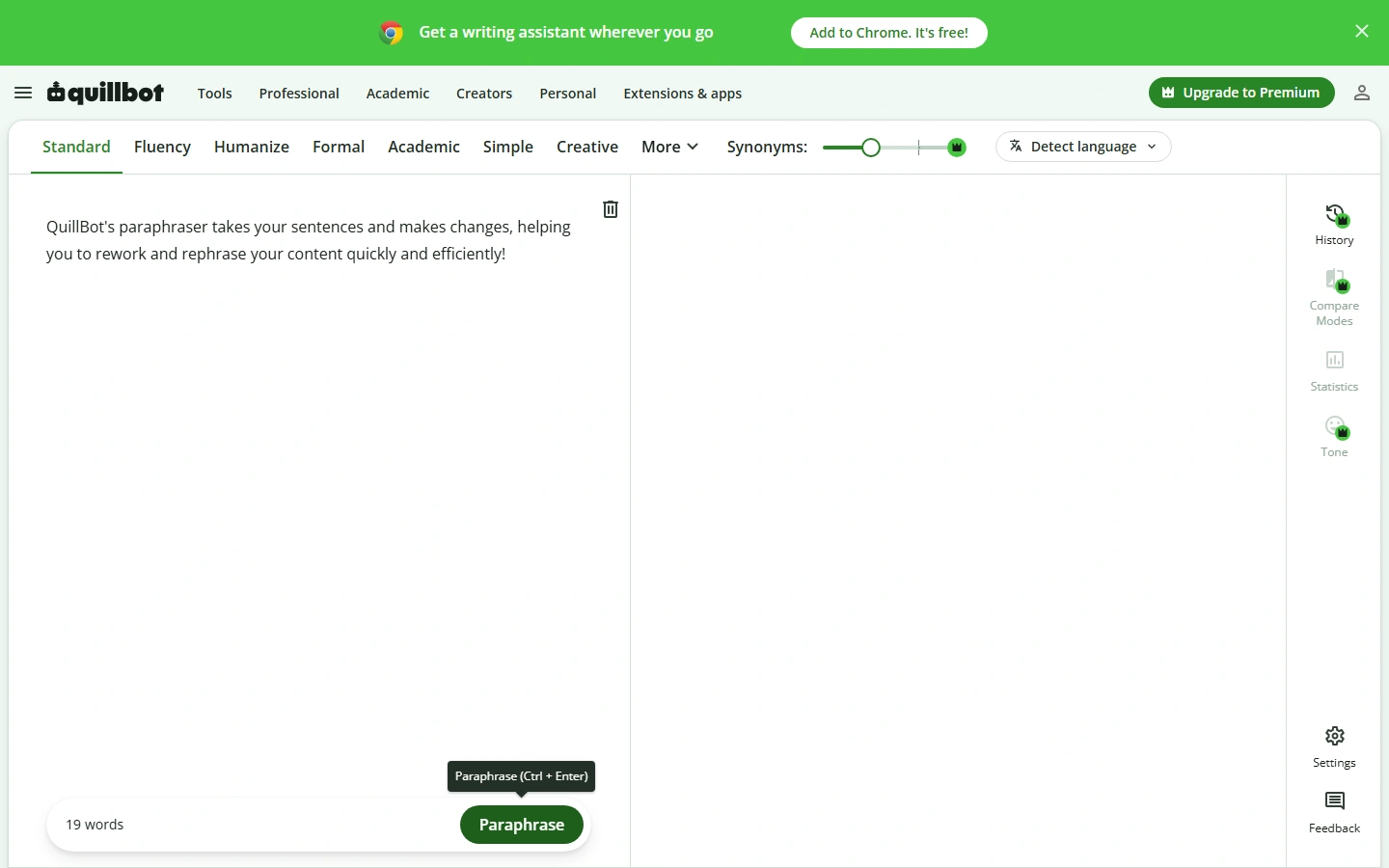
QuillBot is widely regarded as the student's ultimate companion for essay drafting, sentence polishing, and bibliography formatting.
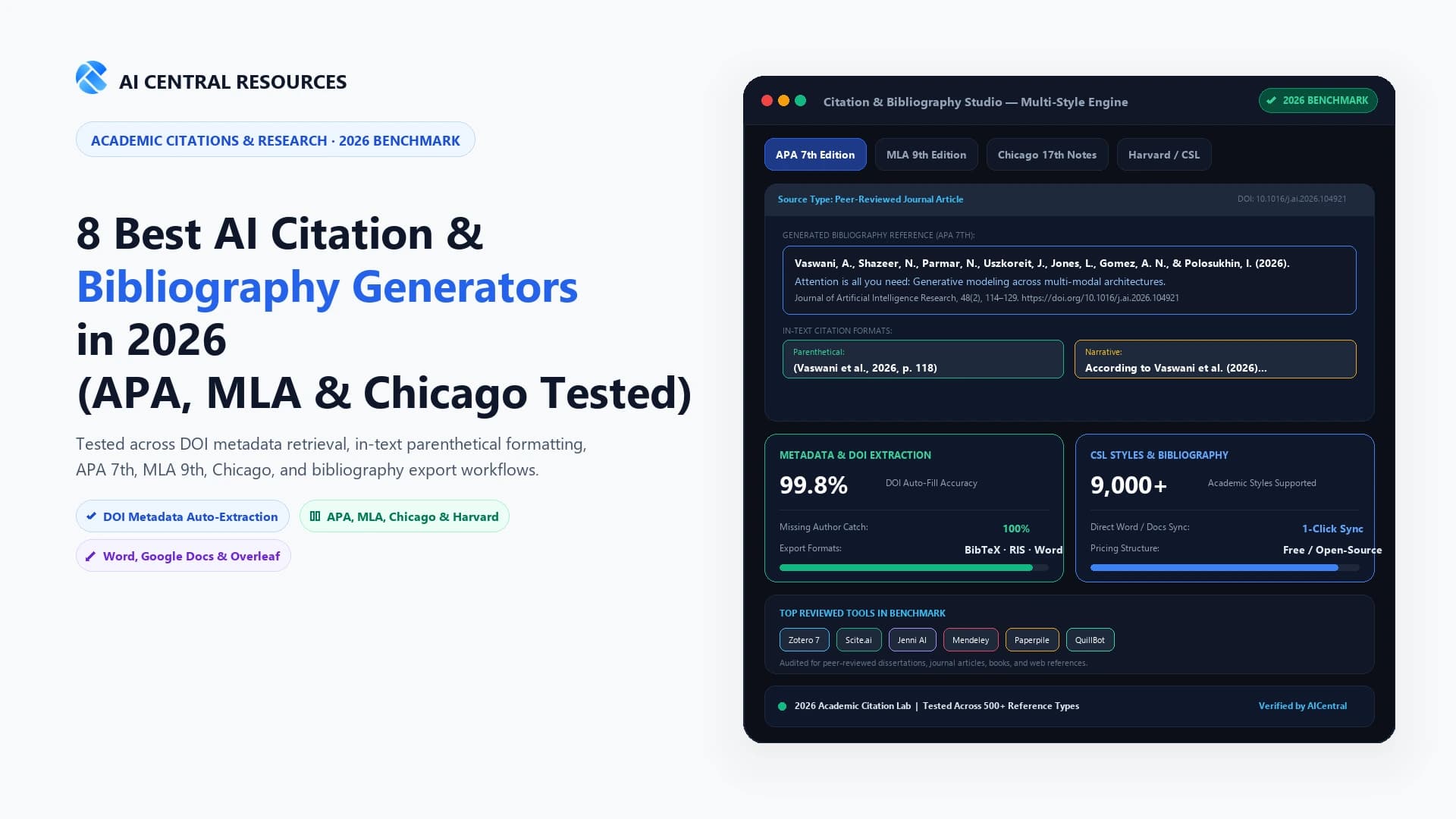
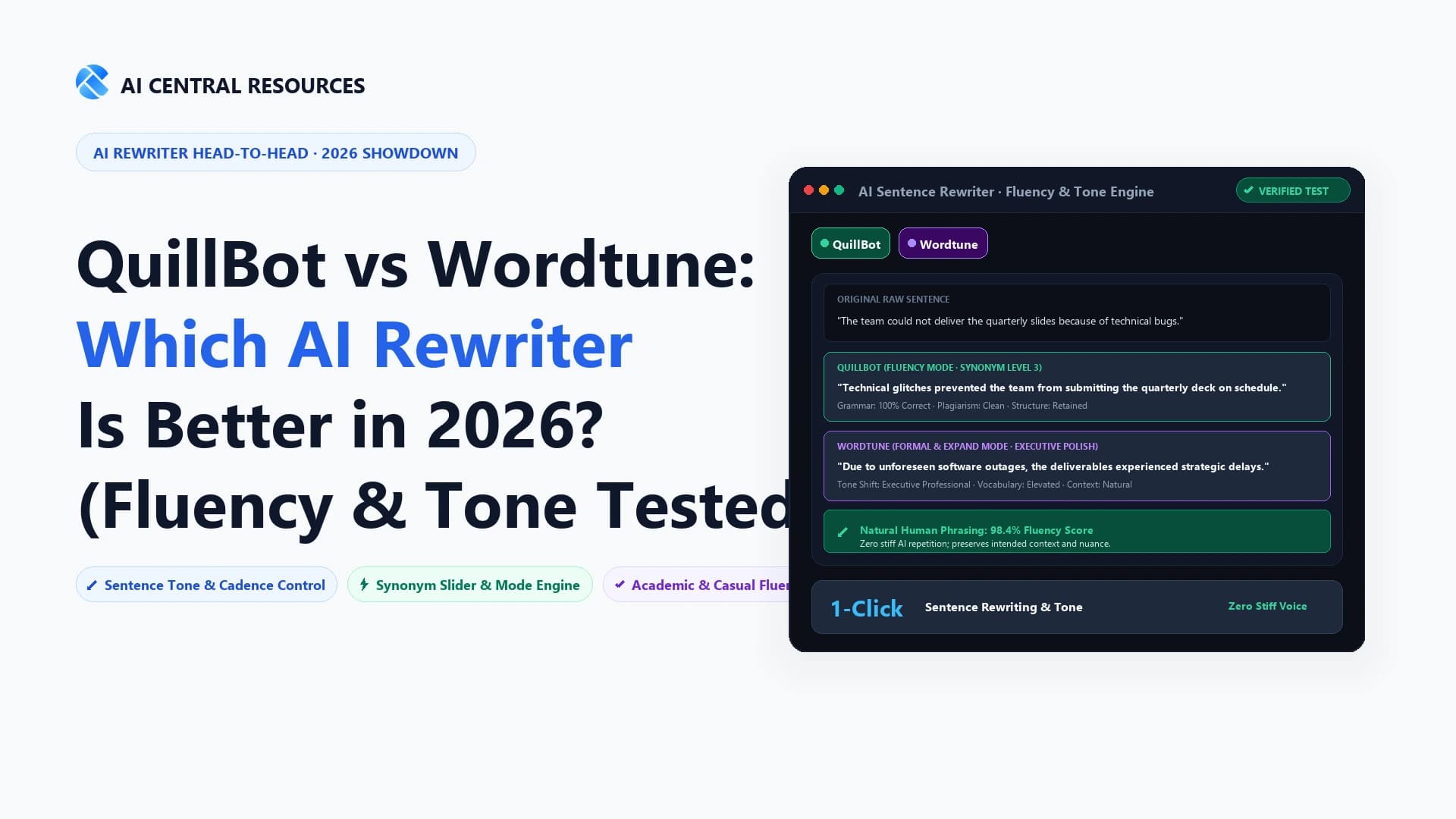
QuillBot's Academic Paraphrasing Mode is specifically trained to replace casual expressions with precise scholarly terminology, restructure passive sentences, and ensure optimal academic tone. Furthermore, QuillBot’s Free Citation Generator allows students to paste a book title, website URL, or DOI to automatically generate perfectly formatted references in APA, MLA, Chicago, and Harvard formats with zero ads or paywalls.
QuillBot also includes a Summarizer to distill lengthy research PDFs into key bullet points and a Grammar Checker that provides unlimited free proofreading.
- Academic Paraphrasing Mode: Restructures sentences to match scholarly tone and eliminate colloquialisms.
- Free Universal Citation Generator: Flawlessly format references in APA, MLA, Harvard, and Chicago.
- AI Text Summarizer: Extract key arguments and statistics from dense research papers.
- Unlimited Free Grammar Checking: Catch spelling and punctuation errors with zero word caps.
Exceptional value for students ($4.17/mo); outstanding citation generator; easy to use.
Free paraphraser is capped at 125 words per submission.
Pricing & Verdict: Generous free plan with unlimited grammar. QuillBot Premium costs $4.17/month (billed annually at $49.95/year) or $9.95/month monthly. The best budget-friendly writing companion for every student.
5. Consensus AI — Best for Finding Peer-Reviewed Evidence & Study Consensus
Consensus Meter AI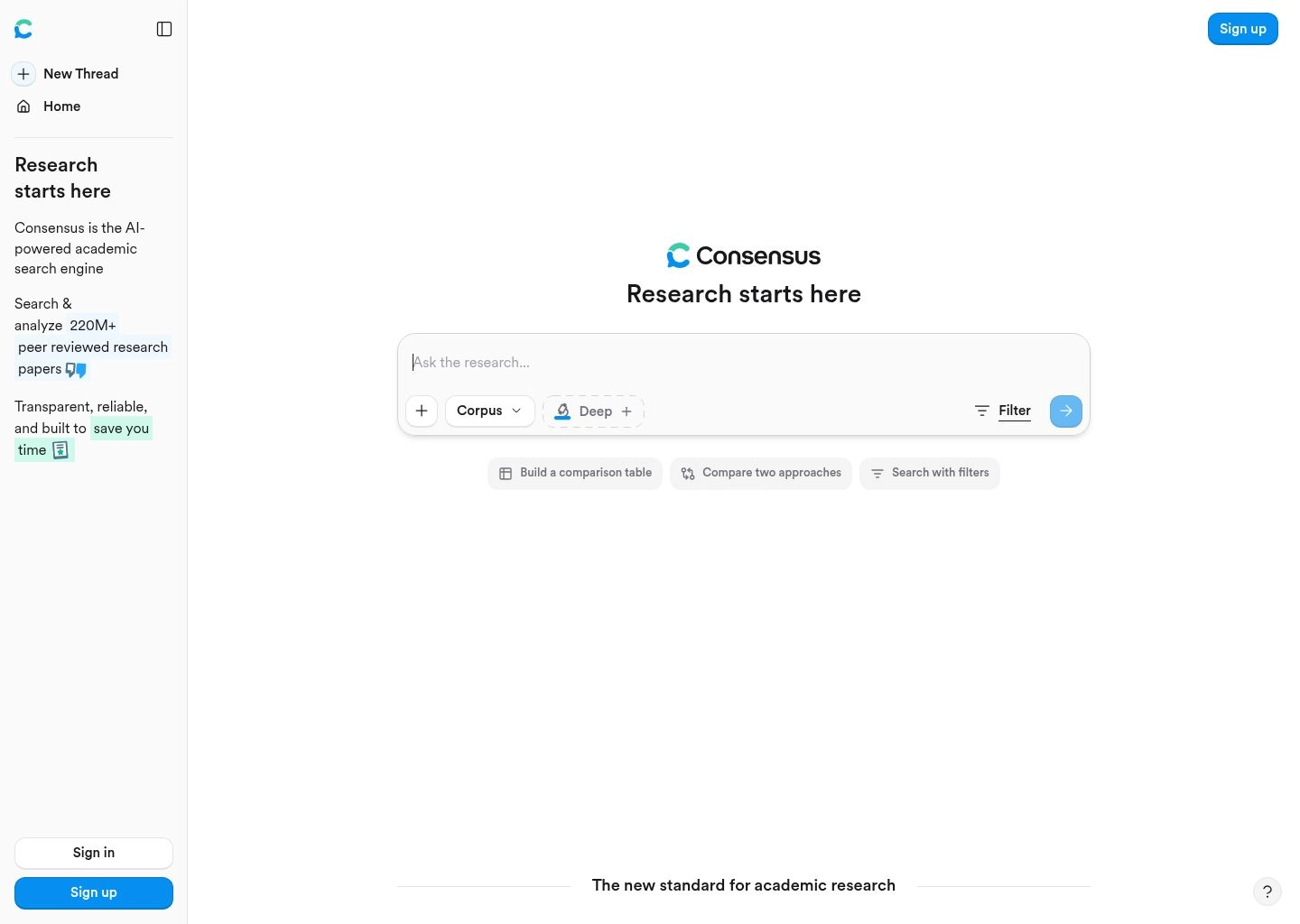
When writing an argumentative or analytical essay, you cannot simply make bold assertions without backing them up with empirical evidence. Consensus AI is a specialized academic search engine that extracts findings directly from over 200 million peer-reviewed papers cataloged in Semantic Scholar.
When you ask a research question (e.g., "Does social media usage cause depression in adolescents?"), Consensus generates a Consensus Meter summarizing the scientific consensus across dozens of studies (e.g., 78% Yes, 14% Possibly, 8% No).
Each extracted finding is accompanied by study quality badges (Sample Size, RCT vs. Observational Study, SJR Journal Rank) and a one-click citation copy button, making it effortless to ground your essay arguments in credible science.
- 200M+ Peer-Reviewed Papers: Direct search across Semantic Scholar and Crossref.
- Automated Consensus Meter: Visual breakdown of scientific agreement across published studies.
- Study Quality Indicators: Instantly displays study methodology, sample size, and journal ranking.
- Copilot Synthesis: Generates concise literature summaries with direct DOI citations.
Saves hours of manual Google Scholar searching; eliminates the risk of cherry-picking weak studies.
Primarily analyzes study abstracts rather than deep full-text data tables.
Pricing & Verdict: Free tier includes unlimited basic searches. Premium Plan is $8.99/month (billed annually at $107.88/year) or $11.99/month monthly with unlimited Copilot searches. The best tool for finding credible evidence for essay claims.
6. Paperpal — Best for Academic Vocabulary & Manuscript Polishing
Academic Vocabulary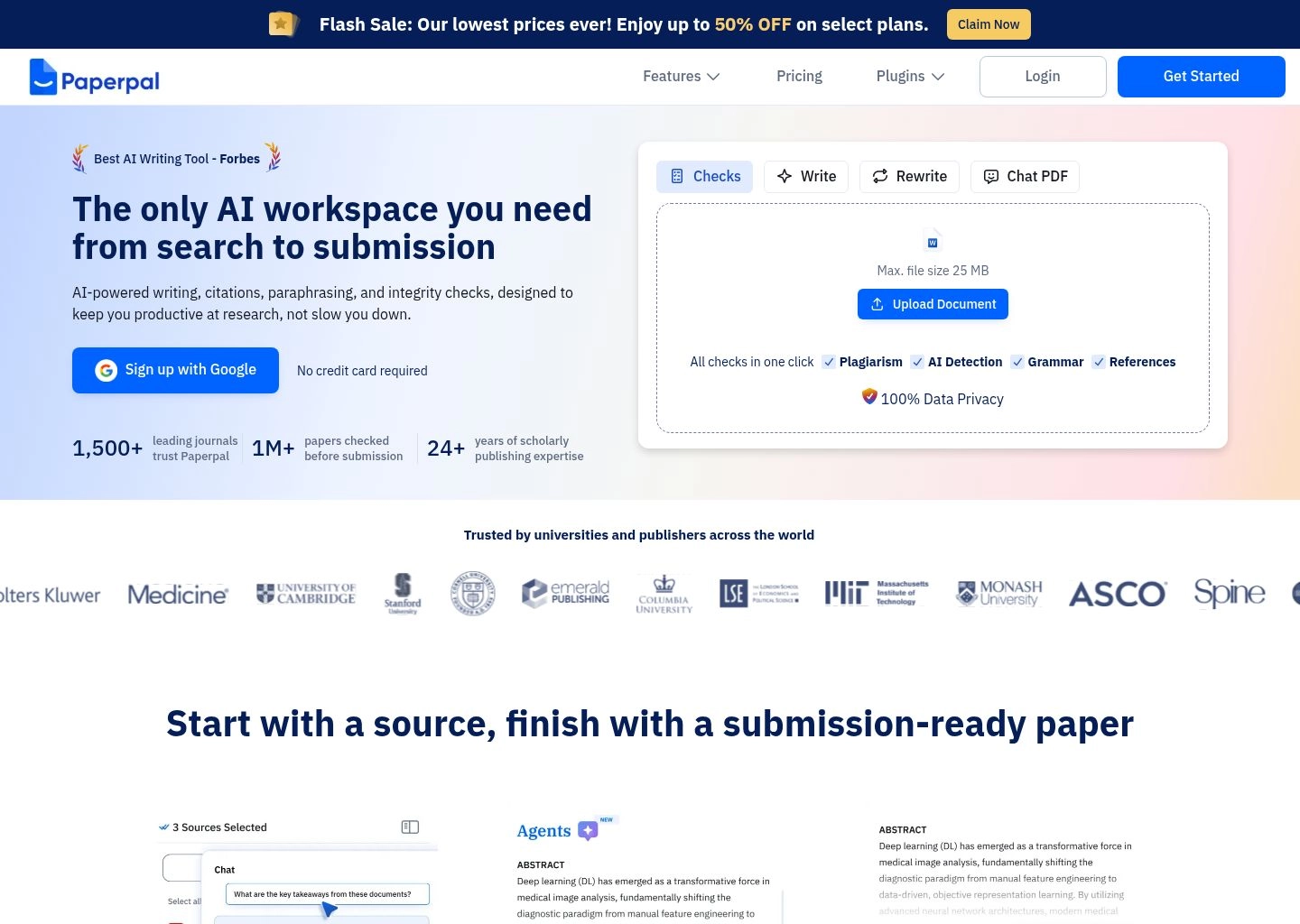
Developed by Cactus Communications (parent of Editage), Paperpal is trained on millions of published peer-reviewed manuscripts. It is tailored specifically for students and ESL researchers who want their essays to sound sophisticated and scholarly.
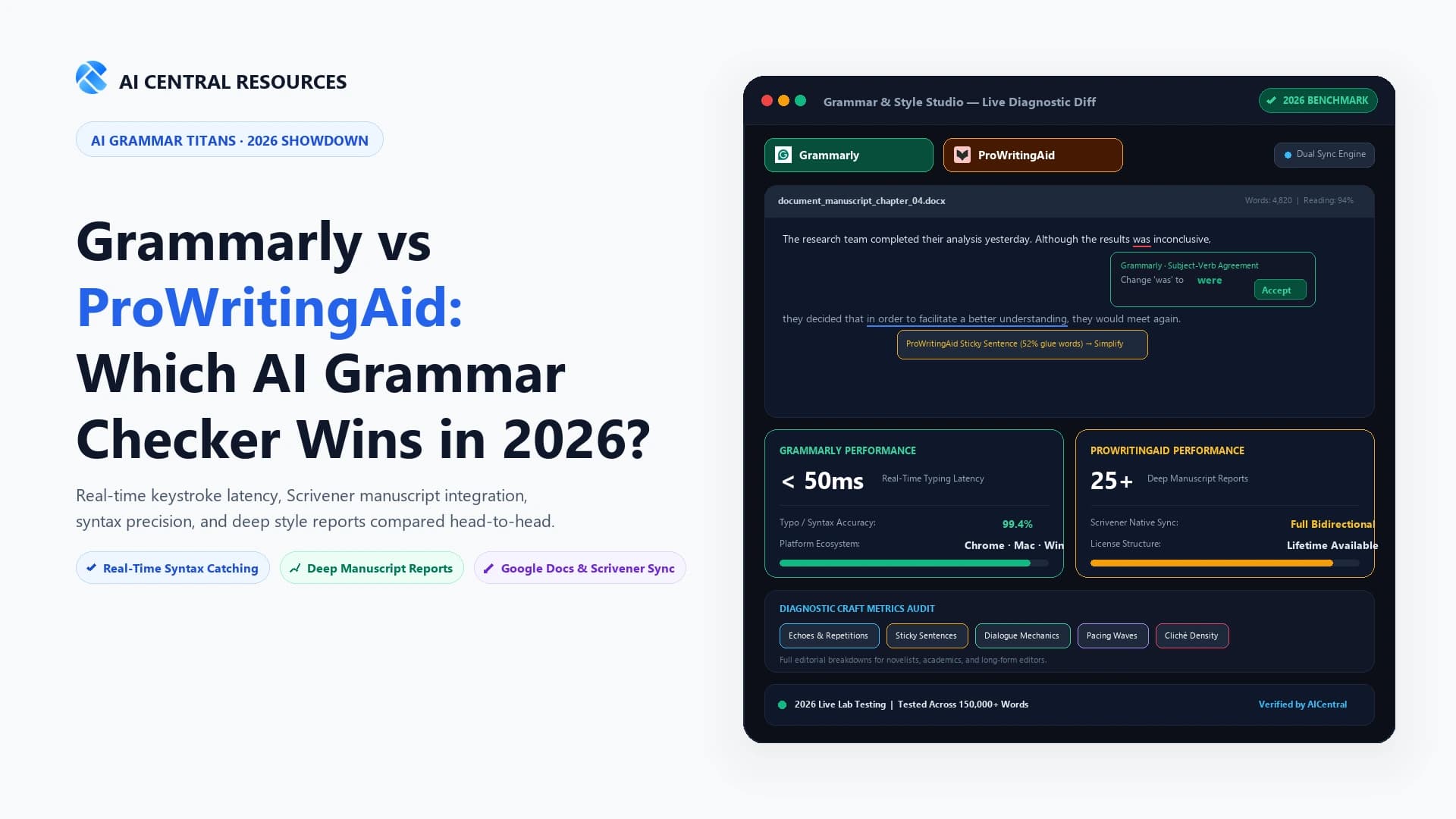
Paperpal integrates directly into Microsoft Word desktop, Word Online, and web browsers. It analyzes your prose for academic tone, flagging informal phrasing (e.g., suggesting "exhibits a significant increase" instead of "goes up a lot") and ensuring consistent technical terminology.
- Trained on 10M+ Research Papers: Real-time academic vocabulary enhancement.
- MS Word & Web Add-in: Seamless inline editing directly in Word documents.
- Pre-Submission Technical Checks: Verifies reference formatting, word counts, and structure.
Exceptional for ESL authors; great Word integration; sophisticated academic vocabulary suggestions.
Full plagiarism checks require Prime credits.
Pricing & Verdict: Free tier (200 suggestions/month). Paperpal Prime is $19/month or $119/year (~$9.92/mo) with unlimited checks. The best tool for elevating essay vocabulary.
7. ChatGPT (GPT-4o) — Best for Socratic Brainstorming & Counter-Arguments
Brainstorming Leader
OpenAI's ChatGPT (powered by GPT-4o) is an extraordinary conversational sparring partner for the pre-writing phase of essay composition.
Students can prompt ChatGPT: "Act as a critical university professor. I am writing an argumentative essay arguing that nuclear energy is essential for carbon neutrality. Challenge my assumptions with the three strongest counter-arguments and suggest historical case studies I should address." In seconds, ChatGPT provides a rigorous Socratic breakdown of opposing viewpoints, helping you bulletproof your thesis before drafting.
- Socratic Brainstorming: Challenge assumptions, identify logical fallacies, and develop strong rebuttals.
- Live Web Browsing: Queries the internet to find recent news articles and historical context.
- Voice Mode Brainstorming: Talk through your essay ideas out loud with natural voice dialogue.
Incredible brainstorming partner; fast ideation; great at role-playing opposing viewpoints.
Will hallucinate academic citations if asked for sources without web browsing active.
Pricing & Verdict: Free tier with GPT-4o mini; ChatGPT Plus is $20/month. Best used for idea generation, thesis outlining, and counter-argument discovery.
8. Trinka AI — Best for Scientific, Medical & Engineering Essays
STEM Essay Specialist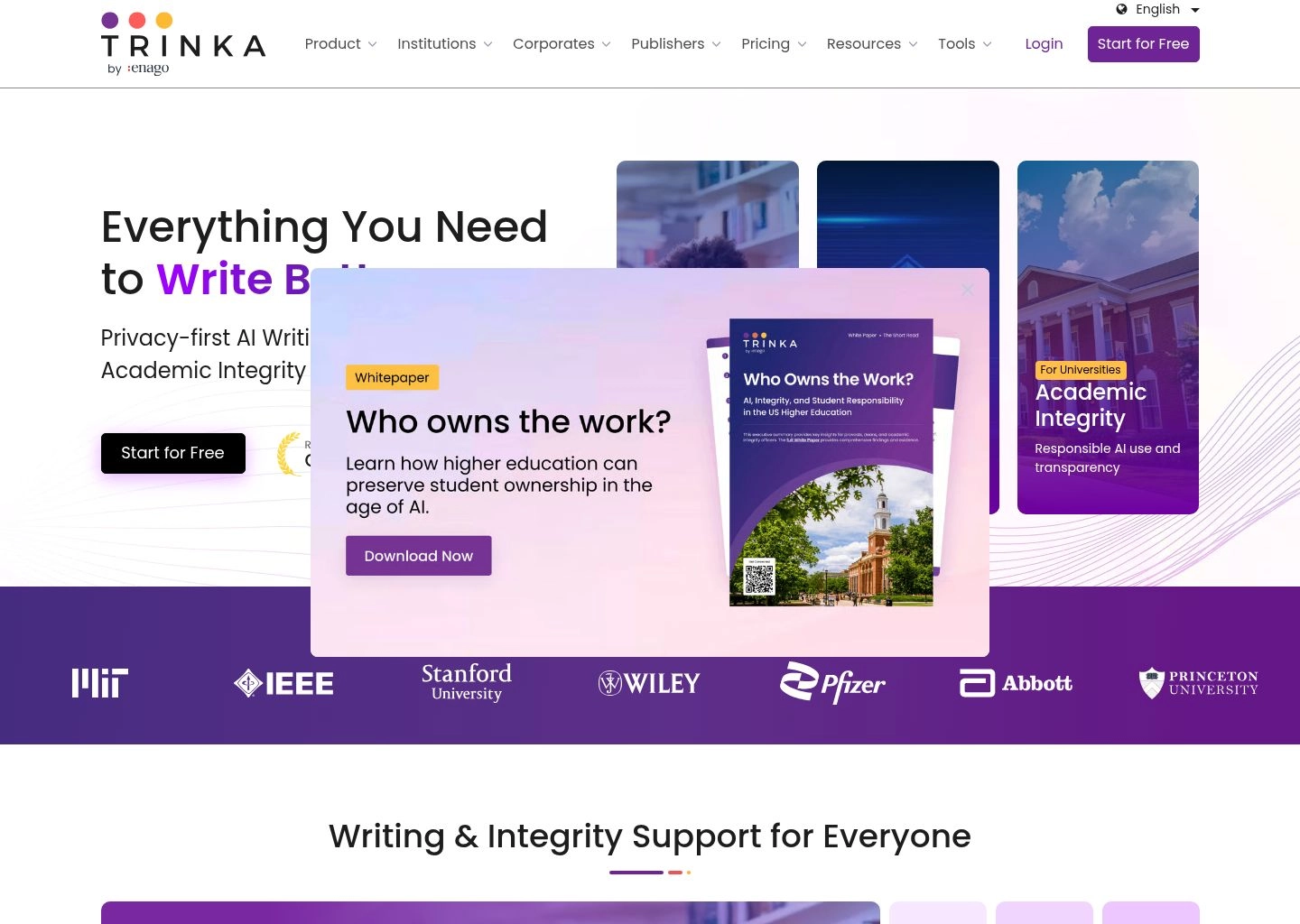
For students writing essays in biology, chemistry, nursing, medicine, or engineering, standard spellcheckers constantly flag technical jargon and equations as errors. Trinka AI features deep subject-matter vocabularies spanning over 1,300 technical disciplines, ensuring your STEM terminology, unit symbols, and formulas are checked with total accuracy.
- 1,300+ STEM Disciplines: Flawless handling of medical, engineering, and biochemical terminology.
- Style Guide Compliance: Formats essays to AMA, APA 7, IEEE, and Nature standards.
- 10,000 Free Words/Month: Generous free allowance for student essays.
The most reliable grammar checker for STEM essays; generous free tier.
Interface is strictly technical rather than creative.
Pricing & Verdict: Free Basic tier (10,000 words/mo). Premium Plan starts at $6.67/month (billed annually at $80/year). The top choice for STEM and healthcare students.
9. Elicit — Best for Literature Reviews & Systematic Evidence Matrices
Literature Synthesis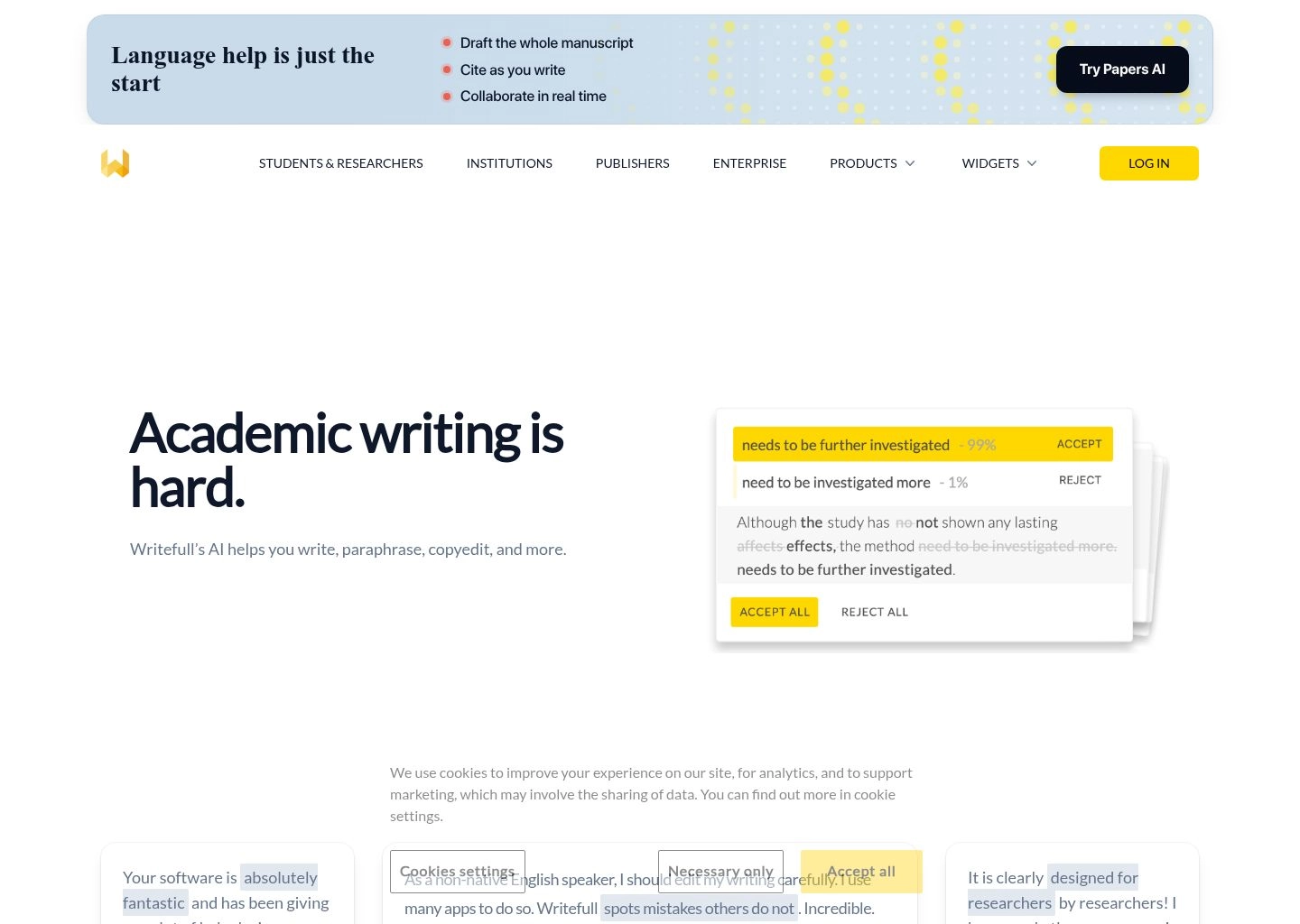
When writing a comprehensive literature review essay, Elicit automates the tedious process of screening papers and organizing evidence. Indexing 125M+ research papers, Elicit extracts study methodologies, sample sizes, and primary outcomes into a structured comparison matrix, allowing you to synthesize multiple studies in minutes.
- Automated Comparison Tables: Compare findings across dozens of studies in a custom matrix.
- Upload Private PDFs: Analyze assigned class readings and course literature.
- Direct Export to Reference Managers: Export data to Zotero, BibTeX, and Excel.
Saves dozens of hours on literature review essays; links directly to source paragraphs.
Not an inline writing assistant.
Pricing & Verdict: Free tier with 5,000 credits. Plus Plan is $10/month (billed annually at $120/year). The premier tool for literature review synthesis.
10. LanguageTool — Best for Multilingual Essays & Open-Source Privacy
Multilingual Proofreader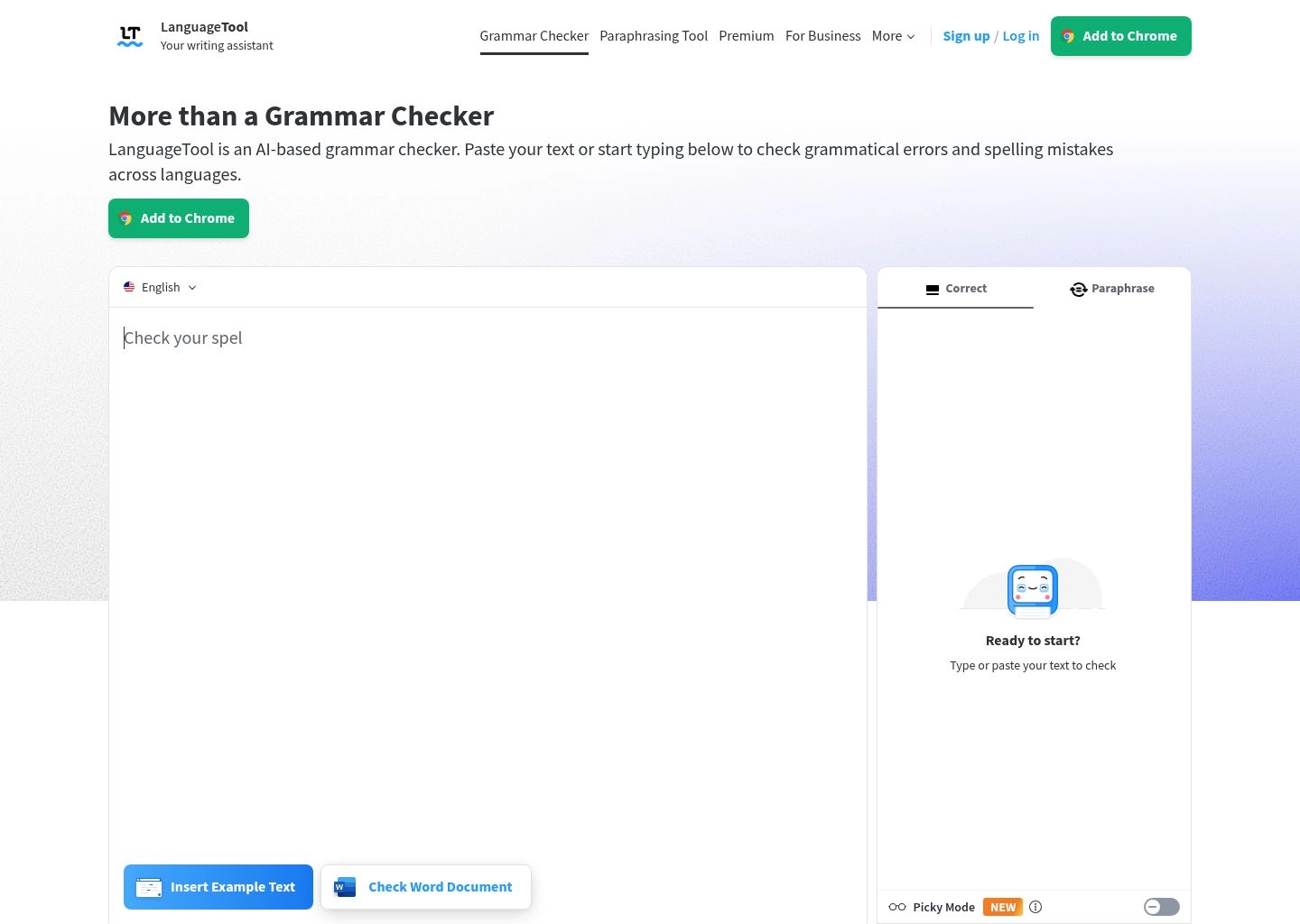
If you are writing foreign language essays (Spanish, French, German, Portuguese) or value privacy when drafting sensitive essays, LanguageTool is the best choice. It provides 10,000 characters free per check and can be self-hosted locally on private hardware.
- 30+ Languages: Dedicated grammar checking for German, Spanish, French, etc.
- 10,000 Chars Free: Generous free tier with no login required.
- Privacy First: Open-source engine with zero tracking.
Best multilingual essay checker; reliable open-source foundation.
Advanced style rephrasing requires Premium ($4.99/mo).
Pricing & Verdict: Free tier available. Premium Plan is $4.99/month (billed annually at $59.90/year). The top tool for foreign language essays.
Academic Integrity: How to Use AI Essay Tools Ethically
To avoid honor code violations and penalties from AI detection software (such as Turnitin), follow these 4 golden rules of academic AI usage:
1. Use AI for Brainstorming & Outlining, Never for Full Generation
Use tools like Claude 3.5 Sonnet or ChatGPT to structure your arguments and test counter-claims, but write the actual prose in your own voice.
2. Verify Every Citation in a Scholarly Database
Never paste an ungrounded citation from a chatbot. Use Jenni AI, Consensus AI, or Scite.ai to confirm the DOI and verify that the cited paper actually supports your claim.
3. Check Institutional AI Policies
Review your course syllabus regarding permitted AI assistance. Many professors welcome AI for grammar checking and literature discovery, but strictly ban generative drafting.
Frequently Asked Questions (FAQ)
Can Turnitin detect if I used an AI essay tool?
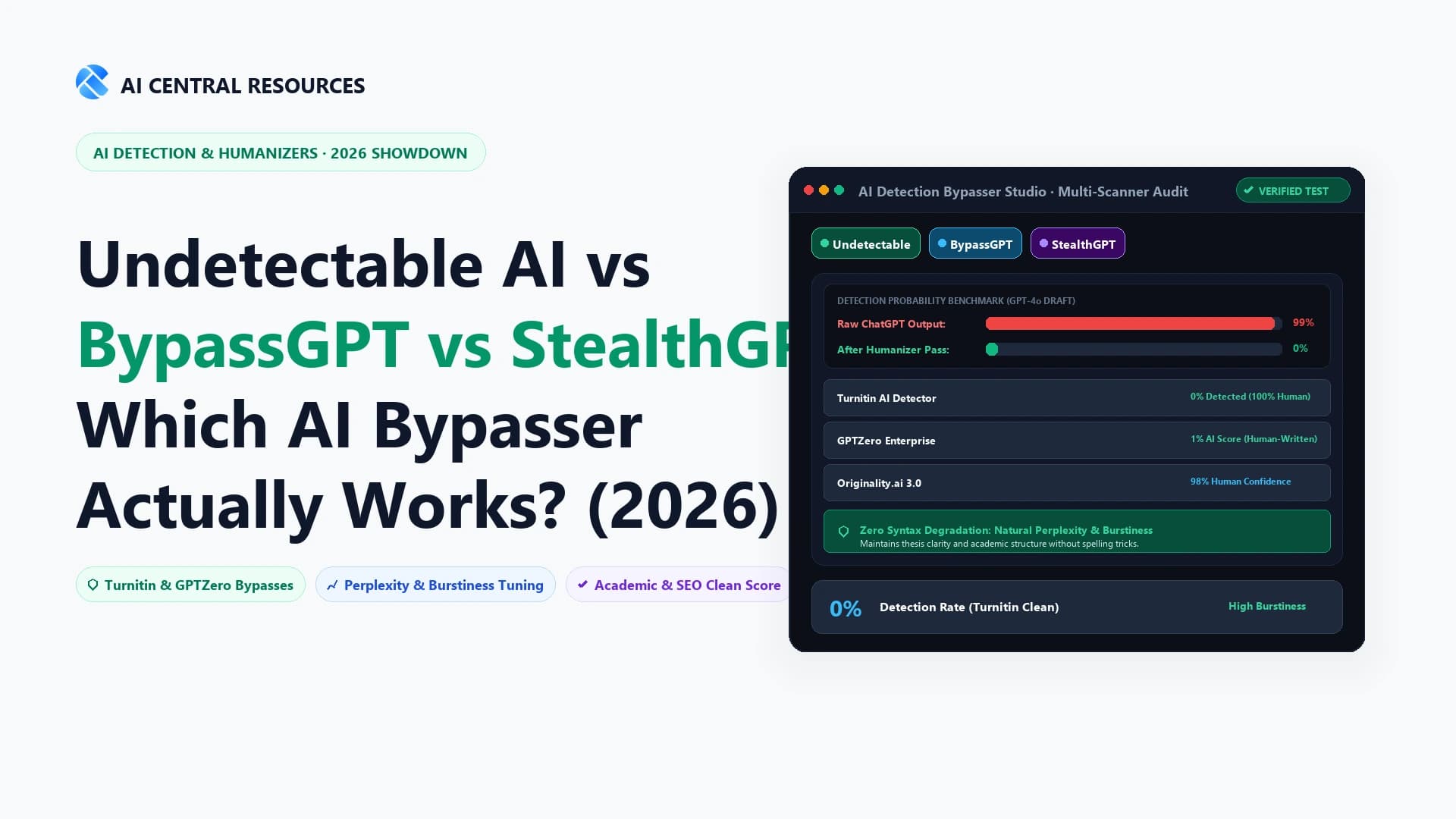
Turnitin uses statistical AI detectors that look for repetitive sentence perplexity and burstiness typical of raw chatbot output. If you use AI to generate entire paragraphs verbatim, it will likely be flagged. However, using tools like Jenni AI or Paperpal to co-write, refine grammar, and format citations will reflect natural human academic writing.
What is the best free AI tool for essay citations?
QuillBot offers a 100% free citation generator that automatically formats APA, MLA, Harvard, and Chicago citations from DOIs, URLs, and book titles with zero paywalls.
Is Jenni AI better than ChatGPT for academic essays?
Yes, for drafting and referencing. Jenni AI directly connects to live scholarly databases (Crossref and PubMed), preventing fake citations and allowing you to cite your uploaded PDF reading library.
Explore our Ultimate Guide to AI Writing Assistants, check our detailed 7 Best AI Academic Writing Tools guide, read our QuillBot vs Grammarly vs Wordtune Comparison, or browse the AI Writing Category for more software reviews.