If you have ever shared a booking link with five different clients on a Monday morning only to find your Thursday afternoon chopped into three awkward 20-minute fragments with zero time left to actually write code or prepare a pitch deck, you already know the central paradox of modern scheduling: making it frictionless for others to book time on your calendar almost always makes it impossible for you to protect your own.
For nearly a decade, Calendly has been the undisputed king of the booking link. It eliminated the exhausting "what time works for you?" email ping-pong, standardized automated reminders, and gave revenue teams sophisticated round-robin lead routing. But Calendly operates on a simple, passive assumption: if a slot on your calendar is empty, it is available for anyone to claim.
Reclaim.ai represents an entirely different scheduling philosophy. Rather than acting as an open reception desk for external visitors, Reclaim is an autonomous internal calendar bodyguard. It treats your calendar as a scarce, dynamic resource—automatically defending habits (like lunch, decompression, and daily planning), pulling assigned sprint tickets directly from tools like Linear and Todoist into flexible time blocks, and dynamically locking focus time when your week starts compressing.
Both tools now offer booking links. Both tools integrate with Google Calendar and Google Meet. But they solve two fundamentally different problems. In this hands-on 2026 comparison, we break down their internal scheduling engines, task synchronization, team routing capabilities, pricing gotchas, and how to choose the right setup for your workflow.
The Quick Answer: Calendly remains the gold standard for outward-facing inbound sales, qualification routing forms, and multi-rep round-robin scheduling. Reclaim.ai is the undisputed champion for inward-facing calendar defense, autonomously protecting habits (lunch, decompression), pulling sprint tickets from Linear/Asana into dynamic focus blocks, and syncing personal and work calendars. For high-volume operators, a hybrid setup (Calendly for external booking + Reclaim for internal defense) delivers the highest productivity.
Head-to-Head Comparison: Reclaim.ai vs. Calendly at a Glance
While marketing pages blur the lines between "scheduling automation" and "calendar management," their underlying technical architectures diverge significantly:
| Feature / Dimension | Reclaim.ai | Calendly | Winner / Advantage |
|---|---|---|---|
| Primary Core Architecture | Internal AI Calendar Defense & Dynamic Task Blocking | External Client Booking Link & Inbound Lead Routing | Tie (Different Purposes) |
| Calendar Logic | Dynamic "Free/Busy" Flipping (Adapts as week compresses) | Static Availability Windows (Treats empty slots as open) | 🏆 Reclaim.ai Wins |
| Booking Link Customization | High-priority links with custom defense buffers | Exhaustive event types, single-use links & custom branding | 🏆 Calendly Wins |
| Project & Task Management Sync | Native 2-way sync with Linear, Asana, ClickUp, Todoist | None (Requires Zapier or third-party webhooks) | 🏆 Reclaim.ai Wins |
| Multi-Calendar Syncing | Mirrors personal & work Google calendars with privacy controls | Checks conflict calendars; does not mirror blocks | 🏆 Reclaim.ai Wins |
| Team Routing & Lead Forms | Team collective scheduling & basic priority links | Advanced Round-Robin, HubSpot/Salesforce Routing Forms | 🏆 Calendly Wins |
| Payment Collection | Stripe support on booking links (paid tiers) | Native Stripe & PayPal with automated tax receipts | 🏆 Calendly Wins |
| Automation Ecosystem | Slack status syncing, Google Meet/Zoom, Raycast | 100+ native CRM integrations & thousands of Zapier Zaps | 🏆 Calendly Wins |
| Free Tier Generosity | Free forever: 3 habits, 1 calendar sync, 1 booking link | Free forever: 1 event type, basic Google/Outlook sync | Tie |
| Starting Paid Pricing | $8 / user / month (Starter) | $10 / user / month (Standard) | 🏆 Reclaim.ai (Lower Entry) |
1. The Booking Link Paradox: Why Calendly Alone Won't Save Your Calendar
To understand why tools like Reclaim.ai exploded in popularity, you have to examine how traditional booking links fail knowledge workers over time.
When you configure a booking tool like Calendly, you set standard availability parameters: for example, "Monday through Friday, 9:00 AM to 5:00 PM, with 15-minute buffers." In theory, this guarantees you will never be double-booked. In reality, it creates a fatal scheduling vulnerability:
- Fragmented Deep Work: A client books a call at 10:00 AM. Another client books at 1:30 PM. A colleague grabs 3:45 PM. While you only have 2.5 hours of meetings, your entire 8-hour workday is fractured into 45-minute swiss-cheese slivers. You can answer Slack messages, but you cannot enter flow state to solve complex problems or write code.
- Habit Cannibalization: When your calendar gets crowded, the first things that disappear are your personal sanity habits—lunch, gym, decompression time between stressful calls, or catching up on unread emails. Because those blocks aren't protected by a hard calendar event, external booking links view them as open real estate.
- Manual "Defensive" Time-Blocking Fatigue: To prevent this, professionals manually create fake events like "BUSY - DO NOT BOOK" or "Focus Time" across their calendar. But this creates rigid dead zones. If an urgent client call needs to happen on Tuesday, you have to manually delete your focus block, remember to move it to Wednesday, and constantly juggle calendar Tetris.
This is the philosophical divide: Calendly was designed to make booking frictionless for the invitee. Reclaim.ai was designed to make your workday survivable for the host.

1. Calendly — The Enterprise Standard for Inbound Sales & Lead Routing
Frictionless external booking links, CRM lead routing (Salesforce/HubSpot), round-robin SDR distribution, and automated payment collection.

There is a reason Calendly is ubiquitous across Fortune 500 sales floors, recruiting agencies, and legal practices: it is bulletproof at converting interest into confirmed calendar events.
Where Calendly Dominates:
- Inbound Lead Routing Forms: On Calendly's Teams and Enterprise plans, you can embed qualifying forms directly onto your marketing site. A prospect selects their company size, industry, and budget. If they are an enterprise lead, Calendly automatically directs them to an Account Executive's calendar. If they are SMB, they get routed to a group demo or a self-serve tier.
- Round-Robin & Collective Scheduling: If a sales team has six account executives, Calendly distributes inbound discovery calls evenly across reps based on availability or weighted quotas. Collective scheduling allows prospects to book only when two required executives (e.g. a Sales Rep and a Solutions Engineer) are simultaneously free.
- Frictionless Invitee Experience: Nearly everyone on the internet has booked through a Calendly link. Invitees know how to choose time zones, add guest emails, and push invites directly to Apple Calendar, Outlook, or Google Calendar without confusion.
- Payment Gateways & Paid Consultations: You can connect Stripe or PayPal to require upfront payment before a meeting is confirmed. This is indispensable for paid coaches, therapists, and legal consultants.
Where Calendly Falls Short:
Calendly is purely reactive. It does not know that you have 4 Linear issues due on Thursday. It does not know that you haven't taken a lunch break in three days. It simply reads your Google or Outlook calendar, identifies empty white space, and hands it away to whoever clicks the link first.

2. Reclaim.ai — Autonomous AI Calendar Defense & Smart Time Blocking
Dynamic "free vs. busy" habit defense, automated Linear/Asana task scheduling, multi-calendar personal/work sync, and auto-rescheduling Smart 1:1s.

Rather than just handing you a link to share with clients, Reclaim.ai takes over the algorithmic scheduling of your entire workday through four core mechanisms:
1. Dynamic "Free vs. Busy" Flipping (Smart Habits)
This is Reclaim's killer feature. When you configure a habit—such as a 45-minute lunch break between 12:00 PM and 2:00 PM—Reclaim places the event on your calendar, but marks it as "Free" to external schedulers. If a high-priority meeting request comes in for 12:30 PM, your lunch automatically hops to 1:15 PM without human intervention.
However, as your day fills up and only 45 minutes remain in your designated window, Reclaim's algorithm automatically flips the event status to "Busy". External booking links (including Reclaim's own links and even Calendly) now see you as unavailable. Your lunch break is locked and protected.
2. Multi-Calendar Synchronization (Personal vs. Work)
If you keep a personal Google Calendar for doctor appointments, family obligations, and personal errands, sharing your work calendar is always a privacy risk. Reclaim's Calendar Sync automatically creates dummy blocks (e.g. titled "Personal Commitment" or simply "Busy") on your corporate work calendar in real time. If your dentist changes your appointment time on your personal phone, your work calendar updates instantaneously, preventing coworkers or booking links from scheduling over it.
3. Decompression Time & Smart 1:1 Meetings
Back-to-back Zoom fatigue is mathematically prevented. Reclaim automatically inserts customizable 5- to 15-minute buffer breaks after intense meetings. Furthermore, its Smart 1:1s allow you and a coworker to schedule recurring weekly syncs that automatically adjust their timing depending on which day has fewer conflicting deadlines.
4. The Integration Showdown: Linear & Task Management Sync
One of the fastest-growing Search Console queries in 2026 is reclaim ai linear, and for good reason: engineering teams have realized that static to-do lists are useless if there is no dedicated calendar time to execute them.

How Reclaim.ai Syncs with Linear:
- Two-Way Ticket Ingestion: Connect your Linear workspace to Reclaim. Whenever a ticket is assigned to you with an estimate (e.g. 2 hours) and a due date, Reclaim automatically carves out 2 hours of focus time on your Google Calendar before that deadline.
- Chunking Large Projects: If a ticket requires 6 hours of work, Reclaim doesn't try to find an impossible 6-hour empty slot. It automatically breaks the work into three 2-hour deep work sessions across Monday, Tuesday, and Wednesday.
- Status Automation: If an emergency meeting takes priority on Tuesday afternoon, Reclaim instantly slides that Linear task block to Wednesday morning. When you complete the ticket in Linear, the calendar block completes automatically.
Calendly has zero native task integration. To achieve anything remotely similar with Calendly, you have to build complex multi-step webhooks through Zapier that generate static Google Calendar events, with none of Reclaim's dynamic auto-rescheduling intelligence.
5. Automation & Ecosystem: Calendly and Zapier
While Reclaim dominates task management, Calendly shines when connected to the broader sales automation ecosystem through Zapier:
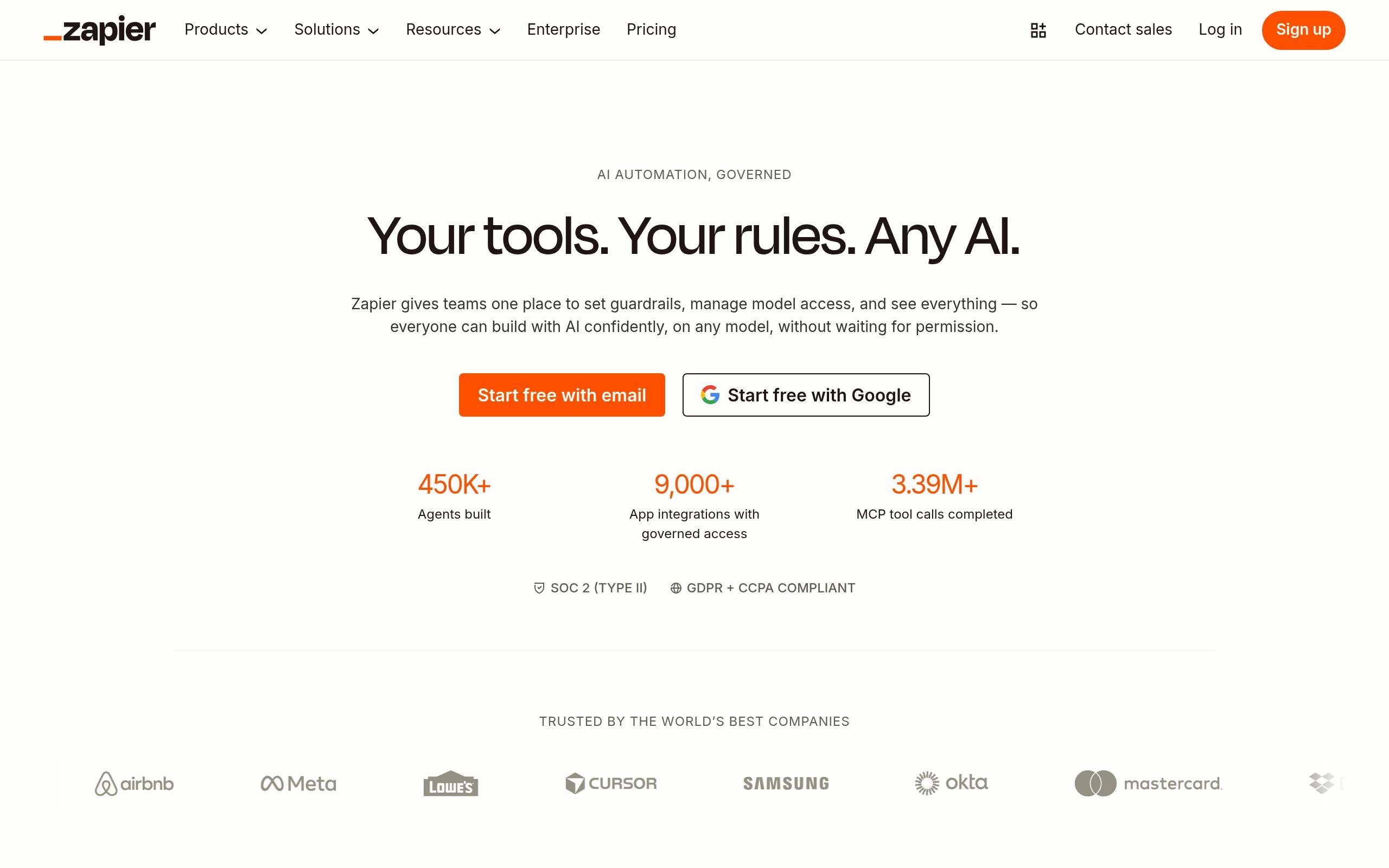
Search volume for calendly and zapier remains massive because high-growth revenue engines use Calendly as an automation trigger rather than just a calendar link:
Trigger: Invitee Created in Calendly
When an enterprise lead books a discovery demo, Zapier instantly checks HubSpot to see if the contact exists. If new, it creates a deal, notifies the dedicated Account Executive in Slack, logs the lead in Salesforce, and adds the attendee to an email onboarding sequence in Mailchimp or Klaviyo.
Trigger: Meeting Canceled / Rescheduled
If a prospect cancels, Zapier automatically updates the CRM deal stage, creates a retention follow-up task for an SDR, and removes the prospect from automated pre-call reminder workflows.
Reclaim offers Zapier webhooks as well, but its integration library is fundamentally designed around developer utilities: Slack status updates (turning on "In Focus Mode" or "In a Meeting" with custom icons), Raycast shortcuts, and Google Tasks.
6. Reclaim vs. Clockwise vs. Motion: Where Does Calendly Fit?
If you are evaluating AI calendar tools in 2026, you will often see Reclaim compared alongside Clockwise and Clockwise vs. Calendly:
- Calendly: The front door. It faces outward toward customers, prospects, candidates, and partners.
- Reclaim.ai: The individual and team autopilot. It faces inward, defending focus time, scheduling sprint tickets, and keeping habits intact.
- Clockwise: Focuses heavily on organization-wide meeting choreography. It rearranges internal team syncs across entire 500-person engineering orgs to create unified 2-hour "Focus Time" blocks on the same afternoon.
- Motion: Replaces your project management tool entirely with an all-in-one AI calendar/project dashboard, but costs significantly more ($19–$34/mo).
7. Pricing Math & Free Tier Reality Check (2026 Updated)
Both tools offer free plans, but their limits target different users:
Calendly Pricing Breakdown:
- Free Tier: 1 event type (e.g. "30-Minute Consultation"), 1 calendar connection, automated booking confirmations. Decent for simple personal booking, but severely restricted for business use.
- Standard ($10 / seat / month): Unlimited event types, multiple calendar conflict checks, automated email reminders, Stripe & PayPal integrations, Zapier access.
- Teams ($16 / seat / month): Round-robin lead routing, collective scheduling, Salesforce/HubSpot routing forms, admin management.
Reclaim.ai Pricing Breakdown:
- Free Tier (Generous): 3 smart habits, 1 calendar sync, 1 scheduling link, 3 weeks scheduling horizon, basic task integrations. Sufficient for solo consultants or freelancers.
- Starter ($8 / seat / month): Unlimited habits, unlimited calendar syncs, 3 scheduling links, 8 weeks scheduling horizon, Todoist & Google Tasks sync.
- Business ($12 / seat / month): Unlimited scheduling links, Linear & Asana & ClickUp sync, 12 weeks scheduling horizon, team habit sharing, custom branding.
- Enterprise ($18 / seat / month): SSO/SAML, advanced reporting, dedicated customer success, SCIM provisioning.
Pricing Verdict: Reclaim is $2/seat cheaper on entry ($8 vs $10) and offers vastly more individual productivity utility on its free tier. Calendly charges a premium because its value is tied directly to inbound revenue generation.
8. Who Should Choose Which? (The 4 Real-World Personas)
💼 Choose Calendly If:
- You are in inbound sales, recruiting, or customer success.
- You need round-robin lead distribution across multiple reps.
- You qualify leads using HubSpot, Marketo, or Salesforce routing forms.
- You require Stripe/PayPal payment upfront before confirming a consultation.
- Your primary daily frustration is coordinating with external parties.
🛡️ Choose Reclaim.ai If:
- You are a software engineer, product manager, or founder.
- You manage sprint backlogs in Linear, Asana, or Todoist and need focus time to execute tickets.
- Your lunch, exercise, and deep work routines are constantly wiped out by meeting creep.
- You need to sync your personal calendar to your corporate work calendar without leaking private details.
- You want an AI that dynamically reschedules your day when emergencies arise.
9. Can You Use Reclaim.ai and Calendly Together? (The Hybrid Stack)
The secret that many high-output executives and consultants have adopted in 2026 is that Reclaim.ai and Calendly are not mutually exclusive—they actually form the ultimate scheduling stack when paired together.
Here is how the hybrid setup works:
- You keep your polished Calendly link in your email signature, LinkedIn bio, and website contact forms to handle incoming prospect calls, podcast appearances, and customer onboarding.
- You run Reclaim.ai in the background on your primary Google Calendar. Reclaim defends your lunch breaks, pulls your Linear tickets into focus blocks, and syncs your personal errands.
- Because Reclaim's dynamic blocks flip to "Busy" as your week fills up, Calendly automatically reads those blocks as unavailable!
The result: external clients still get the smooth, professional Calendly booking experience, but they can only book into slots that Reclaim has deemed safe for your mental bandwidth and sprint commitments.
📚 Related AI Productivity & Scheduling Deep Dives
Frequently Asked Questions
Can Reclaim AI completely replace Calendly for client scheduling?
For solo founders, freelancers, and small teams, yes. Reclaim.ai includes Smart Scheduling Links that automatically adjust your availability around high-priority habits and task blocks. However, for sales organizations needing multi-rep round-robin distribution, qualification routing forms, or CRM deal rules, Calendly remains superior.
How does Reclaim.ai connect with Linear, Asana, and ClickUp for task planning?
Reclaim automatically schedules assigned tasks directly onto your Google Calendar. When an issue is assigned to you in Linear, Asana, Jira, or ClickUp with an estimated duration, Reclaim finds optimal focus blocks before the due date. If an urgent meeting gets booked over a task, Reclaim dynamically moves the remaining time to the next open slot.
Can I use Reclaim.ai and Calendly together in a hybrid setup?
Yes—this is the most effective scheduling stack for busy operators. You share your Calendly link for external discovery calls, while Reclaim.ai defends your lunch breaks, habits, and focus blocks on your Google Calendar. Because Reclaim marks defended blocks as 'Busy', Calendly automatically prevents external clients from booking over your focus time.
How does Reclaim.ai compare to Clockwise and Motion?
Clockwise synchronizes team-wide focus hours across large enterprise departments, while Motion is a full project management system. Reclaim.ai focuses on individual autonomy: personal-to-work multi-calendar syncing, adaptive habit defense, and lightweight integration with your existing task managers at roughly one-third the price of Motion.
Does Reclaim.ai work with Microsoft Outlook as well as Google Calendar?
Yes. Reclaim.ai supports Microsoft Outlook and Office 365 calendar syncing. While its Google Calendar integrations (Google Meet, Google Tasks) are the most established, Outlook users can now sync work and personal schedules, defend habits, and share smart scheduling links seamlessly.
Which tool offers the more generous free plan for individual users?
Reclaim.ai offers significantly more utility on its free tier. Free Reclaim accounts include 3 automated habits, 1 calendar sync, 1 scheduling link, and task integrations. Calendly's free plan restricts users to a single event type and single calendar connection with zero automated task scheduling.
What is the optimal Reclaim.ai productivity setup and best practices for engineers and managers?
The top-performing Reclaim configuration follows the 3-Tier Defense Model: 1. Core Habits: Lock 45-minute daily lunch and 15-minute morning decompression as 'Flexible' until 12 hours out, then flip to 'Busy'. 2. Task Pulling: Connect Linear or Asana to auto-schedule high-priority sprint issues into 90-minute morning focus blocks. 3. Smart 1:1s: Convert internal recurring team syncs into Smart 1:1s so Reclaim auto-reschedules them when conflicts arise instead of canceling.
How does Reclaim.ai sync personal and work calendars without exposing private event details?
Reclaim features zero-knowledge Calendar Sync. When you connect a personal Google or Outlook calendar to your corporate work calendar, Reclaim mirrors your personal doctor's appointments, family commitments, or personal errands as generic "Personal Commitment" or simply "Busy" blocks. Your colleagues and IT administrators see the time blocked without ever seeing personal titles, notes, or attendee details.
How do modern AI schedulers differ from legacy tools like x.ai and Doodle?
Legacy schedulers like Doodle rely on manual voting polls, while older bots like x.ai attempted conversational natural language email parsing that frequently misfired. Modern AI scheduling platforms like Reclaim and Clockwise utilize deterministic constraint-satisfaction algorithms: they ingest your real-time calendar state, prioritize conflicting constraints, and dynamically rearrange time blocks without requiring back-and-forth email dialogue.
Does Reclaim.ai offer team volume discounts or Black Friday promotional pricing?
Yes. Reclaim offers annual billing discounts of up to 20% across its Starter ($8/user/mo billed annually) and Business ($12/user/mo) plans. During seasonal promotion windows (such as Q4 Black Friday / Cyber Week), Reclaim frequently provides promotional coupon codes for new workspace migrations. Volume discounts for organizations with 50+ seats are negotiated directly through Reclaim's enterprise sales team.
What is the difference between Reclaim.ai calendar analytics and workforce surveillance tools like Worklytics?
Reclaim.ai is an employee-empowerment tool designed to defend personal autonomy, prevent burnout, and give individuals visibility into how their time is split between meetings, focus time, and personal habits. Unlike enterprise workforce analytics platforms (e.g. Worklytics, Teramind) that track keystrokes or managerial surveillance telemetry, Reclaim's analytics are private to the user to help them optimize their own workweek.