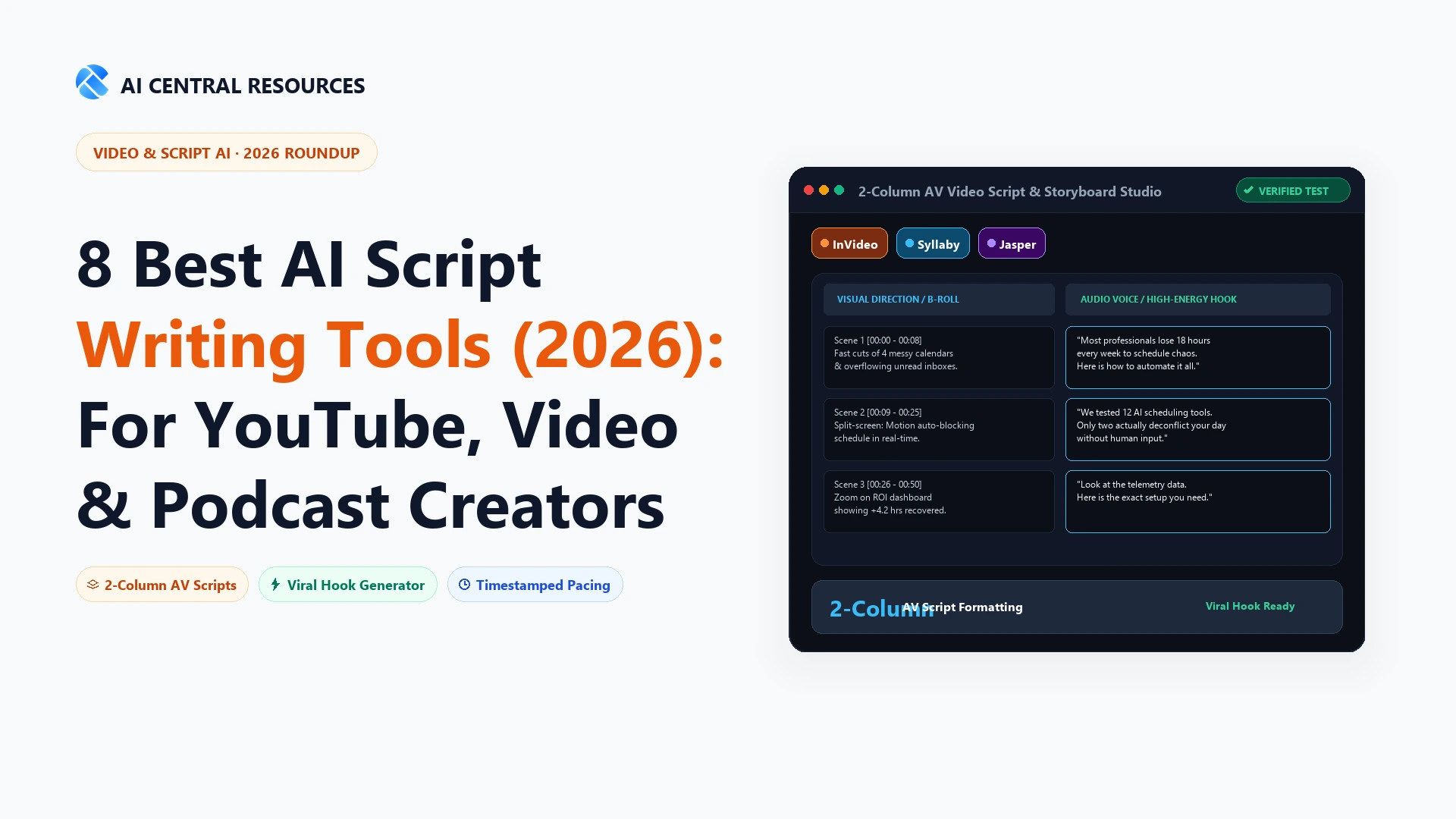
Writing for the spoken ear is fundamentally different from writing for the reading eye. When creators attempt to use standard ChatGPT or generic text models for video scripts, the result is almost always a wooden, text-heavy monologue: sentences run too long for natural breathing, visual cues are completely absent, and viewers drop off within the first 15 seconds. In 2026, modern AI script writing tools and production software have evolved into specialized engines that understand visual pacing, pattern interrupts, 3-second hook retention curves, and multi-column audio-visual (A/V) production formats for YouTube creators, video marketers, and screenwriters alike.
Direct Answer: For YouTube creators and social video teams building organic video funnels, Syllaby is the #1 AI scriptwriting platform with automated search question research and teleprompter formatting. For full-length screenwriting and narrative scene blocking, Celtx leads; while Jasper AI dominates high-converting commercial video ad copy.
How We Tested These 8 AI Scriptwriting Engines
To evaluate each scriptwriting platform with objective production rigor, we generated and stress-tested scripts across three distinct video production formats:
- 10-Minute YouTube Educational Breakdown: Testing 3-second hook retention, pacing transitions, natural spoken conversational rhythm, and integrated B-roll visual cues.
- 90-Second B2B SaaS Product Video Sales Letter (VSL): Evaluating persuasive copywriting frameworks (Problem-Agitate-Solve), pacing urgency, call-to-action (CTA) clarity, and value proposition density.
- Short Narrative Film Scene & Commercial Shoot: Testing industry-standard sluglines, dialogue subtext, character voice distinction, two-column A/V timing, and Fountain/Final Draft export fidelity.
We graded every tool across four critical production benchmarks: Spoken-Word Naturalness (does it sound human when read aloud on camera?), Visual Cue Integration (does it separate audio dialogue from B-roll/camera direction?), Pacing & Retention Structure, and Export Flexibility (Teleprompter, PDF, Fountain, DOCX, or direct NLE timeline integration).
Quick Comparison Matrix: Top 8 AI Script Writing Tools (2026)
Here is how the top 8 AI script writing tools compare across core specialties, script formats, visual direction capabilities, and pricing:
| Tool | Primary Specialty | Key Script Format | Visual Cues & B-Roll | Free Plan | Starting Price | Our Rating |
|---|---|---|---|---|---|---|
| Syllaby | Social video ideation & teleprompter-ready scripts | YouTube, TikTok, Reels | Yes (Visual Direction) | Free 1st video + 50 credits | $9/mo (Starter) | 4.9 / 5.0 |
| Jasper AI | High-converting marketing VSLs & commercial ads | VSL, Promo, Explainer | Via Templates | 7-day free trial | $39/mo (annual) | 4.8 / 5.0 |
| Writesonic | Rapid YouTube video outlines, hooks & SEO descriptions | YouTube Outlines & Hooks | Basic Cues | Free 25 credits/day | $16/mo (annual) | 4.8 / 5.0 |
| Sudowrite | Narrative fiction screenplays, dialogue & scene sensory | Screenplay, Narrative Film | Sensory Scene Cards | Free trial (no credit card) | $10/month | 4.8 / 5.0 |
| Squibler | Standard screenplay formatting & visual scene generation | Fountain, Final Draft, Film | AI Visual Storyboards | Free (1,000 credits/mo) | $29.99/mo (or ~$15.83 annual) | 4.7 / 5.0 |
| ShortlyAI | Multi-model conversational assistant with 100+ LLMs | Script Prompts & Brainstorms | Chat / Document Chat | Free trial available | $19/mo (Plus) | 4.6 / 5.0 |
| Descript | Text-based video editing with AI script-to-timeline syncing | Podcast & Video Timelines | Live Timeline Video | 1 free watermark-free export | $12/mo (annual) | 4.7 / 5.0 |
| Celtx | Multi-column A/V scripts, commercial boards & studio pre-pro | 2-Column A/V, Commercial, Film | Dedicated Visual Column | Free plan (1 project) | ~$18.74/mo (billed yearly) | 4.6 / 5.0 |
In-Depth Reviews: The 8 Best AI Script Writing Tools

1. Syllaby
The Ultimate YouTube & Social Video Scripting Pipeline
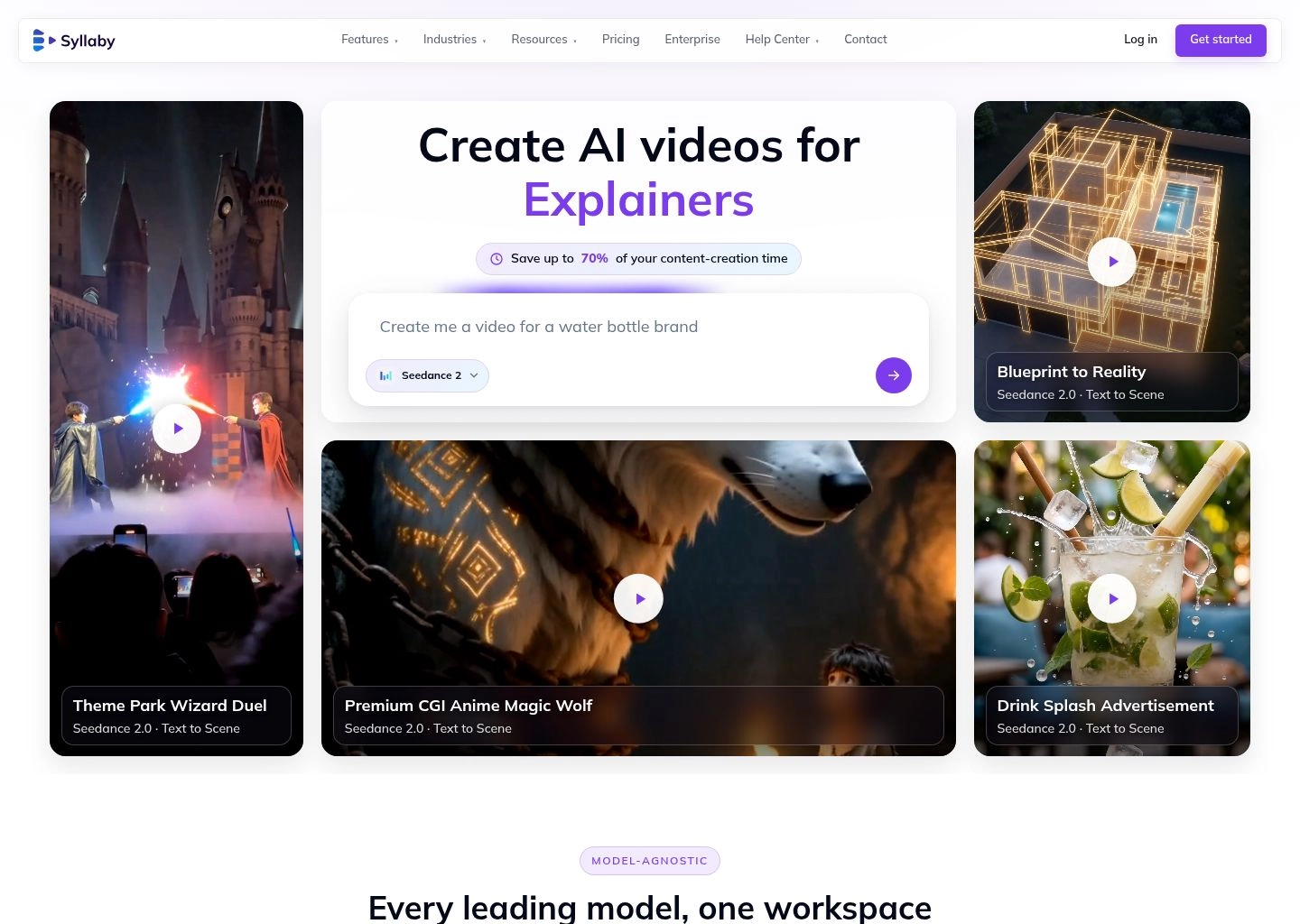
Syllaby is engineered specifically for video creators who struggle with topic research, viewer retention curves, and consistent script output. Rather than treating video scriptwriting as an isolated text prompt, Syllaby starts at the root: discovering high-demand questions your target audience is actively searching on Google and YouTube.
Once a topic is selected, Syllaby’s AI generates a complete 3-part video architecture: a 3-second scroll-stopping hook, an educational body structured with pattern interrupts, and an intentional call-to-action (CTA). Each generated script includes explicit camera directions (e.g. [Look directly into lens, pause for graphic overlay]) and syncs directly into an integrated web teleprompter or mobile recording studio.
Pros & Key Strengths
- ✔ Built-in search intent: engine identifies high-volume questions in your industry.
- ✔ Teleprompter-optimized scripts designed: for natural spoken cadence and breathing pauses.
- ✔ Integrated content calendar: assigns scripts to specific recording dates.
- ✔ Built-in AI avatar: and voice cloning options for automated faceless video generation.
⚠️ Limitations
- ✘ Credit-based tier consumption: (scripts cost 1 credit per minute, avatars 50 credits/min).
- ✘ Tailored primarily for: short-to-medium social video rather than full 90-minute movie scripts.
Pricing: Free first video and 50 credits for new signups. Starter plan is $9/month (100 credits); Basic plan is $29/month (500 credits with voice clone and characters); Standard is $78/mo.
View Syllaby Profile & Features →
2. Jasper AI
Best for High-Converting Video Sales Letters (VSLs) & Ads

Jasper AI remains the undisputed powerhouse for commercial video scripting, advertising commercials, and Video Sales Letters (VSLs). Unlike tools designed for entertainment or fiction, Jasper is tuned specifically for persuasive psychology and conversion rate optimization.
With dedicated video templates like YouTube Script Hook and Introduction, Video Script Outline, and Video Titles, Jasper allows marketers to inject their custom Brand Voice, target audience pain points, and product positioning. Its Brand Voice engine ensures scripts sound like your company's executive spokespeople while systematically hitting high-converting narrative beats (Problem, Agitation, Solution, Social Proof, and Offer).
Pros & Key Strengths
- ✔ Built on battle-tested: direct-response copywriting frameworks (AIDA, PAS, Before-After-Bridge).
- ✔ Dynamic Brand Voice: knowledge base ensures consistent brand personality across scripts.
- ✔ Campaign mode generates video scripts: email sequences, and landing pages in one click.
- ✔ Built-in SEO keyword: integration and multi-language script translation.
⚠️ Limitations
- ✘ Not designed for: narrative screenplay formatting (no Fountain/Final Draft sluglines).
- ✘ Requires structured prompt: inputs to avoid generic corporate promotional jargon.
Pricing: 7-day free trial. Creator plan starts at $39/month (billed annually at $468/year); Pro plan is $59/month with multiple brand voices.
View Jasper AI Profile & Features →
3. Writesonic
Best for Rapid YouTube Outlines, Hooks & SEO Descriptions
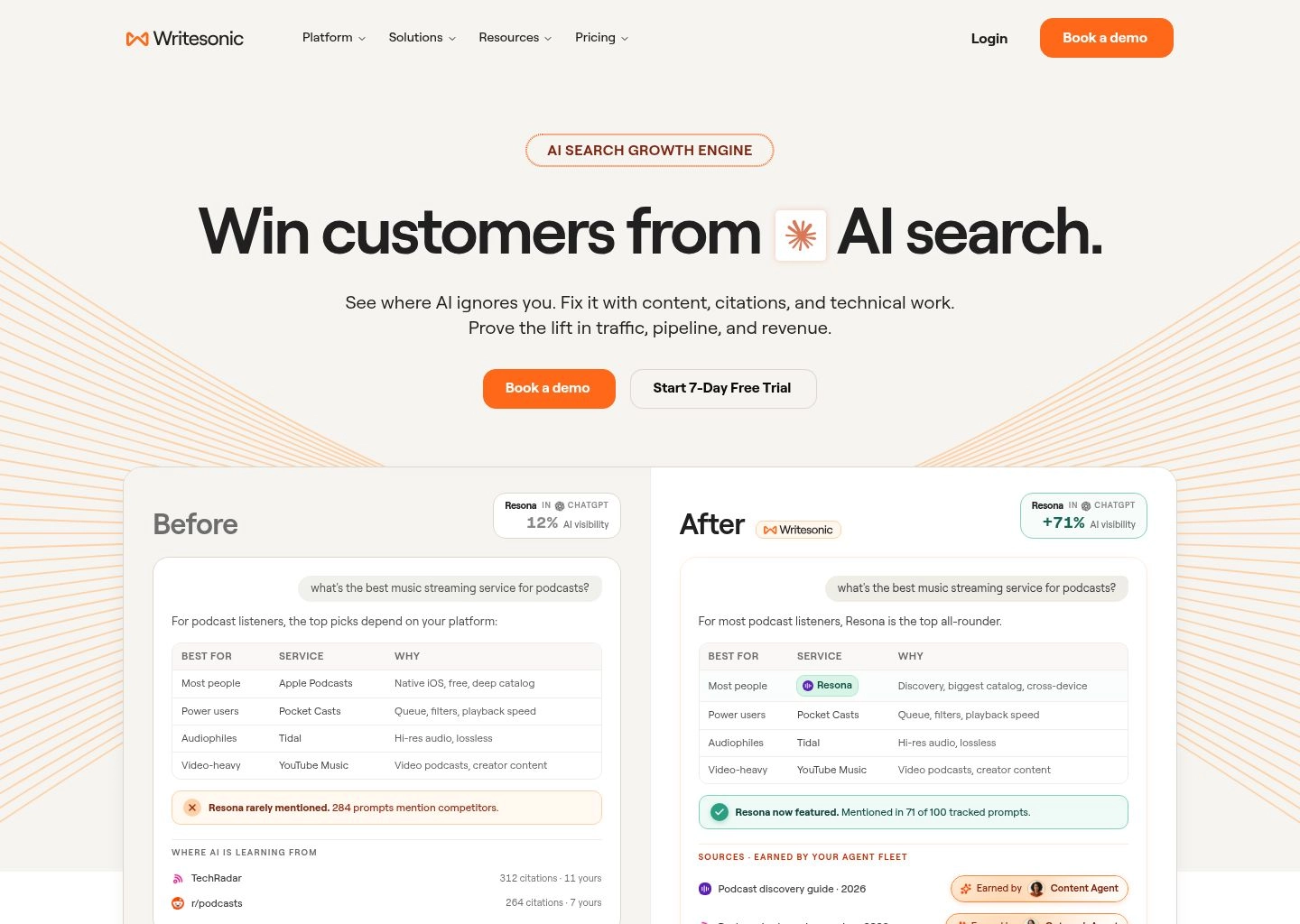
Writesonic (powered by Chatsonic and GPT-4o) offers one of the most streamlined, creator-friendly toolsets for YouTube channel optimization. For creators producing multiple videos per week, Writesonic accelerates every stage of pre-production.
Its dedicated YouTube Script Generator breaks down long-form topics into structured talking points with estimated duration timestamps. In addition to full scripts, Writesonic produces dozens of high-CTR title variations, opening hook options (curiosity, controversy, question), and search-optimized YouTube descriptions loaded with relevant tags and chapter timestamps.
Pros & Key Strengths
- ✔ Instant YouTube chapter: timestamps and SEO description generation.
- ✔ Real-time web connectivity: pulls current events and trending topics directly into scripts.
- ✔ Very affordable entry: price with a free daily credit tier.
- ✔ Multi-model switching between: GPT-4o and Claude 3.5 Sonnet.
⚠️ Limitations
- ✘ Full-length scripts often: require manual editing to inject personal anecdotes.
- ✘ Lacks native visual: A/V multi-column storyboard views.
Pricing: Free plan gives 25 daily generations. Individual paid plan starts at $16/month (billed annually at $192/year) with unlimited generations and custom brand voices.
View Writesonic Profile & Features →
4. Sudowrite
Best for Creative Fiction Scriptwriting, Dialogue & Brainstorming
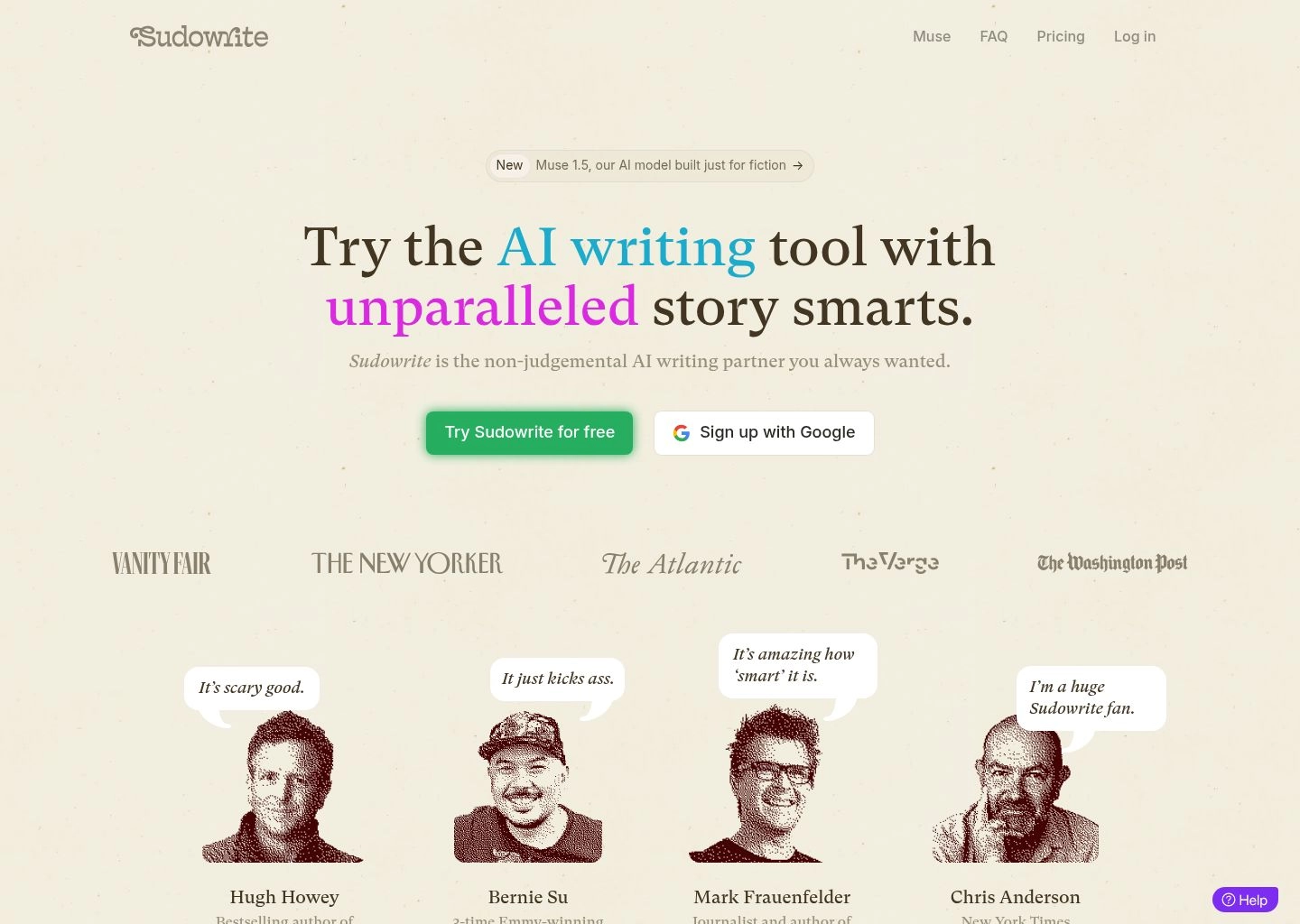
Sudowrite was built by fiction authors and screenwriters who understand that dramatic dialogue cannot sound like corporate marketing copy. While other AI tools produce generic, expository dialogue, Sudowrite is engineered specifically for subtext, tension, and sensory cinematic depth.
Its Describe feature breaks down any scene or setting across all 5 senses plus metaphor, allowing screenwriters to write evocative action lines that grip readers. Its Twist and Brainstorm tools generate unexpected plot developments, while the Rewrite engine can adjust dialogue to reflect specific character quirks, accents, or emotional states without sounding artificial.
Pros & Key Strengths
- ✔ Unmatched literary dialogue: generation with character voice memory.
- ✔ Describe tool produces cinematic: multi-sensory action and scene setting lines.
- ✔ Story Engine supports: multi-chapter narrative structure planning and character bibles.
- ✔ Zero corporate cliché language: tuned exclusively for artistic storytelling.
⚠️ Limitations
- ✘ Does not include: teleprompter features or marketing funnel templates.
- ✘ Credit-based monthly word: limits require careful tier management during heavy writing months.
Pricing: Free trial available (no credit card required). Hobby plan is $10/month (billed annually at $120/year) for 225,000 credits; Professional plan is $25/month for 1,000,000 credits.
View Sudowrite Profile & Features →
5. Squibler
Best for Screenplay Formatting, Scene Cards & Story Arc Organization
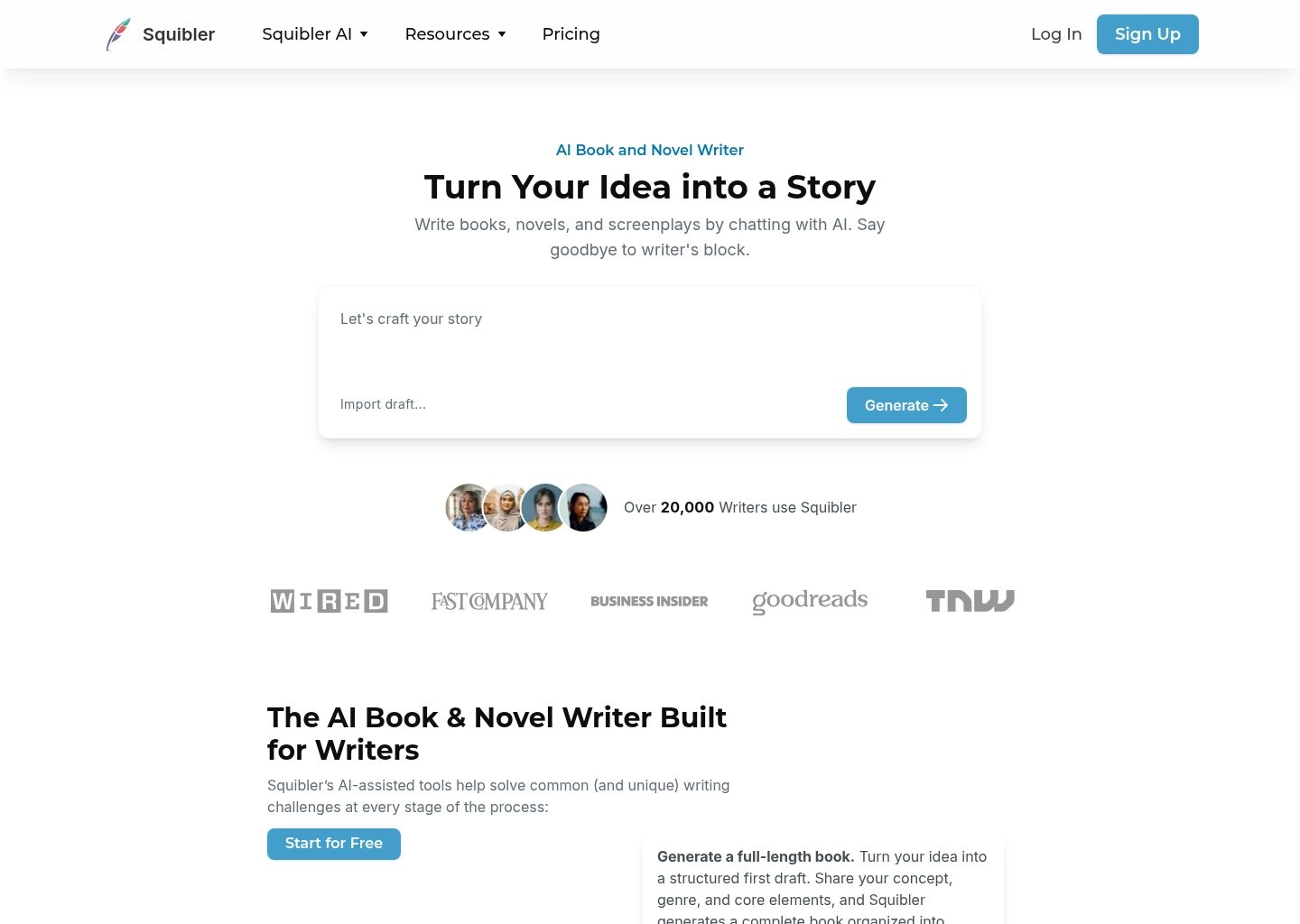
Squibler bridges the gap between AI text generation and formal Hollywood screenwriting standards. While general editors produce unstructured paragraphs, Squibler natively formats scene sluglines (INT. COFFEE SHOP - DAY), character names, dialogue blocks, and parentheticals.
Its standout feature is its integrated Visual Storyboard Generator: with one click, Squibler creates AI concept art and character portrait visualizers directly corresponding to your scene descriptions. It also offers seamless export to Final Draft (.fdx), Fountain, DOCX, and PDF, ensuring zero formatting corruption when submitting scripts to producers or production managers.
Pros & Key Strengths
- ✔ Native screenplay formatting: adhering to strict industry-standard margins and sluglines.
- ✔ AI visual element: generator generates visual concept art for every scene.
- ✔ Full export support: for Final Draft (.fdx), PDF, Word, and Fountain formats.
- ✔ Comprehensive scene organization: sidebar with character tracking bibles.
⚠️ Limitations
- ✘ Full export options: and large manuscripts require a paid plan.
- ✘ UI can take: a brief learning curve for non-traditional filmmakers.
Pricing: Free-forever plan with 1,000 AI credits/month. Plus plan is $29.99/month (or ~$15.83/mo billed annually) with 10,000 credits; Pro plan is $89.99/month with unlimited credits.
View Squibler Profile & Features →
6. ShortlyAI
Best for Distraction-Free Long-Form Script Ideation
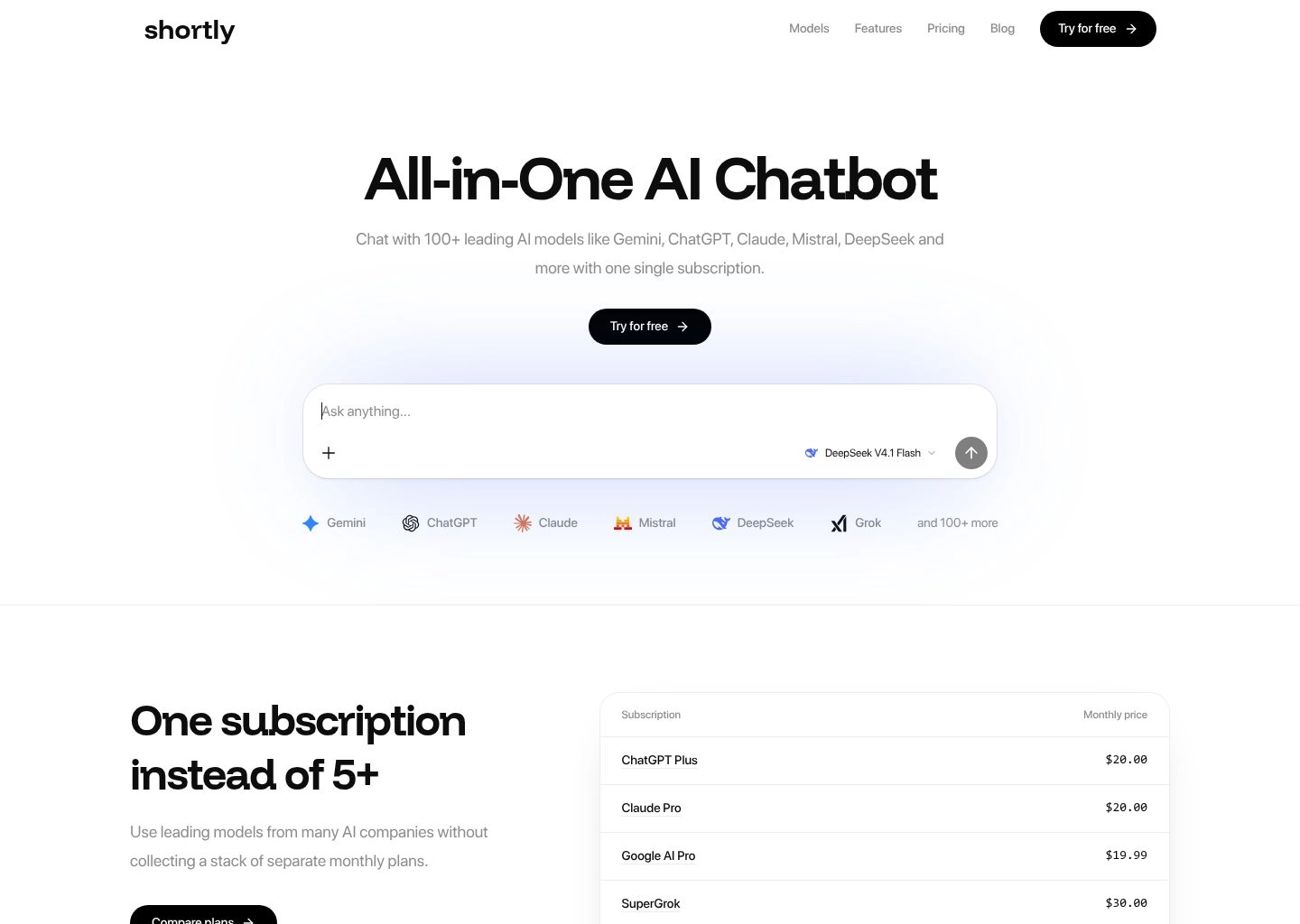
Following its platform evolution, ShortlyAI has transformed into a high-powered multi-model AI assistant workspace hosting over 100+ frontier language models under a single unified subscription. Rather than locking creators into a single proprietary model, ShortlyAI lets scriptwriters toggle seamlessly between GPT-4o, Claude 3.5 Sonnet, Gemini 1.5 Pro, Llama 3, and specialized reasoning models.
This multi-model flexibility is ideal for script ideation: you can generate dramatic dialogue nuances with Claude, outline fast-paced commercial structures with GPT-4o, and brainstorm quirky comedic plot twists with open-source models side-by-side. It also supports web search with AI and document/image chat to deconstruct reference scripts and visual treatments.
Pros & Key Strengths
- ✔ Access to 100+: frontier AI models (OpenAI, Anthropic, Google, Meta) in one dashboard.
- ✔ Real-time web search: integration pulls trending pop-culture references into scripts.
- ✔ Document and image: chat allows analyzing visual mood boards and reference screenplays.
- ✔ Eliminates the need: to maintain multiple separate $20/month AI subscriptions.
⚠️ Limitations
- ✘ Conversational chat layout: rather than dedicated multi-column screenplay formatting.
- ✘ Does not include: native teleprompter hardware or A/V timeline syncing.
Pricing: Plus plan is $19/month with access to 100+ AI models and web search; Pro plan is $49/month with 3x usage limits and priority processing.
View ShortlyAI Profile & Features →
7. Descript
Best for Script-to-Timeline Syncing & Podcast Production
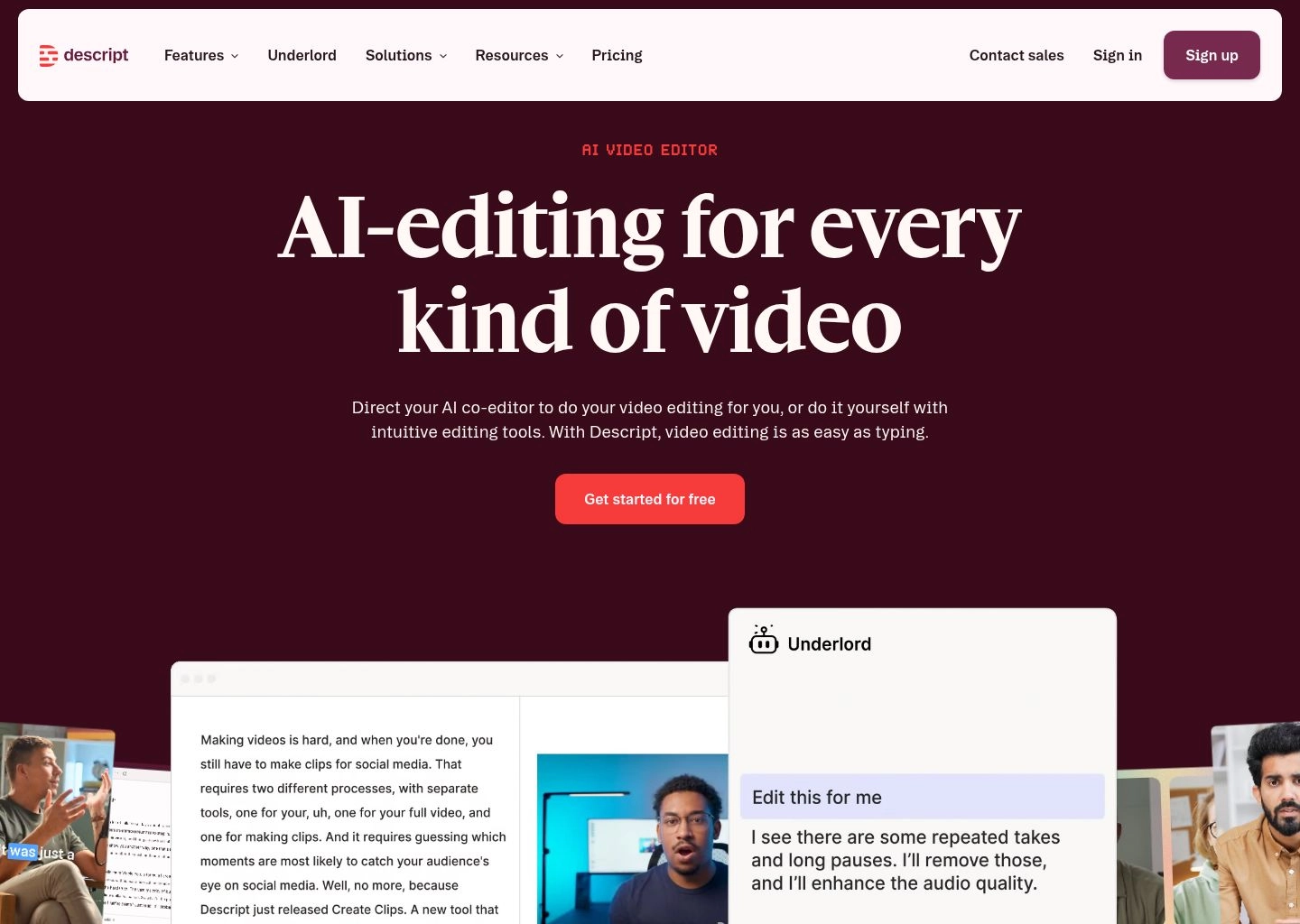
Descript revolutionizes the relationship between scriptwriting and video editing. Instead of writing a static script in one app and filming in another, Descript treats video editing like editing a Google Doc.
Using its built-in AI assistant (Underlord), you can draft an entire video outline, script talking points, generate AI voiceover placeholders (Overdub), and automatically remove filler words ("ums", "ahs", long pauses). When you edit the written words in your script, Descript automatically trims the corresponding video and audio on the multitrack timeline in real time.
Pros & Key Strengths
- ✔ Direct bi-directional connection: between written text and live video timeline.
- ✔ Underlord AI drafts script intros: suggests cuts, and summarizes episodes.
- ✔ click filler word: removal and studio sound voice enhancement.
- ✔ AI Overdub voice: cloning allows correcting misspoken words by simply retyping text.
⚠️ Limitations
- ✘ Desktop app requires: local hardware resources for intensive video rendering.
- ✘ Geared primarily toward: recorded talking-head video rather than fiction screenplays.
Pricing: Free plan includes 1 transcription hour/month. Hobbyist starts at $12/month (billed annually at $144/year); Creator is $24/month with 4K video exports.
View Descript Profile & Features →
8. Celtx
The Industry Standard for Multi-Column A/V Scripts & Studio Pre-Production
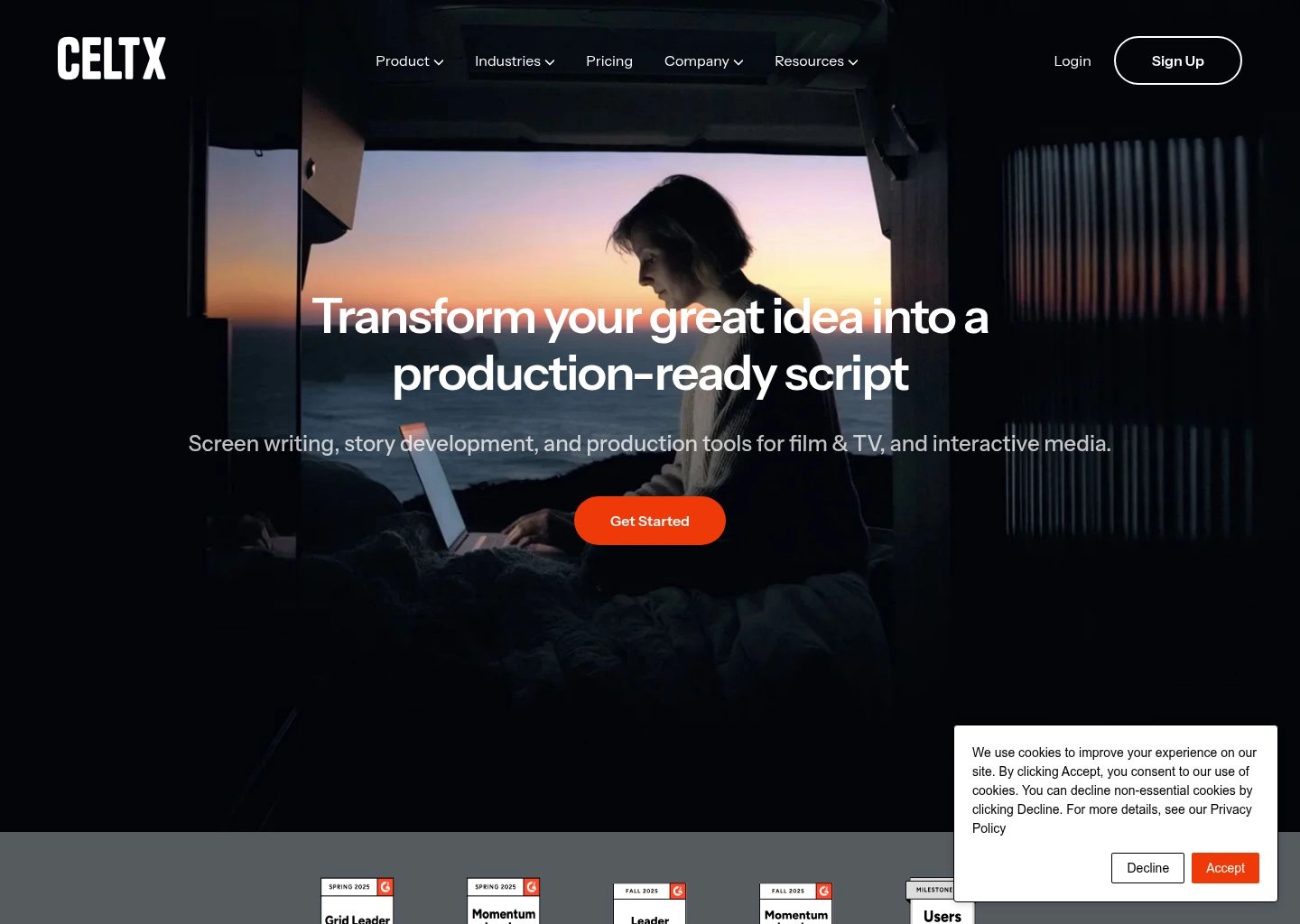
Celtx is one of the most established names in film and media pre-production, trusted by broadcast networks, film schools, and advertising agencies worldwide. Unlike single-column text processors, Celtx is built specifically for production logistics, camera coordination, and audio-visual timing.
Its standout capability is native support for Two-Column A/V Scripts (Video directions on the left, Spoken audio/SFX on the right)—the mandatory standard for TV commercials, corporate training videos, documentaries, and product demos. Celtx helps teams coordinate visual descriptions, shot types (close-up, wide tracking), and calculate script read times to match strict 30-second and 60-second broadcast slots, seamlessly generating automated shot sheets and talent breakdown lists.
Pros & Key Strengths
- ✔ Professional two-column A/V: script format for commercials and corporate videos.
- ✔ Real-time timing calculator: ensures scripts fit exact 30s/60s broadcast constraints.
- ✔ Automated script breakdown: generates talent casting lists, prop lists, and shot sheets.
- ✔ Real-time multi-user team: collaboration for agency writers and directors.
⚠️ Limitations
- ✘ Traditional pre-production suite: without automated generative LLM text generation.
- ✘ Interface contains extensive: pre-production tools that may feel complex for simple vloggers.
Pricing: Free plan (1 seat, 1 project) with a 7-day trial of paid features. Writer and Writer Pro plans start at ~$18.74/month (billed yearly); Team plans support 3 to 15 members.
View Celtx Profile & Features →The Technical Anatomy of High-Retention Video Scripts
Why do AI-scripted videos either skyrocket in YouTube retention or crater within the first 10 seconds? The difference lies in three structural elements engineered specifically for viewer engagement:
1. The 3-Second Hook Architecture
High-performing scripts never open with pleasantries ("Hey guys, welcome back to the channel"). They open with a provocative question, an unresolved tension, or an immediate visual payoff to stop the scroll.
2. Spoken Cadence & Pattern Interrupts
Human speech averages 130–150 words per minute. Scriptwriting models insert intentional rhythmic pauses, sentence length variation (1-word punchlines vs 8-word explanations), and visual resets every 20 seconds.
3. Two-Track Audio/Visual Alignment
A script is only 50% audio. Advanced scriptwriting tools force writers to plan B-roll inserts, kinetic text animations, and camera switches alongside every spoken line, preventing static "talking-head fatigue".
The 5-Step AI Scriptwriting Workflow from Concept to Final Cut
Follow this proven production blueprint to streamline your video creation pipeline from initial idea to published upload:
- Validate Buyer Search Intent: Use Syllaby or Writesonic to find real questions and high-volume keywords active in your niche before drafting a single word.
- Generate 5 Opening Hook Variations: Run your core concept through Jasper AI to produce curiosity-based, controversy-based, and value-first hook angles, picking the most gripping 3-second opener.
- Structure Dialogue with Pacing & Visual Cues: Expand the narrative using Sudowrite for cinematic storytelling or Squibler for standard screenplay sluglines, ensuring clear visual B-roll directions.
- Format for Production Constraints: If producing commercial ads or studio shoots, import your draft into Celtx to calculate strict 30s/60s audio read times and format multi-column A/V shot sheets.
- Record with Teleprompter & Edit via Text: Load the polished script into Syllaby's teleprompter for recording, then drop the raw footage into Descript to polish audio, cut dead air, and edit video directly from your transcript.
Scaling high-retention video output requires connecting ideation, scriptwriting, voiceover, and editing. Explore our benchmarks:
Frequently Asked Questions (FAQs)
Can YouTube detect or penalize AI-generated video scripts?
YouTube does not penalize videos scripted with AI. YouTube's recommendation algorithm rewards viewer satisfaction metrics: Click-Through Rate (CTR), Average View Duration (AVD), and engagement. If an AI tool helps you write a tighter, more engaging script that keeps viewers watching longer, your video will perform better.
What is the ideal word count for a 10-minute YouTube video script?
At a standard natural conversational speaking rate of 130 to 150 words per minute, a 10-minute YouTube video script should be roughly 1,300 to 1,500 words. Leaving breathing room for on-screen demonstrations, B-roll pauses, and graphics ensures viewers do not feel rushed.
What is the difference between an A/V script and a standard screenplay?
A standard screenplay is a single-column document formatted for film and television with scene sluglines, character names, and dialogue. An A/V (Audio/Visual) script uses a two-column grid with visual cues (camera angles, B-roll, on-screen text) in the left column and spoken dialogue/sound effects in the right column, which is standard for commercials and corporate videos.
Which AI scriptwriter is best for social media Shorts and TikTok?
Syllaby is specifically built for short-form organic video (TikTok, Instagram Reels, YouTube Shorts), offering 3-second hook formulas, topic search intent discovery, and direct teleprompter syncing.
Can these tools export directly to Final Draft, WriterDuet, or teleprompters?
Yes. Squibler and Celtx export directly to industry-standard Final Draft (.fdx), Fountain, and formatted PDF. Syllaby includes a built-in web teleprompter, and Descript synchronizes scripts directly with video editing timelines.
What is the best free AI script writing tool in 2026?
Writesonic provides 25 free daily generation credits with GPT-4o capabilities for YouTube outlines, hooks, and descriptions. Sudowrite and Squibler offer generous free starter tiers for creative screenwriters.
Can AI scriptwriters integrate directly with AI avatar video generators (Synthesia, HeyGen)?
Yes. Platforms like Syllaby and Jasper AI format script outputs with avatar-friendly punctuation, natural breath pauses, and SSML pause tags (e.g., <break time="1s"/>). This allows creators to paste scripts directly into HeyGen or Synthesia, generating lifelike AI talking-head videos with synchronized facial expressions and realistic vocal delivery.
What is the best AI screenplay development tool for industry-standard film and TV pacing?
Celtx and Squibler are the top choices for formal film production. They enforce strict industry-standard screenplay formatting (sluglines, action lines, dual dialogue) and feature structured 3-act beat sheets. Unlike generic text generators, they track character screen time, automatically renumber scenes, and export directly to Final Draft (.fdx) format.
Which AI model is best for video script writing and witty dialogue in 2026?
For nuanced human dialogue, comedic timing, and emotional resonance, Claude 3.5 Sonnet (accessible directly in Claude and integrated into Sudowrite) consistently outperforms other models. For high-energy YouTube hooks and marketing conversions, GPT-4o (via Jasper AI and Writesonic) delivers higher engagement retention.
How can creators use Writesonic for bulk YouTube video scripts and SEO descriptions?
Writesonic features a dedicated YouTube Automation Suite. By feeding it a trending topic or competitor video URL, it generates a high-converting 3-second hook, a time-stamped video outline, the full spoken voiceover script, and search-optimized YouTube descriptions with targeted tags and chapters in a single batch run.