Writing a full-length fiction novel, fantasy epic, romance saga, or gripping thriller is one of the most grueling creative undertakings in the world. Managing sprawling character arcs, maintaining consistent worldbuilding lore across a 100,000-word manuscript, overcoming crippling writer's block during the messy middle, and polishing pacing across dozens of chapters requires immense stamina and discipline.
In 2026, the emergence of specialized AI story and novel writing tools has revolutionized fiction authoring. Unlike generic chatbots that produce bland, repetitive tropes and lose track of plot threads after two paragraphs, purpose-built creative fiction platforms are designed around novelists' real workflows. They feature persistent Codex lore bibles, multi-act scene beat outline generators, sensory description expanders, and developmental pacing analytics that work alongside the author while keeping their unique creative voice in total control.
To identify the absolute best tools for fiction writers, our editorial team spent four weeks benchmarking the industry's top platforms with published novelists, evaluating character consistency, dialogue realism, scene pacing, and series bible memory. Below are the 10 best AI story and novel writing tools tested and ranked for 2026.
⚡ The 30-Second Executive Summary: Top Fiction Writing Tools
Best Overall Fiction Co-Writer: Sudowrite is the undisputed gold standard for novelists, featuring Story Engine, sensory description expanders, Canvas plotting, and character dialogue generators.
Best for Advanced Worldbuilding & Series Bibles: Novelcrafter offers the most powerful character Codex, scene beat planner, and "bring-your-own-key" multi-LLM routing for serious pantser and plotter novelists.
Best for Literary Prose & Natural Dialogue: Claude 3.5 Sonnet produces the most nuanced, emotionally resonant dialogue and atmospheric prose with a massive 200K-token context window.
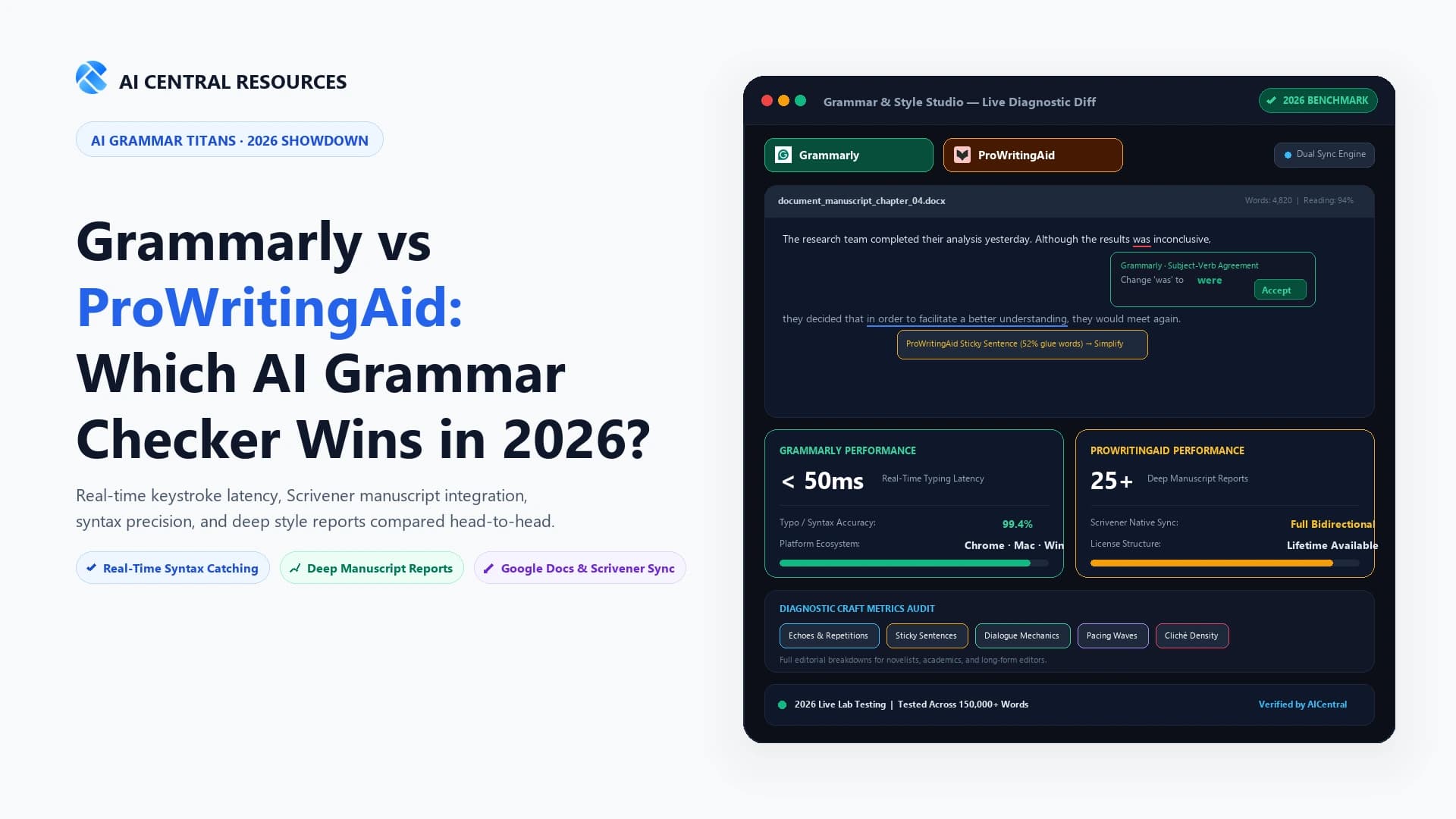
Best for Manuscript Editing & Pacing Reports: ProWritingAid delivers 25+ in-depth manuscript reports analyzing narrative pacing, dialogue tags, repeat words, and Scrivener integration.
Best for Brainstorming Plot Twists & Archetypes: ChatGPT Plus (GPT-4o) serves as an interactive brainstorming partner for untangling plot knots and worldbuilding lore.
2026 Benchmark Scorecard: Top 10 AI Novel & Story Writing Tools
The comparison matrix below evaluates the top 10 fiction writing platforms across core story capabilities, worldbuilding memory systems, supported AI models, manuscript export integrations, and pricing.
| Tool | Primary Fiction Strength | Worldbuilding / Lore Bible | Supported AI Engines | Starting Price | Best For |
|---|---|---|---|---|---|
| 1. Sudowrite | Story Engine & Scene Expansion | Story Bible (Characters & Lore) | Claude 3.5, GPT-4o, Custom | $10 / mo (annual) | 🏆 #1 Overall Novel Co-Writer |
| 2. Novelcrafter | Codex Worldbuilding & Scene Beats | Deep Nested Codex + Tags | OpenRouter (Any LLM via API) | $4 / mo (Hobbyist) | Series Authors & Worldbuilders |
| 3. Claude 3.5 Sonnet | Literary Prose & Realistic Dialogue | 200K Context Window Memory | Anthropic Claude Foundation | Free / $20 / mo | Literary Fiction & Dialogue |
| 4. ProWritingAid | 25+ Developmental Manuscript Reports | Style Guide & Terminology | Proprietary NLP + AI Sparks | Free / $10 / mo | Pacing, Dialogue Tags & Scrivener |
| 5. ChatGPT (GPT-4o) | Brainstorming & Socratic Plotting | Custom GPT Memory Files | OpenAI GPT-4o | Free / $20 / mo | Idea Generation & Plot Twists |
| 6. Hemingway Editor | Readability & Trimming Fluff | N/A (Readability) | Client-Side NLP | 100% Free Web / $19.99 App | Muscular Action & Pacing |
| 7. QuillBot | Creative Paraphrasing & Rewording | Synonym Thesaurus | Proprietary Paraphraser | Free / $4.17 / mo | Creative Scene Rephrasing |
| 8. Jasper AI | Creative Story Generator & Outliner | Knowledge Base | Multi-Model Engine | $39 / mo | Fast Commercial Story Outlines |
| 9. Rytr | Budget Story Plots & Dialogue Snippets | Basic Tones | GPT Models | Free / $7.50 / mo | Budget Creative Snippets |
| 10. Writesonic | Sonic Editor Narrative Expansions | Brand Voice Files | GPT-4o & Claude | Free / $16 / mo | Short Story Drafting & Expansion |
In-Depth Reviews: The 10 Best AI Story & Novel Writing Tools
1. Sudowrite — The Undisputed Benchmark for Fiction & Novelists
#1 Top Rated Fiction AI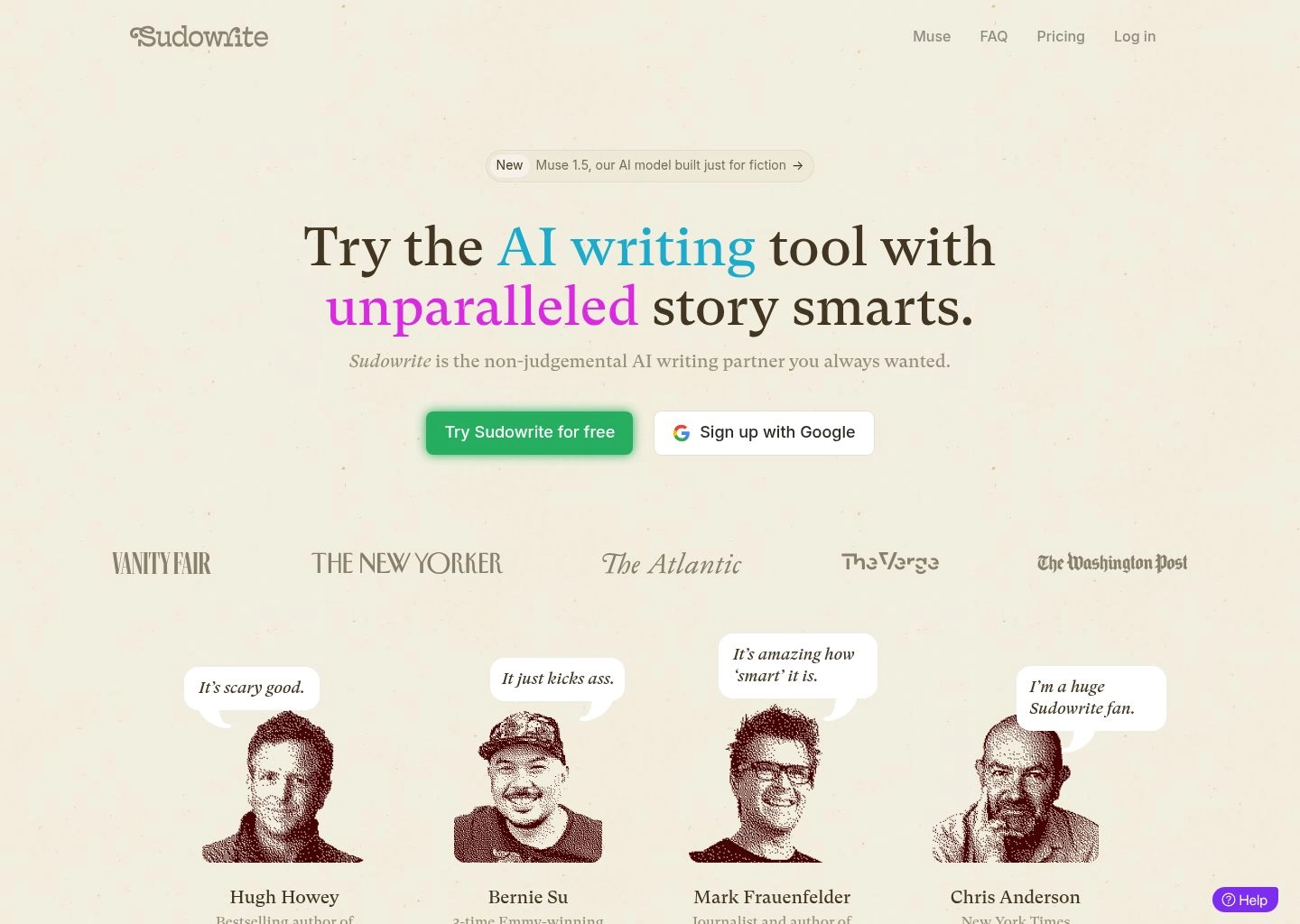
Conceived and developed by published sci-fi and fantasy novelists Amit Gupta and James Yu, Sudowrite is universally recognized as the single most sophisticated AI co-writing software designed exclusively for narrative fiction. Rather than treating writing as an automated generation task, Sudowrite acts as an intuitive creative muse that amplifies the author's voice.
Sudowrite’s crown jewel is its Story Engine. Story Engine guides authors step-by-step through the entire novel construction process: from Brainstorming Braindump to Genre/Style calibration, Synopsis, Characters, Worldbuilding Lore, Outline, and Chapter Beats. Once your chapter beats are defined, Sudowrite generates prose scene-by-scene, maintaining consistent character voices, emotional subtext, and pacing.
Beyond full chapter drafting, Sudowrite includes magical micro-tools:
- Describe: Highlight any object or location (e.g., "a ruined castle in the rain") to generate rich, immersive sensory details across Sight, Sound, Smell, Taste, Touch, and Metaphor.
- Twist: Injects surprising, genre-appropriate plot twists when you hit a narrative dead end.
- Rewrite: Rephrase scenes to show rather than tell, increase inner conflict, or add vivid sensory depth.
- Canvas: An infinite visual whiteboard for mind-mapping character relationships, timelines, and branching plotlines.
- Story Engine Architecture: Step-by-step novel drafting from high-level premise to 80,000-word manuscript.
- Sensory Describe Button: Generate multi-sensory prose covering Sight, Sound, Smell, Taste, and Metaphor.
- Story Bible Lore Memory: Preserves character physical traits, backstories, and world lore across chapters.
- Visual Canvas Mind Map: Brainstorm story branches, character trees, and multi-act plot structures.
The most natural fiction co-writer on the market; outstanding sensory description tools; fantastic community of indie authors.
Operates on credit/word consumption tiers; heavy drafting on Pro models burns credits quickly.
Pricing & Verdict: Free trial available. Hobby & Student Plan is $10/month (billed annually at $120/year) for 225,000 credits/mo; Professional Plan is $22/month (billed annually at $264/year) with 1,000,000 credits/mo; Max Plan is $44/month for 2,000,000 credits/mo. The definitive #1 choice for indie authors, novelists, and creative storytellers.
2. Novelcrafter — Best for Advanced Series Bibles & Worldbuilding Lore
Codex Worldbuilding Leader
If Sudowrite is an all-inclusive creative playground, Novelcrafter is a high-precision, professional novelist operating system designed for power users, epic fantasy authors, and multi-book series architects.
Novelcrafter’s superpower is its deep Codex Worldbuilding System. Authors can create structured, tagged database entries for every character, magical system, faction, location, historical event, and item in their fictional universe. As you write scene beats in the editor, Novelcrafter’s AI dynamically scans your text: whenever a character or setting is mentioned (`@CharacterName`), the engine automatically injects that entity's specific lore rules and personality constraints into the prompt context.
Novelcrafter utilizes a "Bring Your Own Key" (BYOK) model via OpenRouter, OpenAI, and Anthropic APIs. This gives authors complete freedom to toggle between Claude 3.5 Sonnet (for emotional dialogue), GPT-4o (for complex plotting), or open-source Llama 3 models—slashing AI generation costs to literal pennies per chapter.
- Nested Codex Worldbuilding: Organize characters, locations, and magical systems with automatic entity tagging.
- Multi-LLM BYOK Routing: Connect any AI model via OpenRouter API (Claude 3.5, GPT-4o, DeepSeek, Mistral).
- Scene Beat Outlining: Granular planning for chapter beats, tension progression, and POV tracking.
- Full Scrivener & EPUB Export: Export complete formatted manuscripts ready for publishing or formatting.
Most advanced lore memory of any tool; ultra-cost-effective via BYOK; highly customizable.
Steeper learning curve than Sudowrite; requires setting up your own API keys for AI generation.
Pricing & Verdict: 14-day free trial. Tinker Plan is $4/month (billed annually at $48/year); Craftsman Plan is $8/month; Artisan Plan is $16/month. Additional AI generation paid directly to API providers. The absolute best platform for series writers and complex worldbuilders.
3. Claude 3.5 Sonnet — Best for Literary Prose & Natural Dialogue
Literary Dialogue Leader
Ask any published author which raw foundation model writes the most beautiful, human-like literary prose in 2026, and the answer is almost unanimous: Anthropic's Claude 3.5 Sonnet.
Where standard AI models rely on purple prose, cheesy dialogue clichés, and exaggerated melodramatic reactions, Claude 3.5 Sonnet captures subtext, subtle humor, dry wit, and authentic human cadence. When prompted to write character dialogue with conflicting hidden motivations, Claude produces authentic exchanges where characters speak naturally rather than sounding like theatrical monologues.
Claude's 200,000-token context window allows you to upload an entire 50,000-word manuscript draft or full series bible into a single chat project, ensuring that characters maintain their speech quirks, physical descriptions, and emotional arcs across the entire book.
- Exceptional Dialogue Realism: Captures subtext, banter, emotional tension, and subtle character quirks.
- 200K Token Context Window: Upload full multi-chapter drafts and character bibles for consistent memory.
- Artifacts Side-by-Side Canvas: Edit scene drafts and dialogue exchanges in a clean workspace window.
- Advanced Scene Pacing: Adjust narrative speed from introspective slow-burns to rapid action climaxes.
Highest human-like prose quality; avoids AI clichés; outstanding emotional depth.
Lacks specialized novel structuring tools like Sudowrite’s Story Engine or Novelcrafter’s Codex.
Pricing & Verdict: Free tier available. Claude Pro is $20/month for 5x message capacity. The undisputed best standalone AI model for drafting literary fiction and dialogue.
4. ProWritingAid — Best for Developmental Manuscript Editing & Pacing
Developmental Editing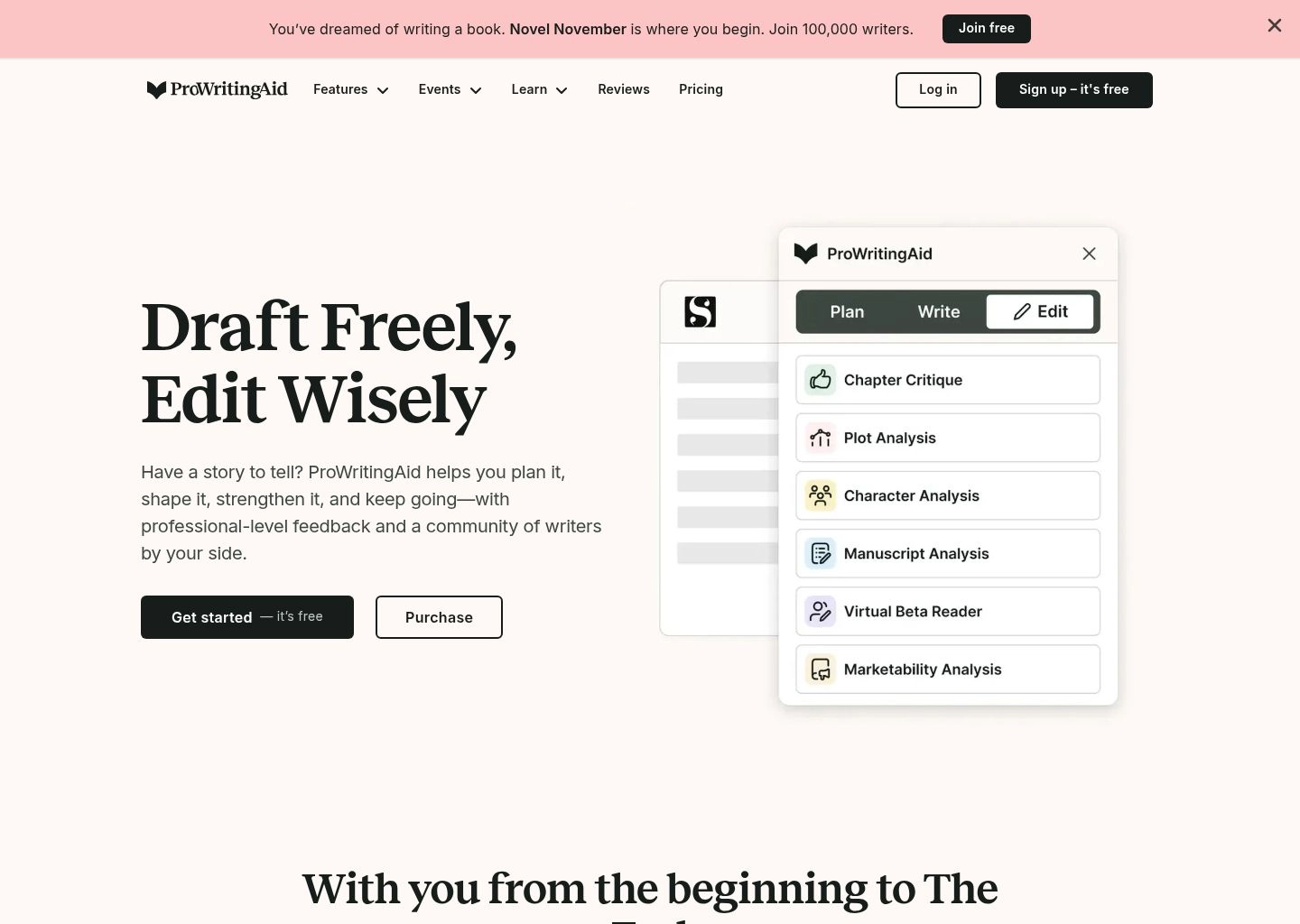
While generative tools help you draft scenes, ProWritingAid is the essential software for turning a messy first draft into a polished, publishable manuscript.
ProWritingAid generates over 25 specialized fiction reports:
- Pacing Report: Graphs narrative momentum across chapters, highlighting slow exposition dumps.
- Dialogue Tags Report: Flags repetitive "he said/she said" constructions and adverb abuse.
- Repeats & Echoes: Catches words used multiple times within two paragraphs.
- Sensory Words Report: Analyzes whether your descriptions balance visual, auditory, and kinesthetic details.
ProWritingAid integrates directly with Scrivener, Novlr, Final Draft, and Microsoft Word, allowing novelists to analyze full 100,000-word book files without lag.
- 25+ Fiction Diagnostic Reports: Scans for pacing, sticky sentences, cliches, and dialogue tags.
- Direct Scrivener & Word Integration: Analyze multi-chapter book projects in their native format.
- AI Sparks Creative Assistant: Brainstorm character backstories, sensory expansions, and tone shifts.
- Lifetime License Option: Buy once and use forever with zero recurring monthly subscription.
Most comprehensive editing tool for authors; excellent Scrivener support; lifetime pricing available.
The sheer number of reports can feel overwhelming for beginners.
Pricing & Verdict: Free tier (500 words/check). Premium Plan starts at $10/month (billed annually at $120/year) or $30/month monthly, or a Lifetime License for $399. The essential editing companion for every serious novelist.
5. ChatGPT (GPT-4o) — Best for Socratic Brainstorming & Plot Twists
Brainstorming Partner
When you are in the outlining phase of a novel and need to brainstorm character flaws, untangle plot holes, or invent magic systems, ChatGPT (powered by GPT-4o) acts as an infinite creative sounding board.
Writers can create dedicated Custom GPTs loaded with their world lore files, character sheets, and timeline rules. You can then chat with your fictional antagonist, test how your detective character would react to a new clue, or brainstorm 10 unpredictable climactic showdowns.
- Custom Story GPTs: Build dedicated AI assistants loaded with your book's world bible.
- Character Roleplay: Interview your protagonist and antagonist to discover their internal voices.
- Voice Mode Brainstorming: Talk through your plot ideas out loud while taking walks or driving.
Fast, versatile creative brainstorming; voice mode is great for dictating plot ideas.
Prose output tends to use repetitive clichés (e.g., 'a testament to', 'little did they know') without strict prompting.
Pricing & Verdict: Free tier available. ChatGPT Plus is $20/month. Ideal for pre-writing, character conception, and unblocking plot roadblocks.
6. Hemingway Editor — Best for Pacing, Action Scenes & Trimming Fluff
Action & Pacing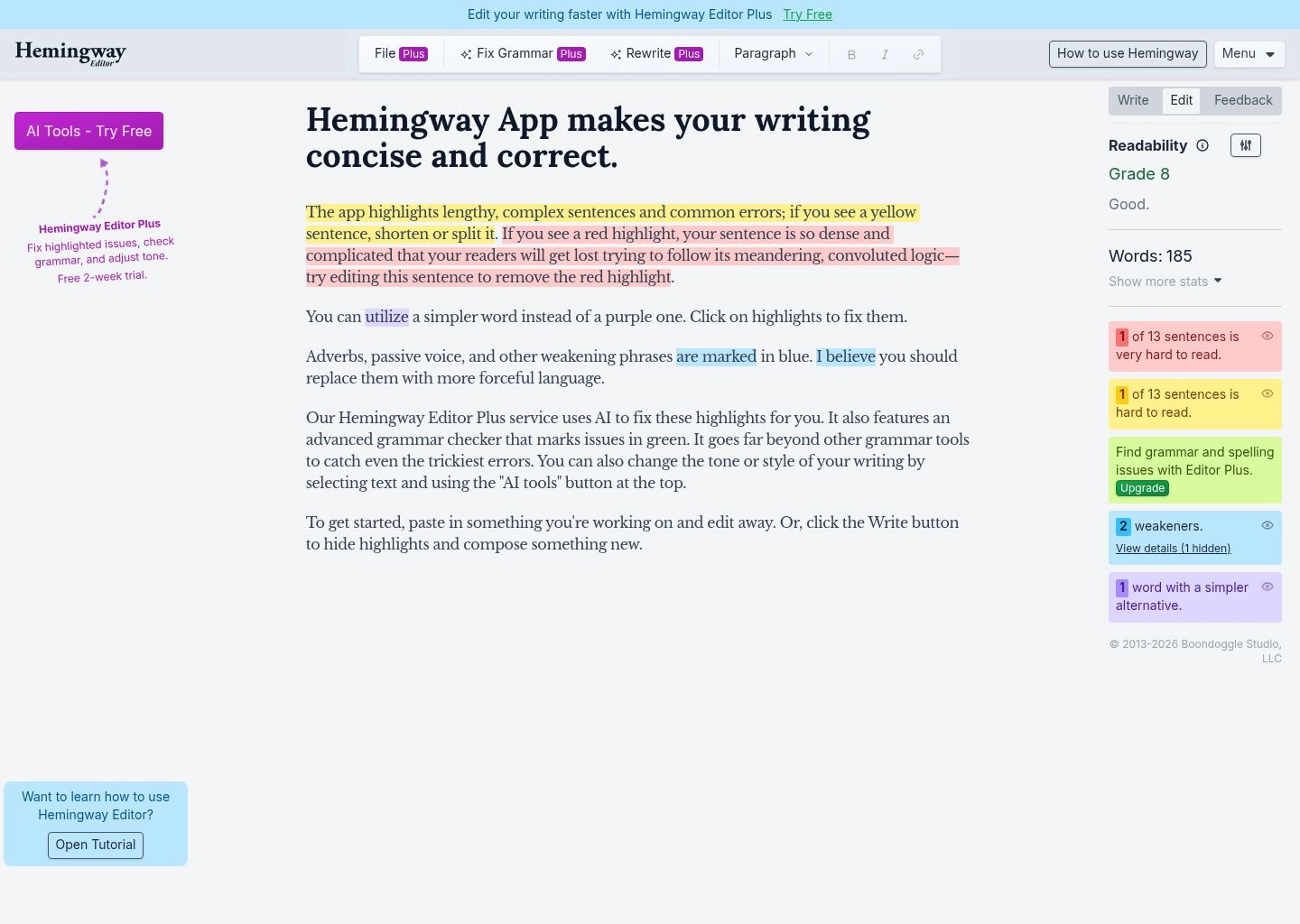
When drafting fast-paced action scenes, sword fights, space battles, or tense suspense sequences, prose must be muscular and immediate. Hemingway Editor highlights weak adverbs in blue, passive voice in green, and sluggish run-on sentences in red, training authors to keep reader adrenaline high.
- Visual Color-Coded Pacing: Instantly identify sentences that drag down action scenes.
- Automated Readability Grades: Keep prose accessible to mainstream fiction audiences.
- 100% Free Web Version: Zero word limits and no login requirements.
Completely free; great for tightening action and suspense scenes; zero latency.
Not an AI generator; purely an editing and readability feedback tool.
Pricing & Verdict: 100% free web app. Standalone desktop app is a $19.99 one-time purchase. Essential for polishing action sequences.
7. QuillBot — Best for Creative Scene Paraphrasing & Synonym Variety
Creative Rephrasing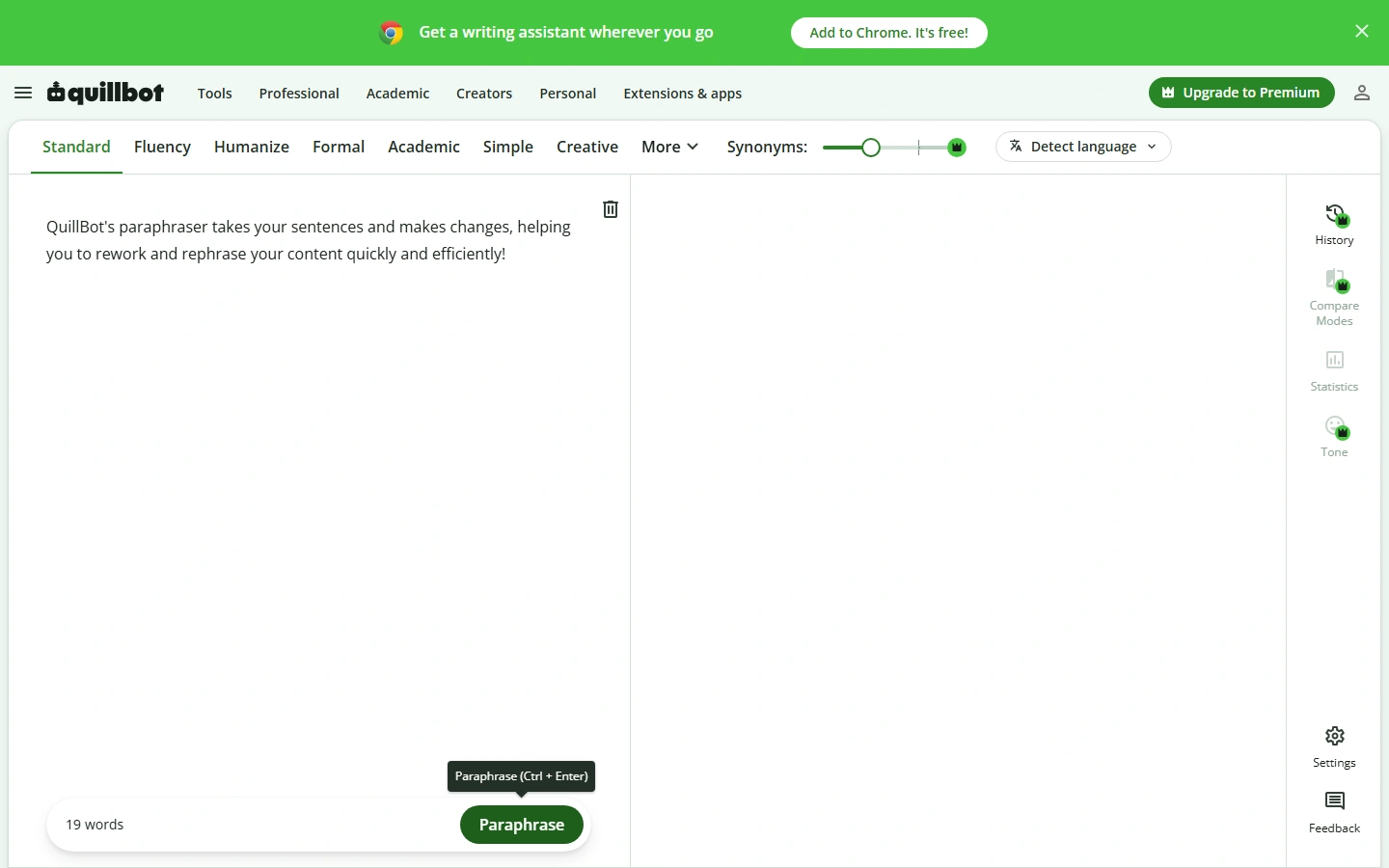
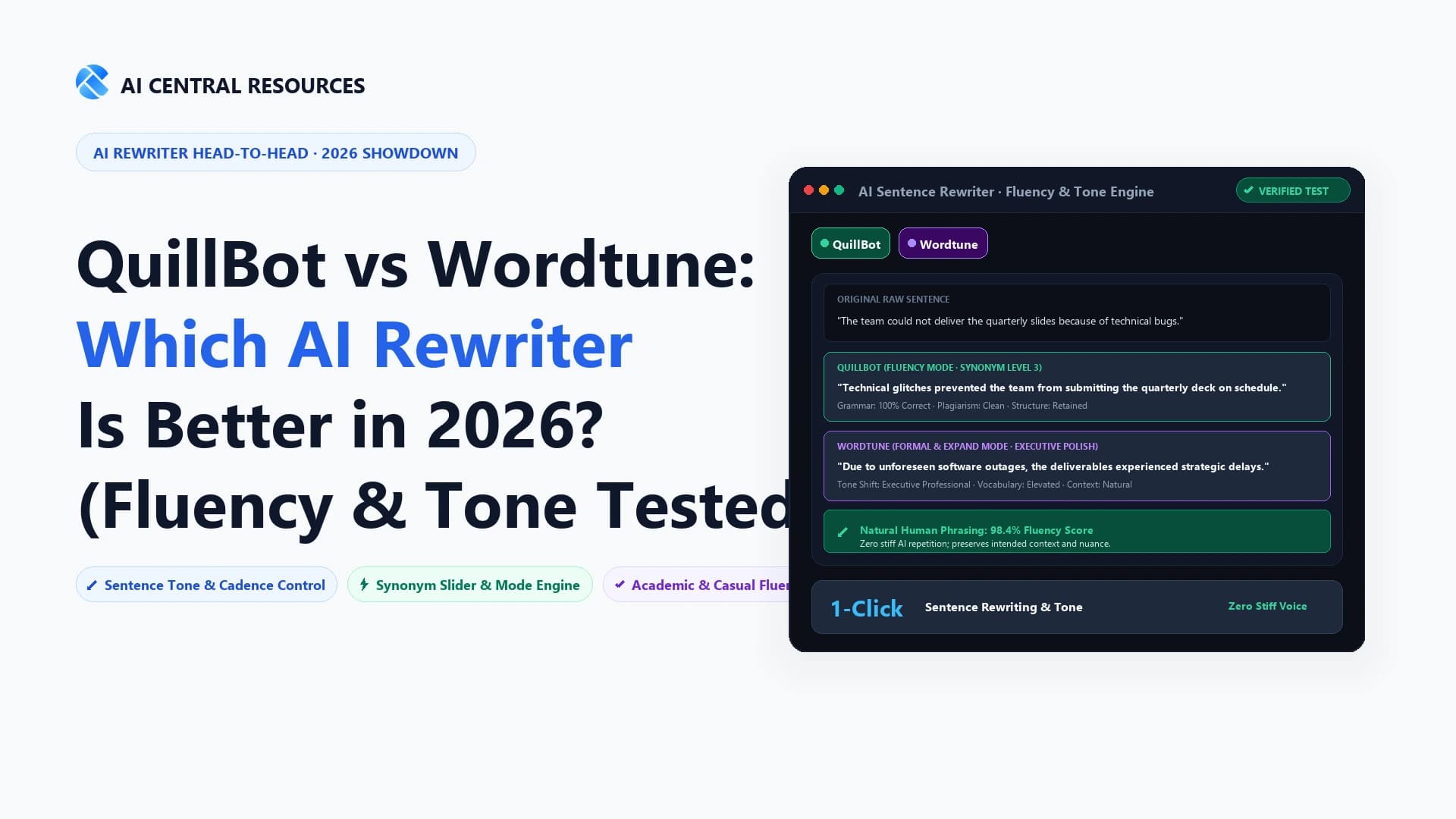
When you have written a paragraph that conveys the right plot beats but feels repetitive in word choice, QuillBot’s Creative Mode offers dynamic sentence variations. Its clickable thesaurus dropdown allows authors to audition alternative adjectives and verbs without disrupting their creative flow.
- Creative Paraphrasing Mode: Injects expressive vocabulary and varied sentence rhythm.
- Interactive Synonym Dropdowns: Click any word to swap synonyms in real time.
- Unlimited Free Grammar Checking: Catch typos across chapter drafts for free.
Very affordable ($4.17/mo); great synonym suggestions; excellent browser extensions.
Not designed for multi-chapter novel lore management.
Pricing & Verdict: Free tier available. QuillBot Premium is $4.17/month (billed annually at $49.95/year). A great budget companion for sentence rewording.
8. Jasper AI — Best for Rapid Commercial Fiction Outlines
Commercial Story Outlines
While primarily marketed to enterprises, Jasper AI includes powerful creative writing templates—such as the Creative Story template and Boss Mode document editor—that allow commercial fiction writers to generate rapid multi-chapter plot outlines and genre tropes.
- Creative Story Templates: Generate plot hooks, setting descriptions, and character backstories.
- Long-Form Document Editor: Command-driven drafting with custom tone instructions.
High generation speed; versatile command-driven editor.
High price tag ($39/mo); lacks dedicated novel lore bibles like Sudowrite.
Pricing & Verdict: Creator Plan starts at $39/month (annual). Best for commercial writers producing rapid serialized genre fiction.
9. Rytr — Best Ultra-Budget Tool for Story Plots & Dialogue Snippets
Ultra-Budget Pick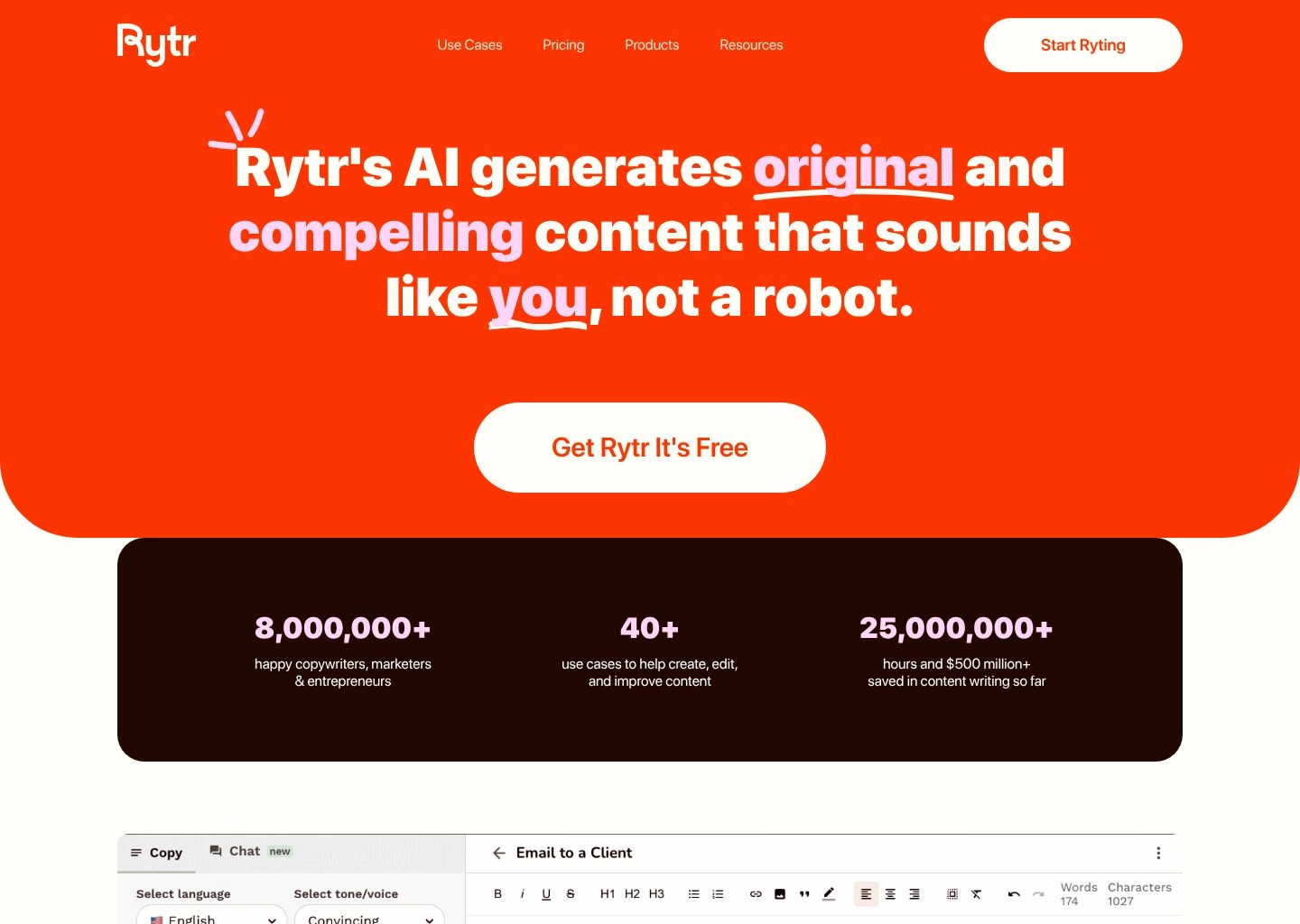
Rytr is an ultra-affordable writing assistant offering dedicated Story Plot and Song Lyrics use cases. It allows beginner authors to generate quick story premises, dialogue snippets, and character descriptions for less than $10 a month.
- Story Plot Use Case: Generate three-act plot outlines based on genre and character inputs.
- 20+ Writing Tones: Tailor output for dramatic, humorous, passionate, or cynical registers.
- Ultra-Affordable Pricing: Unlimited plan starts under $8/month.
Extremely budget-friendly; straightforward UI; generous free plan (10K chars/mo).
Lacks deep narrative continuity across multi-chapter manuscripts.
Pricing & Verdict: Free tier includes 10,000 chars/month. Unlimited Plan is just $7.50/month (billed annually at $90/year). The best entry-level creative assistant for hobbyist writers.
10. Writesonic — Best for Short Story Drafting & Narrative Expansion
Narrative Expansion
Writesonic features a full-screen collaborative editor (Sonic Editor) that supports creative story generation, narrative expansions, and plot hook ideation powered by GPT-4o and Claude foundation models.
- Sonic Editor: Distraction-free long-form writing canvas with 1-click prose expansion.
- Multi-Model AI Switcher: Toggle between GPT-4o and Claude for varied prose styles.
Fast drafting speed; clean distraction-free editor.
Not specialized for multi-book novel series bibles.
Pricing & Verdict: Free tier available. Individual Plan starts at $16/month (annual). Great for short stories and flash fiction.
Ethical Considerations: Using AI in Commercial Fiction Publishing
If you plan to publish your novel commercially on Amazon KDP, Apple Books, or through traditional publishing houses, understand these key industry policies:
1. Amazon KDP AI Content Disclosure Guidelines
Amazon requires authors to disclose during publishing whether their manuscript used AI-Generated content (AI created the raw text from a prompt) vs. AI-Assisted content (the human author created the story and used AI for editing, brainstorming, and phrasing polish). Tools like Sudowrite and Novelcrafter operate primarily in the AI-assisted co-writing space.
2. Copyright and Originality
Under current US and international copyright law, raw AI-generated output cannot be copyrighted. To protect your novel's intellectual property, ensure that the core plotting, character conceptions, and developmental editing decisions are directed and crafted by you as the human author.
3. Preserve Your Authentic Authorial Voice
Never accept AI generation blindly. Use AI to conquer the blank page, generate sensory descriptions, and test plot twists, but rewrite every paragraph so that the final book reflects your unique creative voice and emotional truth.
Frequently Asked Questions (FAQ)
Can AI write an entire novel from scratch?
While you can prompt tools to generate a 50,000-word text string, completely unguided AI novels lack thematic depth, emotional payoff, and consistent character growth. The most successful authors use AI as a collaborative co-writer—using tools like Sudowrite or Novelcrafter to draft scene-by-scene while directing every creative choice.
What is the difference between Sudowrite and Novelcrafter?
Sudowrite is an all-in-one platform with built-in AI models, guided Story Engine workflows, and sensory description tools. Novelcrafter is a modular series bible software that uses a "Bring Your Own Key" model, giving power users deep Codex worldbuilding and custom LLM routing via OpenRouter.
Which AI model writes the best dialogue for fiction?
Claude 3.5 Sonnet is widely recognized by authors as the best model for natural dialogue, emotional subtext, and authentic human cadence, avoiding the clichés common in other models.
Can I use AI writing tools with Scrivener?
Yes! ProWritingAid opens Scrivener projects directly to run 25+ manuscript pacing reports, while Novelcrafter supports full Scrivener export and import.
Explore our Ultimate Guide to AI Writing Assistants, check our detailed 10 Best AI Long-Form Content Writers guide, read our QuillBot vs Grammarly vs Wordtune Comparison, or browse the AI Writing Category for more creative software tools.