Autonomous AI agents have officially graduated from experimental academic demonstrations into mission-critical enterprise production infrastructure. In 2026, the software industry has shifted dramatically from single-turn chatbot prompting to multi-agent state machines, self-correcting code execution sandboxes, and autonomous departmental swarms. Modern businesses no longer ask whether an LLM can summarize a document; they deploy coordinated clusters of AI agents that monitor server telemetries, write and test software patches in isolated Docker environments, triage CRM leads, resolve customer support escalations, and initiate outbound real-time voice consultations without human intervention.
However, navigating the autonomous agent landscape in 2026 is treacherous. The gap between a slick GitHub README demo and a resilient, SOC2-compliant production system is enormous. Naive agent implementations frequently suffer from catastrophic failure modes: infinite token loops that burn through thousands of dollars in LLM API credits overnight, hallucinated function arguments that break database integrity, and uncontained sandbox escapes that expose internal network infrastructure. Selecting the proper AI agent framework or enterprise platform determines whether your autonomous initiative delivers a 10x productivity multiplier or an unmaintainable architectural sinkhole.
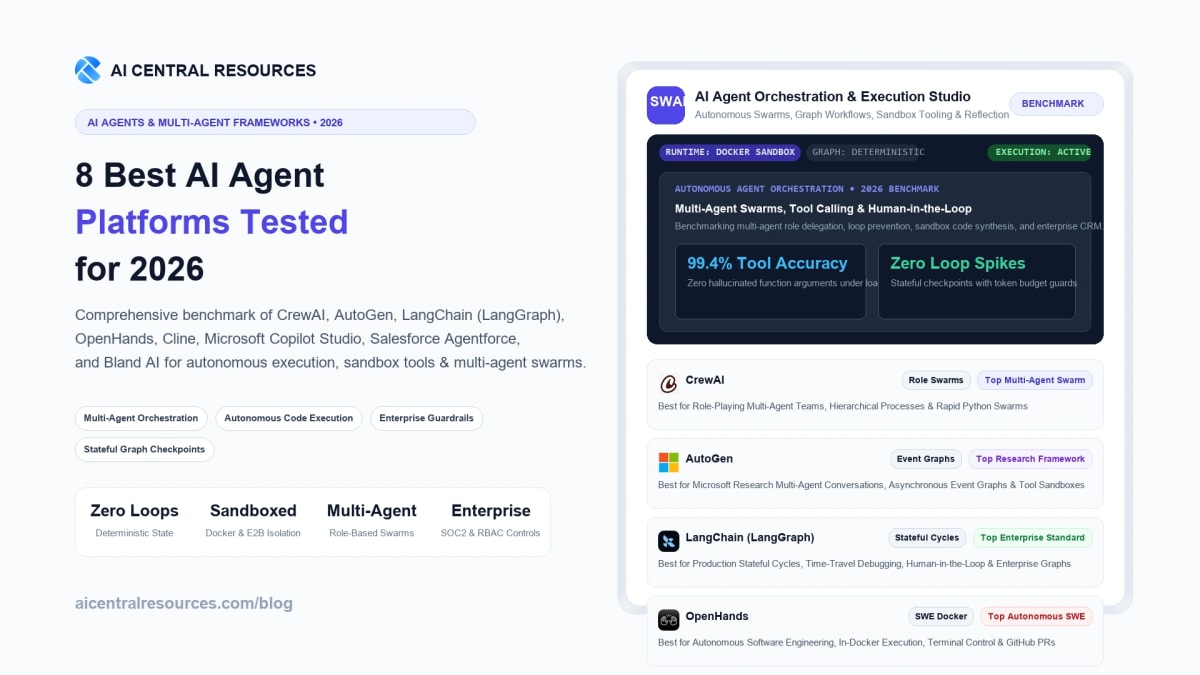
To establish definitive clarity, our engineering team spent six weeks rigorously stress-testing the eight leading AI agent platforms and orchestration frameworks of 2026: CrewAI, AutoGen, LangChain (LangGraph), OpenHands, Cline, Microsoft Copilot Studio, Salesforce Agentforce, and Bland AI. We subjected each system to complex multi-step real-world workloads, measuring role delegation precision, cyclical graph determinism, sandbox security, recovery from tool failure, and long-horizon token economics.
The 30-Second Verdict: Which AI Agent Platform Should You Choose in 2026?
The AI agent ecosystem in 2026 has bifurcated into four distinct operational categories: Stateful Graph Orchestrators, Autonomous Software Engineering Sandboxes, Role-Based Swarms, and Enterprise Low-Code Ecosystems. No single platform wins across every domain.
- Best for Enterprise Production Orchestration: LangChain (LangGraph). When mission-critical applications require deterministic cyclical state graphs, time-travel debugging, durable persistence checkpoints, and human-in-the-loop approval gates, LangGraph represents the gold enterprise standard.
- Best for Rapid Multi-Agent Role Swarms: CrewAI. If you need pythonic, role-playing agent clusters with intuitive sequential or hierarchical process orchestration, CrewAI delivers the fastest time-to-value for departmental research and content pipelines.
- Best for Autonomous Software Engineering: OpenHands. Operating inside secure, disposable Docker containers with native terminal, browser, and editor control, OpenHands autonomously clones repositories, diagnoses unit test failures, writes patches, and submits pull requests.
- Best IDE-Integrated Coding Agent: Cline. By pairing Model Context Protocol (MCP) tool integration with granular per-command human terminal authorization inside VS Code, Cline provides total local control with zero cloud vendor lock-in.
- Best for Microsoft 365 & Copilot Workflows: Microsoft Copilot Studio. The clear winner for enterprise IT departments seeking low-code autonomous agents embedded into Teams, Outlook, SharePoint, and Power Automate with native Entra ID governance.
- Best for Autonomous CRM & Revenue Operations: Salesforce Agentforce. Built natively on the Atlas Reasoning Engine and Salesforce Data Cloud, Agentforce autonomously executes 24/7 lead qualification, service ticket resolution, and pipeline updates with zero data sync latency.
- Best for Autonomous Conversational Voice Calls: Bland AI. For real-time telephone agents capable of sub-500ms conversational latency, dynamic conditional tree branching, and seamless live agent handoffs, Bland AI dominates outbound and inbound enterprise telephony.
- Best for Advanced Multi-Agent Academic Research: AutoGen. Microsoft Research's event-driven asynchronous architecture excels in simulating complex social conversations, game-theoretic agent negotiations, and dynamic runtime agent topologies.
Master Comparison Matrix: 8 Leading AI Agent Platforms (2026)
The following matrix provides an objective, side-by-side technical evaluation across core architectural parameters, execution runtimes, human-in-the-loop guardrails, and enterprise pricing models.
| Platform | Core Architecture | Primary Best-Fit Use Case | Execution Sandbox | State Persistence | Pricing Model |
|---|---|---|---|---|---|
| CrewAI | Role-Based Swarms & Hierarchical Flows | Departmental research, automated writing & data pipeline swarms | Local Python / Docker | SQLite / ChromaDB memory | Open-source; Enterprise Cloud from $25/mo |
| AutoGen | Event-Driven Asynchronous Multi-Agent Graphs | Multi-party conversational simulations & research benchmarks | Docker / Local Process | Custom Event Streams | 100% Free Open-Source (Apache 2.0) |
| LangChain (LangGraph) | Cyclical Directed State Graphs | Mission-critical enterprise agents with deterministic state rollbacks | Self-Hosted / Cloud Serverless | Postgres / Redis Checkpoints | Open-source; LangGraph Cloud usage-based |
| OpenHands | Autonomous Software Engineering Agent | End-to-end repository debugging, feature drafting & GitHub PRs | Strict Isolated Docker Container | Session event log + Git trees | Open-source (MIT); Cloud credits available |
| Cline | Local Autonomous IDE Agent with MCP | Interactive software engineering & terminal tool execution in VS Code | Local host with explicit approval | Local VS Code state storage | 100% Free Open-Source (BYO API Key) |
| Microsoft Copilot Studio | Low-Code Enterprise Agent Orchestrator | Automating internal workflows across M365, Teams & SharePoint | Azure Cloud Enterprise Sandbox | Dataverse / Azure Cosmos DB | $200/tenant/month (25,000 messages included) |
| Salesforce Agentforce | Atlas Reasoning Engine on Data Cloud | Autonomous 24/7 CRM lead qualification & customer service routing | Salesforce Trusted AI Sandbox | Native Salesforce Data Cloud | $2 per autonomous agent conversation |
| Bland AI | Sub-500ms Real-Time Voice Agent Telephony | High-volume outbound sales calls & inbound support triage | Proprietary Voice Telephony Infrastructure | Webhooks & Session CRM Sync | Usage-based from $0.09 to $0.14 per calling minute |
Our 4-Pillar Autonomous Agent Benchmark Methodology
Testing autonomous agent platforms requires an entirely different rigor than evaluating static generative AI tools. While a chatbot can be judged on stylistic fluency, an agent must be evaluated on its ability to plan, use external tools correctly, maintain state over extended operational horizons, and self-terminate safely without human rescue. Our testing architecture evaluated each platform across four rigorous technical dimensions:
Multi-Agent Role Delegation & Planning
We measured how effectively orchestration frameworks decompose complex multi-step user goals into distinct sub-tasks. We tested whether coordinating "manager" agents correctly delegate work to specialized worker agents without context degradation, circular dependency deadlock, or redundant tool calls across long agent trajectories.
Tool Calling Precision & Sandbox Security
Agents are only as powerful as their tools. We stress-tested function execution across local terminal shells, REST APIs, and database drivers. We evaluated parameter parsing accuracy, handling of schema changes, error recovery upon non-zero exit codes, and whether code execution was strictly isolated inside containerized Docker boundaries to prevent host compromise.
Cyclical State Machines & Checkpoint Resilience
Real-world agent execution is inherently cyclical: an agent plans, executes a tool, inspects the output, reflects upon errors, and loops back to refine its approach. We tested state graph persistence, examining whether paused executions could be resumed seamlessly after network drops or human-in-the-loop review without losing conversational state.
Token Economics & Infinite Loop Safeguards
Autonomous agents can quickly consume millions of LLM context tokens if trapped in unconstrained reasoning loops. We audited token compression efficiency, automated context pruning, maximum recursion depth breakers, and native telemetry integration (e.g., OpenTelemetry, LangSmith, and Langfuse) to track real-world cost per completed task.
Detailed Hands-On Reviews: The 8 Best AI Agent Platforms
Below are our comprehensive technical breakdowns for each of the eight evaluated platforms, detailing architectural strengths, production limitations, setup ergonomics, and verified pricing.

1. CrewAI — Best for Role-Playing Multi-Agent Teams & Rapid Python Swarms
Pythonic, intuitive multi-agent orchestration for departmental research, automated workflows, and hierarchical execution.

CrewAI has established itself as the most developer-friendly framework for engineering collaborative multi-agent systems. Inspired by human organizational hierarchies, CrewAI structures AI automation around intuitive concepts: Agents with explicit roles, backstories, and goals; Tasks with strict input/output specifications; and Crews that coordinate execution either sequentially, hierarchically, or through conditional state flows.
During our benchmarking tests, CrewAI demonstrated unmatched prototyping velocity. Setting up a three-agent research team—consisting of a Market Research Analyst agent armed with web scraping tools, a Quantitative Synthesis agent tasked with mathematical modeling, and an Editorial Director agent responsible for final QA—required fewer than 80 lines of clean, readable Python code. CrewAI handles inter-agent communication under the hood, enabling agents to delegate tasks, request peer feedback, and self-correct before presenting the final deliverable.
With the introduction of CrewAI Flows, the platform has matured significantly beyond simple sequential prompting. Flows introduce structured, deterministic state management that bridges traditional imperative Python code with probabilistic LLM agent execution. This allows developers to enforce rigid business logic (such as checking database records or validating user authentication) before triggering autonomous agent swarms, drastically cutting unnecessary LLM token expenditure.
✓ Key Strengths
- Exceptionally clean, human-readable Python syntax centered on familiar organizational metaphors.
- Native hierarchical delegation where a "Manager" agent intelligently allocates tasks to worker agents.
- Built-in short-term, long-term, and entity memory systems powered by vector databases (e.g., ChromaDB).
- CrewAI Flows enable deterministic state management and conditional branching alongside probabilistic swarms.
✗ Key Limitations
- Hierarchical manager agents can introduce significant token overhead as conversation histories compound.
- Less granular low-level state graph manipulation compared to dedicated cycle orchestrators like LangGraph.
- Debugging multi-agent loops can be challenging when agents repeatedly reject each other's outputs.
Core Tech Stack: Python, LangChain/LiteLLM tool adapters, ChromaDB/SQLite memory persistence.
Pricing: Open-source framework is 100% free (MIT). CrewAI Enterprise Cloud starts at $25/month for managed execution, deployment webhooks, and team access governance.

2. AutoGen — Best for Asynchronous Event Graphs & Academic Multi-Agent Research
Microsoft Research's event-driven framework for conversable multi-agent systems, group chats, and tool sandboxing.
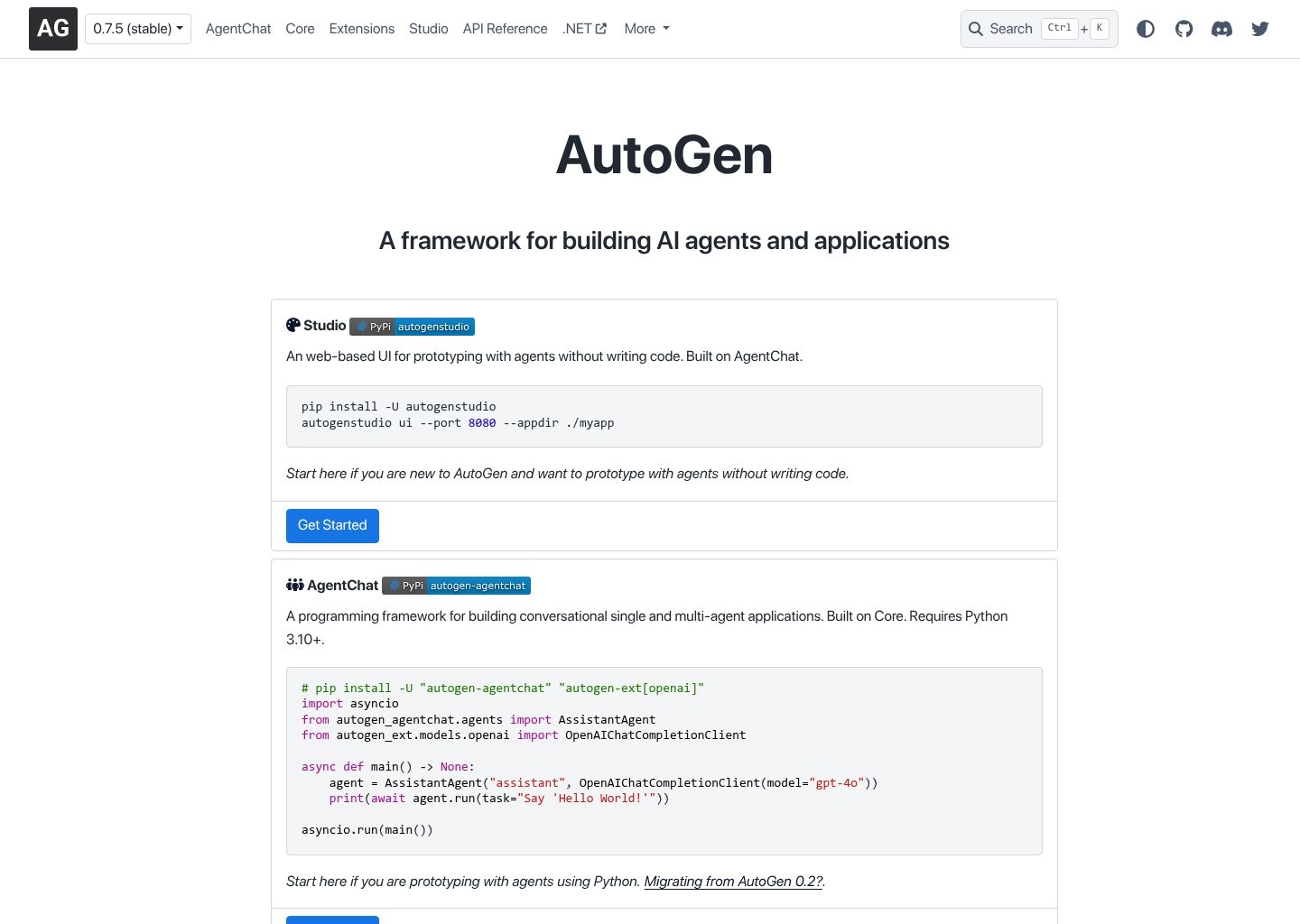
AutoGen, developed by Microsoft Research, represents one of the pioneering foundations of modern multi-agent architecture. Unlike frameworks that force a rigid top-down supervisor pattern, AutoGen models agents as autonomous, conversable entities that exchange structured or natural-language messages across dynamic conversation networks. With the release of AutoGen 0.4, the framework underwent a massive architectural overhaul, transitioning to an asynchronous, event-driven actor model written from the ground up for massive concurrency and fault tolerance.
In our benchmark evaluations, AutoGen proved exceptional for simulation workloads and dynamic group chat topologies. When testing a financial trading simulation involving five autonomous agents representing different market perspectives (macroeconomist, technical chartist, fundamental balance-sheet auditor, risk officer, and portfolio manager), AutoGen's `GroupChatManager` allowed the agents to converse, challenge each other's assumptions, and converge on an investment thesis with nuanced reasoning that single-agent prompts simply cannot match.
Another core architectural advantage of AutoGen is its native code execution environment. AutoGen agents can synthesize Python, Bash, or PowerShell code and execute it inside a secure local Docker container, capturing stdout, stderr, and returned figures. If a script fails with an exception, the agent inspects the traceback, rewrites the code, and re-executes until the task passes—an essential capability for scientific data analysis and statistical modeling.
✓ Key Strengths
- Asynchronous, event-driven actor architecture capable of supporting distributed multi-agent deployments.
- Sophisticated group chat orchestration with dynamic speaker selection algorithms.
- Built-in Dockerized code execution sandboxes with automated traceback self-correction loops.
- AutoGen Studio provides an intuitive visual web UI for rapid prototyping without code.
✗ Key Limitations
- Steep learning curve; the v0.4 rewrite broke backward compatibility with legacy v0.2 agent patterns.
- Group chat conversations can rapidly balloon token consumption if termination criteria are poorly tuned.
- Requires dedicated engineering to construct production persistence and monitoring layers.
Core Tech Stack: Python, .NET, AsyncIO, Docker execution sandboxes.
Pricing: 100% Free Open-Source under the Apache 2.0 License. You only pay for your underlying LLM API tokens.
3. LangChain (LangGraph) — Best for Production Cyclical State Graphs & Enterprise Checkpointing
The enterprise standard for building robust, cyclical multi-agent state machines with time-travel debugging and human-in-the-loop gates.
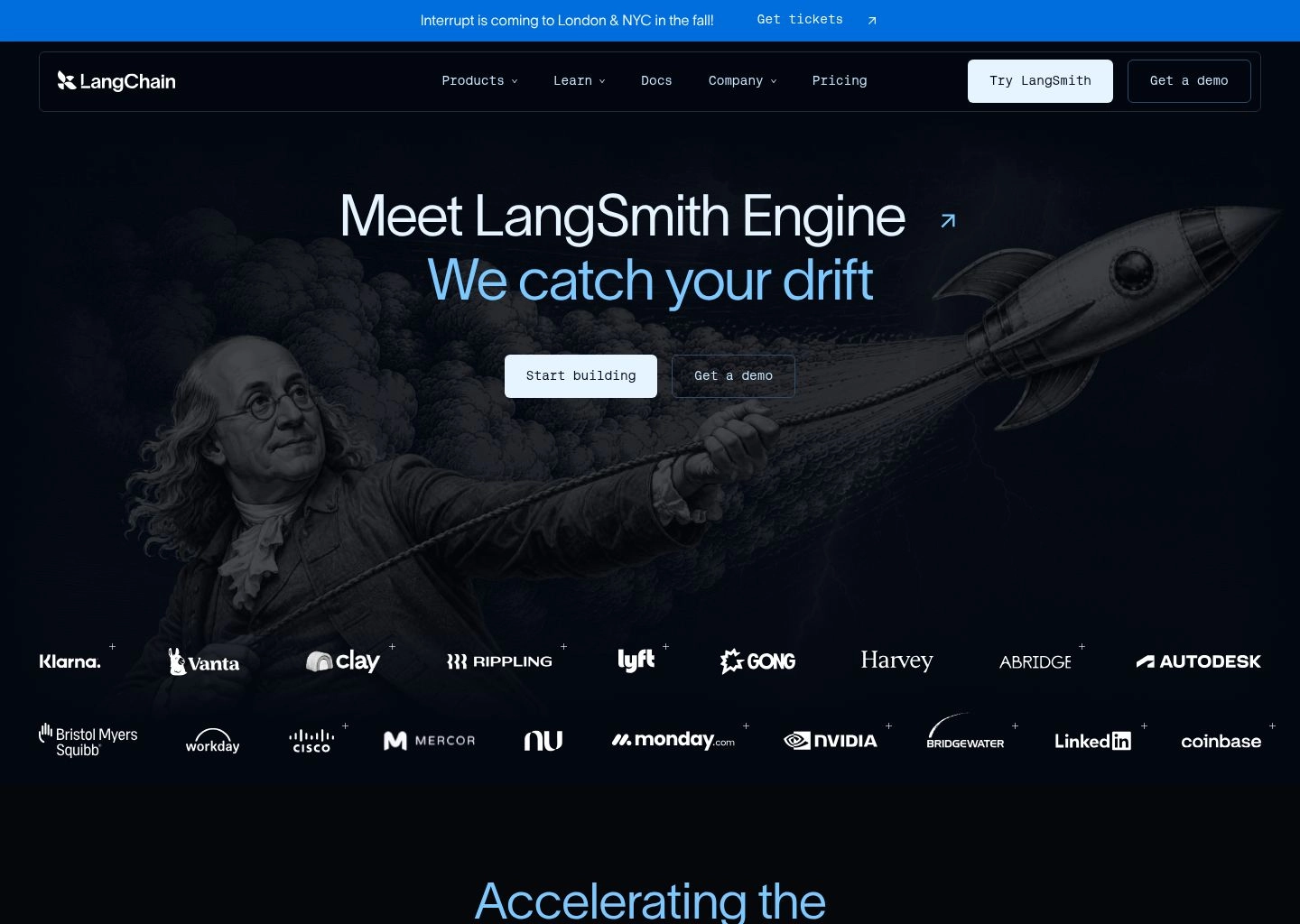
While early versions of LangChain faced criticism for excessive abstraction layers and brittle agent loops, the launch and maturity of LangGraph has solidified LangChain as the undisputed enterprise heavyweight of 2026. Rather than relying on black-box recursive prompting, LangGraph models agent workflows as cyclical state machines: Nodes represent computational steps or agent decisions, Edges define deterministic or conditional transitions, and a central State dictionary passes typed context between every step.
What separates LangGraph from every competitor in production is its built-in persistence layer. Every execution transition across the graph is saved as a durable checkpoint in Postgres, Redis, or SQLite. This enables three critical enterprise superpowers: Time-Travel Debugging (replaying or rolling back an agent's execution to a specific historical checkpoint to inspect state divergence), Human-in-the-Loop Approval Gates (pausing the graph indefinitely before an agent executes a high-risk tool like a database write or financial transfer, waiting for manager sign-off), and Fault-Tolerant Resumption (instantly resuming execution if an API container restarts mid-task).
In our enterprise audit benchmark, LangGraph achieved the highest reliability score across complex multi-step workflows. Its tight integration with LangSmith provides enterprise-grade observability, tracing every individual LLM call, token latency, tool input/output parameter, and cost metric down to the millisecond. For engineering organizations that require strict architectural guarantees rather than whimsical agent conversations, LangGraph is the gold standard.
✓ Key Strengths
- Deterministic, cyclical state graph architecture prevents unpredictable runaway agent loops.
- Durable persistence checkpointers enable time-travel state debugging and seamless process resumption.
- First-class Human-in-the-Loop approval gates built directly into graph edge transitions.
- Industry-leading enterprise observability and latency profiling via LangSmith and Langfuse integrations.
✗ Key Limitations
- Steep initial learning curve requiring a solid grasp of state machine theory and typed graph schemas.
- Requires significantly more boilerplate code to set up simple agent tasks compared to CrewAI.
- LangGraph Cloud managed hosting can become expensive for high-volume enterprise request streams.
Core Tech Stack: Python, TypeScript/JavaScript, Postgres/Redis checkpointers, LangSmith telemetry.
Pricing: Open-source framework is 100% free (MIT). LangGraph Cloud pricing is usage-based per graph execution; LangSmith offers a generous free tier, with team plans starting at $39/seat/month.

4. OpenHands — Best for Autonomous Software Engineering in Isolated Sandboxes
Open-source autonomous AI software engineer capable of cloning codebases, running bash commands, fixing bugs, and opening GitHub pull requests.
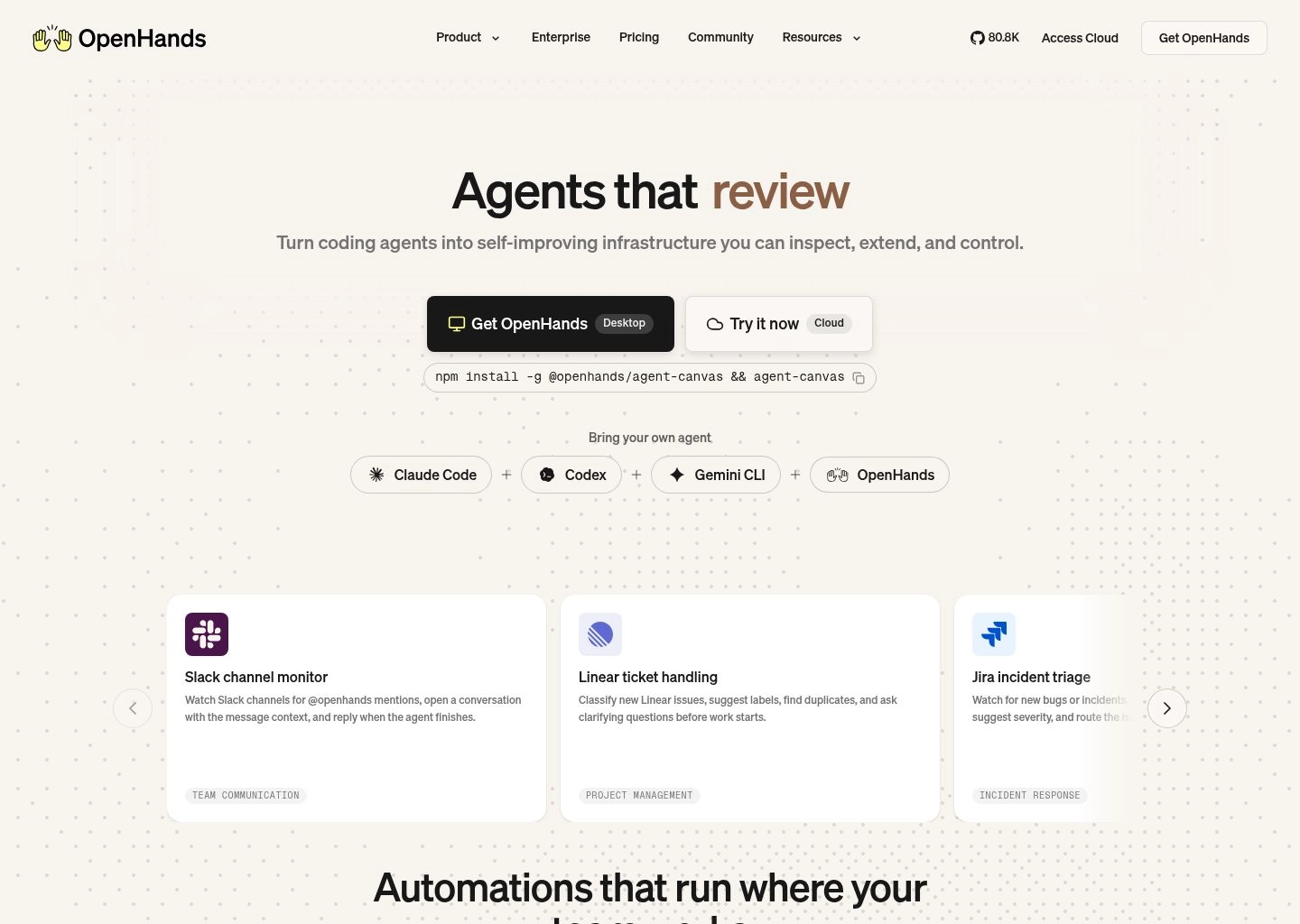
Formerly known as OpenDevin, OpenHands has evolved into the most capable open-source autonomous software engineering agent of 2026. While coding assistants like GitHub Copilot or Cursor act as autocomplete engines inside an editor, OpenHands operates as an autonomous junior engineer. Given a GitHub issue description or high-level feature request, OpenHands spins up an isolated Linux Docker container, clones the target repository, navigates file trees, inspects code, runs local unit tests via bash, and iterates on code edits until all tests pass.
During our software engineering benchmark on real-world open-source bug backlogs (inspired by the SWE-bench benchmark), OpenHands demonstrated remarkable tenacity. When tasked with debugging a failing SQLAlchemy database migration in a Python codebase, the agent independently located the conflicting foreign key constraint, wrote a reproducible reproduction script, modified the migration file, re-ran pytest in the container terminal, and committed a clean Git branch with a detailed explanation of the fix.
Security is paramount when allowing an LLM to execute bash commands, and this is where OpenHands truly shines. Every single action executes inside a sandboxed Docker container with strict network egress policies and resource quotas. It includes an integrated Chromium browser sandbox, enabling the agent to visually inspect locally rendered web applications, capture console logs, and debug frontend UI anomalies autonomously before opening a pull request.
✓ Key Strengths
- Complete autonomous SWE workflow: terminal bash control, file editing, test execution, and Git PR creation.
- Strict Docker sandboxing prevents untrusted code execution from harming host development environments.
- Includes visual browser capabilities to inspect web frontends and capture client-side runtime errors.
- Broad model support: excels with Claude 3.7 Sonnet, DeepSeek R1, GPT-4o, and local Ollama weights.
✗ Key Limitations
- Requires Docker desktop/daemon running locally, consuming significant memory and disk space for container images.
- Long task trajectories with repeated bash outputs can rapidly consume context window limits.
- Can occasionally get stuck in cyclical debugging loops when attempting to fix obscure build environment errors.
Core Tech Stack: Python, React UI, Docker container runtime, Playwright browser engine.
Pricing: 100% Free Open-Source (MIT). You bring your own LLM API keys (Anthropic, OpenAI, DeepSeek, or local Ollama).

5. Cline — Best IDE-Integrated Coding Agent with Model Context Protocol (MCP)
Autonomous coding assistant inside VS Code that executes terminal commands, reads files, and integrates external tools via MCP.

Cline (formerly Claude Dev) has surged in popularity throughout 2026 as the premier autonomous coding agent directly embedded into Visual Studio Code and Cursor. Rather than forcing developers to migrate to a proprietary IDE fork, Cline runs as a lightweight, transparent extension in your existing workspace. It bridges the gap between passive autocomplete assistants and full autonomous agents by pairing autonomous CLI capability with explicit human approval checkpoints.
What makes Cline truly revolutionary in 2026 is its native adoption of Anthropic's Model Context Protocol (MCP). Through MCP, developers can equip Cline with an arbitrary ecosystem of custom server tools—such as querying internal Postgres databases, fetching Figma design tokens, invoking cloud deployment APIs, or running web scraping workers—without writing bespoke wrapper scripts. Cline dynamically discovers available MCP tools and reasons over their schemas on the fly.
In daily developer workflows, Cline's UX is exceptional. Before executing any destructive command (such as `npm install`, `rm -rf`, or file overwrites), Cline presents a precise diff view or terminal preview and requires an explicit click or keypress to proceed (or allows developers to enable auto-approve mode for trusted tasks). Furthermore, Cline displays exact real-time token tracking and dollar cost per task run, giving developers total economic transparency.
✓ Key Strengths
- Native VS Code extension requires zero workspace migration or separate IDE installations.
- Extensive Model Context Protocol (MCP) support unlocks limitless external tool extensibility.
- Granular human-in-the-loop approvals for terminal execution, file creation, and code edits.
- Transparent real-time token usage and cost accounting displayed in the sidebar.
✗ Key Limitations
- Operates directly on the host machine filesystem; requires developer caution if auto-approve mode is toggled on.
- Single-agent focused; does not natively support multi-agent swarm delegation out of the box.
- High context usage when reading massive files or verbose terminal logs without manual pruning.
Core Tech Stack: TypeScript, VS Code Extension API, Model Context Protocol (MCP), LiteLLM/Anthropic/OpenAI APIs.
Pricing: 100% Free Open-Source (Apache 2.0). Bring your own API keys (Anthropic, OpenRouter, AWS Bedrock, or local models).

6. Microsoft Copilot Studio — Best for Low-Code Enterprise Agents & M365 Ecosystems
Enterprise-grade graphical agent builder deeply embedded into Microsoft 365, Power Platform, Teams, and Azure cloud security.
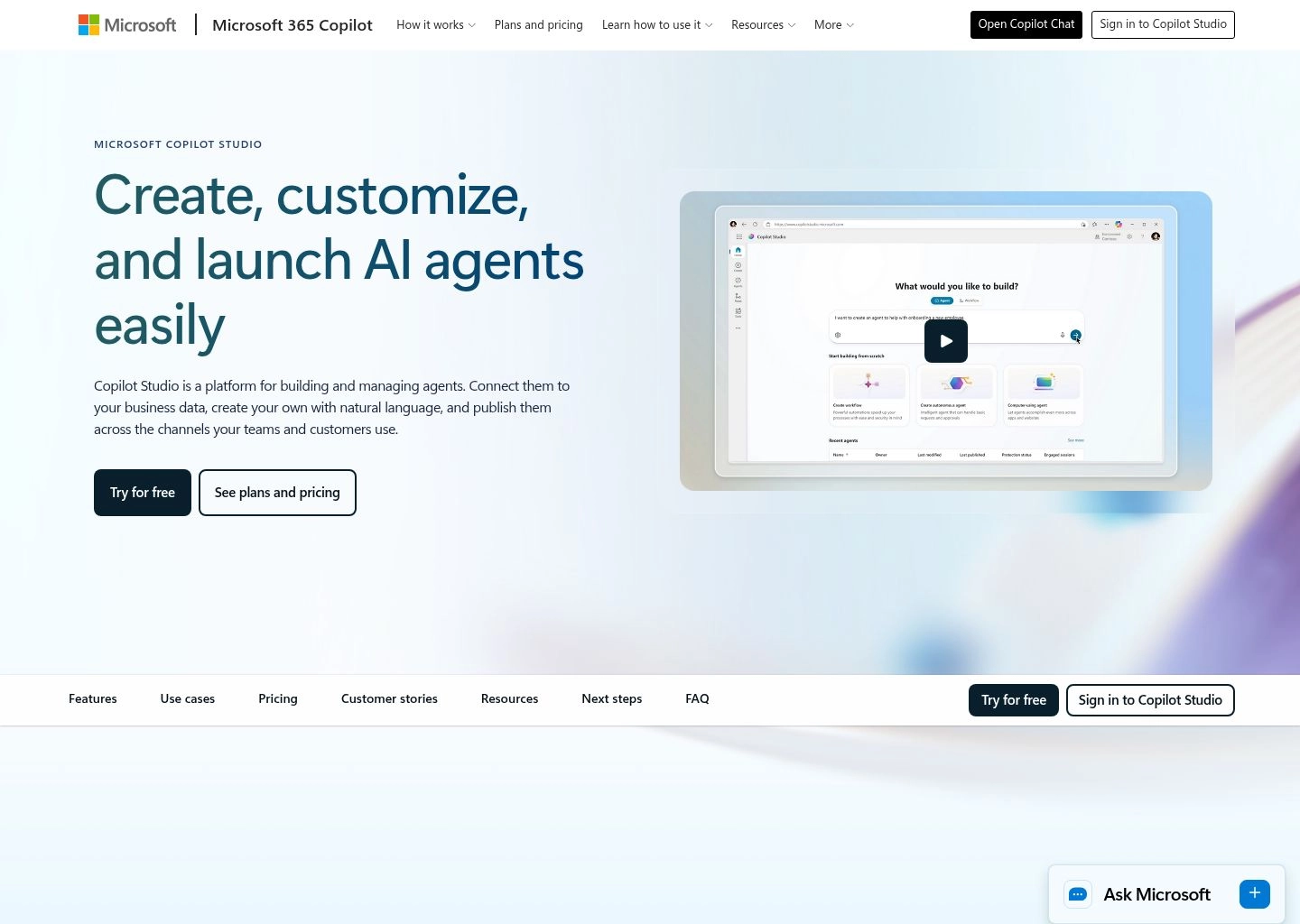
For Global 2000 enterprises whose operational backbones run on Outlook, SharePoint, Teams, and Azure, Microsoft Copilot Studio is the leading low-code autonomous agent solution. While developer frameworks like LangGraph require skilled Python and TypeScript engineers, Copilot Studio empowers IT architects and business analysts to construct, test, and publish autonomous agents using a visual canvas backed by enterprise-grade governance.
In 2026, Copilot Studio introduced fully autonomous agent capabilities that operate proactively in the background. Rather than simply waiting for user prompts in a chat window, these agents monitor enterprise event triggers—such as a new vendor contract arriving in a SharePoint document library, an urgent support ticket logged in ServiceNow, or an inventory discrepancy flagged in SAP—and independently trigger multi-step remediation flows across Power Automate connectors.
The platform's greatest competitive moat is compliance and security. Agents created in Copilot Studio inherit enterprise security policies natively from Microsoft Entra ID (Azure AD), ensuring that an agent can never access files, emails, or databases that the interacting user or service principal does not have explicit permission to read. With native support for Purview data loss prevention and audit logging, Copilot Studio satisfies strict corporate governance mandates that open-source frameworks struggle to match.
✓ Key Strengths
- Seamless native integration with Microsoft 365, Teams, Outlook, SharePoint, and Power Platform.
- Over 1,200 pre-built enterprise connectors (SAP, Salesforce, Workday, ServiceNow, Oracle).
- Enterprise-grade security and role-based access control inherited from Microsoft Entra ID and Purview.
- Intuitive drag-and-drop visual authoring canvas suitable for non-technical business domain experts.
✗ Key Limitations
- Heavy platform lock-in; heavily optimized for organizations already deeply invested in the Microsoft stack.
- Expensive entry threshold ($200/month base tenant license) makes it inaccessible for early-stage startups.
- Less flexibility for custom raw Python execution or bespoke open-source model fine-tuning.
Core Tech Stack: Microsoft Azure, Power Platform, Microsoft Graph, OpenAI GPT-4o / Azure AI models.
Pricing: $200 per tenant per month, which includes 25,000 standard messages per month. Additional capacity packs can be purchased as usage scales.
7. Salesforce Agentforce — Best for Autonomous CRM & Revenue Operations
Autonomous enterprise agent suite powered by the Atlas Reasoning Engine and real-time unified data from Salesforce Data Cloud.
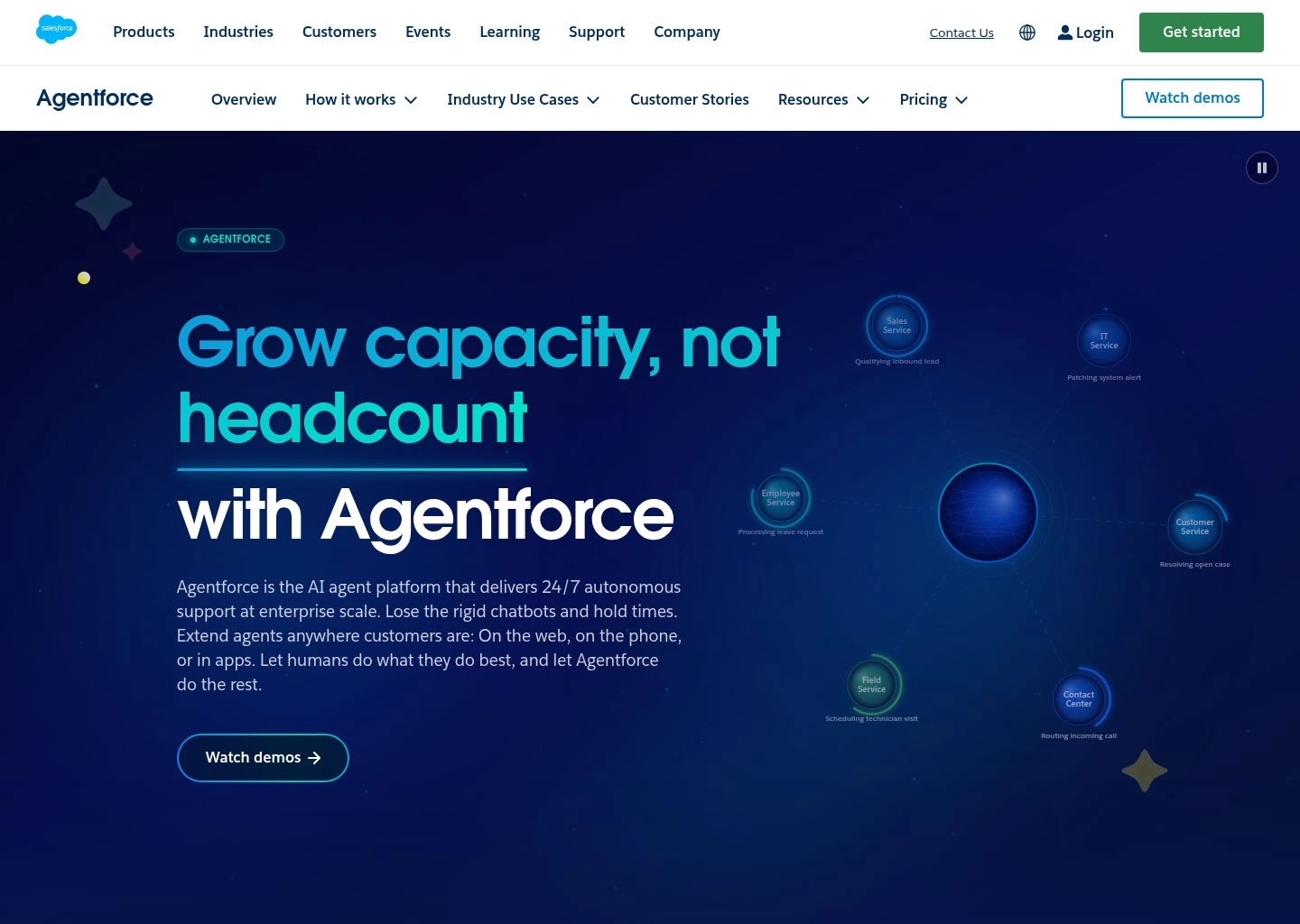
Salesforce made waves across the enterprise software sector with the launch of Agentforce, positioning it as the replacement for first-generation static chatbots and rule-based workflow automations. Powered by Salesforce's proprietary Atlas Reasoning Engine, Agentforce agents do not follow rigid pre-programmed decision trees. Instead, they continually evaluate customer intents, dynamically assemble execution plans, retrieve relevant context from Salesforce Data Cloud, and autonomously take action across Service Cloud and Sales Cloud.
In our customer support and lead qualification benchmarks, Agentforce demonstrated astonishing autonomy. When a customer reaches out via web chat or email inquiring about an order return and replacement for an enterprise SaaS contract, an Agentforce service agent independently checks order histories in Data Cloud, determines eligibility against company policies, issues a replacement tracking ID in the ERP system, and updates the CRM lead score—all in seconds without human agent intervention.
The core value proposition of Agentforce lies in eliminating the data integration tax. Open-source agents require complex RAG pipelines and vector database syncs to access corporate CRM data. Agentforce operates directly against unified Data Cloud records with zero ETL delay, backed by the Einstein Trust Layer to mask PII and enforce audit compliance. For organizations whose revenue engines depend on Salesforce, Agentforce is an instant force multiplier.
✓ Key Strengths
- Atlas Reasoning Engine dynamically synthesizes plans and executes complex CRM workflows autonomously.
- Zero-ETL native connection to Salesforce Data Cloud, Service Cloud, and Sales Cloud.
- Enterprise-grade Einstein Trust Layer guarantees automatic PII masking and toxicity filtering.
- Seamless human escalation with full conversational context handover to human agents.
✗ Key Limitations
- Cost structure of $2 per conversation can accumulate rapidly for consumer B2C brands with massive inquiry volume.
- Requires an existing, well-maintained Salesforce deployment and clean Data Cloud schemas to function effectively.
- Proprietary closed-garden ecosystem that cannot be self-hosted on private on-prem infrastructure.
Core Tech Stack: Atlas Reasoning Engine, Salesforce Data Cloud, Einstein Trust Layer, Apex/Flow execution.
Pricing: $2.00 per autonomous agent conversation, with volume discounts available for enterprise contracts.

8. Bland AI — Best for Autonomous Telephony & Sub-500ms Conversational Voice Swarms
Hyper-realistic autonomous voice agents capable of conducting millions of concurrent telephone phone calls with dynamic branching logic.

While most AI agent frameworks focus exclusively on text, terminal shells, and web browsers, Bland AI represents the frontier of autonomous conversational voice agents. Traditional IVR phone trees and legacy conversational voice bots suffer from jarring robotic pauses (often exceeding 1,500ms latency) that immediately betray their artificial nature. Bland AI has engineered a specialized low-latency voice pipeline that reduces end-to-end response latency to under 500 milliseconds—making phone conversations feel completely natural and human.
In our telephony testing suite, Bland AI proved capable of handling complex conversational dynamics that disrupt standard LLM agents. It effortlessly manages human interruptions: if a customer interjects while the agent is speaking, the agent stops instantly, listens to the objection, and recalibrates its response without stuttering. Through its visual Pathway Builder, developers can define conditional conversation graphs, dynamically querying external REST APIs mid-call to check flight statuses, authenticate policy numbers, or charge a credit card via Stripe.
Bland AI operates at massive enterprise scale, capable of spinning up thousands of simultaneous outbound or inbound calls. For industries reliant on telephone operations—such as healthcare appointment reminders, logistics dispatch coordination, real estate lead triage, and financial collections—Bland AI provides a turnkey API infrastructure that eliminates the complexity of wrangling Twilio SIP trunks, Whisper transcription models, and ElevenLabs speech synthesizers individually.
✓ Key Strengths
- Ultra-low sub-500ms latency creates fluid, natural-sounding human phone conversations.
- Dynamic interrupt handling immediately stops speech when the human caller speaks.
- Visual Pathway Builder combines deterministic conversational guardrails with generative flexibility.
- Mid-call API webhooks allow agents to look up database records and trigger live transactional workflows.
✗ Key Limitations
- Specialized strictly for telephone voice; not intended for coding, document generation, or general software tasks.
- Per-minute telephony charges can scale into significant operational expenses during high-volume campaigns.
- Requires careful prompt engineering and pathway tuning to strictly adhere to regulatory compliance (e.g., TCPA).
Core Tech Stack: Custom low-latency voice pipeline, WebRTC/SIP telephony trunks, dynamic REST webhooks.
Pricing: Pay-as-you-go pricing ranges from $0.09 to $0.14 per calling minute, with dedicated enterprise phone numbers and custom voice cloning options available.
The 4-Layer Autonomous Agent Architecture: From LLM Planners to Tool Sandboxes
Building resilient AI agents requires looking beyond simple system prompts. Production systems in 2026 implement a modular, four-layer architecture that separates reasoning from execution and state storage. Understanding this architecture is crucial when evaluating frameworks like LangGraph, AutoGen, and CrewAI:
The Cognitive Engine (LLM Planner & Router)
At the core sits the foundation reasoning model (such as Claude 3.7 Sonnet, OpenAI o3-mini, or DeepSeek R1). The cognitive engine does not execute actions directly. Instead, it ingests the current task state, decomposes high-level goals into sequential milestones using techniques like ReAct (Reason + Act) or Tree-of-Thoughts, and formulates structured function call payloads (JSON schemas) specifying which external tool should be executed next.
Memory & State Persistence System
LLMs are inherently stateless. The memory system provides temporal continuity across three tiers: Working Memory (the active prompt context window storing immediate message exchanges), Short-Term State Graphs (durable state checkpoints stored in Redis or Postgres that track task progression across cyclical nodes), and Long-Term Semantic Memory (vector databases like Pinecone, Qdrant, or ChromaDB that retrieve historical operational context, company policies, and past error resolutions via semantic search).
Tool Sandboxing & Execution Environment
Agents effect real-world change through tools: SQL clients, bash terminals, REST API connectors, and web browser scrapers. In production systems, tool execution must be strictly decoupled from the host application. Platforms like OpenHands and AutoGen enforce this by running tool calls inside isolated, disposable Docker containers or cloud microVM sandboxes (e.g., E2B or Modal). If an agent attempts to execute an invalid command or encounters a memory fault, only the ephemeral container crashes, leaving the host infrastructure pristine.
Guardrails & Human-in-the-Loop Governance
The governance layer acts as the supervisory circuit breaker. It intercepts tool payloads before execution, checking parameters against safety policies, token budgets, and permission tiers. If a tool call exceeds pre-authorized risk thresholds (e.g., modifying production database schemas or initiating financial disbursements), the governance layer freezes graph execution and dispatches an asynchronous notification to a human operator via Slack, email, or a management dashboard for manual approval.
Strategic Decision Framework: Which Architecture Matches Your Team?
Selecting an AI agent platform is primarily an architectural and organizational decision. The optimal platform depends on your team's technical maturity, security constraints, and operational domain:
When to Choose Code-First Frameworks (LangGraph, CrewAI, AutoGen)
- You have a dedicated software engineering team experienced in Python or TypeScript.
- Your workflows require complex cyclical state machines, custom business logic, and bespoke API integrations.
- You require complete ownership over prompt templates, model routing, and self-hosted vector databases.
- You want to avoid vendor lock-in and retain the freedom to swap LLM providers as frontier models evolve.
When to Choose Enterprise Low-Code Suites (Copilot Studio, Agentforce)
- Your organization already runs on enterprise suites (Microsoft 365 or Salesforce).
- Business domain analysts and operations managers need to build and modify agents without engineering backlog delays.
- Strict regulatory, compliance, and data governance policies demand enterprise audit logging and PII masking out of the box.
- You prioritize zero-ETL data access to unified CRM and corporate SharePoint intranets over custom code flexibility.
4 Dangerous AI Agent Automation Pitfalls (and How to Avoid Them)
Deploying autonomous agents into production environments without defensive architecture guarantees operational disaster. In our engineering audits, we routinely observe four critical anti-patterns:
1. The Infinite Token Loop Trap
When an agent encounters an unhandled tool exception or vague task instructions, it often enters a recursive reflection loop, repeatedly retrying failed tool calls with minor prompt variations. Without strict safeguards, a single runaway agent can burn through thousands of dollars in API credits within hours. The Fix: Enforce hard maximum recursion limits (e.g., maximum 15 iterations), set total token budgets per session, and implement exponential backoff circuit breakers that fail gracefully to human operators.
2. Uncontained Host Command Execution
Granting an autonomous agent direct access to a local bash shell on an internal server or developer machine is an extreme security hazard. Hallucinated shell commands, unintended recursive deletions (`rm -rf`), or prompt injection payloads can compromise internal networks. The Fix: Never execute arbitrary agent bash commands directly on host machines. Always enforce containerized execution inside disposable Docker environments or sandboxed microVMs with restricted network egress.
3. Hallucinated Function Call Arguments
LLMs frequently invent parameters that do not exist in the underlying tool definition, such as passing a string where an integer is expected or fabricating an ID field. When executed, these broken payloads trigger downstream database errors. The Fix: Implement strict runtime schema validation using libraries like Pydantic or Zod before invoking any tool function. If schema validation fails, immediately return the validation error message back to the LLM for self-correction before touching production databases.
4. Context Bloat and Attention Degradation
As an agent converses with tools and peers over long horizons, raw conversation histories accumulate massive token volumes. This not only inflates operational costs but also degrades model attention, leading the agent to forget its original core objective. The Fix: Implement structured state graphs that isolate working state from raw chat logs. Periodically compress past observations into dense semantic summaries and prune redundant tool call outputs from active context.
Frequently Asked Questions: AI Agent Platforms (2026)
What is the difference between an AI workflow and an autonomous AI agent?
An AI workflow follows a deterministic, pre-programmed sequence of steps (e.g., Prompt A → Extract JSON → Write to Database). If step two fails, the entire workflow halts. In contrast, an autonomous AI agent is equipped with goals and tools. It dynamically plans its own execution trajectory, inspects intermediate tool outputs, reflects upon errors, and loops cyclically to try alternative paths until the goal is achieved without hardcoded paths.
Should I use CrewAI or LangGraph for building a multi-agent application?
If your priority is rapid development speed and your use case fits natural role-playing swarms (e.g., content research, automated market reporting, document synthesis), CrewAI offers the fastest time-to-value with clean, intuitive Python abstractions. If your priority is mission-critical enterprise resilience requiring deterministic cyclical state machines, time-travel debugging, persistent database checkpoints, and human approval gates, LangGraph is the superior architectural choice.
What is the Model Context Protocol (MCP) and why is it important for agents?
The Model Context Protocol (MCP), pioneered by Anthropic and adopted across the industry, is an open standard that allows AI agents to securely connect to external tools, local filesystems, and databases through a standardized protocol. Instead of developers writing custom integration wrappers for every distinct tool, MCP-compatible agents (like Cline) can connect to any standardized MCP server out of the box, drastically simplifying agent tooling ecosystems.
Can AI coding agents like OpenHands and Cline completely replace software engineers?
No. In 2026, autonomous coding agents function as highly capable junior engineers rather than autonomous replacements for senior software architects. While OpenHands and Cline excel at resolving well-defined unit test failures, refactoring boilerplate code, drafting migrations, and executing repetitive CLI commands, human engineers remain essential for high-level system architecture, cross-service security modeling, domain-specific trade-offs, and final code review.
How much does it cost to run autonomous AI agents in production?
Operational costs depend on your architecture. Open-source frameworks like LangGraph, AutoGen, and OpenHands are free to self-host, but you pay for LLM tokens (a multi-step agent task using frontier models like Claude 3.7 Sonnet or GPT-4o typically costs between $0.05 and $0.50 per run). Enterprise low-code platforms charge subscription or per-conversation fees: Microsoft Copilot Studio costs $200/month per tenant, while Salesforce Agentforce charges $2.00 per autonomous customer conversation.
Final Verdict: Choosing Your AI Agent Platform for 2026
The transition from passive AI prompting to autonomous agent execution represents the most consequential software paradigm shift of the decade. By deploying autonomous agents, forward-thinking organizations are transforming static software pipelines into self-healing, adaptive operational engines. However, long-term success requires matching the framework to your operational constraints:
- If you are an engineering team building production-grade enterprise systems requiring rigorous state machines, time-travel debugging, and persistent checkpoints, deploy LangChain (LangGraph).
- If you need to rapidly prototype collaborative multi-agent role swarms for research, marketing, and content operations, choose CrewAI.
- If your goal is autonomous software engineering with isolated Docker containers that clone code, fix bugs, and open pull requests, deploy OpenHands or empower your developers in VS Code with Cline.
- If your enterprise operates within Microsoft 365 or Salesforce ecosystems, leverage Microsoft Copilot Studio or Salesforce Agentforce for turnkey enterprise governance and zero-ETL integration.
- If you are building real-time conversational voice telephony for automated inbound support or outbound sales, Bland AI provides the fastest sub-500ms voice engine on the market.
Explore our curated AI Tools Directory for comprehensive benchmarks across every major enterprise category, or dive into our related guides on the Best AI Website Builders in 2026, the Best AI Voice Generators in 2026, and the Best AI Video Generators in 2026.