

AutoGen
Microsoft's open-source framework for building multi-agent AI applications
Gallery
6 items

About AutoGen
I deployed Microsoft AutoGen across a multi-agent coding and debugging workflow to benchmark autonomous agent conversation and tool execution. Configuring specialized agents (coder, reviewer, planner) that critique each other's outputs produces significantly higher first-run code quality. However, agents can enter infinite conversation loops without strict termination triggers, and AutoGen 0.4 introduced substantial architectural breaking changes. As a 100% free open-source framework, it remains a premier playground for building multi-agent AI systems.
AutoGen is an open-source Python (and .NET) framework from Microsoft Research for building applications where multiple AI agents collaborate to solve tasks. Instead of a single model handling everything, AutoGen lets developers compose specialized agents — an AssistantAgent that proposes solutions, a UserProxyAgent that represents the human or automates approvals, and optional tool or code-executor agents — that converse with one another, exchange code, critique proposals, and iterate until a task is complete. This conversation-driven paradigm makes agent reasoning transparent and easier to debug than opaque single-model chains.
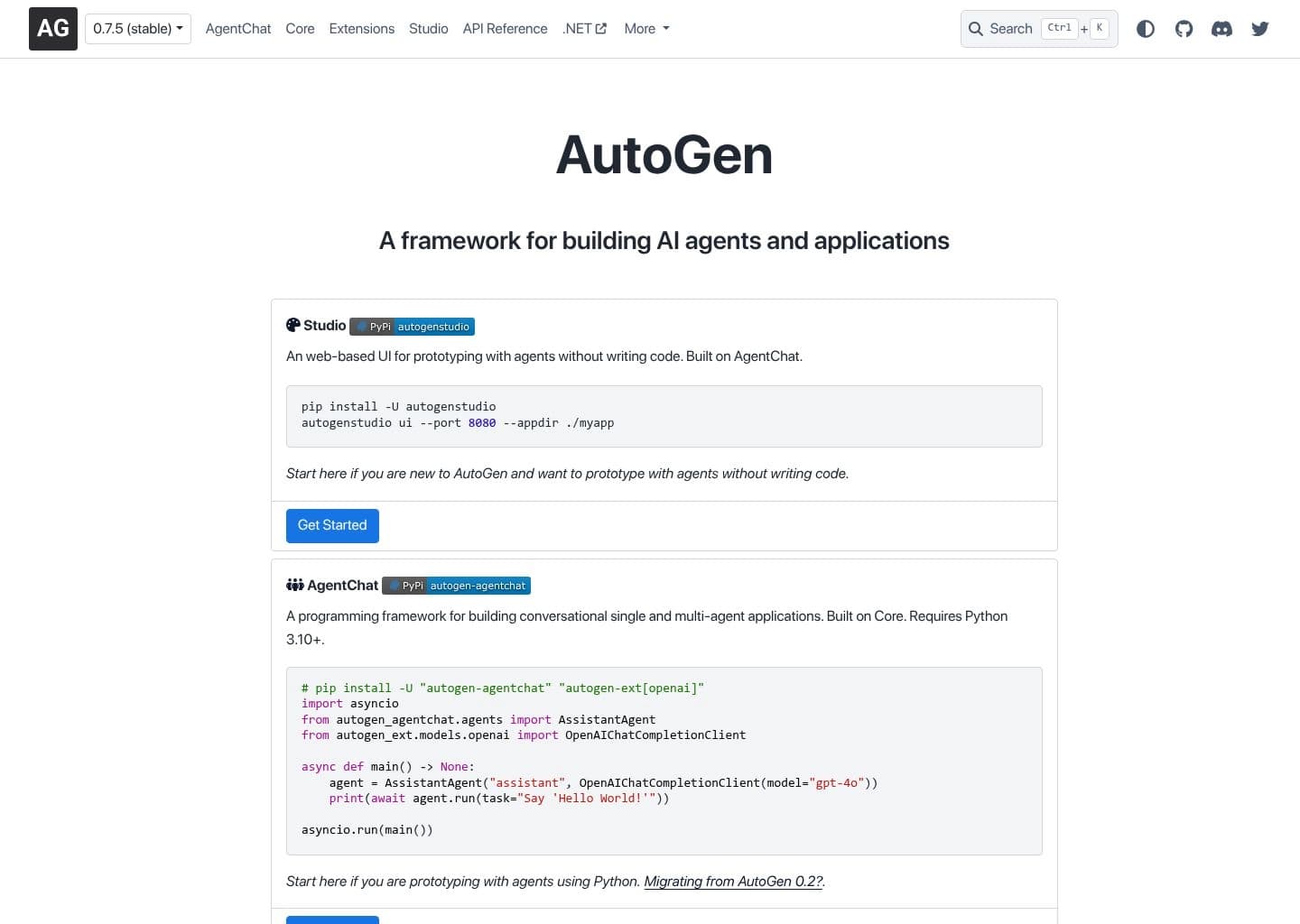
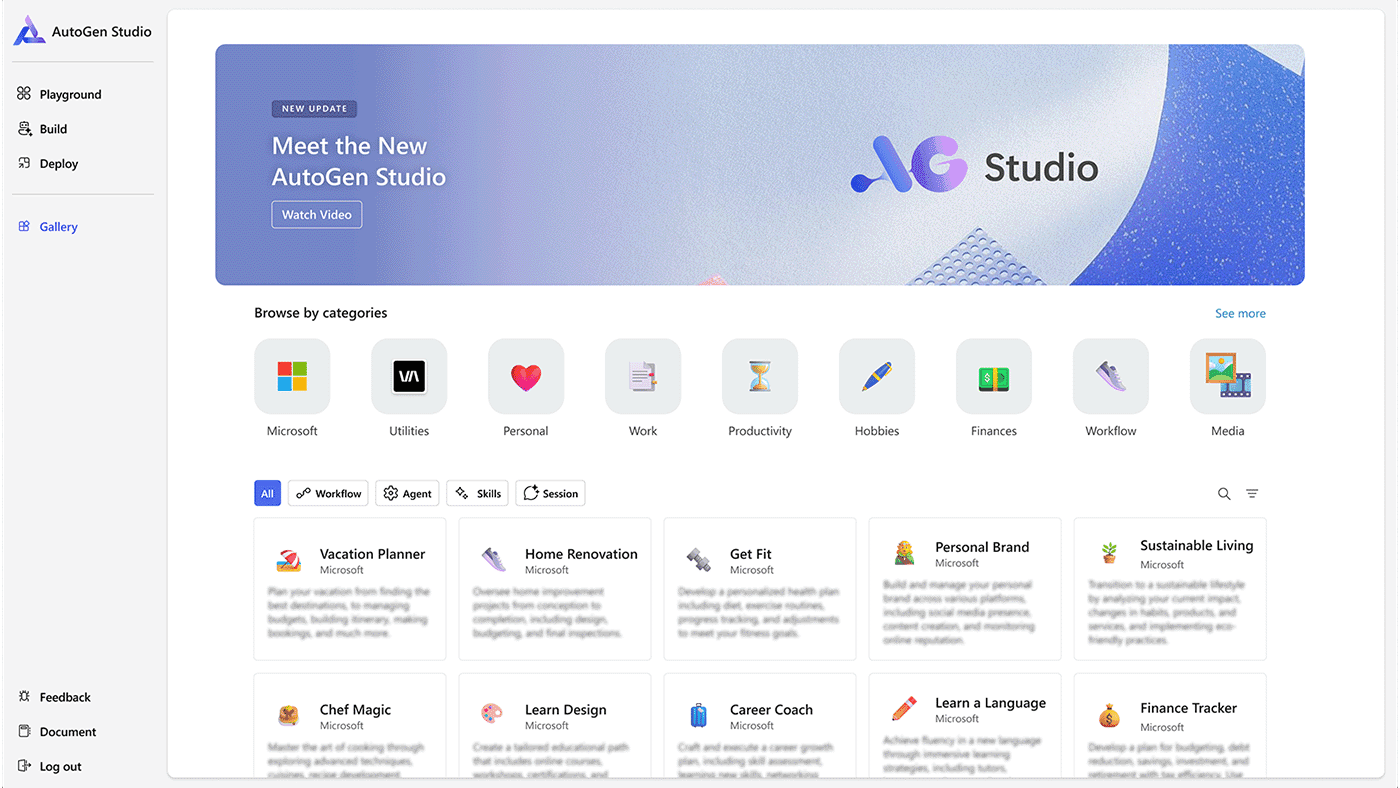
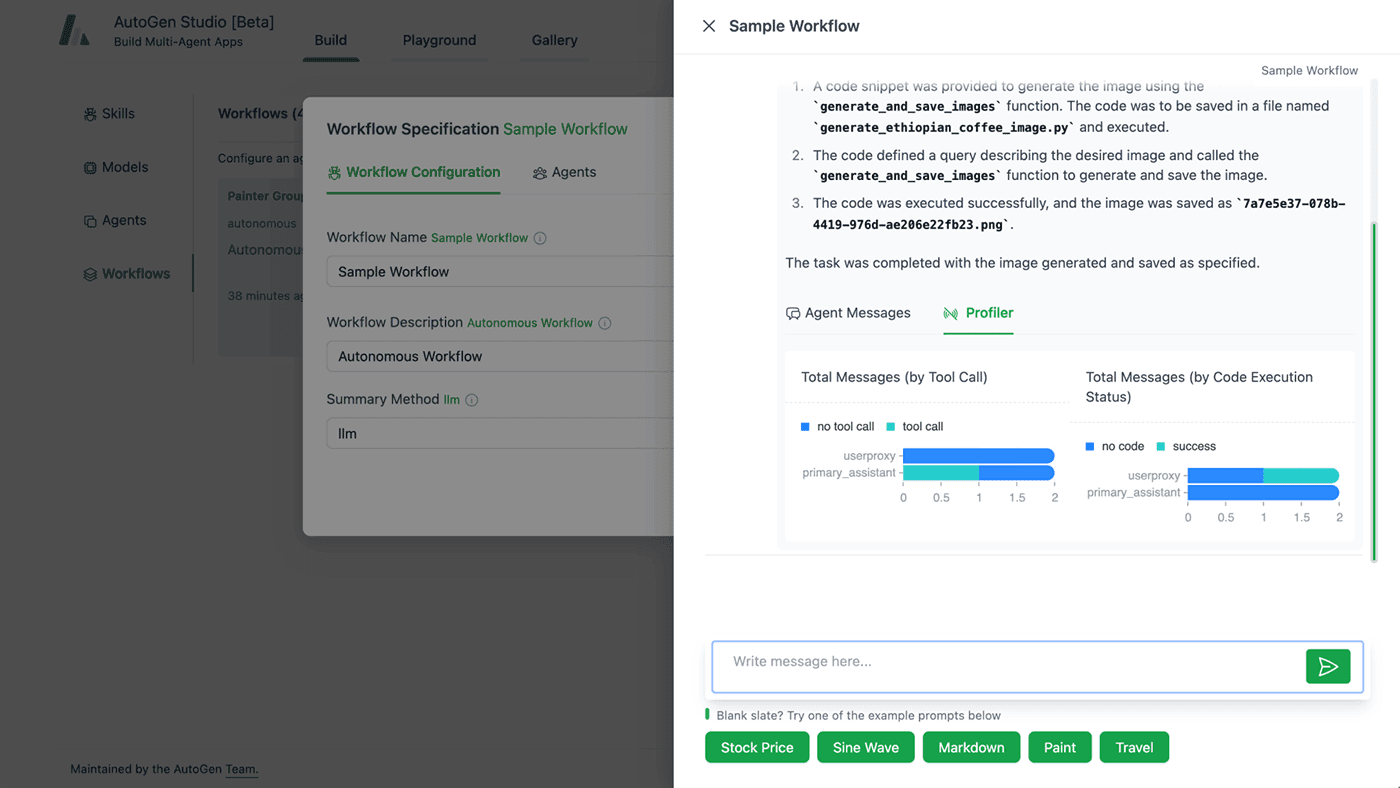
The framework is organized in layers: a low-level Core API for event-driven, distributed agent runtimes; a higher-level AgentChat API for rapid prototyping of common multi-agent patterns like two-agent chat and group chats; and an Extensions API that plugs in LLM providers (OpenAI, Azure OpenAI, and other OpenAI-compatible endpoints), Model Context Protocol servers, and code execution sandboxes such as Docker. AutoGen Studio complements the code-first frameworks with a no-code, browser-based UI for assembling and testing agent teams visually, while AutoGen Bench provides a benchmarking suite for evaluating agent performance.
AutoGen is best suited for developers, researchers, and teams prototyping multi-agent workflows, experimenting with agent collaboration patterns, or teaching or studying how conversational multi-agent systems behave. Because it is one of the most cited open-source agent frameworks in academic literature, it is also a common baseline in multi-agent research papers.
Important context for 2026: Microsoft has placed AutoGen into maintenance mode. It receives only bug fixes and security patches and is now community-managed rather than actively developed by Microsoft. Microsoft's recommended path for new, production-oriented projects is Microsoft Agent Framework, which merges AutoGen's agent abstractions with Semantic Kernel's enterprise features. A community-led fork called AG2 also continues active development under Apache 2.0 for teams who want the classic AutoGen patterns with ongoing feature work. Existing AutoGen users can continue using the stable v0.4+ architecture, but should evaluate a migration path before starting new production builds.
Key Features
- Conversation-driven multi-agent orchestration with AssistantAgent and UserProxyAgent roles
- Event-driven Core API for distributed, scalable multi-agent runtimes
- AgentChat API for rapid prototyping of two-agent chats and group chats
- Extensions API supporting OpenAI, Azure OpenAI, and other OpenAI-compatible model providers
- Built-in Model Context Protocol (MCP) workbench for connecting external tools and servers
- Docker-based code execution for safely running model-generated code
- AutoGen Studio no-code browser UI for building and testing agent workflows visually
- AutoGen Bench benchmarking suite for evaluating multi-agent performance
Pros
- Completely free, open-source, and MIT-licensed with no vendor lock-in
- Conversation-driven multi-agent paradigm makes agent reasoning transparent and easier to debug
- Highly cited in academic research with extensive published examples and benchmarks
- Layered API (Core, AgentChat, Extensions) supports both quick prototyping and low-level custom architectures
- AutoGen Studio offers a no-code UI for teams who do not want to write Python
- Backed by Microsoft Research with deep Azure and MCP integration options
Cons
- Now in maintenance mode — no new features or enhancements from Microsoft, only bug fixes and security patches
- Microsoft directs new production projects to Microsoft Agent Framework instead, creating migration uncertainty for existing users
- Requires Python 3.10+ and comfort with async programming for the AgentChat and Core APIs
- AutoGen Studio is explicitly not production-ready and intended for prototyping only
- Ecosystem fragmentation across classic AutoGen, the AG2 community fork, and Microsoft Agent Framework can confuse newcomers
Pricing
AutoGen itself is completely free and open source under the MIT License (code) and CC-BY-4.0 (documentation). There are no paid tiers, seats, or usage fees for the framework. Costs come entirely from the LLM API calls agents make — for example OpenAI, Anthropic, or Azure OpenAI usage-based pricing — and any compute or Azure infrastructure used to host agent runtimes or Docker-based code execution. AutoGen Studio and AutoGen Bench are also free and installed via pip alongside the core packages.
Claim Verified Creator Badge
Are you the founder of AutoGen? Display this listing's verified badge on your website to show your customers that your product has been vetted and listed on AI Central Resources.
<a href="https://www.aicentralresources.com/tool/autogen" target="_blank" rel="noopener">
  <img src="https://www.aicentralresources.com/badges/featured-badge-dark.svg" alt="Featured on AICentralResources" width="200" height="54" style="border: none;" />
</a>
* Place this HTML snippet in your website's footer, landing page, or press section. This creates a search-friendly backlink directly to your verification page.
Connect with AutoGen
Frequently Asked Questions
No. As of 2026, Microsoft has placed AutoGen into maintenance mode, meaning it only receives bug fixes and security patches. It is now community-managed, and Microsoft recommends new production projects use Microsoft Agent Framework instead.
Yes, AutoGen is fully open source under the MIT License. You only pay for the underlying LLM API calls (such as OpenAI or Azure OpenAI usage) and any infrastructure you run it on.
Microsoft Agent Framework is Microsoft's newer, production-focused successor that merges AutoGen's agent abstractions with Semantic Kernel's enterprise features like session state and telemetry. AutoGen remains available for existing users and research but is no longer actively enhanced.
AutoGen Studio is a free, no-code browser-based interface built on top of AgentChat that lets users prototype and test multi-agent workflows without writing Python code. It is intended for prototyping, not production deployments.
For the Core and AgentChat APIs, yes — AutoGen requires Python 3.10 or later. If you prefer a no-code approach, AutoGen Studio provides a visual interface for building agent workflows without writing code.
Similar AI Tools to AutoGen
View all alternatives of AutoGen
LangChain
The open-source framework and platform for building reliable AI agents

CrewAI
Build, govern, and scale collaborative multi-agent AI crews for enterprise workflows


Amazon Bedrock
The fully managed AWS platform for building generative AI applications and agents at production scale

Botpress
Build and deploy LLM-powered AI agents and chatbots with a visual studio and full code control

Compared with AutoGen
Direct head-to-head feature matrices, pricing, and category breakdowns