
LangChain
The open-source framework and platform for building reliable AI agents
Gallery
7 items
About LangChain
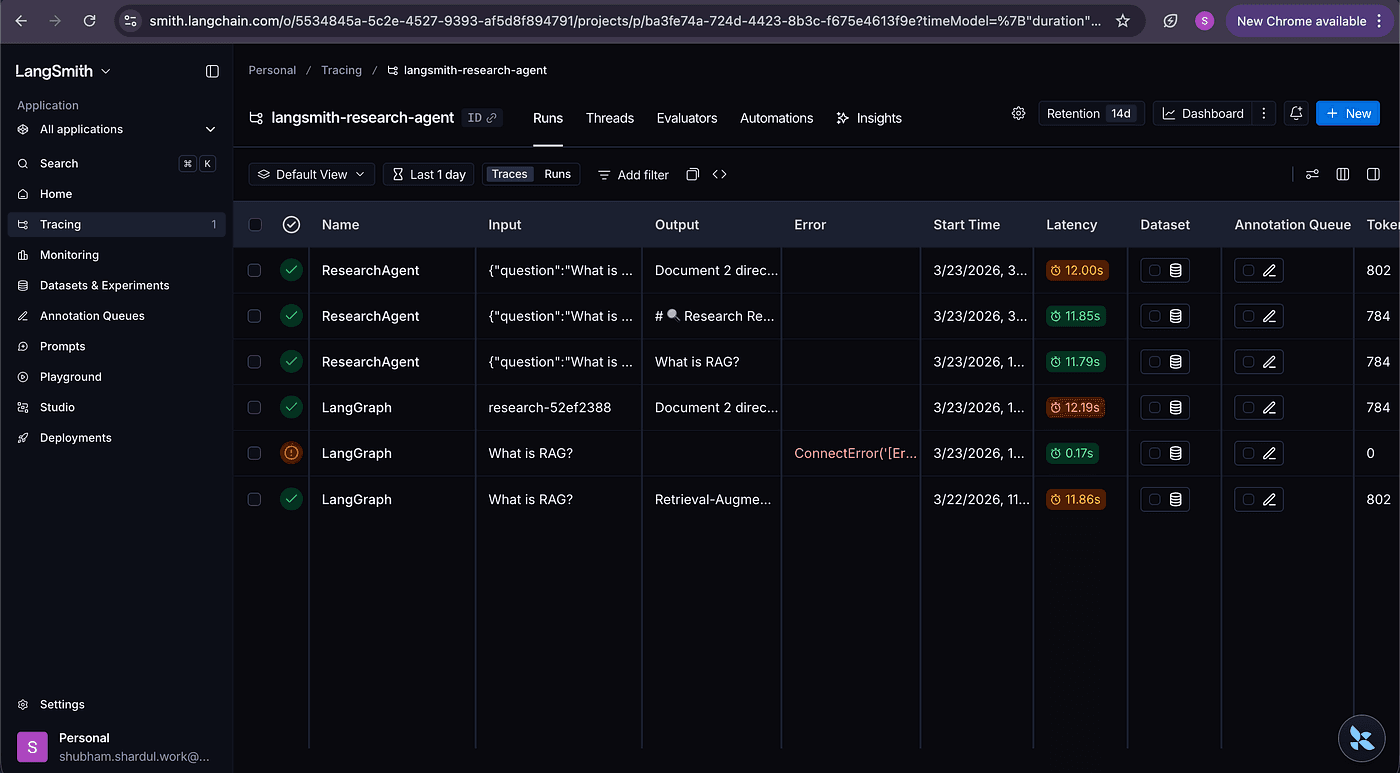
Having architected complex production LLM pipelines on LangChain, its unified ecosystem of document loaders, vector store retrievers, and LangGraph multi-agent runtimes remains the industry backbone of generative AI engineering. The LangSmith tracing platform makes debugging token costs and latency bottlenecks straightforward. The framework has evolved rapidly, resulting in frequent abstraction refactors that can require codebase updates across major version bumps. Being 100% open-source and free, it remains the foundational framework for developers engineering production AI applications.
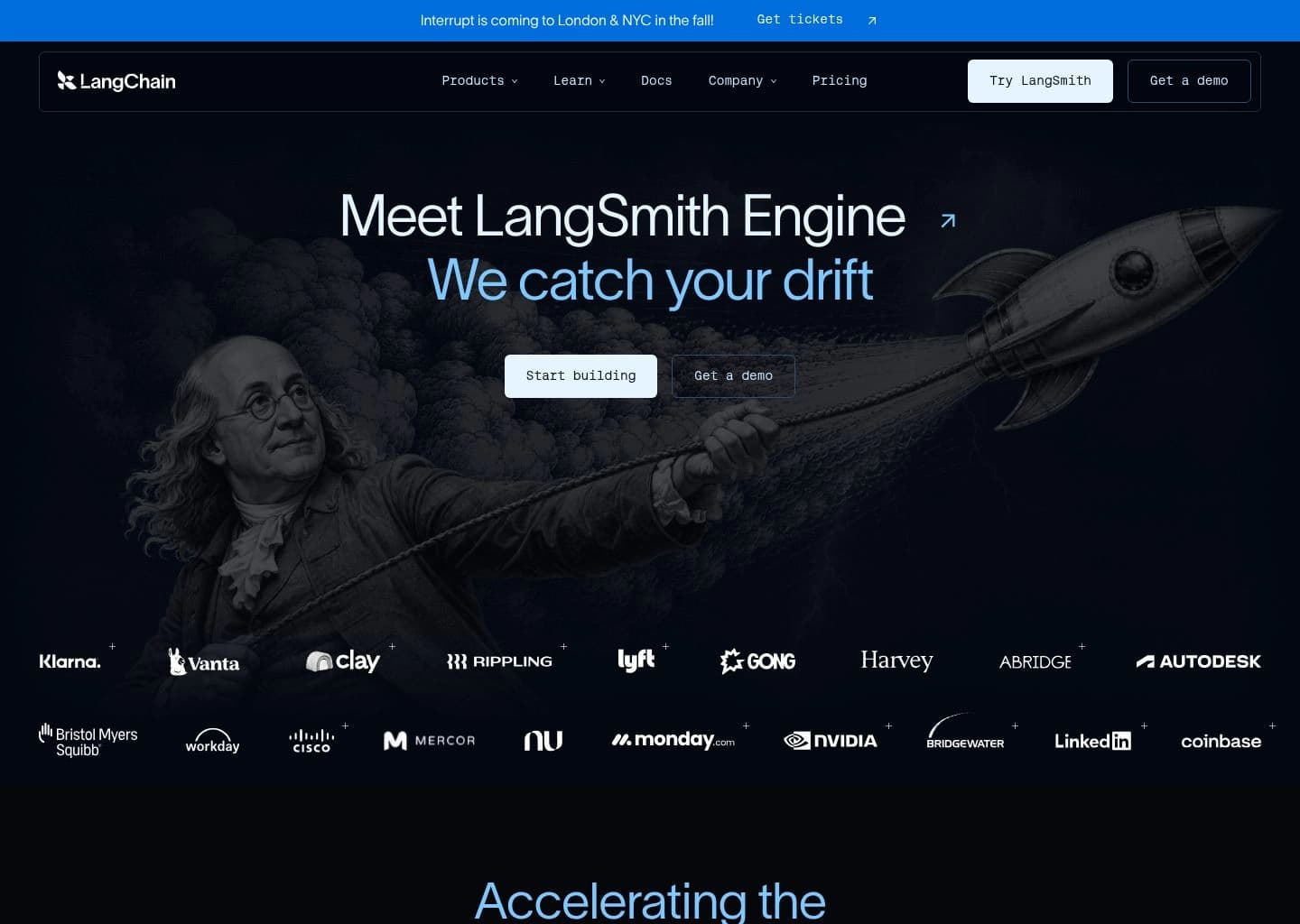
LangChain is the open-source framework and layered product ecosystem that helped define how developers build applications on top of large language models. Harrison Chase released the first version of LangChain, an 800-line Python package, from his personal GitHub account between October 16 and October 25, 2022, while working as an ML engineer at Robust Intelligence. The project caught fire as ChatGPT's release accelerated developer interest in LLM applications, and Chase incorporated LangChain as a company in January 2023 with co-founder Ankush Gola, quickly raising over $20 million from Sequoia Capital. The company has since grown into a three-layer product stack: LangChain (the original open-source framework for chains and RAG), LangGraph (a lower-level orchestration runtime for stateful, multi-agent systems, released in 2024), and LangSmith (an independent commercial observability and evaluation platform, launched in July 2023).
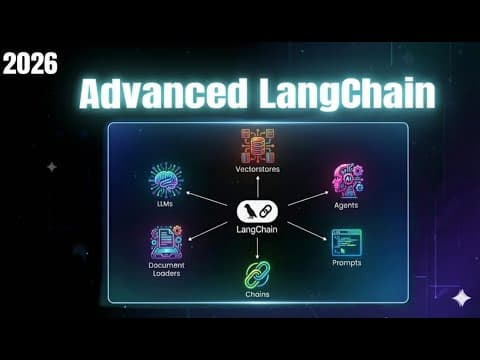
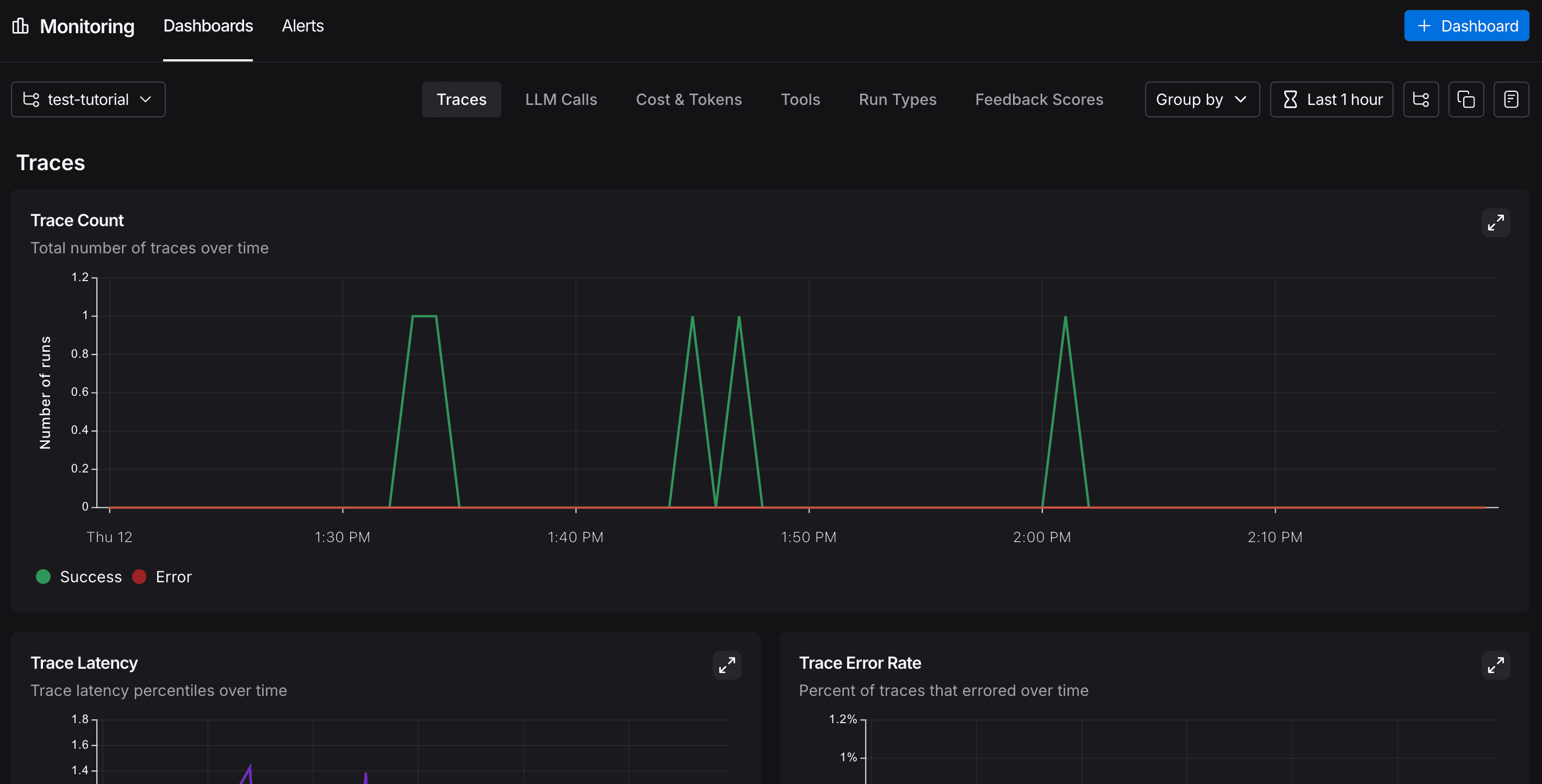
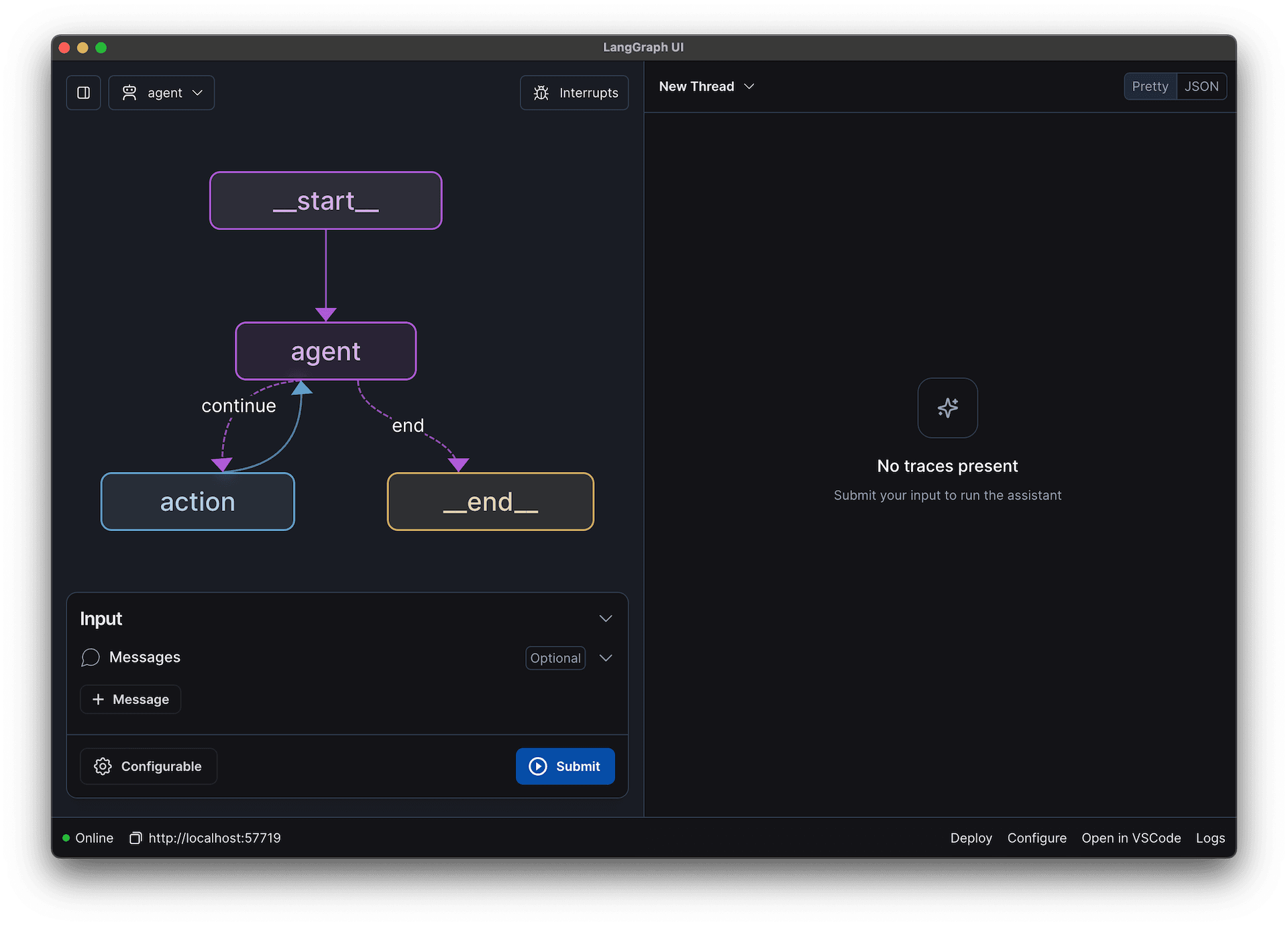
The core LangChain framework provides interoperable building blocks and the LangChain Expression Language (LCEL) for composing LLM calls, retrieval steps, and tool use into chains, with out-of-the-box support for parallelization, fallbacks, batching, and streaming. For more complex agentic workflows, LangGraph gives developers explicit control over state, branching, and multi-agent coordination, paired with LangGraph Studio, a visual IDE for building and stepping through an agent's decision graph. LangSmith sits above both, providing prompt-level tracing (Observability), systematic testing against datasets (Evaluation), and production hosting (Deployment), along with newer additions like LangSmith Fleet for managing many deployed agents and LangSmith Sandboxes. Both the LangChain and LangGraph frameworks are MIT-licensed and free to use, remaining valuable even with a single model provider by standardizing methods like fallbacks and async execution.
LangChain reports over 350 million monthly open-source downloads, more than 1 million developers building with its Python and JavaScript frameworks, and adoption by 7,000+ active LangSmith customers, including 5 of the Fortune 10. Companies such as Klarna, Rippling, Lyft, Gong, Harvey, Cisco, Workday, LinkedIn, and Coinbase use the ecosystem to build and observe production AI agents. The company raised a Series B in October 2025 at a $1.25 billion valuation, backed by Sequoia Capital and Benchmark among others, and hosts Interrupt, its annual agent-engineering conference. While the open-source frameworks remain free, LangSmith's commercial tiers monetize the observability and evaluation layer that most teams need to move agents reliably into production.
Key Features
- Open-source LangChain framework with interoperable building blocks for LLM applications
- LangChain Expression Language (LCEL) for composing chains with parallelization, fallbacks, and streaming
- LangGraph, a low-level orchestration runtime for building stateful, multi-agent systems
- LangGraph Studio, a visual IDE for building and debugging agent graphs
- LangSmith Observability for prompt-level tracing across chains and agent runs
- LangSmith Evaluation for testing application performance against custom and built-in evaluators
- LangSmith Deployment for shipping and hosting production-ready agents
- Deep Agents and Deep Agents Code for building agents that plan and execute longer, more complex tasks
Pros
- Core LangChain and LangGraph frameworks are fully open source (MIT license) and free with no usage caps
- Massive, mature open-source ecosystem with 350M+ monthly downloads and extensive third-party integrations
- LangGraph Studio gives developers a genuinely useful visual IDE for debugging complex multi-agent state machines
- LangSmith's free Developer tier is a real, usable starting point, not just a truncated trial
- Deep integration between framework, orchestration, and observability layers reduces tool-stitching for teams that commit to the ecosystem
Cons
- Real production costs go beyond the advertised $39/seat LangSmith price once trace overages, vector DB, and infrastructure are factored in
- Per-seat LangSmith pricing scales linearly with team size, unlike usage-only competitors like Langfuse
- Free Developer tier caps out at 5,000 traces/month and 14-day retention, tight for active production debugging
- Committing deeply to the LangChain/LangGraph ecosystem can create lock-in, even though the core framework itself is open source
Pricing
The LangChain and LangGraph frameworks are MIT-licensed, open source, and completely free to use with no usage limits from LangChain itself. The commercial layer, LangSmith, offers three tiers: Developer is free and includes 1 seat, 5,000 base traces/month, 14-day data retention, the prompt playground, and basic evaluations. Plus costs $39 per seat per month and includes 10,000 base traces included, full evaluations, custom dashboards, and email support; overage traces beyond the included allowance cost $2.50 per 1,000 (base, 14-day retention) or $5.00 per 1,000 (extended, 400-day retention), with base traces upgradeable to extended for an additional $2.50 per 1,000. Enterprise pricing is custom and adds dedicated support, custom retention policies, SSO, self-hosting, and higher trace volumes; exact figures require contacting LangChain sales. LangGraph Cloud/Platform deployment is billed separately from LangSmith, with plans starting around $35/month for hosted agent compute. Total production cost typically also includes underlying LLM API usage and vector database infrastructure, which are billed independently by those providers.
Claim Verified Creator Badge
Are you the founder of LangChain? Display this listing's verified badge on your website to show your customers that your product has been vetted and listed on AI Central Resources.
<a href="https://www.aicentralresources.com/tool/langchain" target="_blank" rel="noopener">
  <img src="https://www.aicentralresources.com/badges/featured-badge-dark.svg" alt="Featured on AICentralResources" width="200" height="54" style="border: none;" />
</a>
* Place this HTML snippet in your website's footer, landing page, or press section. This creates a search-friendly backlink directly to your verification page.
Connect with LangChain
Frequently Asked Questions
LangChain is an open-source software framework, plus a broader product suite (LangGraph for agent orchestration and LangSmith for observability and evaluation), that helps developers build, debug, and deploy applications powered by large language models, from simple chains to complex multi-agent systems.
Yes. LangChain is an MIT-licensed open-source library for Python and JavaScript and is completely free to use. The company's commercial product is LangSmith, its observability, evaluation, and deployment platform, which has its own separate paid tiers.
LangSmith's Developer tier is free (1 seat, 5,000 base traces/month, 14-day retention). The Plus tier costs $39/seat/month with 10,000 base traces included, and overage traces cost $2.50 per 1,000 (14-day retention) or $5.00 per 1,000 (400-day extended retention). Enterprise pricing is custom.
Use LangChain for simpler chains and retrieval flows using LangChain Expression Language. Use LangGraph, LangChain's lower-level orchestration framework, when building agents or workflows that need complex state management, branching, and multi-agent coordination.
LangChain was released as an open-source side project by Harrison Chase in October 2022, then incorporated as a company in January 2023 with co-founder Ankush Gola. It later raised a Series B in October 2025 at a $1.25 billion valuation, backed by investors including Sequoia Capital and Benchmark.
Similar AI Tools to LangChain
View all alternatives of LangChain
CrewAI
Build, govern, and scale collaborative multi-agent AI crews for enterprise workflows



Amazon Bedrock
The fully managed AWS platform for building generative AI applications and agents at production scale


Compared with LangChain
Direct head-to-head feature matrices, pricing, and category breakdowns