Direct Answer: OpenAI, its hardware subsidiary io Products, Chief Hardware Officer Tang Yew Tan, and engineer Chang Liu filed twelve counterclaims against Apple Inc. in San Jose federal court on November 27, 2026, accusing Apple of coercing shared manufacturing suppliers and deploying an alleged double agent to extract confidential hardware engineering data.
- →Court & Schedule: Pending before U.S. District Judge Edward Davila in the Northern District of California, with Apple's response due December 18, 2026, and a jury trial scheduled for July 19, 2027.
- →Supply-Chain Interference Allegations: OpenAI alleges Apple pressured an anodizing finishing shop to shift OpenAI assignments overnight and intimidated a second metal-finishing supplier into withdrawing completely.
- →Forensic & Espionage Claims: The filing alleges a former Apple-to-OpenAI hire ('Employee X') exfiltrated supplier measurement files to a Singapore phone in February and June 2026 before returning to Apple.
- →Apple's Rebuttal: Apple rejected the twelve counterclaims as 'a transparent attempt to distract from the substance of Apple's lawsuit' filed originally in July 2026.

OpenAI API
Reviewed Developer Platform 4.9 / 10OpenAI's core developer model platform powering cloud inference alongside its upcoming consumer hardware division.
SAN JOSE, Calif. — OpenAI Group PBC escalated its legal conflict with Apple Inc. on November 27, 2026, filing a comprehensive set of twelve counterclaims in the U.S. District Court for the Northern District of California. Joined by its acquired hardware unit io Products, Chief Hardware Officer for Consumer Products Tang Yew Tan, and engineer Chang Liu, OpenAI accuses the Cupertino electronics giant of pressuring specialized manufacturing vendors and allegedly facilitating the extraction of proprietary prototyping specifications.
The federal filing arrives nearly five months after Apple initiated the original trade-secret lawsuit on July 10, 2026, targeting both Tan and Liu shortly after they departed Apple's hardware engineering organization. OpenAI's new counterclaims transform what began as a conventional employee-mobility dispute into an unusually public battle over whether an incumbent hardware giant can use supplier leverage to slow down a rival's push into dedicated AI consumer devices.
Inside the Anodizing and Vendor Coercion Allegations
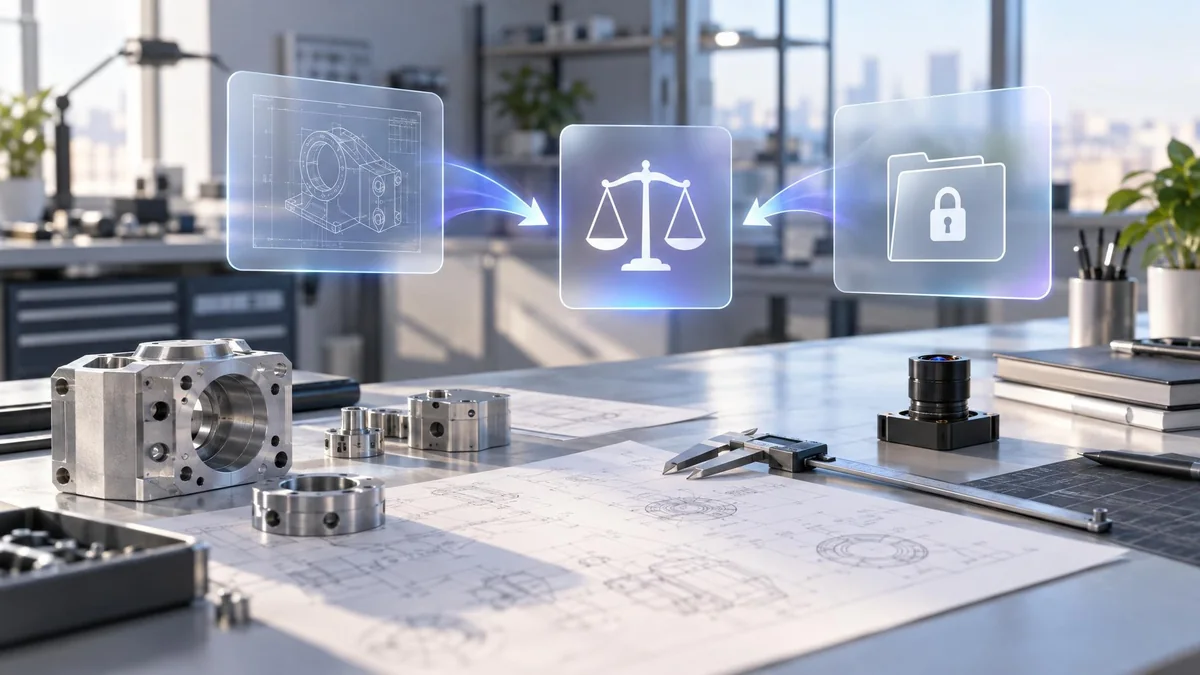
At the commercial center of OpenAI's counterclaim is a complaint familiar to emerging consumer electronics companies: dependency on specialized tier-two Asian and domestic finishing shops. Because consumer AI hardware requires custom metallurgy, optical tolerances, and surface finishes, startups routinely share contract shops that depend on Apple's high-volume iPhone, Mac, and wearables orders for core revenue stability.
According to court documents, OpenAI and io Products allege that Apple executives intervened directly with finishing vendors working on unannounced AI device enclosures. Specifically, the filing states that an anodizing specialist suddenly notified OpenAI that all ongoing work on its prototypes would be pushed out of daytime production runs and restricted solely to overnight shifts. A second precision supplier allegedly pulled out of its OpenAI manufacturing agreement altogether after facing commercial pressure from Apple procurement teams.
Legal scholars tracking Silicon Valley supplier disputes note that vendor-interference claims carry high evidentiary thresholds under California business tort law. OpenAI will need to establish during discovery that Apple explicitly conditioned contract continuation or tooling allocations on dropping OpenAI, rather than simply enforcing standard dedicated-line capacity reservations during peak seasonal ramps.
The 'Employee X' Exfiltration Timeline
Beyond supply-chain pressure, OpenAI's filing asserts counterclaims of corporate espionage centered on a mechanical or manufacturing engineer identified in public court filings only as "Employee X." OpenAI hired the engineer on December 2, 2025, giving the individual access to internal vendor-qualification protocols and mechanical tolerance reports.
The counterclaim details a specific chain of alleged transfers prior to the engineer's resignation on June 2, 2026. On February 5, 2026, Employee X allegedly transmitted a 76-page proprietary supplier measurement procedure outside OpenAI's corporate network to a personal mobile phone registered in Singapore. Then, on June 1, 2026—just one day before departing OpenAI—the individual allegedly exfiltrated six compressed project archives, including files labeled structure.zip and CPK_GRR.zip, containing statistical process capability (CPK) and gauge repeatability and reproducibility (GRR) qualification data.
OpenAI states that Employee X returned to Apple immediately after leaving and delivered a technical briefing to Apple's Asia-Pacific (APAC) Operations group in July 2026. Following an internal forensic audit, OpenAI served Apple with a formal cease-and-desist letter on October 9, 2026, before folding the allegations into the November 27 counterclaim.
| Date | Case Milestone / Alleged Event | Key Entities Involved |
|---|---|---|
| Dec 2, 2025 | "Employee X" joins OpenAI hardware organization | OpenAI / io Products |
| Jan 22, 2026 | Engineer Chang Liu departs Apple hardware division | Chang Liu, Apple Inc. |
| Feb 5, 2026 | Alleged transfer of 76-page supplier measurement procedure | Employee X (Singapore device) |
| Jun 1–2, 2026 | Alleged export of six archives (structure.zip, CPK_GRR.zip); resignation |
Employee X, Apple APAC Ops |
| Jul 10, 2026 | Apple files original trade-secret complaint against Tan and Liu | Apple Inc., Tang Yew Tan, Chang Liu |
| Oct 9, 2026 | OpenAI issues formal cease-and-desist demand to Apple | OpenAI Legal Counsel |
| Nov 27, 2026 | OpenAI, io Products, Tan, and Liu file 12 federal counterclaims | Judge Edward Davila (N.D. Cal.) |
| Dec 18, 2026 | Deadline for Apple to file answer or motion to dismiss | Apple Legal Counsel |
| Feb 5 / Mar 12, 2027 | Document production deadline and close of fact discovery | All Parties (Pre-Trial Schedule) |
| Jul 19, 2027 | Scheduled start of federal jury trial in San Jose | U.S. District Court N.D. Cal. |
Privacy Allegations Over Personal iCloud and iMessage Forensics
The twelve counts also challenge how Apple investigated departing staff before launching its July 2026 suit. Alongside Tang Yew Tan—a veteran hardware executive who spent roughly 24 years inside Apple before becoming OpenAI's Chief Hardware Officer for Consumer Products—co-plaintiff Chang Liu asserts that Apple and outside forensic consultancy Charles River Associates improperly inspected his personal communications.
Following Liu's departure on January 22, 2026, Apple's legal and forensic investigators allegedly reviewed personal iMessages and iCloud-synced data rather than restricting preservation imaging solely to work-partitioned files. Apple's own July lawsuit noted that roughly 400 former Apple employees have joined OpenAI over recent recruiting cycles, underscoring why both companies are treating offboarding forensics as a board-level battleground.
In a brief public response, an Apple spokesperson dismissed OpenAI's filing as "a transparent attempt to distract from the substance of Apple's lawsuit." Under Judge Davila's standing case-management schedule, document production closes on February 5, 2027, with fact discovery wrapping up March 12, 2027 ahead of the July 19, 2027 jury trial.
Strategic Legal & Operational Leverage for OpenAI
- +Reframes the federal narrative from defensive trade-secret defense to offensive supply-chain competition claims before a San Jose jury.
- +Establishes formal judicial discovery over Apple APAC vendor communications ahead of io Products' consumer hardware launch window.
- +Puts Apple's employee-offboarding and personal iCloud forensic practices under direct federal privacy scrutiny.
- +Forces bilateral document production obligations onto Apple procurement teams by February 5, 2027.
Litigation & Hardware Supply-Chain Risks
- −Counterclaims do not automatically defeat Apple's underlying July 2026 trade-secret counts against Tan and Liu.
- −Exposing vendor friction publicly may complicate negotiations with cautious precision-manufacturing partners across Asia.
- −Extended discovery through March 2027 risks pulling senior engineering leaders like Tan into depositions during critical prototyping.
- −Tortious interference claims require high proof linking Apple directives directly to lost vendor capacity.
What This Means for AI Hardware Builders
Whether settled prior to July 2027 or tried before a jury, Apple v. Tan and OpenAI's twelve counterclaims expose a structural bottleneck in physical AI deployment. Frontier labs moving from cloud software into wearables, ambient pins, or edge hardware must build supply-chain redundancy outside single-customer finishing vendors, while enforcing strict cryptographic separation between personal device backups and corporate engineering files from day one.
Review the detailed reporting on OpenAI's twelve counterclaims against Apple Inc., filed November 27, 2026 before Judge Edward Davila.
Frequently Asked Questions
Why did OpenAI countersue Apple on November 27, 2026? +
OpenAI, io Products, Tang Yew Tan, and Chang Liu filed twelve counterclaims alleging Apple pressured shared finishing suppliers to drop or delay OpenAI hardware work, improperly accessed personal iCloud/iMessage data, and received proprietary OpenAI measurement files from a departing engineer known as Employee X.
Who are the key individuals named in OpenAI's counterclaim? +
Co-plaintiffs alongside OpenAI Group PBC and io Products include Chief Hardware Officer for Consumer Products Tang Yew Tan (a 24-year Apple veteran) and engineer Chang Liu, as well as forensic vendor Charles River Associates and an unnamed engineer dubbed Employee X.
What files did Employee X allegedly take from OpenAI? +
OpenAI alleges Employee X transferred a 76-page supplier measurement document on February 5, 2026, and six zip archives including structure.zip and CPK_GRR.zip on June 1, 2026, to a personal Singapore phone before briefing Apple APAC Operations.
When is the OpenAI vs. Apple trade-secret jury trial scheduled? +
Judge Edward Davila's schedule sets Apple's response deadline for December 18, 2026, document production for February 5, 2027, fact discovery close for March 12, 2027, and a federal jury trial starting July 19, 2027.