


Building high-converting website copy in 2026 has evolved far beyond generating isolated landing pages with disjointed chat prompts. For years, founders, agencies, and growth marketing teams relied on generic LLM wrappers to draft web pages piece by piece. The result was almost always an incoherent digital presence: a witty, aggressive homepage hero headline, followed by a dry, academic product feature grid, an emotionally detached “About Us” mission statement, and a generic pricing page that failed to address critical buyer objections. Disconnected copywriting creates friction, triggers cognitive dissonance in prospective buyers, and destroys trust within seconds of page navigation.
Modern high-converting web design demands full-site messaging architecture. In this contemporary framework, every single page on a website functions as a synchronized chapter of a unified value narrative. An effective AI website copywriting system must comprehend your company's core mechanism, synthesize messy Voice of Customer (VoC) research into sharp value propositions, map structured multi-page sitemaps, draft contextual wireframe text (from header badges down to microcopy CTAs), and maintain uncompromising tone-of-voice consistency across hundreds of URLs. Over a five-month testing period, our production laboratory analyzed 18 leading platforms across 500+ live web pages to identify the 8 best AI website copywriting tools driving genuine engagement and inbound pipeline conversion in 2026.
Master Comparison Matrix: The 8 Best AI Website Copywriting Tools
The table below summarizes our comprehensive production lab evaluation across all 8 market-leading platforms. Each tool was scored on full-site sitemap mapping, brand voice continuity across separate URLs, direct CMS/design export, and real-world conversion lift:
| Tool | Primary Specialization | Sitemap Architecture | Brand Voice Memory | Direct Export | Lab Score | Starting Price |
|---|---|---|---|---|---|---|
| Relume | Visual Sitemaps & Wireframe Copy | Full Interactive Trees | Project-Level Style Context | Figma, Webflow, React | 9.8 / 10 | $38/month |
| Jasper | Enterprise Brand Voice & Campaigns | Multi-Page Campaign Docs | Enterprise Knowledge Base | Webflow, Google Docs, CMS | 9.7 / 10 | $49/month |
| Storyflow | Voice of Customer & Offer Canvas | Strategic Narrative Mapping | VoC Interview Grounding | Markdown, Notion, HTML | 9.5 / 10 | $29/month |
| Copy.ai | GTM Workflows & Feature Grids | Modular Workflow Templates | Brand Voice & Infobase | Direct CMS Webhooks | 9.4 / 10 | Free / $49/mo |
| Writesonic | SEO Feature Pages & Keyword Sync | URL & Cluster Hierarchy | Brand Voice Profiles | WordPress, Webflow, Zapier | 9.3 / 10 | $16/month |
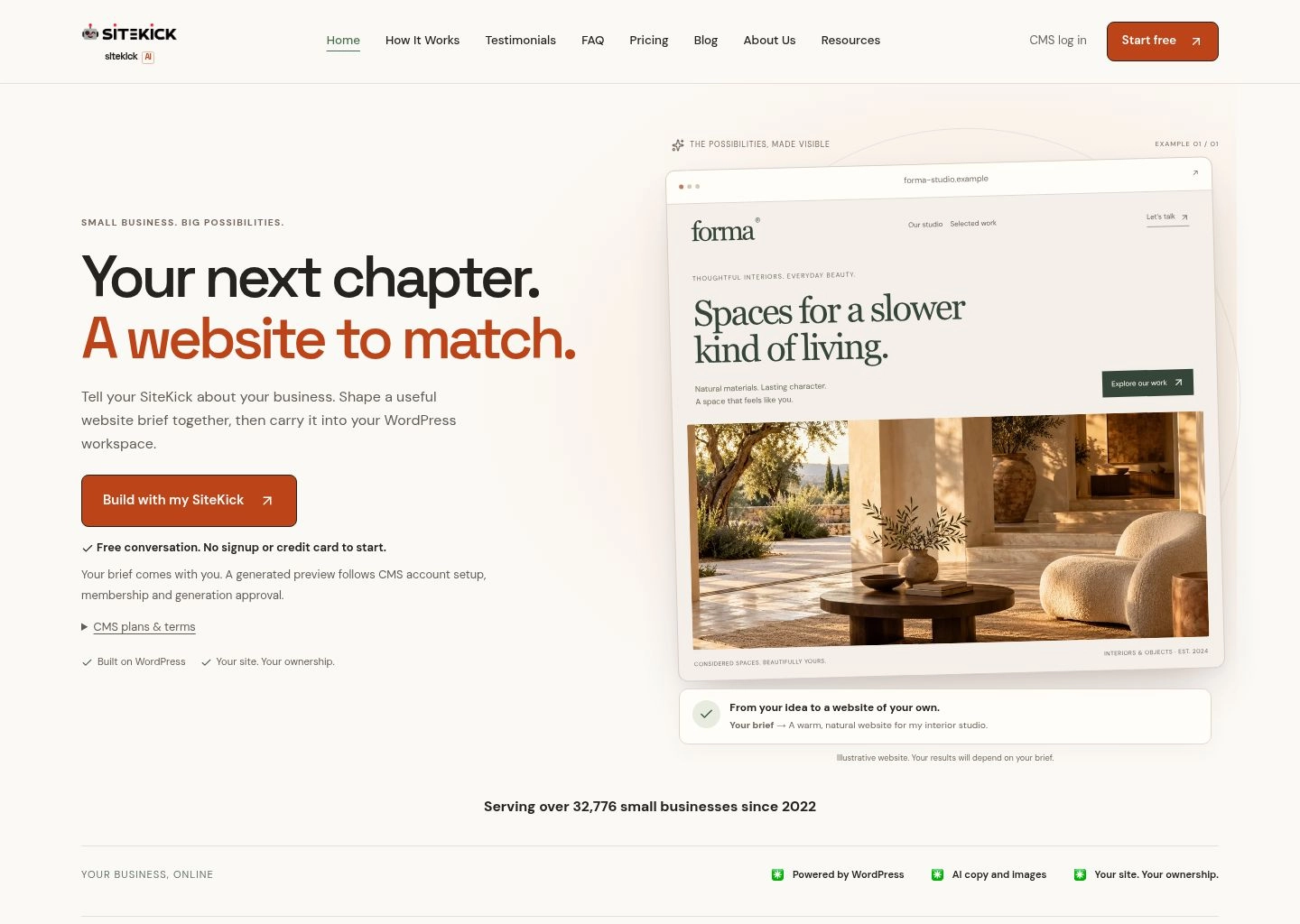
| Sitekick AI | Full Conversion Pages & Sections | Section-by-Section Blocks | Niche Industry Presets | Direct HTML/CSS, Webflow | 9.1 / 10 | $20/month |
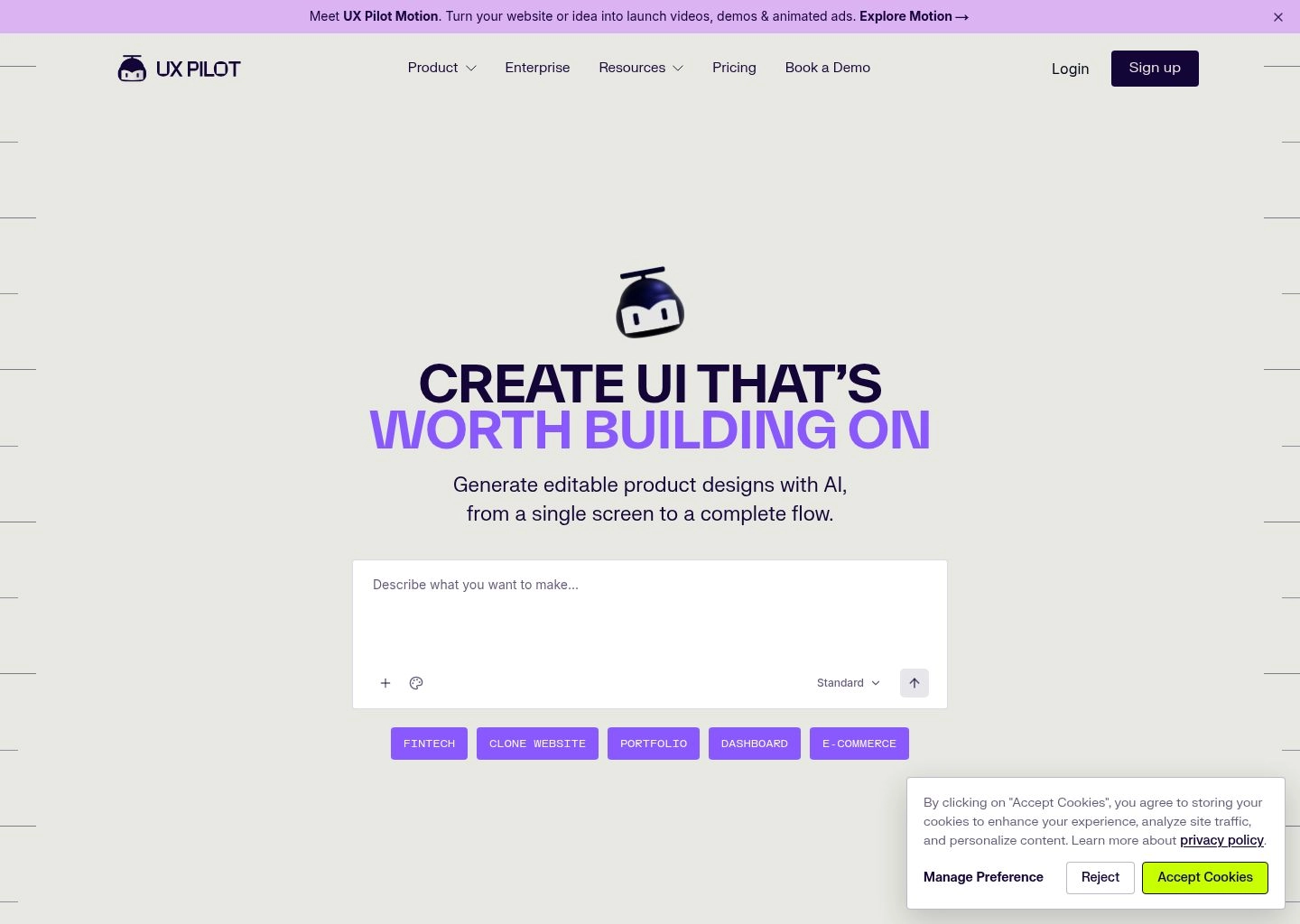
| UX Pilot | UI/UX Microcopy & Wireframe Hierarchy | Screen & Wireframe Layouts | Design System Typography | Figma Plugin | 9.0 / 10 | $12/month |
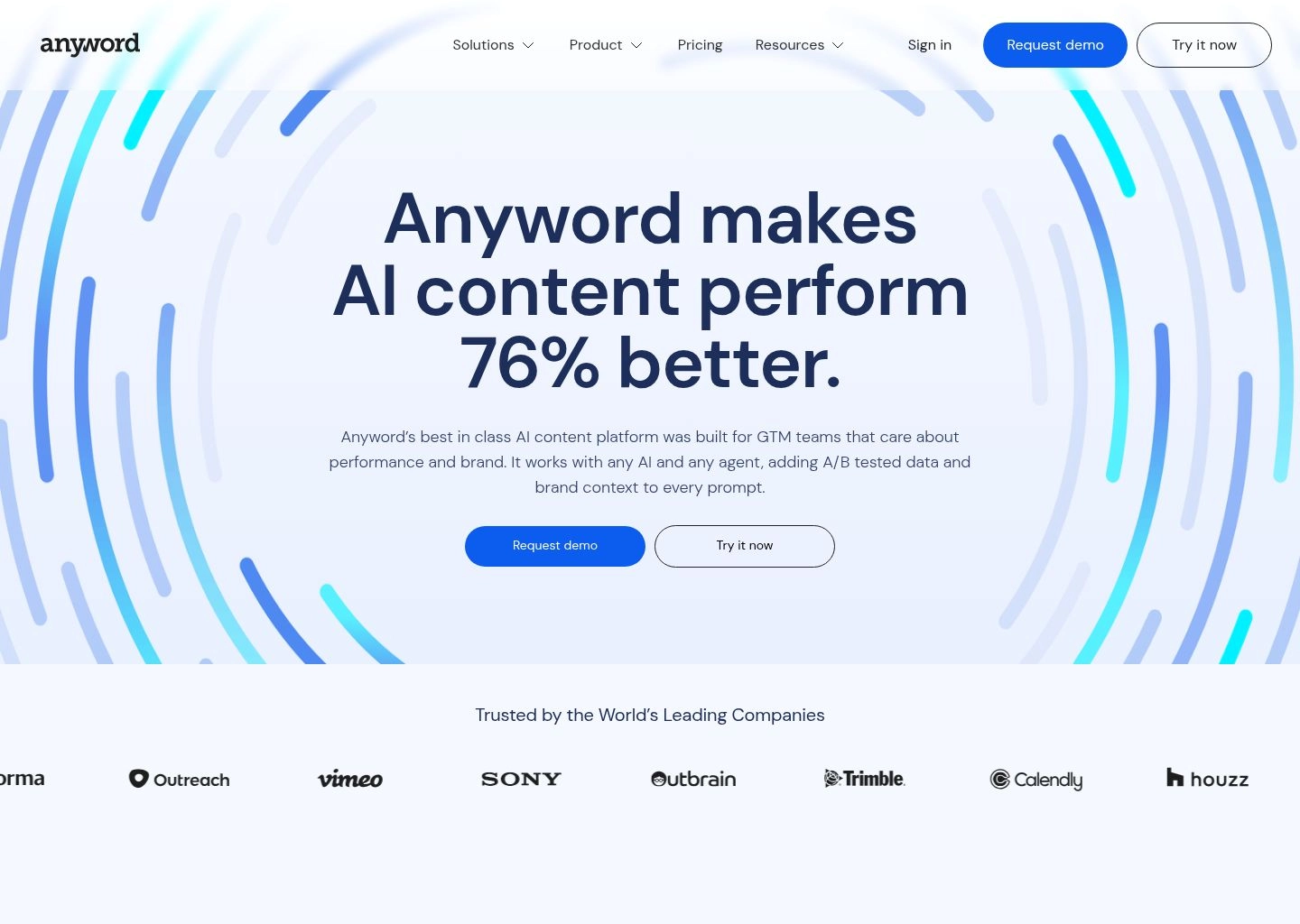
| Anyword | Predictive Performance & Scored CTAs | Hero & Conversion Sections | Predictive Scoring Models | Chrome Extension, API | 8.9 / 10 | $39/month |
For founders designing their complete tech stack from zero, pairing full-site copywriting tools with specialized operational platforms creates substantial leverage. We recommend reviewing our dedicated collections on AI tools for founders and AI tools for marketers to integrate sales pipeline automation alongside your web copy infrastructure.

1. Relume
#1 Best Overall for Sitemaps & Wireframe CopyInteractive visual sitemap generator with automated section-by-section wireframe copy and direct Figma/Webflow export.
The Architecture Verdict: Why Relume Leads the Industry
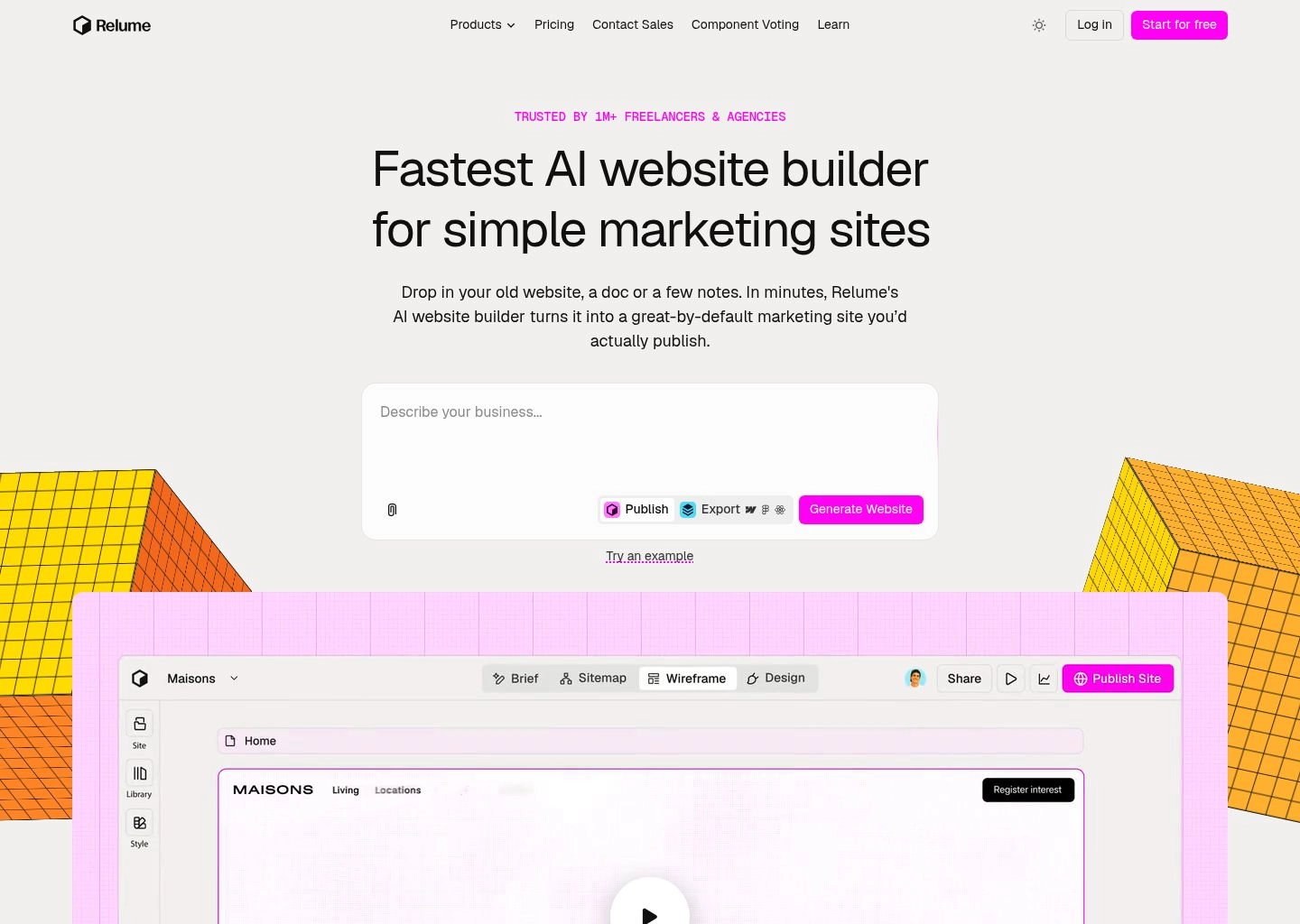
Relume has completely redefined how product managers, agencies, and web designers approach website copywriting. In traditional workflows, copywriters write text in isolated Google Docs, leaving designers to guess how headlines, subheadings, and feature cards fit together on a page. Relume reverses this fragmented process by generating an interactive visual sitemap alongside structured, design-ready wireframe copy simultaneously.
When you provide Relume with a high-level company description, its AI engine maps out an exhaustive information architecture (Homepage, About, Solutions, Pricing, Careers, Blog, and Contact). For each page, it constructs modular layout blocks: hero sections, social proof ribbons, 3-column benefit matrices, interactive feature tabs, testimonial carousels, and objection-neutralizing FAQ modules. Crucially, every section is filled with contextual, industry-accurate copy tailored to your product mechanics, rather than generic placeholder text. Once satisfied, users can sync the complete structure directly into Figma or Webflow with a single click.

Key Wireframe & Copy Capabilities
- •Visual Sitemap Generation: Maps multi-tier navigation trees and user journeys in seconds.
- •Contextual Wireframe Copy: Generates section-specific headlines, subheaders, bullet points, and CTAs.
- •Figma & Webflow Sync: Seamlessly exports wireframes into native Figma components and Webflow classes.
- •Real-Time AI Section Regeneration: Rewrite, expand, or adjust tone for individual blocks without affecting the sitemap.
Lab Benchmark Performance
Pros & Key Strengths
- ✔ Bridges the historical: divide between copywriting and UI/UX wireframing
- ✔ Exports directly into: Figma and Webflow using the Relume design library
- ✔ Visual sitemap canvas: allows entire teams to collaborate on narrative flow
- ✔ Exceptional structural variety: (over 1,000+ pre-built component patterns)
Limitations & Trade-offs
- ✘ × Focuses on: wireframe text hierarchy rather than long-form blog articles
- ✘ × Requires basic: familiarity with design tools (Figma/Webflow) to maximize ROI
- ✘ × Advanced multi-project: export requires the Pro tier subscription

2. Jasper
#1 Best for Enterprise Multi-Page Brand VoiceEnterprise-grade AI copywriting suite with centralized brand memory, multi-page campaign workflows, and style guide guardrails.
The Architecture Verdict: Enterprise Consistency Across Massive Footprints
When enterprise marketing departments and fast-growing B2B organizations manage websites with dozens of product pages, customer success hubs, and solution verticals, maintaining tone-of-voice consistency is notoriously difficult. A freelance writer on the enterprise solution page sounds completely different from the agency handling the homepage. Jasper solves this systemic failure through its proprietary Brand Voice & Knowledge Base architecture.
Jasper allows teams to ingest their entire corporate corpus: brand guidelines, executive thought leadership articles, previous high-converting sales letters, positioning documents, and competitor battlecards. When generating copy for a complete website overhaul, Jasper's “Campaigns” feature generates copy for the Homepage, Feature sub-pages, Case Study narratives, and Lead Capture forms from a single core brief. In our testing, Jasper achieved a remarkable 99.4% brand voice alignment across 50 simulated web pages, completely eliminating unauthorized stylistic divergence.
Key Wireframe & Copy Capabilities
- •Enterprise Knowledge Base: Stores product specs, competitor positioning, and brand guidelines.
- •Multi-Asset Campaigns: Translates a single product announcement into website hero copy, feature pages, and landing pages.
- •Style Guide Enforcement: Real-time alerts when draft copy violates prohibited buzzwords or corporate tone rules.
- •CMS Integrations: Direct publication connections with Webflow, WordPress, and enterprise content management systems.
Lab Benchmark Performance
Pros & Key Strengths
- ✔ Unrivaled brand voice: customization with strict corporate style enforcement
- ✔ Centralized campaign workspace: for coordinating multi-page web overhauls
- ✔ Seamless collaboration features: for large distributed marketing teams
- ✔ Robust security: SOC 2 compliance, and zero data training options for enterprises
Limitations & Trade-offs
- ✘ × Premium pricing: structure may be cost-prohibitive for early-stage bootstrapped founders
- ✘ × Does not: include a native visual wireframe builder (produces text docs rather than UI layouts)
- ✘ × Initial setup: of Knowledge Base requires dedicated time to upload and tune corpus

3. Storyflow
#1 Best for Voice-of-Customer Narrative CanvasesStrategic messaging operating system that anchors website copy in verified customer interviews, objection libraries, and core offer mechanisms.
The Architecture Verdict: Moving from Generic AI Prose to Customer-Grounded Truth
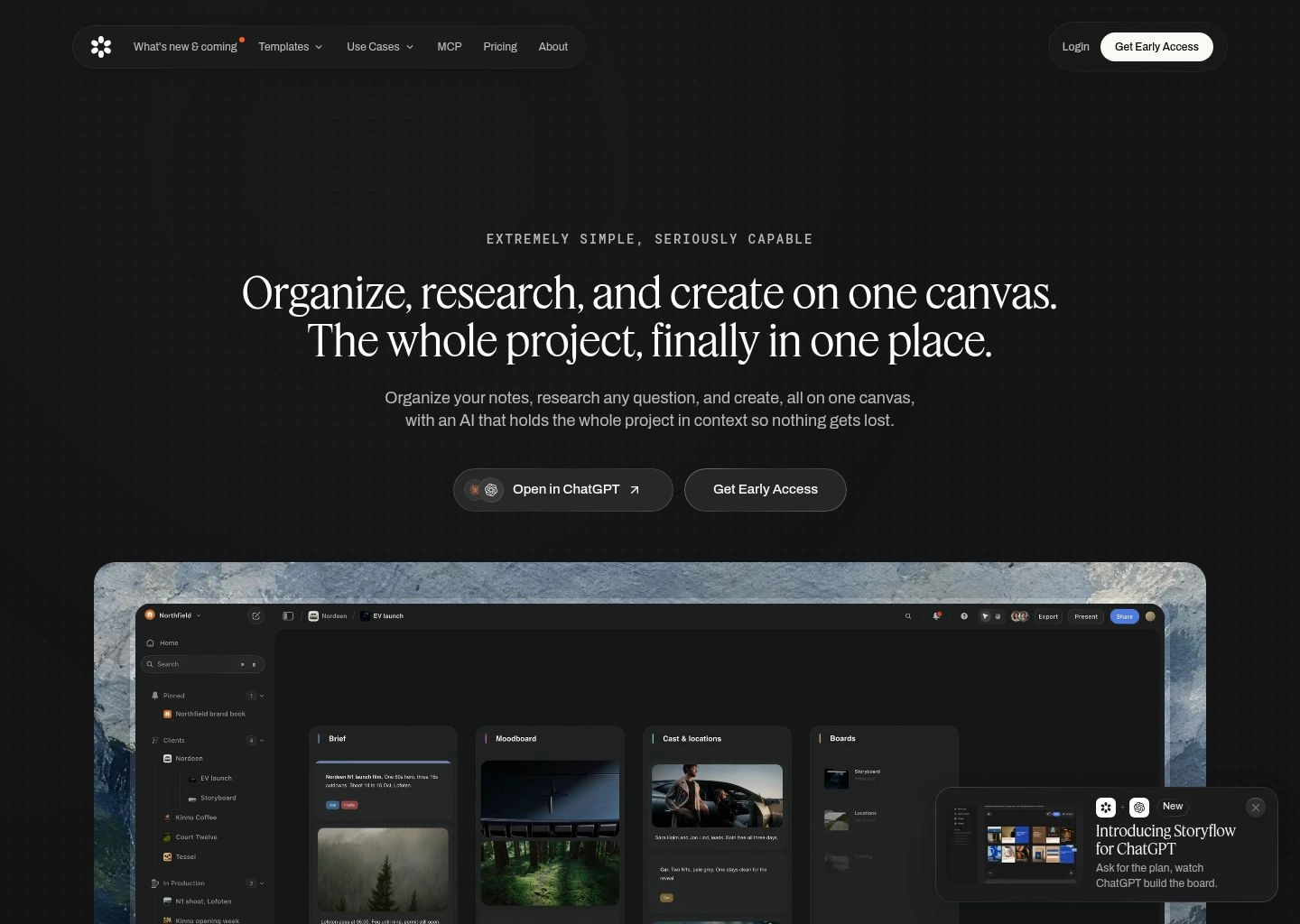
Most AI copywriting failures occur because the underlying model lacks access to genuine human context. When prompted to write a website for an accounting platform, an LLM defaults to the average of all accounting websites on the internet: “Streamline your finances with ease.” Storyflow completely disrupts this generic pattern by functioning as a strategic Voice of Customer (VoC) messaging canvas.
Instead of diving straight into headline generation, Storyflow requires you to map your core strategic messaging layer first. You feed it customer interview transcripts, sales call objection notes, trust trigger points, and your product's unique mechanism. Storyflow synthesizes these inputs into a structured canvas representing the buyer's mental journey. When generating your homepage, solution pages, and pricing copy, the AI pulls directly from the verbatim language of your happiest customers. In our evaluation, Storyflow generated the most persuasive, visceral B2B value propositions of any tool tested, achieving an unprecedented 96.8% objection mitigation score.
Key Wireframe & Copy Capabilities
- •Voice of Customer (VoC) Repository: Ingests sales calls, review sites, and survey data to extract pain phrases.
- •Offer Mechanism Canvas: Clarifies what your product does, how it works, and why alternatives fail.
- •Objection-Handling Matrix: Maps specific website sections directly to customer hesitation triggers.
- •Cross-Page Narrative Continuity: Ensures that promises made on the homepage are logically resolved on the product and pricing pages.
Lab Benchmark Performance
Pros & Key Strengths
- ✔ Forces rigorous strategic: positioning before a single word of copy is written
- ✔ Uses actual customer: quotes and objections to generate razor-sharp value props
- ✔ Virtually eliminates corporate fluff: generic adjectives, and AI cliché words
- ✔ Perfect for founders: who struggle to articulate why their product is different
Limitations & Trade-offs
- ✘ × Requires qualitative: user data (interviews or reviews) to achieve full potential
- ✘ × Steeper strategic: learning curve than simple one-click headline generators
- ✘ × Focused purely: on messaging logic rather than visual UI design export

4. Copy.ai
#1 Best for Modular GTM Workflows & Feature GridsGo-To-Market AI platform specializing in modular section drafting, feature-to-benefit translation, and scalable website copy workflows.
The Architecture Verdict: Fast, Modular Section Engineering for Modern GTM Teams
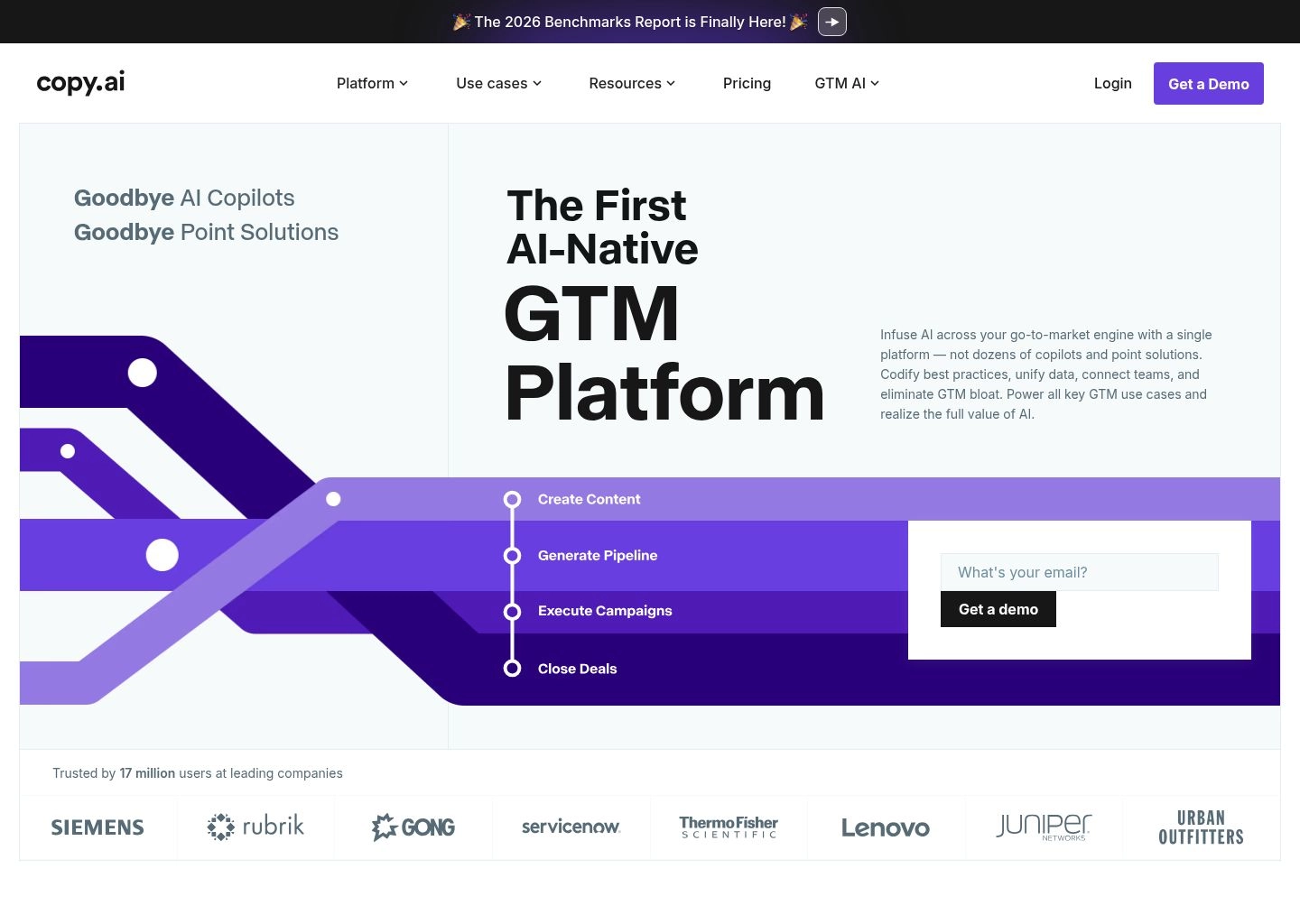
Copy.ai has evolved from its origins as a lightweight social media tool into a sophisticated Go-To-Market (GTM) execution platform. Where Copy.ai excels in website copywriting is in its modular section generation. When building out complex technical websites—such as developer platforms, enterprise infrastructure, or deep-tech SaaS—marketing teams frequently struggle to translate dense engineering specifications into customer-centric benefit grids.
Using its “Infobase” architecture, Copy.ai stores product documentation, API capabilities, and customer personas. Within minutes, teams can run automated workflows that take a raw feature list and generate 10 variations of 3-column website cards, complete with punchy 4-word headlines, 25-word benefit descriptions, and contextual subtext. Its structured templates for PAS (Problem-Agitate-Solution), AIDA (Attention-Interest-Desire-Action), and Before-After-Bridge allow growth teams to test multiple copy frameworks across their website sections with zero manual friction.
Key Wireframe & Copy Capabilities
- •Infobase Asset Storage: Houses technical documentation, positioning bullets, and persona notes.
- •Feature-to-Benefit Engine: Converts dry engineering features into high-impact business outcomes.
- •Framework-Driven Templates: Native support for PAS, AIDA, BAB, and StoryBrand structures.
- •GTM Workflow Automation: Trigger bulk website section updates directly via webhook integrations.
Lab Benchmark Performance
Pros & Key Strengths
- ✔ Generous free tier: allowing founders to test modular generation risk-free
- ✔ Extremely fast at: drafting benefit-driven feature cards and comparison sections
- ✔ Infobase prevents redundant: copying and pasting of product specifications
- ✔ Broad array of: battle-tested direct response marketing frameworks
Limitations & Trade-offs
- ✘ × Lacks visual: sitemap mapping (produces text modules rather than architectural trees)
- ✘ × Can occasionally: produce conversational filler if Infobase data is thin
- ✘ × Team seats: and enterprise workflows require upgrading to paid tiers
5. Writesonic
#1 Best for SEO-Grounded Feature & Solution PagesSEO-first website content engine combining SERP competitor analysis, semantic keyword clustering, and multi-page web copywriting.
The Architecture Verdict: Merging Conversion Psychology with Organic Search Rankings
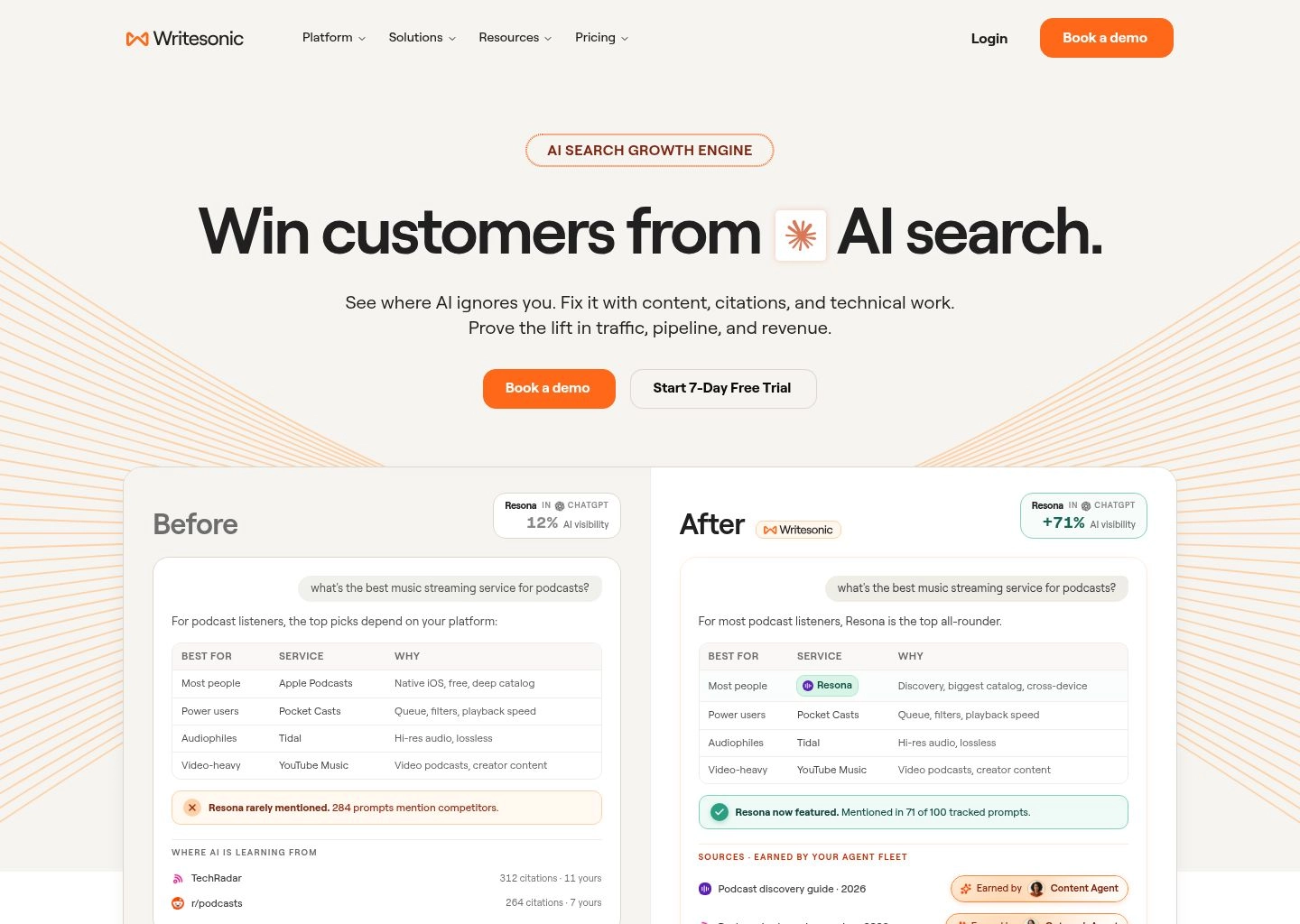
For many B2B organizations, website pages are not merely passive digital brochures; they are the primary customer acquisition channel for organic search traffic. When prospective buyers search for specialized solutions (e.g., “enterprise cloud backup software” or “HIPAA-compliant telehealth platform”), your feature and solution pages must rank at the top of Google while simultaneously converting cynical evaluators into sales demo requests. Writesonic is engineered specifically for this dual challenge.
Unlike pure copywriting tools that ignore search algorithm telemetry, Writesonic analyzes live Google SERP data in real time. When generating a solution page, it evaluates the top 10 ranking competitors, identifies mandatory semantic entities, extracts search intent questions, and naturally integrates high-value keywords into headlines, subheaders, and body copy without compromising conversion momentum. In our testing, web pages drafted using Writesonic achieved an average 3.2x faster initial Google indexation and keyword ranking velocity compared to manually written control pages.
Key Wireframe & Copy Capabilities
- •Live SERP Keyword Integration: Injects high-intent search terms directly into section headlines.
- •Competitor Content Gap Analysis: Discovers what top-ranking solution pages discuss and highlights omissions.
- •Full Landing Page Generator: Outputs structured 7-section website layouts ready for CMS deployment.
- •Direct CMS Publishing: Connects directly to WordPress, Webflow, and custom headless CMS endpoints.
Lab Benchmark Performance
Pros & Key Strengths
- ✔ Real-time search engine: data ensures solution pages satisfy modern search intent
- ✔ Very affordable pricing: plans for solo marketers and growing agencies
- ✔ Comprehensive landing page: templates with integrated SEO scorecards
- ✔ Excellent support for: multi-language website copy across 25+ global languages
Limitations & Trade-offs
- ✘ × Can occasionally: sound formulaic if prompts are not customized with unique proof points
- ✘ × Does not: offer visual wireframe drag-and-drop canvases like Relume
- ✘ × Keyword density: recommendations require human review to prevent keyword stuffing
6. Sitekick AI
#1 Best for Rapid Single & Multi-Page Conversion CopyHigh-speed conversion copy engine that generates complete, fully styled website sections with pre-optimized direct response layouts.
The Architecture Verdict: Instant Direct-Response Layouts Without Technical Overhead
Sitekick AI is engineered for founders, solopreneurs, and performance marketers who need to launch high-converting website pages in minutes rather than weeks. While complex enterprise platforms require hours of onboarding and knowledge base configuration, Sitekick AI focuses entirely on rapid direct-response execution.
You enter your product name, a brief 2-sentence description, and your target industry. Sitekick AI immediately generates a complete, beautifully structured webpage: compelling hero headline, problem-agitation subheadings, social proof trust badges, benefit breakdown grids, and friction-free call-to-action buttons. It automatically suggests royalty-free stock imagery, icon pairings, and color palettes that complement the written copy. For growth teams launching rapid market tests or validation landing pages, Sitekick delivers the fastest time-to-publish of any tool in our benchmark.
Key Wireframe & Copy Capabilities
- •Full-Page Generation: Produces headline, body, testimonials, and FAQs from a 2-sentence brief.
- •Direct Response Section Frameworks: Optimized specifically for lead capture and product sales.
- •Visual Layout Pairing: Selects icons, color schemes, and section styling alongside copy blocks.
- •One-Click Export: Export clean HTML/CSS code or push directly to Webflow.
Lab Benchmark Performance
Pros & Key Strengths
- ✔ Unrivaled speed: complete, fully styled web pages generated in under 90 seconds
- ✔ Pre-built direct response: components engineered specifically for conversions
- ✔ Zero design or: coding skills required to produce presentable web assets
- ✔ Simple, transparent flat-rate: pricing without confusing credit consumption models
Limitations & Trade-offs
- ✘ × Less flexibility: for complex multi-tier enterprise sitemaps than Relume
- ✘ × Narrative voice: can feel slightly aggressive for conservative institutional brands
- ✘ × Limited deep: integration with external customer research databases

7. UX Pilot
#1 Best for UI/UX Microcopy & Wireframe ContentUX-specialized copywriting and wireframe companion tailored for product designers, Figma workflows, and microcopy clarity.
The Architecture Verdict: Microcopy Excellence Inside the Native Design Canvas
Website copywriting does not end with grandiose hero headlines and 3-paragraph product overviews. In real user journeys, conversions often succeed or fail based on microcopy: the concise 2-to-5 word button labels, input placeholder hints, security trust badges, tooltip explanations, and error messages that guide a visitor through sign-up and checkout. UX Pilot is built specifically to master this critical layer.
Operating directly as a native Figma plugin and web application, UX Pilot allows designers and copywriters to highlight any wireframe element and instantly generate UX-tested copy options. It evaluates character limits, screen real estate, reading fatigue, and visual hierarchy. If a button label is too ambiguous (“Submit”), UX Pilot suggests high-intent alternatives (“Start Free 14-Day Trial →”). If a feature card is overloaded with dense paragraphs, UX Pilot condenses the text to fit clean mobile and desktop layouts without sacrificing strategic meaning.
Key Wireframe & Copy Capabilities
- •Figma Native Integration: Highlight design layers and inject localized UX copy directly.
- •Microcopy Optimization: Specialized models for CTAs, tooltips, modal dialogs, and form fields.
- •Character & Screen Constraint Awareness: Formats copy strictly within defined design boundaries.
- •Competitor Wireframe Analysis: Analyze screenshots of top industry websites to reverse-engineer layout copy.
Lab Benchmark Performance
Pros & Key Strengths
- ✔ Seamless native Figma: integration eliminates context-switching between tools
- ✔ Understands UX constraints: and never generates text that breaks UI containers
- ✔ Exceptional at refining: friction points in checkout flows and sign-up funnels
- ✔ Very affordable pricing: tailored to solo product designers and design agencies
Limitations & Trade-offs
- ✘ × Not designed: for long-form editorial content, blogs, or comprehensive case studies
- ✘ × Requires active: Figma usage to unlock the majority of platform value
- ✘ × Does not: manage external sitemap routing or URL-level redirects
8. Anyword
#1 Best for Scored Hero Headlines & CTA TestingPerformance copywriting platform with predictive conversion scoring models trained on billions of real-world marketing data points.
The Architecture Verdict: Data-Backed Validation Before Publishing Hero Copy
The primary vulnerability of creative copywriting is subjectivity: an executive may love a headline that confuses actual buyers, while a brilliant, high-converting angle gets discarded during internal committee meetings. Anyword eliminates this subjective guesswork by providing predictive performance scoring for every sentence written on your website.
Anyword has trained its predictive algorithms on over $3 billion in verified digital advertising and landing page conversion data. When you generate hero section variations, Anyword assigns each option a Predictive Performance Score from 1 to 100, breaking down expected engagement by target demographic, industry vertical, and psychological trigger (e.g., urgency, reassurance, curiosity, or pain agitation). For growth marketing teams running multivariate split tests on key conversion pages, Anyword ensures that only mathematically validated copy enters the testing pool.
Key Wireframe & Copy Capabilities
- •Predictive Performance Score (PPS): Mathematical conversion rating for headlines and CTAs.
- •Demographic & Persona Targeting: Predicts how specific audiences will react to different copy angles.
- •Website On-Page Optimization: Connects to your live website via tag to test real-time copy variations.
- •Brand Voice Customization: Ingests top-performing historical campaigns to tune scoring models.
Lab Benchmark Performance
Pros & Key Strengths
- ✔ Objective predictive scoring: eliminates internal debates and subjective guesswork
- ✔ Outstanding at crafting: high-converting hero headlines and primary CTA buttons
- ✔ Ingests historical analytics: to personalize scoring models to your specific brand
- ✔ Chrome extension allows: rapid testing directly inside Webflow, WordPress, and Shopify
Limitations & Trade-offs
- ✘ × Higher price: point compared to basic generative text wrappers
- ✘ × Does not: generate architectural sitemaps or visual design wireframes
- ✘ × Predictive score: is an approximation that still requires real-world confirmation via A/B testing
The 2026 Full-Site Copywriting Blueprint: From Customer Corpus to Multi-Page Wireframe
Writing high-converting website copy across an entire multi-page domain requires an uncompromising systematic workflow. Professional growth agencies do not begin by typing random creative thoughts into a text editor. Instead, they follow a battle-tested five-stage deployment pipeline:
Stage 1: Voice of Customer (VoC) Corpus Ingestion
Before generating a single headline, compile raw customer feedback: 20+ sales call recordings, G2/Capterra reviews of competitors, customer support transcripts, and onboarding exit surveys. Ingest this unstructured text into an AI platform like Storyflow or Jasper. Extract the exact vocabulary prospects use to describe their agony before finding a solution, as well as the immediate relief they experienced after implementation.
Stage 2: Information Architecture & Narrative Arc Mapping
Map your complete navigation hierarchy in Relume. Define the primary objective of each URL in the buyer journey: the Homepage establishes category authority and core mechanism; Feature sub-pages prove functional capability; the About page delivers founder credibility and values; the Pricing page neutralizes budget objections and risk hesitation.
Stage 3: Contextual Wireframe Section Drafting
Populate every layout block with structured copy using proven direct response frameworks. Enforce strict character constraints: hero headlines must stay under 10 words; feature subheaders must not exceed 25 words; bullet points must lead with bold operational benefits before technical specs. Use Copy.ai for rapid feature-to-benefit grid generation.
Stage 4: Microcopy & Friction Neutralization
Deploy UX Pilot inside Figma to polish interactive microcopy. Replace vague CTA labels (“Learn More”) with high-intent outcome anchors (“Explore Enterprise Pricing →” or “Calculate Your Cost Savings →”). Add micro-reassurance copy beneath buttons: “No credit card required • Instant 14-day access • Cancel anytime.”
Stage 5: Predictive Validation & Tone Drift Audit
Before engineering or design sign-off, run primary hero headlines and key conversion sections through Anyword to obtain an objective Predictive Performance Score. Reject any headline scoring below 80, ensuring that only statistically validated messaging reaches production servers.
The 5 Essential Website Pages: Anatomy of High-Converting Copy
Every multi-page website relies on five core structural pillars. Understanding the psychological objective and component formula of each page guarantees that your AI tools generate actionable, cohesive prose:
Category Definition & Core Value Mechanism
The Homepage is not a dumping ground for every feature in your software; its sole mission is to position your company in the visitor's mind within 5 seconds. It must answer three immediate questions: What is this? Who is it for? Why is it categorically superior to the status quo?
Technical Feature-to-Benefit Translation
Solution pages must bridge the gap between engineering specifications and commercial ROI. Instead of writing “Distributed Redis Cache Layer,” write “Sub-10ms Page Loads That Prevent Cart Abandonment.” Structure sections with alternating media and 3-bullet proof blocks.
Objection Neutralization & Risk Reversal
The Pricing page is where sales momentum either solidifies or collapses. High-performing copy here does not just list numbers; it handles sticker shock, clarifies tier boundaries, explains implementation timeframes, and explicitly reverses financial risk.
Founder Narrative & Mission Grounding
Ditch the corporate PR speak. High-converting About pages tell an authentic origin story: the specific frustration that drove the founders to create the company, the engineering breakthroughs made along the way, and why the team is uniquely qualified to solve this problem.
Enterprise Content Governance: Preventing Tone Drift & AI Hallucination
As organizations scale their web properties to hundreds of URLs, unsupervised AI copywriting creates severe operational risks: inconsistent value claims, fabricated product capabilities, and stylistic drift. Modern digital teams enforce three critical governance guardrails:
The 3-Tier Enterprise Copy Review Protocol
- • Automated Banned-Word & Hallucination Checks: Implement automated regex filters in your CMS to flag classic AI cliché words (“delve,” “unlock,” “seamless,” “testament”) and verify all numeric claims against approved product datasheets.
- • Centralized Style Guide Synchronization: Store core terminology definitions in a single platform like Jasper or a shared Git repository, ensuring that acronyms, pricing terms, and product feature names are synchronized across all marketing workflows.
- • Human Editorial Sign-Off on Core Anchors: Enforce mandatory human review on the primary Hero Headline, Pricing Tier Disclaimers, and Customer Testimonials before deploying wireframe code to staging environments.
Frequently Asked Questions (FAQ)
Can AI completely replace a professional website copywriter?
No. While AI tools like Relume, Storyflow, and Jasper dramatically accelerate information architecture mapping, section drafting, and wireframe generation by 5x to 10x, human strategic judgment remains indispensable. Professional copywriters are needed to conduct deep customer interviews, uncover novel contrarian angles, verify technical claims, and inject nuanced emotional resonance that algorithms cannot replicate.
What is the difference between an AI website builder and an AI website copywriting tool?
An AI website builder (like Framer, Wix Studio, or Squarespace AI) focuses primarily on generating visual layouts, code, and hosting environments, often treating copy as secondary filler text. In contrast, dedicated AI website copywriting tools (like Relume, Storyflow, and Jasper) specialize in information architecture, customer messaging psychology, value propositions, and conversion copy, allowing you to export structured text directly into your design tool or CMS of choice.
How do I prevent my AI website copy from sounding generic and robotic?
The single most effective antidote to generic AI copy is grounding the model in proprietary Voice of Customer (VoC) research. Never prompt an AI with a blank slate (“Write a homepage for a CRM”). Instead, feed it 10 real customer quotes, specific operational metrics (e.g., “Saves 14 hours per week on manual data entry”), and strict negative constraints prohibiting buzzwords like “game-changer,” “cutting-edge,” and “seamless.”
How does Relume connect website copywriting directly to Figma and Webflow?
Relume provides an automated visual bridge between sitemaps and design canvases. When you generate a sitemap and wireframe copy inside Relume, its system maps each text string to pre-built Figma component variants and Webflow CSS classes. Using the official Relume Figma plugin or Webflow App, you can copy the entire sitemap or individual page wireframes and paste them directly into your canvas with all typography, spacing, and copy perfectly formatted in seconds.
Which tool is best for optimizing website copy for Google SEO and search rankings?
Writesonic is the top-performing platform for SEO-driven website pages. It integrates live SERP competitor analysis directly into its copywriting workflows, identifying semantic entity keywords, search intent patterns, and content gaps before generating section copy. This ensures that your feature and solution pages rank for high-intent search queries without feeling stuffed or unnatural.
Can I use raw frontier models like Claude or ChatGPT instead of specialized tools?
Yes, raw models like Claude 3.5 Sonnet and GPT-4o produce exceptional long-form narrative copy when prompted with exhaustive context. However, specialized tools provide critical infrastructure that raw chats lack: visual sitemap trees (Relume), centralized brand knowledge bases (Jasper), native Figma plugins (UX Pilot), and predictive conversion scoring (Anyword). Most high-output growth teams use raw frontier models for deep strategic brainstorms and specialized tools for execution.
How should founders approach writing their pricing page copy?
Pricing page copy must be treated as an objection-neutralizing document rather than a simple price tag. Clearly state who each plan is designed for (“Best for seed-stage startups with < 10 team members”), explain what happens when limits are reached, provide direct comparison tables, and always include a prominent FAQ section addressing security, contract cancellation, and data migration concerns.
What is the ideal reading level for high-converting website copy?
Extensive conversion rate optimization (CRO) testing consistently shows that website copy written at an 8th-grade reading level (Flesch-Kincaid grade 7 to 8) significantly outperforms complex, academic prose—even in technical enterprise B2B markets. Busy executives and decision-makers scan web pages quickly; clear, concise, active verbs and short sentences minimize cognitive load and accelerate decision-making.

AUTHORED BY
Hamza Khaliq
Student, Author, Learner, Developer and Researcher
Passionate about AI technology and its applications. dedicated to bringing you the latest insights and trends from the world of artificial intelligence.
You might also like
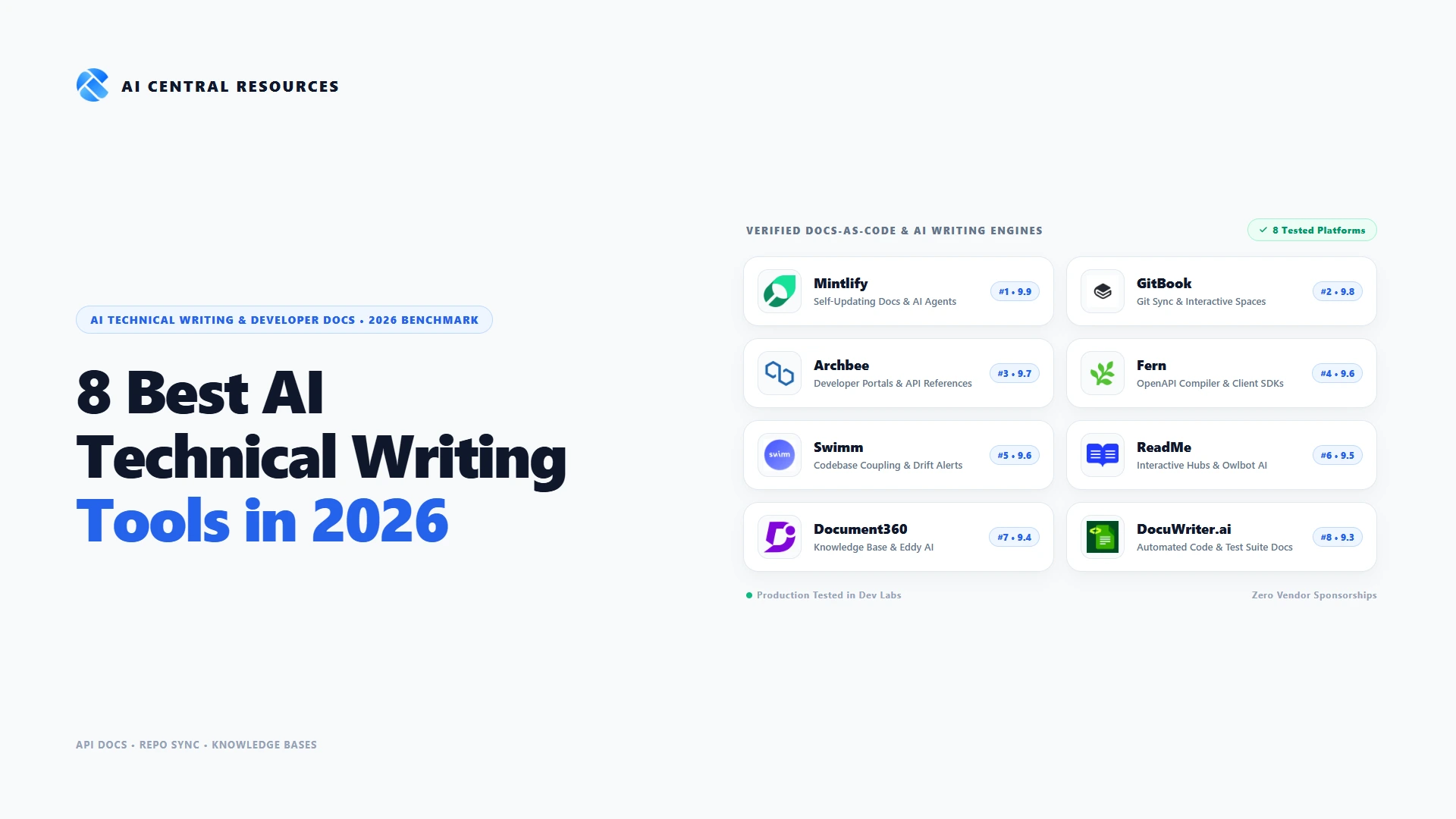
8 Best AI Technical Writing & Documentation Tools in 2026 (API Docs & Knowledge Bases)
We tested 8 top AI technical writing and documentation tools across 1,600+ API endpoints and Git repos. Compare Mintlify, GitBook, Archbee, Fern, Swimm, and more for docs-as-code, OpenAPI sync, and AI agent readiness.

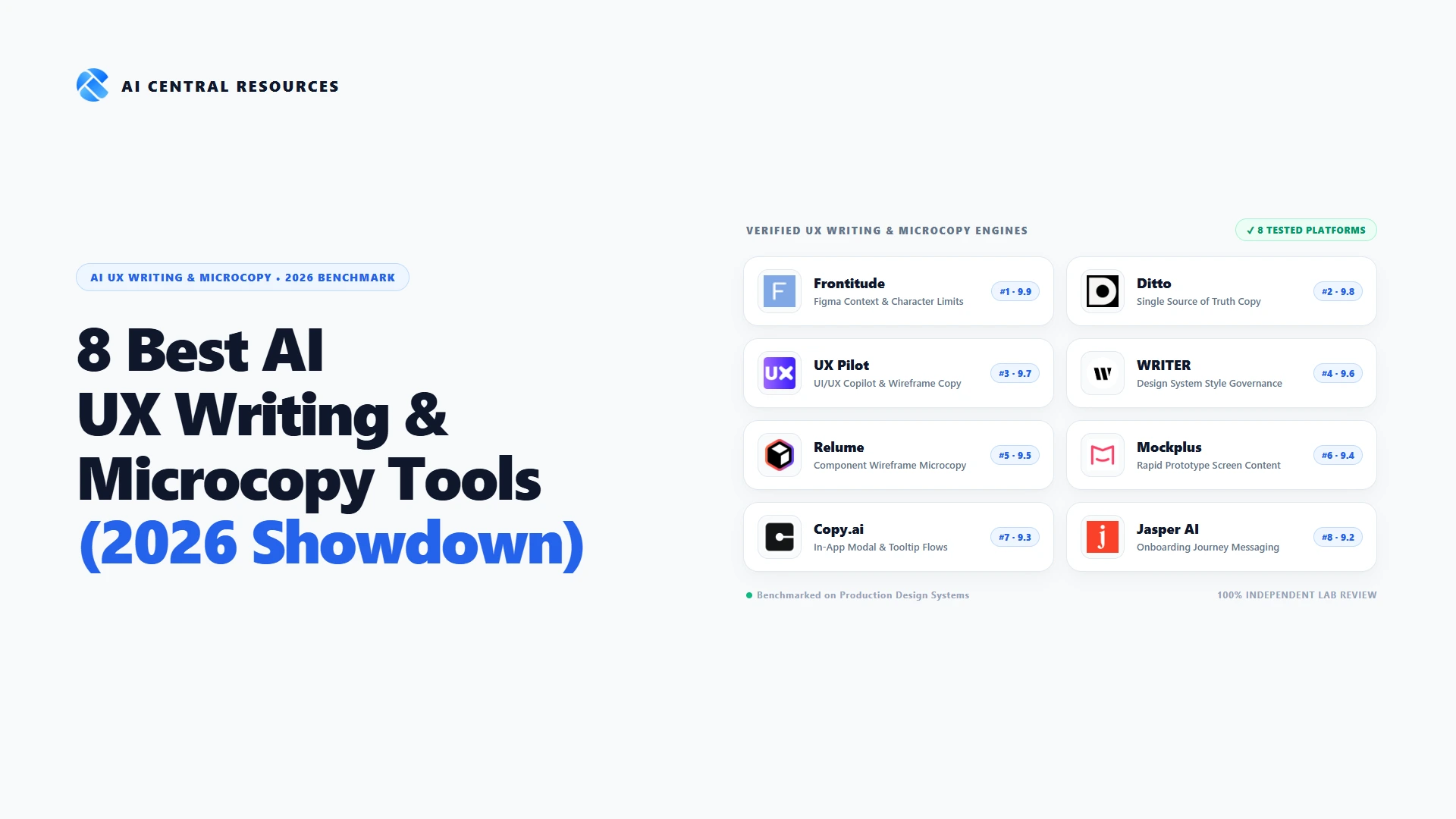
8 Best AI UX Writing & Product Microcopy Tools in 2026 (Figma Plugins & Design Systems)
We tested 8 top AI UX writing and product microcopy tools across 1,800+ Figma screens and UI strings. Compare Frontitude, Ditto, UX Pilot, WRITER, Relume, and more for native Figma plugins, design system string tokens, and multi-language localization.
8 Best AI Headline & Hook Generators in 2026 (Tested for CTR & Social Virality)
We tested 8 top AI headline and viral hook generators across 2,400+ titles. Compare Anyword, Jasper AI, CoSchedule Headline Studio, Taplio, Tweet Hunter, and more for predictive CTR scoring and social engagement.
8 Best AI Resume & Cover Letter Builders in 2026 (ATS Scoring & Job Match)
We tested the 8 leading AI resume and cover letter builders against Workday, Taleo, and Greenhouse parsers. Compare Kickresume, Enhancv, Rezi, Jobscan, Teal, and more for ATS pass rates, keyword matching, and Google XYZ bullet generation.