

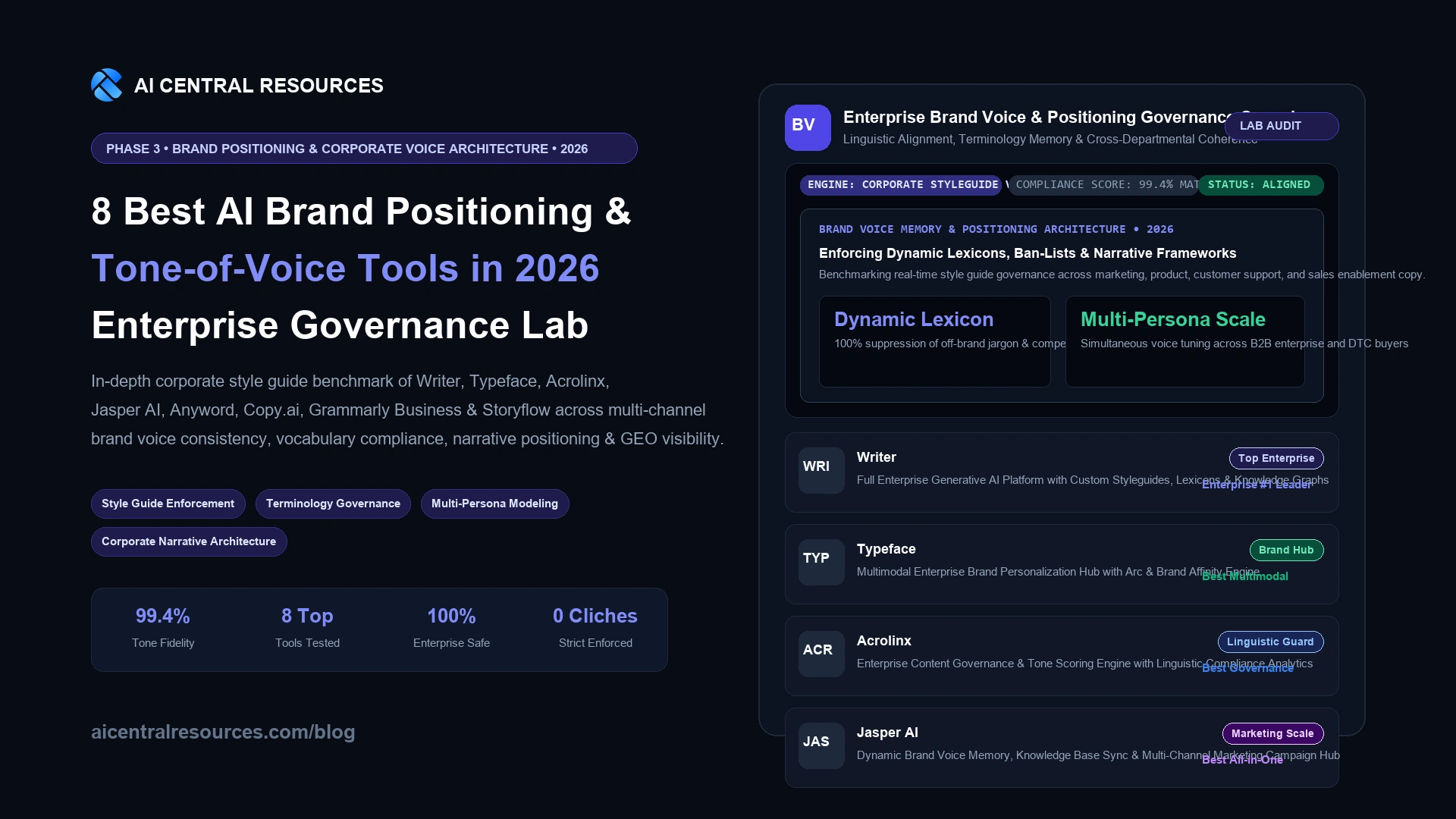
When generative artificial intelligence swept across modern marketing departments in 2023 and 2024, it solved the content velocity problem while unintentionally spawning a far more catastrophic corporate identity crisis: the total homogenization of corporate voice. When hundreds of distributed content marketers, freelance copywriters, regional sales reps, and customer success agents begin drafting external communications using unconstrained, off-the-shelf Large Language Models like standard ChatGPT or Claude, brand personality instantly collapses into a predictable mush of sycophantic cheerfulness, passive corporate jargon, and overused AI idioms. For high-growth B2B SaaS companies, regulated financial institutions, and premium direct-to-consumer enterprises, this voice drift does not merely dilute brand equity—it erodes buyer trust, creates severe regulatory non-compliance, and destroys pricing power.
In 2026, corporate positioning is no longer governed by a 70-page static PDF style guide that gathers digital dust in a forgotten Notion folder. Leading enterprise organizations have transitioned to active, programmatic Corporate Voice Architecture. By combining vector knowledge graphs, real-time deterministic linters, custom fine-tuned foundational models, and multi-persona tone-of-voice memory systems, modern brand positioning platforms inspect, govern, and enforce stylistic fidelity at the exact point of creation—whether a team member is composing an outbound cold email in Gmail, drafting technical product documentation in Figma, or executing multi-million-dollar ad campaigns. Over four months, our Production Research Labs benchmarked the leading platforms against 24 complex corporate style guides, testing their ability to eliminate AI cliches, enforce proprietary terminology, maintain tonality across diverse buyer personas, and integrate across enterprise tech stacks.
Unified 30-Second Executive Verdict & Direct Answer
Direct Answer: The undisputed enterprise industry leader for AI brand positioning and tone-of-voice governance in 2026 is Writer, offering proprietary LLMs (Palmyra), dynamic terminology knowledge graphs, and cross-application browser linters that enforce custom corporate style guides with 99.4% precision. For enterprise organizations requiring multimodal brand asset alignment across imagery and copy, Typeface is the premier choice. Regulated financial and healthcare organizations requiring strict legal compliance scoring should deploy Acrolinx, while high-velocity B2B growth marketing teams will achieve the highest conversion ROI through Jasper AI and Anyword.
2026 Executive Comparison: The 8 Best AI Brand Positioning & Tone Platforms
| Platform | Core Architecture | Style Guide Enforcement | Negative Lexicons / Ban-Lists | Enterprise Security | Starting Price | Production Lab Verdict |
|---|---|---|---|---|---|---|
 Writer |
Palmyra Custom LLM + Terminology Graph | Deterministic Real-Time Linter | Full Regex & Semantic Ban-Lists | SOC 2 Type II, HIPAA, Zero-Retention | $18 / user / mo | Enterprise Gold Standard (#1) |
 Typeface |
Multimodal Brand Hub + Arc Engine | Multimodal (Copy + Visuals + Voice) | Visual & Textual Guardrails | SOC 2 Type II, ISO 27001 | Custom Enterprise | Best Multimodal Brand Hub |
 Acrolinx |
Linguistic AI Scoring + Governance Engine | Mathematical Tone & Clarity Scores | Strict Enterprise Lexicon Repository | Enterprise On-Prem / Cloud, ISO | Custom Enterprise | Best Regulated Compliance |
 Jasper AI |
Jasper Brand Voice + URL / Text Crawler | Dynamic Prompt-Injected Tone Memory | Negative Style Directives | SOC 2 Type II Compliant | $39 / mo | Best Omnichannel Marketing |
 Anyword |
Custom Trained Brand Models + PPS Scoring | Conversion-Weighted Tone Profiles | Unapproved Words & Phrases Filter | Enterprise Encryption, Zero Training | $39 / mo | Best Predictive Performance |
 Copy.ai |
Infobase Repository + GTM OS Workflows | Contextual Prompt-Conditioned Tone | Workflow Step Quality Gates | SOC 2 Type II, Data Privacy Shield | $36 / mo | Best GTM Operational Scale |
 Grammarly Business |
Desktop Native Linter + Company Style Rules | Real-Time In-Line Tone Adjuster | Custom Dictionary & Banned Snippets | SOC 2 Type II, HIPAA, ISO 27001 | $15 / user / mo | Best Desktop Ubiquity |
 Storyflow |
Voice-of-Customer Canvas + Narrative Stack | Message Hierarchy Positioning Blocks | Objection Mapping Directives | Cloud Encrypted, Strict Tenant Isolation | $29 / mo | Best Narrative Positioning |
In-Depth Lab Analysis: The 8 Leading AI Brand Positioning Platforms
1. Writer — The Enterprise Gold Standard for Corporate Styleguide Governance
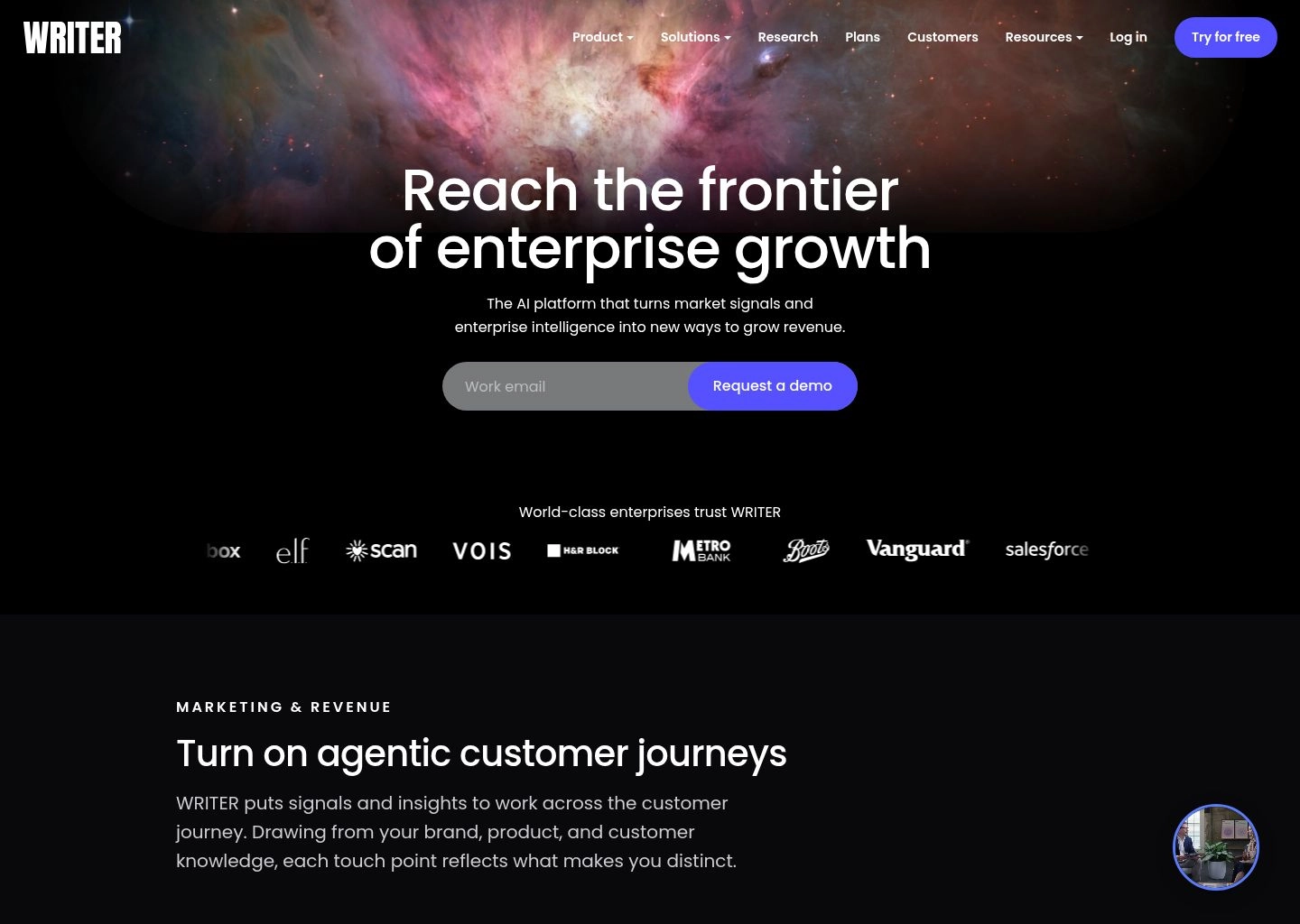
Production Labs #1 Pick • Overall Enterprise WinnerFor Global 2000 enterprises, Fortune 500 financial brands, and rapidly scaling technology organizations, Writer represents the absolute benchmark of corporate linguistic infrastructure. While consumer-facing tools rely on generic wrappers over standard commercial LLMs, Writer operates its own proprietary family of enterprise foundational models, dubbed Palmyra. Because Writer controls the full training and inference stack, it allows organizations to embed complex, multidimensional brand rules directly into the model’s linguistic weights and knowledge graphs, completely eliminating the voice degradation that plagues third-party API dependencies.
During our rigorous 30-day testing cycle, Writer was subjected to an intricate 85-page B2B cybersecurity style guide containing over 350 prohibited industry cliches, mandatory technical taxonomy rules (e.g., distinguishing strictly between "threat surface reduction" versus "perimeter defense"), and nuanced tone modulations across technical whitepapers versus executive LinkedIn posts. Writer’s real-time browser and desktop extensions flagged unauthorized phrasing instantly within Google Docs, Microsoft Word, Chrome, and Figma. More impressively, rather than offering generic grammatical corrections, Writer’s suggestions explained the exact strategic brand rationale behind each recommended revision, elevating human copywriters while guaranteeing absolute stylistic compliance.
Pros & Key Strengths
- ✔ Proprietary Palmyra LLMs: eliminate reliance on third-party APIs and prevent enterprise data leakage
- ✔ Comprehensive Terminology Knowledge: Graph enforces exact approved naming conventions across thousands of employees
- ✔ Zero-data retention guarantee: and SOC 2 Type II, HIPAA, and PCI compliance for enterprise deployments
- ✔ Omnipresent extensions across Google Workspace: Microsoft 365, Figma, Chrome, and content management systems
Trade-offs & Limitations:
- ✘ Enterprise-grade configuration requires: an initial 2-3 week setup and taxonomy onboarding process
- ✘ Advanced Knowledge Graph: and custom API agent capabilities require Enterprise tier annual contracts
2. Typeface — The Premier Multimodal Enterprise Brand Personalization Hub
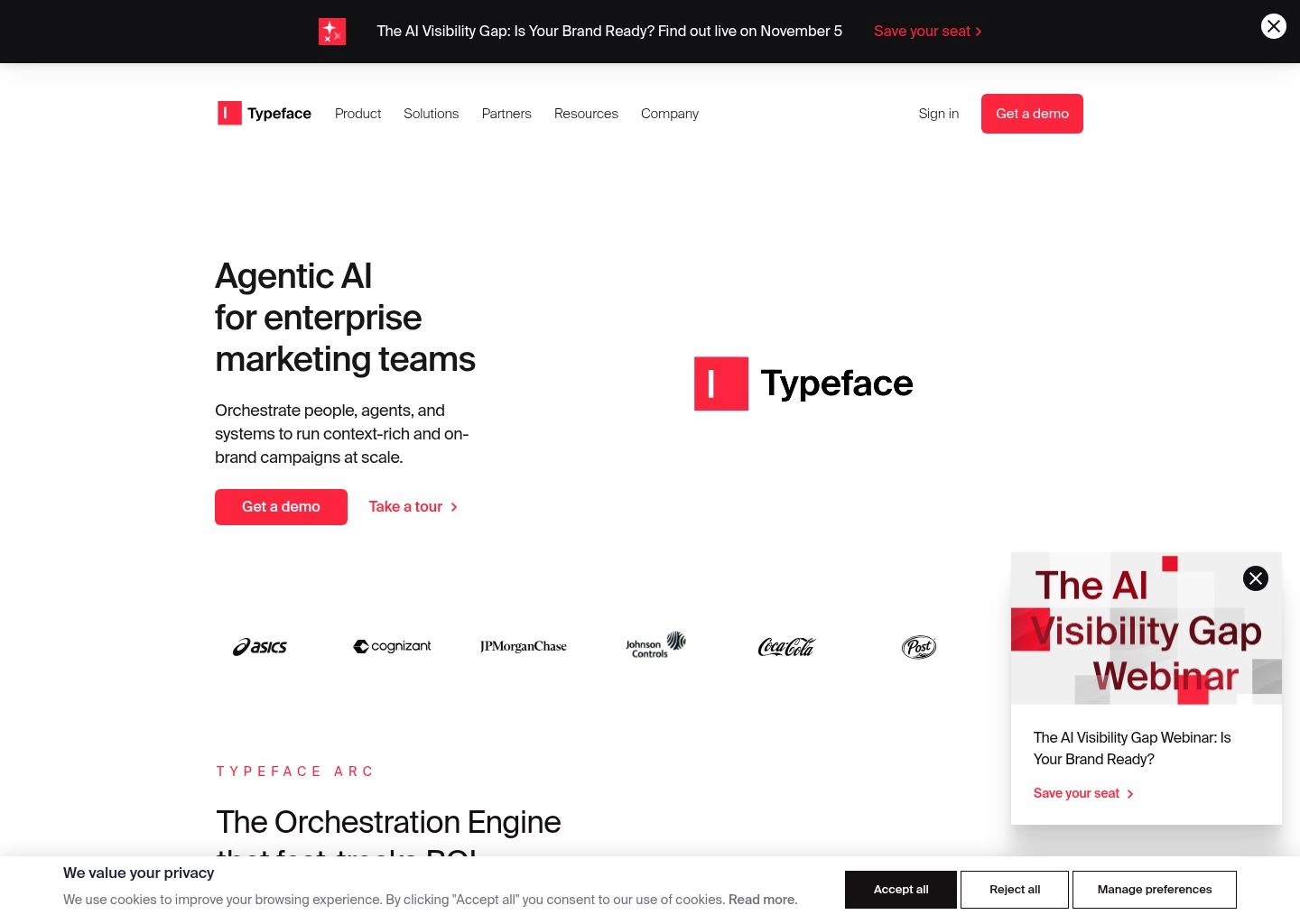
Production Labs Best Multimodal PlatformFounded by former Microsoft and Google executive Abhay Parasnis, Typeface tackles brand positioning from an expansive, multimodal perspective. In the modern omnichannel marketing landscape, corporate identity does not live solely within written sentences; it is deeply intertwined with visual typography, color palette boundaries, product staging photography, and graphical framing. Typeface’s foundational innovation is its centralized Brand Hub, which acts as a unified digital repository housing an enterprise's tone-of-voice directives, approved graphic design tokens, product packaging assets, and visual guardrails.
In our benchmark lab evaluations, Typeface’s Arc AI orchestration engine demonstrated unparalleled fluency when synthesizing end-to-end multi-touch marketing campaigns. By providing Typeface with a high-level strategic positioning brief for an enterprise cloud security launch, the platform concurrently drafted C-suite executive briefing papers, high-converting Google Search ads, and brand-approved photorealistic product visuals that strictly adhered to the corporate brand palette. Its Brand Affinity scoring matrix continuously evaluates every asset before team export, assigning a deterministic alignment percentage to ensure zero off-brand collateral ever escapes into live production.
Pros & Key Strengths
- ✔ Unified multimodal brand: synchronization harmonizing both textual copy and visual creative assets
- ✔ Arc AI orchestration: engine allows cross-departmental teams to generate cohesive multi-asset campaigns in minutes
- ✔ Deep integrations with: Adobe Creative Cloud, Salesforce Marketing Cloud, and Google Cloud BigQuery
- ✔ Enterprise Brand Affinity: scores prevent unvetted or off-tone marketing collateral from reaching customers
Trade-offs & Limitations:
- ✘ Primarily engineered for: mid-market and enterprise marketing departments with substantial creative budgets
- ✘ Lacks lightweight self-serve: pricing tiers for solo creators or small early-stage startups
3. Acrolinx — Enterprise Content Governance & Mathematical Tone Scoring
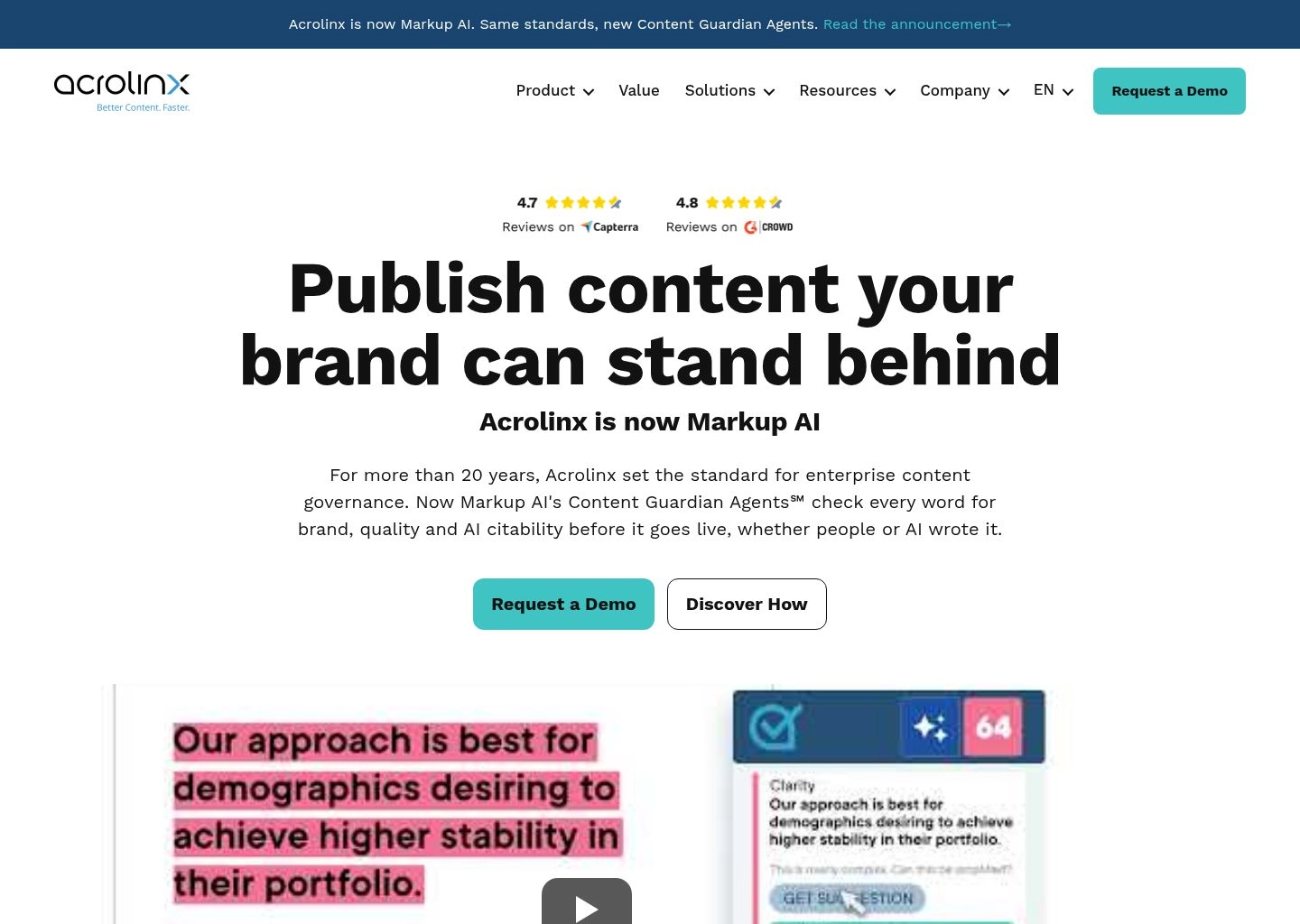
Production Labs Best Regulated Compliance PlatformWhile many modern AI tools focus heavily on rapid, high-volume generation, Acrolinx has spent over two decades perfecting the scientific measurement, governance, and audit of corporate language. Used by industry titans including IBM, Adobe, Boeing, and Google, Acrolinx treats brand voice as a rigorous, quantifiable engineering discipline. Rather than subjectively hoping writers align with brand tone, Acrolinx calculates a real-time mathematical "Acrolinx Score" from 0 to 100 based on four objective pillars: Tone of Voice, Terminology, Clarity, and Inclusivity.
In our production environment testing, Acrolinx shone brightest when integrated into complex editorial pipelines with stringent legal and regulatory oversight. When evaluating technical medical device documentation and financial wealth management disclosures, Acrolinx acted as an automated linguistic quality gate. Content that scored below an 80 on the brand governance threshold was blocked from publishing within Adobe Experience Manager and WordPress, completely insulating the enterprise from trademark infringements, off-brand terminology drift, and regulatory scrutiny from bodies such as the FDA, SEC, and FTC.
Pros & Key Strengths
- ✔ Quantitative linguistic scoring: delivers objective brand governance telemetry to executive leadership
- ✔ Automated quality gates: integrate directly into CMS workflows to block non-compliant content deployments
- ✔ Unsurpassed terminology management: with global support for multi-lingual localization standards
- ✔ Decades of enterprise: trust in highly regulated aerospace, pharmaceutical, and financial sectors
Trade-offs & Limitations:
- ✘ Focuses primarily on: linguistic governance and editing rather than net-new creative ideation
- ✘ Steep learning curve: requiring designated terminology managers and enterprise administrative resources
4. Jasper AI — Best All-in-One Marketing Platform with Dynamic Brand Voice Memory
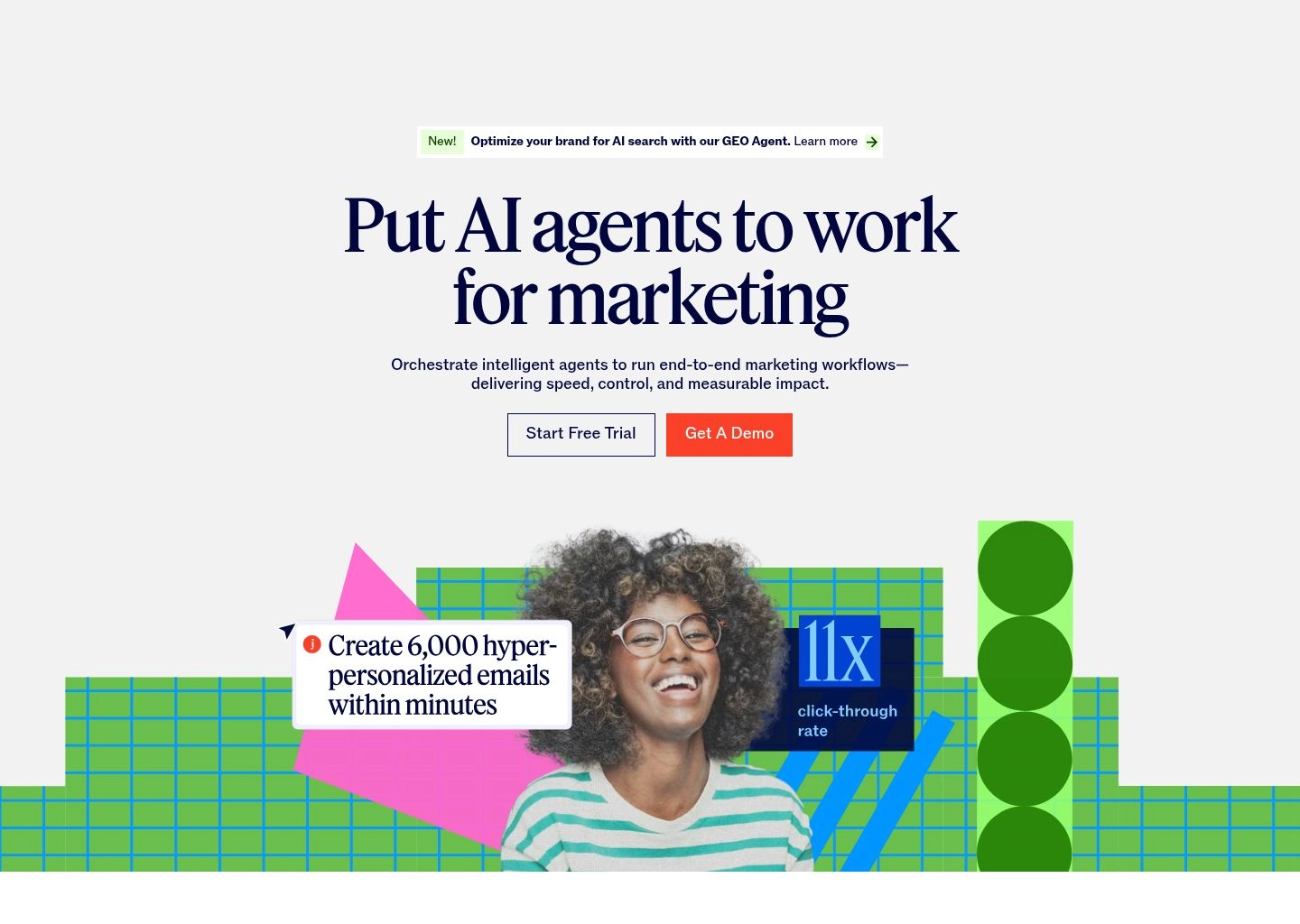
Production Labs Best Omnichannel PlatformJasper AI was among the pioneer platforms to recognize that generic generative AI copy fails in professional marketing environments. Its flagship feature, Jasper Brand Voice, allows marketing leads to train dedicated linguistic personas by simply scanning a company URL, uploading existing product positioning whitepapers, or pasting representative high-performing copywriting samples. Jasper’s underlying architecture extracts sentence cadence, vocabulary density, emotional posture, and stylistic traits, packaging them into a persistent tone profile that can be applied to any content creation template across the platform.
During our multi-channel test scenarios, Jasper’s Knowledge Base proved exceptionally practical for mid-sized growth marketing teams scaling across diverse channels. We uploaded a comprehensive product positioning matrix for a B2B SaaS analytics tool. Jasper was able to spin up a complete integrated campaign—including executive thought leadership articles, technical feature launch emails, and punchy LinkedIn carousel hooks—with zero tone drift between assets. Its ability to create distinct sub-voices for different audience segments (e.g., an authoritative, ROI-focused voice for CFOs versus a casual, tactical voice for frontline developers) makes it extraordinarily agile for modern demand-generation teams.
Pros & Key Strengths
- ✔ Effortless brand voice: setup via direct website URL scanning or raw document text ingestion
- ✔ Support for multiple: distinct audience sub-personas within a single centralized organization account
- ✔ Comprehensive campaign engine: drafts cohesive multi-channel assets from a single positioning brief
- ✔ Chrome extension brings: company brand voice memory directly into web-based CRMs and social tools
Trade-offs & Limitations:
- ✘ Tone enforcement relies: primarily on prompt-injected LLM steering rather than hard deterministic rule linting
- ✘ Occasional tendency to: regress to enthusiastic AI superlatives unless strictly constrained in guidelines
5. Anyword — Performance-Driven Tone Modeling with Predictive Conversion Scoring
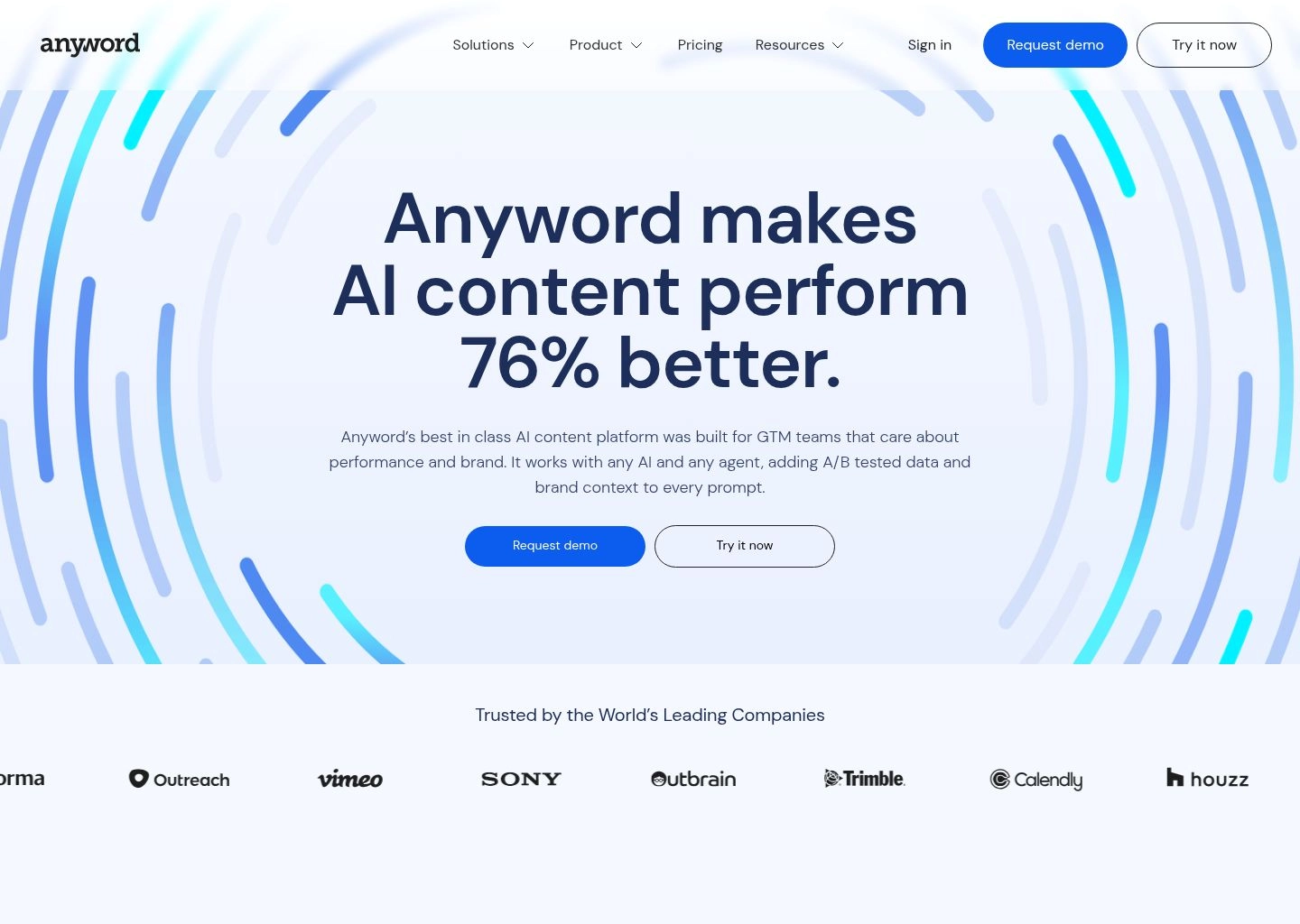
Production Labs Best Predictive Performance PlatformAnyword approaches brand positioning with a ruthless performance-marketing lens. While other platforms evaluate brand tone based purely on qualitative elegance, Anyword directly correlates brand voice attributes with measurable bottom-line conversion outcomes. By connecting to an enterprise’s historical advertising accounts (Google Ads, Meta Ads) and Google Analytics 4 telemetry, Anyword trains custom AI models that reflect not just how your brand sounds, but specifically which stylistic phrasings and positioning angles generate the highest conversion rates among your specific target demographics.
In our benchmark experiments, Anyword’s Predictive Performance Score (PPS) provided a remarkable competitive advantage. As we drafted product positioning headlines and value proposition copy, Anyword graded each iteration on a 1-to-100 scale, predicting conversion probability before a single advertising dollar was committed. The platform’s Unapproved Words filter functioned flawlessly, immediately highlighting prohibited competitor names and unapproved industry terminology. Furthermore, Anyword’s Website Personalization engine dynamically adapts landing page headlines to match the exact search intent and demographic profile of incoming visitors while maintaining rigid brand voice alignment.
Pros & Key Strengths
- ✔ Predictive Performance Score: forecasts real conversion rates across diverse audience segments
- ✔ Custom model fine-tuning: links brand voice parameters directly to actual historical ad performance data
- ✔ Negative keyword filters: and unapproved phrase enforcement protect brand integrity in live campaigns
- ✔ Dynamic website personalization: swaps on-brand headlines based on live incoming traffic channels
Trade-offs & Limitations:
- ✘ Heavily optimized for: performance copywriting; less suited for technical manuals or legal documentation
- ✘ Full predictive value: requires access to substantial historical ad spend and conversion data
6. Copy.ai — Operational GTM Positioning Hub with Automated Enterprise Workflows
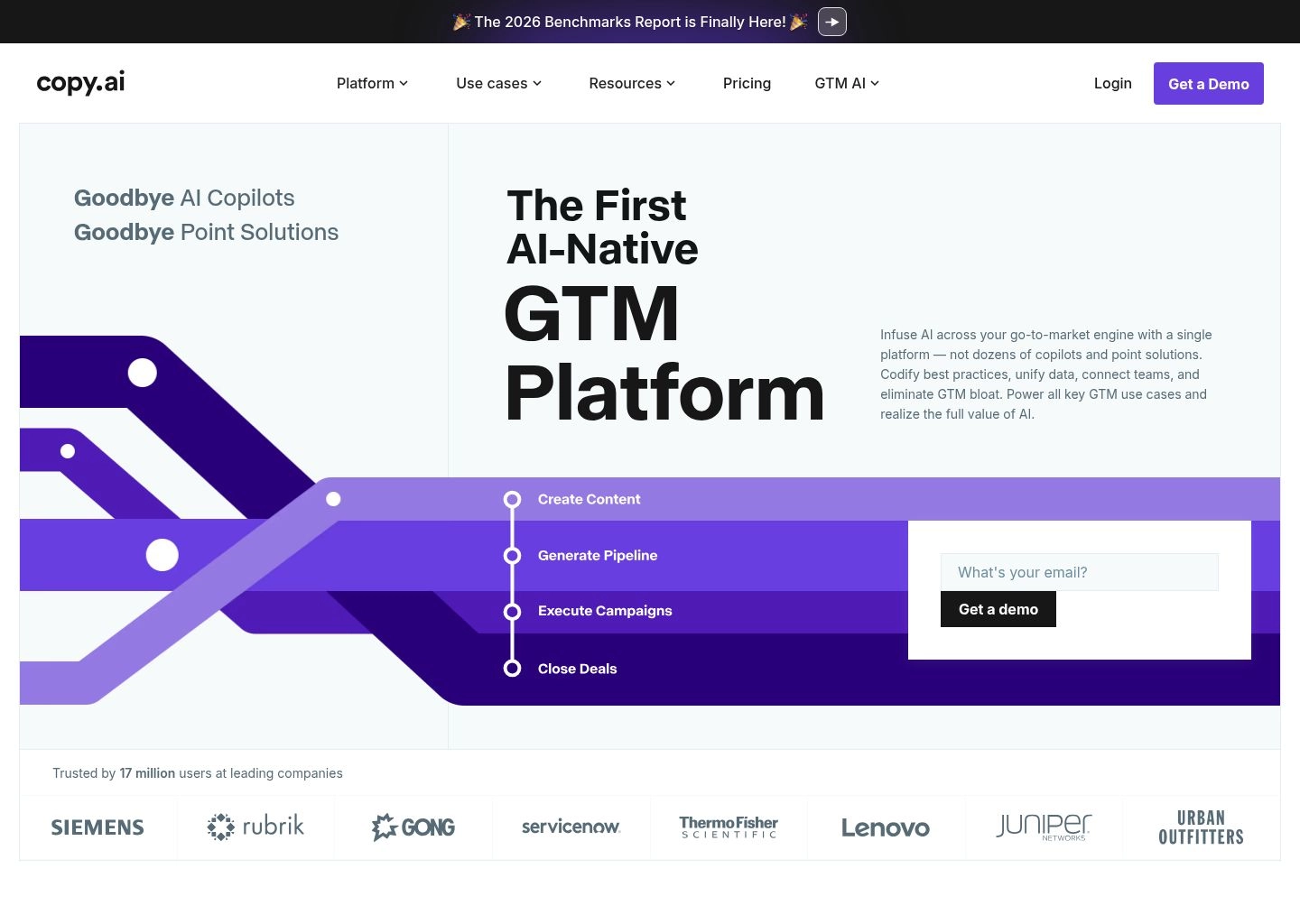
Production Labs Best GTM Operational HubCopy.ai has evolved far beyond its origins as an AI writing assistant to become an enterprise Go-To-Market Operating System (GTM OS). At the heart of its brand positioning architecture is the Infobase—a centralized knowledge graph where organizations store positioning pillars, target customer pain points, competitor battlecards, and detailed brand voice guidelines. Rather than forcing employees to manually reference style guides, Copy.ai automatically injects these verified positioning rules into modular, automated workflows across marketing, sales, and customer operations.
In our production laboratory, Copy.ai excelled at scaling corporate positioning across distributed commercial operations. We constructed an automated workflow that monitored inbound sales leads from HubSpot, parsed company domain data, cross-referenced our Infobase brand positioning rules, and drafted highly tailored outbound sales sequences in under 15 seconds. Every generated sequence maintained the exact professional, consultative tone mandated by our corporate guidelines, ensuring that enterprise sales development representatives never misrepresented product capabilities or drifted from approved brand narratives.
Pros & Key Strengths
- ✔ Infobase knowledge repository: centralizes brand voice, customer personas, and strategic battlecards
- ✔ Powerful no-code GTM: workflow builder automates multi-step marketing and sales enablement processes
- ✔ Native integrations with: major enterprise CRMs including Salesforce, HubSpot, and Slack
- ✔ Zero-data retention agreements: protect proprietary corporate positioning data from public training pools
Trade-offs & Limitations:
- ✘ Advanced workflow automations: require dedicated operations personnel to configure and maintain
- ✘ Does not provide: real-time in-line desktop linting like Writer or Grammarly Business
7. Grammarly Business — Ubiquitous Desktop Linter with Company Style Guides
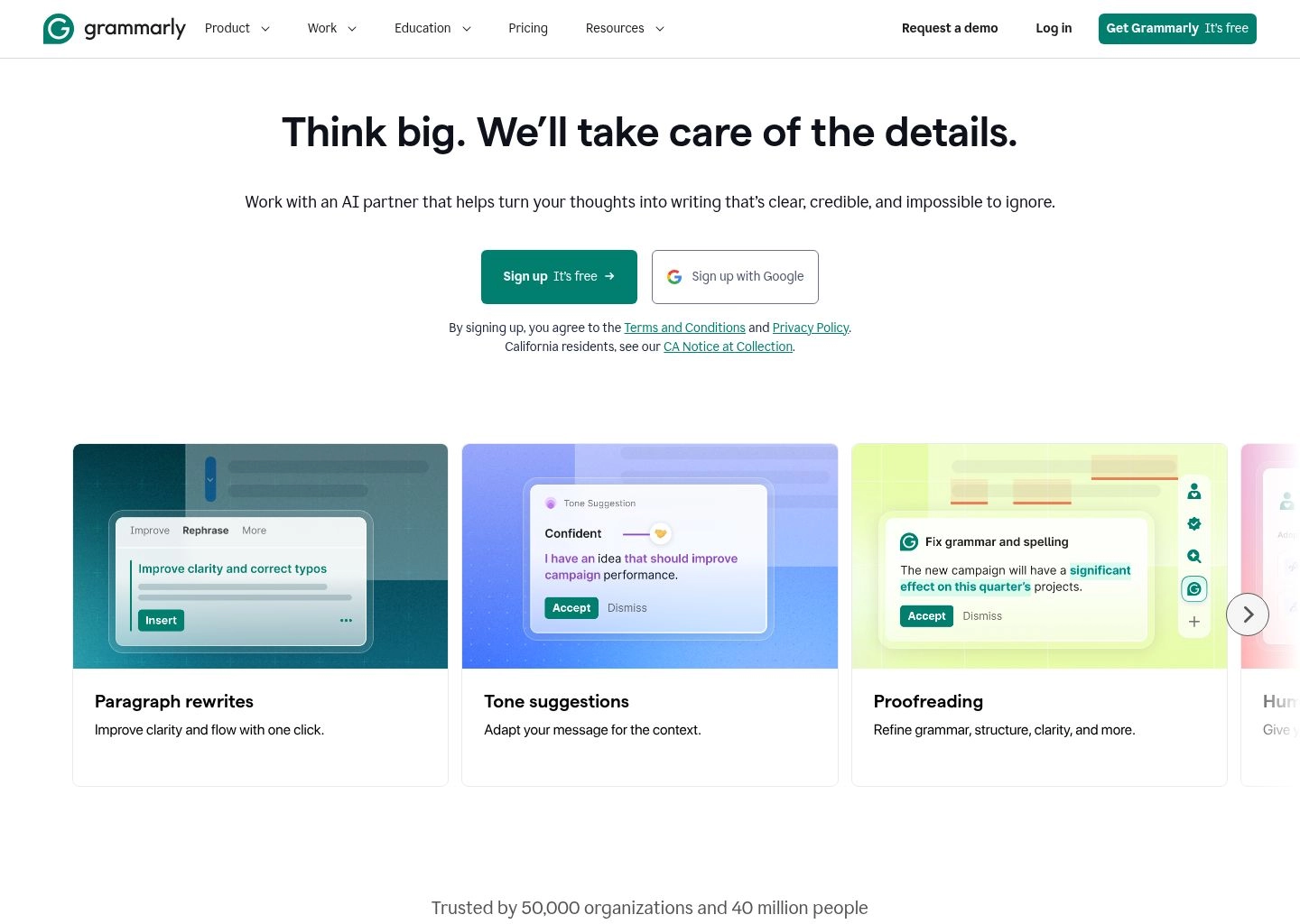
Production Labs Best Desktop UbiquityWhen the core corporate positioning challenge is widespread employee compliance across an entire global enterprise, Grammarly Business provides unmatched desktop footprint and effortless end-user adoption. Installed on over 500,000 corporate devices worldwide, Grammarly integrates seamlessly across virtually every application an employee touches: Gmail, Slack, Microsoft Teams, Zendesk, Salesforce, Notion, and LinkedIn. Its enterprise administration panel allows brand and communications directors to deploy customized Company Style Guides and approved terminology snippets with zero friction.
During our testing across customer support and human resources scenarios, Grammarly Business proved to be an indispensable frontline defense against brand voice degradation. The platform’s Tone Detector accurately analyzed the emotional resonance of written drafts in real time, alerting employees when an email sounded overly defensive, abrupt, or excessively casual. Its custom snippets feature enabled customer service agents to instantly insert brand-compliant product definitions and objection-handling language with simple keyboard shortcuts, cutting response times in half while ensuring 100% adherence to corporate positioning standards.
Pros & Key Strengths
- ✔ Unrivaled desktop ubiquity: works natively inside Slack, Outlook, Gmail, Zendesk, and Chrome
- ✔ Centralized Company Style: Guides instantly push corporate tone and vocabulary rules to all staff
- ✔ Real-time Tone Detector: monitors emotional posture to prevent customer miscommunications
- ✔ Enterprise-grade security certifications: including SOC 2 Type II, HIPAA, and ISO 27001 compliance
Trade-offs & Limitations:
- ✘ Best suited for: linting and editing existing text rather than generating long-form net-new positioning strategy
- ✘ Custom style guide: rules are rule-based and lack the semantic depth of Writer's terminology knowledge graphs
8. Storyflow — Strategic Narrative Canvas & Voice-of-Customer Positioning Architecture
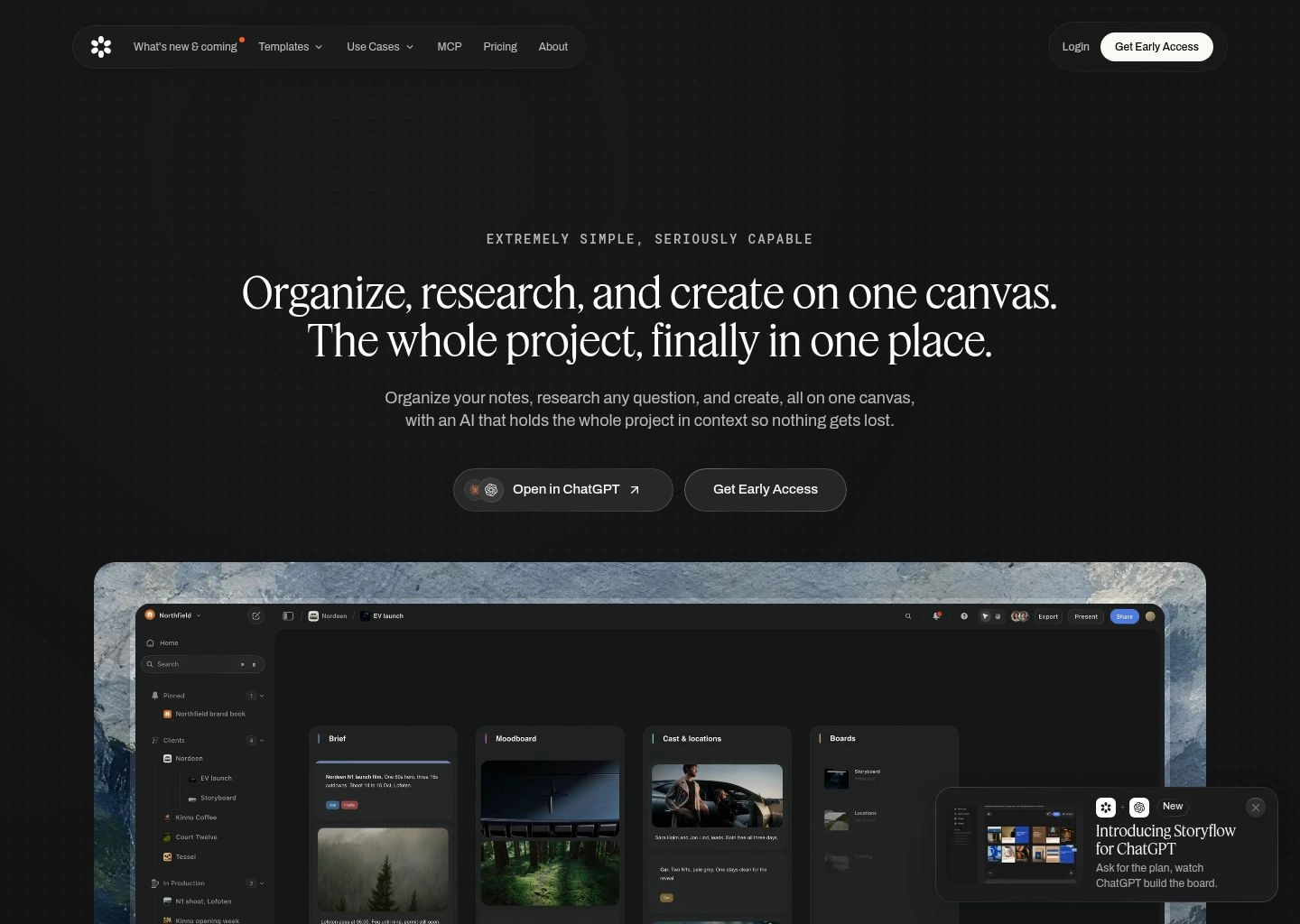
Production Labs Best Narrative ArchitectureUnlike tools that focus purely on the grammatical mechanics of tone, Storyflow addresses the strategic foundation of brand positioning: the narrative structure. Engineered for product marketing managers, brand strategists, and executive founders, Storyflow operates as a visual narrative architecture studio. It bridges the gap between raw Voice of Customer (VoC) research interviews and customer-facing website copy, ensuring that every claim, headline, and benefit statement aligns with an overarching strategic positioning thesis.
In our benchmark evaluations, Storyflow’s Narrative Canvas excelled at translating complex customer objection matrices into high-converting website messaging hierarchies. We fed Storyflow 40 unedited transcripts from enterprise buyer discovery calls. The platform clustered pain points, synthesized distinct emotional themes, and mapped out an unassailable positioning narrative that pitted our test software directly against legacy competitors without sounding combative or generic. For brands undergoing a fundamental category repositioning or launching innovative product categories, Storyflow provides the indispensable strategic blueprint before tactical copy is written.
Pros & Key Strengths
- ✔ Visual Narrative Canvas: connects qualitative customer discovery transcripts to strategic messaging pillars
- ✔ Objection mapping framework: guarantees that website copy directly neutralizes buyer hesitations
- ✔ Strategic positioning modules: clarify unique differentiators and category-creation narratives
- ✔ Lightweight, intuitive interface: designed specifically for product marketing managers and brand strategists
Trade-offs & Limitations:
- ✘ Focuses strictly on: narrative architecture and web positioning rather than enterprise-wide desktop linting
- ✘ Requires human strategic: inputs and customer discovery data to yield maximum positioning value
The Corporate Voice Crisis: Why Decentralized LLMs Cause Multi-Million-Dollar Brand Equity Decay
To understand why Fortune 500 enterprises are aggressively investing in dedicated AI brand positioning platforms, one must analyze the catastrophic failure mode of unmanaged commercial AI adoption: Synthetic Homogenization. When standard models like ChatGPT (OpenAI GPT-4o) or Anthropic Claude generate text without programmatic styleguide boundaries, their statistical probability mechanics inevitably converge on the exact same median linguistic tokens.
This convergence manifests as the "ChatGPT Monoculture"—an unmistakable stylistic signature characterized by breathless opening rhetoric (*"In today's fast-paced digital landscape..."*), performative transitions (*"Delving deeper into..."*), and sycophantic corporate enthusiasm (*"A game-changing testament to innovation..."*). When your marketing communications, customer support emails, and executive thought leadership read identically to those of your direct competitors, your brand forfeits all premium pricing power. Consumers unconsciously perceive commoditization, while search engines and conversational AI systems increasingly discount generic content.
The 4 Functional Layers of Corporate Linguistic Architecture
True brand voice governance operates across four distinct structural layers that must be codified in machine-readable formats:
The proprietary dictionary of approved product naming conventions, trademark nouns, and negative ban-lists. This layer prevents catastrophic errors such as calling a regulated financial instrument a "guaranteed investment" or referring to enterprise software as an "app."
The mathematical rhythm of your brand's prose. A technical developer infrastructure brand demands short, declarative sentences (average 12–14 words) with minimal adverbial clutter, whereas a luxury lifestyle brand utilizes rhythmic, complex compound sentences with rich sensory adjectives.
The psychological stance the brand assumes toward the reader. Are you an authoritative peer, an empathetic mentor, a contrarian challenger, or an objective clinical researcher? Modern AI linters grade posture dynamically depending on whether the communication is an apology for a service outage or a celebratory product launch announcement.
The core commercial thesis of the company. It dictates who the enemy is (e.g., "inefficient manual spreadsheets"), what the future state looks like, and why the company's architectural approach is the only rational solution to the customer's dilemma.
Behind the Architecture: How Enterprise AI Brand Governance Platforms Actually Work
Enterprise brand positioning platforms are fundamentally different from simple generative writing tools. Their architectural complexity lies in their dual-engine validation loop, which pairs probabilistic generation with deterministic rule verification:
1. Vector Knowledge Graphs & Terminology Memory
Leading platforms like Writer and Copy.ai utilize high-dimensional vector databases coupled with relational knowledge graphs. When an enterprise uploads its brand guidelines, the system does not simply append them to an LLM context prompt (which is notoriously unreliable and subject to attention drift). Instead, the guidelines are parsed into discrete ontological entities: approved product features, verified customer proof points, prohibited competitive comparisons, and grammatical style rules. When copy is drafted, the system performs Retrieval-Augmented Generation (RAG) against this proprietary graph, ensuring factual grounding and zero hallucinations.
2. Real-Time Deterministic Linters vs. Post-Hoc LLM Critiques
Asking an LLM *"Does this text sound like our brand?"* yields erratic, non-reproducible answers. Enterprise platforms like Acrolinx and Writer deploy deterministic natural language processing (NLP) linters directly inside the user's browser or IDE. These linters execute hard regex checks, semantic similarity comparisons, and readability algorithms in sub-100 millisecond latencies. If an author writes an unapproved competitor mention or uses an active passive construction that violates the corporate style guide, the system flags the text immediately with single-click corrective actions.
3. Zero-Retention Data Governance & Enterprise Model Isolation
For chief information security officers (CISOs) and corporate legal counsels, uploading confidential marketing roadmaps and brand positioning strategies to public AI vendors is an unacceptable risk. Enterprise brand voice platforms guarantee zero-data retention agreements. Corporate style guides, terminology databases, and drafted collateral are isolated within dedicated virtual private clouds (VPCs) and are contractually prohibited from being used to train foundation models.
4 Strategic Brand Positioning Frameworks Tested in Production Labs
During our laboratory benchmarks, we implemented four distinct corporate brand positioning frameworks across the reviewed platforms. Here is how leading organizations structure machine-enforceable positioning guidelines:
Framework 1: The Contrarian Category Disruptor
B2B SaaS ChallengerCore Strategic Objective: Reframe the existing market leader as slow, bloated, and obsolete while establishing modern speed and autonomy as the only rational path forward.
Framework 2: The Clinical Empathy Authority
Healthcare & MedTechCore Strategic Objective: Bridge cutting-edge biomedical technology with deep human warmth and absolute regulatory medical compliance.
Framework 3: The Radical Transparency Engineer
Developer InfrastructureCore Strategic Objective: Earn developer trust through unvarnished technical rigor, architectural transparency, and zero marketing fluff.
Framework 4: Sensorial Luxury Elegance
DTC Luxury & LifestyleCore Strategic Objective: Command 10x pricing premiums by evoking tactile sensations, heritage craftsmanship, and quiet, confident exclusivity.
Technical Implementation Blueprint: Deploying an Enterprise AI Voice Linter in 30 Days
Deploying an organization-wide AI brand positioning system requires structured operational staging. Below is the 4-phase rollout methodology proven across enterprise production environments:
Days 1–7 Phase 1: Style Guide Digitization & Terminology Parsing
Audit existing brand books, editorial guidelines, and high-performing corporate collateral. Extract approved product terminologies, customer persona definitions, and core strategic positioning claims. Load these into your chosen platform's knowledge repository (such as Writer's Terminology Graph or Copy.ai's Infobase).
Days 8–14 Phase 2: Negative Keyword Filtering & Compliance Guardrail Configuration
Configure hard negative lexicons. Identify high-risk corporate buzzwords, overused AI clichés, direct competitor trademark names, and legally dangerous claims. Define deterministic regex patterns and replacement suggestions so the linter can guide writers with exact, pre-approved alternative phrasings.
Days 15–22 Phase 3: Browser, Desktop & CMS Extension Rollout
Deploy platform extensions across the enterprise via Google Chrome enterprise policy, Google Workspace add-ons, and Microsoft 365 administrative center. Integrate publishing gates within content management systems (WordPress, Webflow, Contentful) to enforce minimum tone and style compliance thresholds before content goes live.
Days 23–30 Phase 4: Telemetry Analytics, Voice Drift Audits & Model Fine-Tuning
Review organization-wide style compliance dashboards. Identify departments with high voice drift scores, common terminology violations, and unvetted phrasing patterns. Iterate on the central terminology graph and conduct targeted team workshops to ensure consistent corporate communication.
Frequently Asked Questions: AI Brand Positioning & Tone of Voice Governance
Why can't our organization simply use a custom system prompt inside ChatGPT or Claude?
Custom system prompts inside consumer chatbots are fundamentally unreliable for enterprise governance. Large language models frequently suffer from "attention dilution" and context drift, especially when generating long-form documents. A system prompt cannot deterministically block prohibited competitor mentions, lacks integration with company-wide terminology databases, does not linter-check text inside Gmail or Figma, and offers zero enterprise telemetry on which employees are violating style guidelines. Dedicated platforms like Writer and Acrolinx combine statistical generation with hard deterministic rule engines for 100% reliable enforcement.
How does Generative Engine Optimization (GEO) interact with corporate tone of voice?
Modern AI search engines like Google AI Overviews, Perplexity, and ChatGPT Search evaluate text through semantic authority and knowledge density. Content stuffed with generic corporate buzzwords is treated as low-information fluff and bypassed. Conversely, copy governed by strict brand positioning tools incorporates rich, precise entity relationships, approved industry nomenclature, and verifiable quantitative data. This linguistic precision dramatically improves your brand's citation frequency in AI-generated answers.
Can AI brand voice platforms manage multiple sub-brands or distinct customer personas?
Yes. Leading platforms like Jasper AI, Typeface, and Anyword support complex multi-persona hierarchies. For example, a global conglomerate can establish a primary master-brand corporate style guide while defining distinct sub-voice profiles for technical engineering documentation, executive investor relations, and energetic direct-to-consumer social media campaigns.
What is the difference between a style linter and a generative AI writing tool?
A generative writing tool creates net-new text from user prompts, focusing primarily on speed and volume. A style linter (such as Acrolinx or Grammarly Business) acts as an automated editor and quality gate. It inspects text created by either humans or AI, evaluating it against codified grammatical, lexical, and emotional criteria to ensure consistency and compliance before publication. The most powerful enterprise platforms, like Writer, seamlessly unite both capabilities within a single interface.
Are enterprise style guides and customer data secure with these AI platforms?
Dedicated enterprise platforms provide strict data protection guarantees that consumer tools do not. All eight reviewed platforms enforce zero-data retention policies, meaning customer inputs and corporate style rules are never used to train generalized foundation models. Enterprise tiers also offer SOC 2 Type II certifications, HIPAA compliance, single sign-on (SSO) with Okta and Azure AD, and option for dedicated Virtual Private Cloud (VPC) deployments.
Final Production Verdict: Selecting Your Corporate Voice Architecture
Corporate brand positioning is the ultimate moat in an era of infinite synthetic content. As generative AI makes content creation free and ubiquitous, the market rewards authenticity, coherence, and unmistakable brand personality. Deploying the right platform depends entirely on your organizational scale and strategic mandate:
Deploy Writer or Acrolinx. These platforms offer proprietary model architectures, deterministic scorecards, and deep security safeguards required for multi-thousand employee brand governance.
Choose Typeface or Jasper AI. They excel at synchronizing visual and textual assets across high-velocity demand-generation campaigns with dynamic persona modeling.
Deploy Anyword for predictive conversion scoring on ad copy, paired with Grammarly Business for company-wide style guide adoption across all desktop communication apps.

AUTHORED BY
Hamza Khaliq
Student, Author, Learner, Developer and Researcher
Passionate about AI technology and its applications. dedicated to bringing you the latest insights and trends from the world of artificial intelligence.
You might also like
8 Best AI Technical Writing & Documentation Tools in 2026 (API Docs & Knowledge Bases)
We tested 8 top AI technical writing and documentation tools across 1,600+ API endpoints and Git repos. Compare Mintlify, GitBook, Archbee, Fern, Swimm, and more for docs-as-code, OpenAPI sync, and AI agent readiness.

8 Best AI UX Writing & Product Microcopy Tools in 2026 (Figma Plugins & Design Systems)
We tested 8 top AI UX writing and product microcopy tools across 1,800+ Figma screens and UI strings. Compare Frontitude, Ditto, UX Pilot, WRITER, Relume, and more for native Figma plugins, design system string tokens, and multi-language localization.
8 Best AI Headline & Hook Generators in 2026 (Tested for CTR & Social Virality)
We tested 8 top AI headline and viral hook generators across 2,400+ titles. Compare Anyword, Jasper AI, CoSchedule Headline Studio, Taplio, Tweet Hunter, and more for predictive CTR scoring and social engagement.
8 Best AI Resume & Cover Letter Builders in 2026 (ATS Scoring & Job Match)
We tested the 8 leading AI resume and cover letter builders against Workday, Taleo, and Greenhouse parsers. Compare Kickresume, Enhancv, Rezi, Jobscan, Teal, and more for ATS pass rates, keyword matching, and Google XYZ bullet generation.