

Databricks
The Data Intelligence Platform for building and scaling data and AI
Gallery
6 items

About Databricks
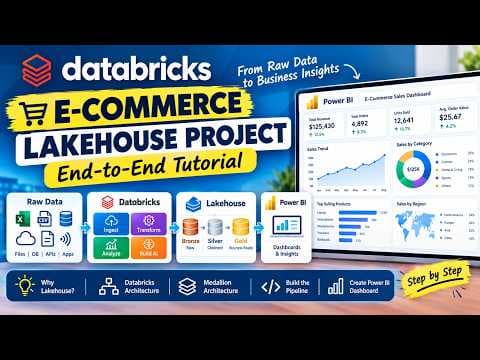
Databricks is a unified Data Intelligence Platform built around the lakehouse architecture, combining data engineering, data warehousing, real-time analytics, and AI/ML development into a single system. The company was founded in 2013 by seven UC Berkeley PhD researchers and AMPLab alumni, later nicknamed the "Apache Spark Seven": Ali Ghodsi, Ion Stoica, Matei Zaharia (the original creator of Apache Spark), Patrick Wendell, Reynold Xin, Andy Konwinski, and Arsalan Tavakoli-Shiraji. The founders had already built and open-sourced Apache Spark at Berkeley before starting the company, and Andreessen Horowitz led their $13.9 million Series A in 2013 after valuing the young company at $50 million. Ali Ghodsi became CEO in January 2016 and remains in that role today, with Databricks reaching a $5.4 billion annual recurring revenue run-rate by January 2026 and a valuation exceeding $100 billion following a September 2025 funding round.
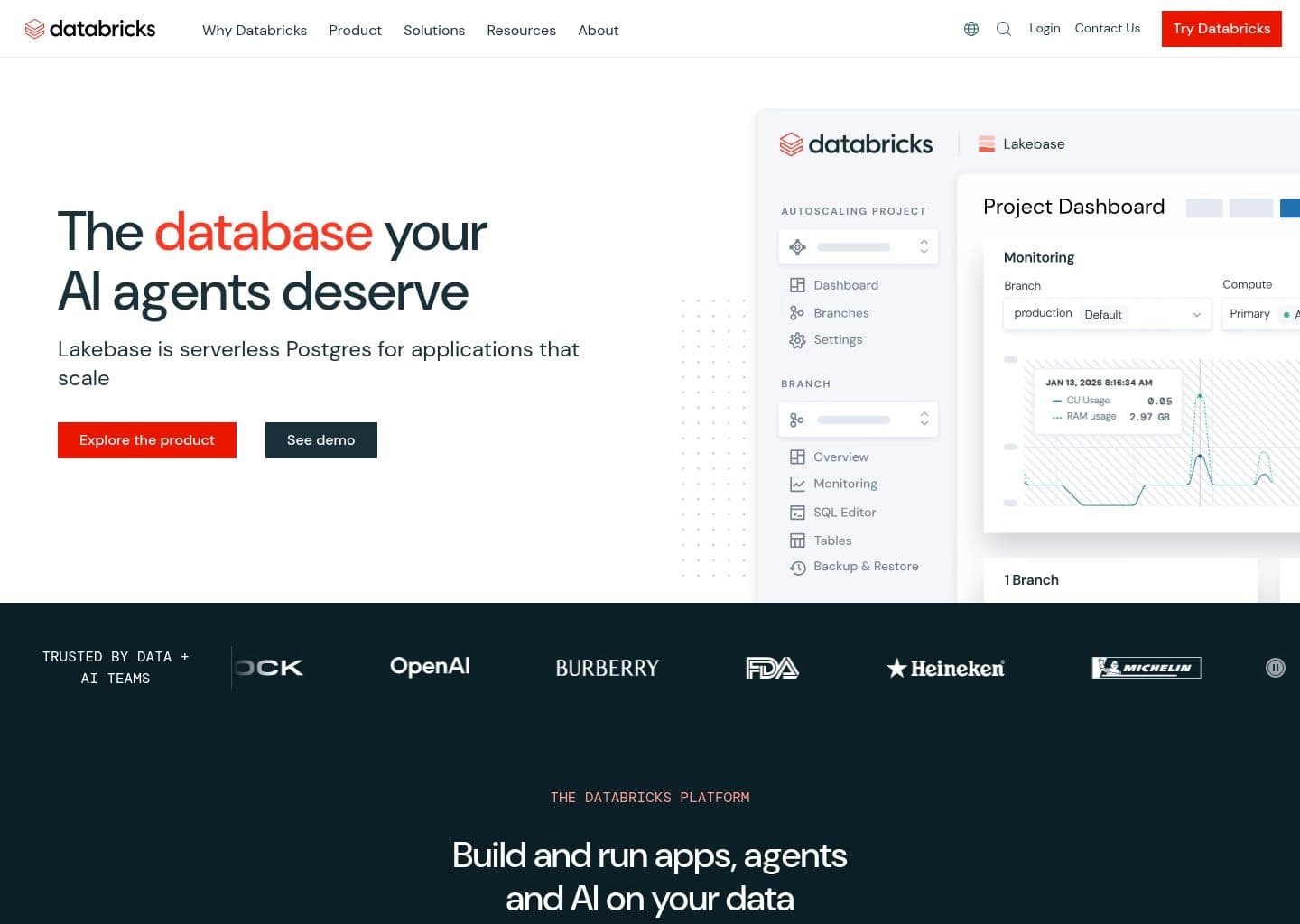
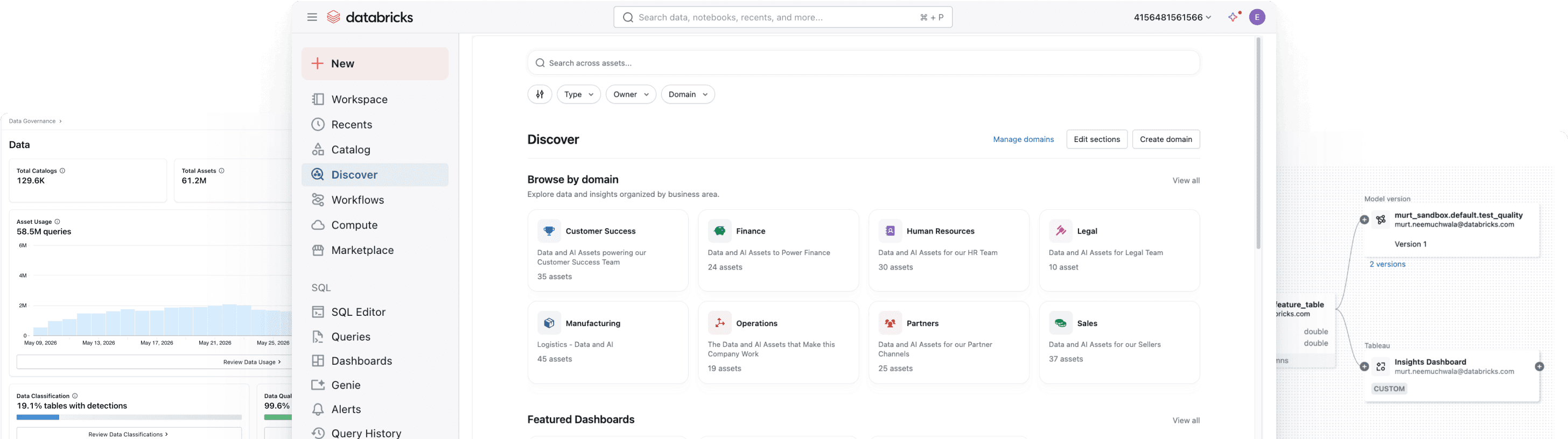
At its core, Databricks pioneered the "lakehouse" concept, a data architecture that combines the low-cost, flexible storage of a data lake with the performance and reliability guarantees of a traditional data warehouse. This is powered by Delta Lake, Databricks' open-source storage layer that adds ACID transaction support to data lakes, alongside MLflow for managing the machine learning lifecycle. The platform has since expanded well beyond its Spark-processing origins into a broader suite: Unity Catalog provides unified governance, access control, and lineage tracking across all data and AI assets; Lakeflow handles data engineering and ETL pipeline orchestration; Agent Bricks lets teams build and deploy custom AI agents; and Lakebase is an autoscaling operational database built natively on the platform.
Databricks operates natively across AWS, Azure, and Google Cloud Platform, giving enterprises flexibility to run workloads on their existing cloud infrastructure rather than requiring a migration. More than 20,000 organizations use the platform today, including Adidas, AT&T, Bayer, Block, Mastercard, Rivian, and Unilever, with over 60% of the Fortune 500 among its customer base. The platform's open-source contributions, particularly Apache Spark, Delta Lake, and MLflow, have become foundational infrastructure across the broader data engineering industry well beyond Databricks' own paying customers.
Pricing follows a consumption-based model measured in Databricks Units (DBUs), with rates varying by workload type (data engineering, data warehousing, AI/ML, and more) and by edition (Standard, Premium, Enterprise), plus separately billed underlying cloud infrastructure costs. This makes Databricks best suited for organizations with real data engineering and data science maturity who need a unified platform spanning ingestion through AI deployment, rather than smaller teams looking for a simple, fixed-price analytics tool; the DBU-based pricing model rewards careful workload monitoring and can become expensive quickly without governance around cluster usage and compute type.
Key Features
- Lakehouse architecture unifying data warehousing and data lake workloads
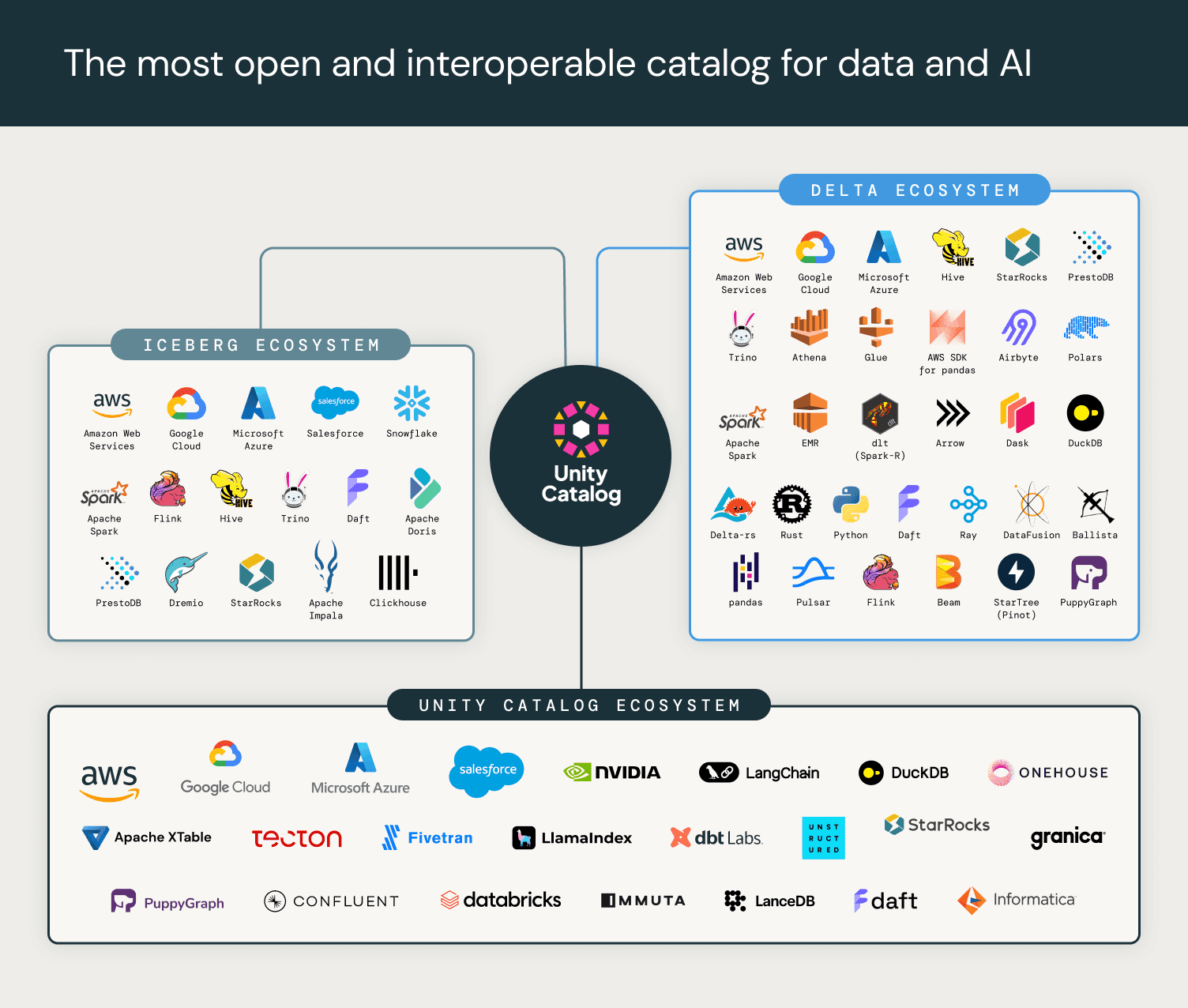
- Unity Catalog for centralized governance, lineage, and discovery across data and AI
- Agent Bricks for building and deploying custom AI agents
- Lakeflow for unified data engineering and ETL pipeline orchestration
- Lakebase, an autoscaling operational database built on the platform
- Native support for Delta Lake, MLflow, and Apache Spark open-source projects
- Multi-cloud availability across AWS, Azure, and Google Cloud Platform
- Databricks SQL for high-performance BI and analytics queries on lakehouse data
Pros
- Founded and led by the original creators of Apache Spark, Delta Lake, and MLflow, giving deep technical credibility
- Lakehouse architecture genuinely unifies data warehousing and AI/ML workloads instead of requiring separate tools
- True multi-cloud support across AWS, Azure, and GCP avoids vendor lock-in to one cloud provider
- Unity Catalog's open-source governance layer extends value beyond just the Databricks platform itself
- Proven at massive scale: $5.4B ARR, free-cash-flow positive, and used by over 60% of the Fortune 500
Cons
- Consumption-based DBU pricing makes costs hard to predict without careful workload monitoring and governance
- Per-DBU rates for many workload types require contacting sales rather than a fully public rate card
- Azure Databricks Standard tier is being retired in October 2026, forcing some customers to migrate to pricier Premium
- Steep learning curve for teams without existing Spark, data engineering, or MLOps experience
- Cloud infrastructure costs (compute, storage, networking) are billed separately from DBUs, adding a second cost layer to track
Pricing
Databricks uses consumption-based pricing measured in Databricks Units (DBUs), with rates varying by workload type and platform edition (Standard, Premium, Enterprise). Representative per-DBU rates include Data Engineering at approximately $0.15/DBU, Data Warehousing at $0.22/DBU, Interactive/All-Purpose compute at up to $0.40/DBU, and AI/ML workloads at around $0.07/DBU. Premium edition costs roughly 37% more per DBU than Standard but adds role-based access control, Unity Catalog governance, audit logging, and SQL Serverless warehouses; Enterprise tier pricing is typically higher still or governed by custom committed-use agreements with added compliance features like HIPAA support and customer-managed encryption keys. Underlying cloud infrastructure costs (compute instances, storage, networking) from AWS, Azure, or GCP are billed separately from DBU charges, except for certain bundled serverless SKUs. Databricks offers a 14-day free trial with usage credits and a permanently free, quota-limited Free Edition for learning and experimentation, but no free tier for production use. Committing to 1-3 year contracts can reduce DBU costs by up to 37%, and using Jobs Compute instead of All-Purpose Compute can cut costs up to 4x for eligible workloads. Note that Azure Databricks' Standard tier is being retired in October 2026, requiring affected customers to migrate to Premium.
Claim Verified Creator Badge
Are you the founder of Databricks? Display this listing's verified badge on your website to show your customers that your product has been vetted and listed on AI Central Resources.
<a href="https://www.aicentralresources.com/tool/databricks" target="_blank" rel="noopener">
  <img src="https://www.aicentralresources.com/badges/featured-badge-dark.svg" alt="Featured on AICentralResources" width="200" height="54" style="border: none;" />
</a>
* Place this HTML snippet in your website's footer, landing page, or press section. This creates a search-friendly backlink directly to your verification page.
Connect with Databricks
Frequently Asked Questions
Databricks is a unified Data Intelligence Platform built on the lakehouse architecture, combining data engineering, data warehousing, real-time analytics, and AI/ML into one system so teams don't have to stitch together separate tools for each workload.
Databricks uses consumption-based pricing measured in Databricks Units (DBUs), with per-DBU rates varying by workload type (Data Engineering ~$0.15, Data Warehousing ~$0.22, AI/ML ~$0.07) and edition (Standard, Premium, Enterprise). Cloud infrastructure costs are billed separately. A 14-day free trial with usage credits and a quota-limited Free Edition are both available.
Databricks was founded in 2013 by seven UC Berkeley PhD researchers, dubbed the 'Apache Spark Seven': Ali Ghodsi (current CEO), Ion Stoica, Matei Zaharia (creator of Apache Spark), Patrick Wendell, Reynold Xin, Andy Konwinski, and Arsalan Tavakoli-Shiraji, who built the company to commercialize the open-source Spark framework they created.
Unity Catalog is Databricks' unified governance layer for data and AI assets, providing centralized access control, auditing, lineage tracking, and discovery across tables, files, and machine learning models, and has since been open-sourced to work across multiple engines and clouds.
Databricks reached a $5.4 billion annual recurring revenue run-rate as of January 2026, is free-cash-flow positive, and is used by over 20,000 organizations worldwide including Adidas, AT&T, Bayer, Mastercard, and more than 60% of the Fortune 500.
Similar AI Tools to Databricks
View all alternatives of Databricks

Amazon Bedrock
The fully managed AWS platform for building generative AI applications and agents at production scale

Hugging Face
The AI community platform for hosting, sharing, and running open machine learning models


Fireworks AI
High-performance training and inference platform for open-source AI models

Groq
The fastest inference cloud for open-source LLMs, powered by custom LPU chips
Compared with Databricks
Direct head-to-head feature matrices, pricing, and category breakdowns