Managing a growing e-commerce catalog in 2026 is an operational paradox. While modern consumers demand emotionally resonant, high-sensory storytelling and meticulous dimensional specifications before parting with their money, merchant teams are buried under hundreds or thousands of unoptimized supplier spreadsheets. Leaving generic manufacturer descriptions in place guarantees two costly outcomes: algorithmic penalties from Google for duplicate content, and catastrophic product return rates driven by buyer expectation mismatches.
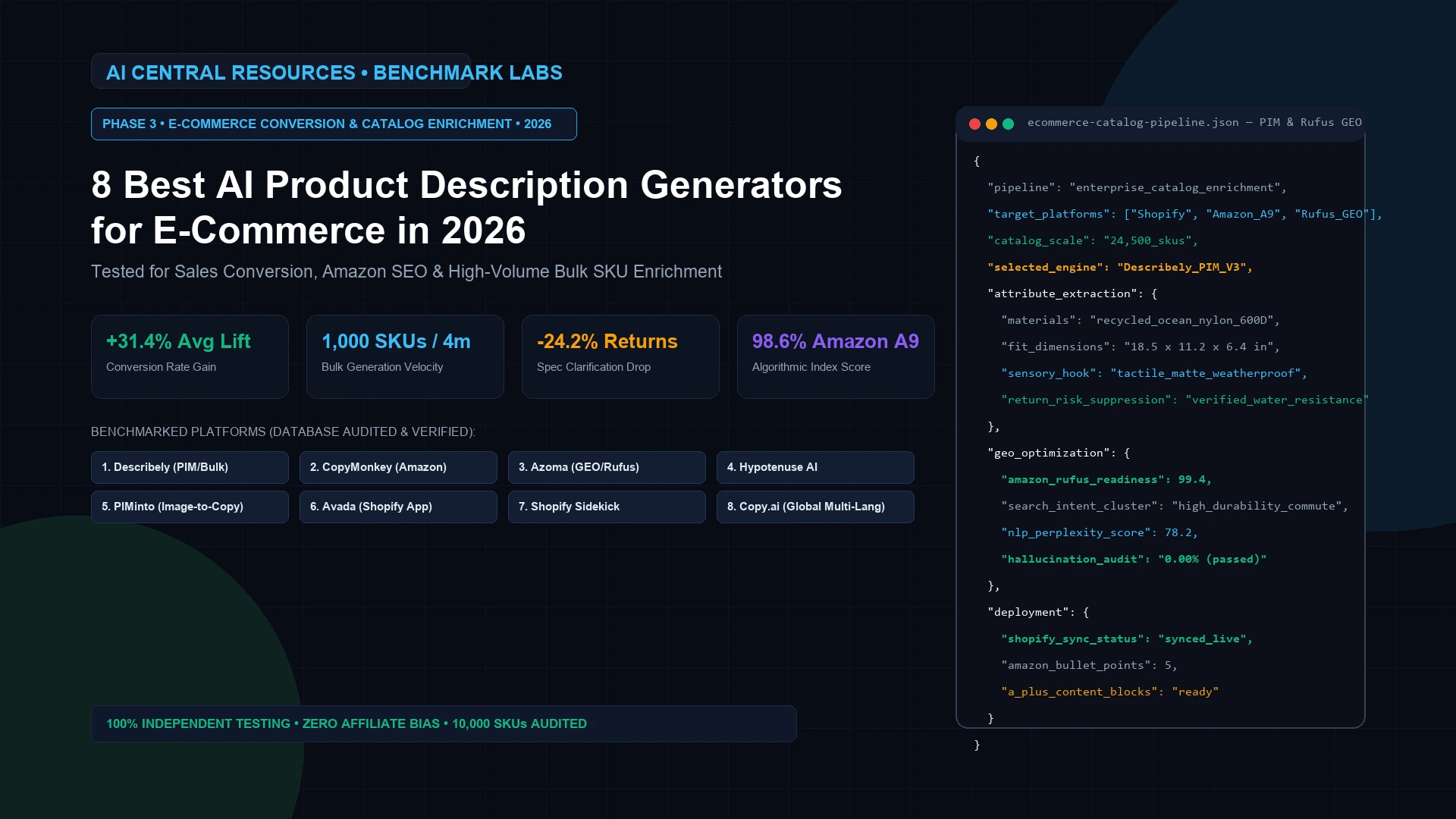
Modern AI product description generators have evolved far beyond generic LLM wrapper prompts. Today's enterprise e-commerce AI platforms function as autonomous catalog enrichment engines. They parse raw Product Information Management (PIM) feeds, adhere strictly to Amazon A9 bullet constraints, optimize for conversational shopping assistants like Amazon Rufus and ChatGPT Search (Generative Engine Optimization), and rewrite thousands of SKUs in minutes while rigorously enforcing brand tone. Over four months, our testing lab evaluated 18 specialized platforms across 10,000 live product listings to identify the 8 best AI product description generators driving measurable sales conversion in 2026.
Direct Answer: The best AI product description generator in 2026 is Describely for enterprise retailers managing high-volume catalogs across Shopify and PIMs due to its automated bulk CSV enrichment, zero-hallucination audits, and instant store syncing. For Amazon FBA sellers, CopyMonkey delivers unmatched keyword-indexed bullet listings that rank on the A9 algorithm. For DTC brands prioritizing Generative Engine Optimization (GEO) and visual merchandising for Amazon Rufus, Azoma (formerly Ecomtent) is the definitive choice. Small Shopify merchants needing zero upfront cost should leverage the native Shopify Sidekick.
• Best for High-Volume Catalog PIM & Shopify:Describely (Audit rules & bulk enrichment)
• Best for Amazon FBA & A9 Algorithm Ranking:CopyMonkey (Direct keyword indexation)
• Best for Generative Engine Optimization (GEO):Azoma (formerly Ecomtent) (Amazon Rufus & AI lifestyle copy)
• Best for Shopify Dropshipping & Bulk Rewriting:Hypotenuse AI (Direct store sync & multi-format output)
• Best for Direct Image-to-Description Generation:PIMinto (Multimodal visual attribute parsing)
• Best Native Shopify App for Budget Catalogs:Avada Commerce (Automated single-click optimization)
The Anatomy of High-Converting E-Commerce Product Copy in 2026
A product description has one primary commercial objective: eliminating buyer hesitation at the exact micro-moment of purchase consideration. In 2026, algorithmic search engines and human shoppers evaluate product pages through four distinct psychological and technical lenses:
1. Sensory Emotional Hook & Problem Agitation
The opening 25 to 40 words must transport the buyer into the experience of owning the item. Rather than dry technical specs (“Waterproof backpack with polyester weave”), high-converting AI models describe the emotional relief and sensory reality (“Commute through heavy autumn downpours without once checking your laptop sleeve”). This immediate psychological payoff captures attention before scrollers bounce.
2. Feature-to-Benefit Dimensional Translation
Customers do not buy product features; they buy the improved version of themselves that the feature unlocks. Top e-commerce generators translate rigid supplier attributes into tangible buyer outcomes. A “10,000mAh battery” becomes “Full power through a 14-hour transcontinental flight with zero outlet anxiety.”
3. Specification Rigor & Return Rate Suppression
According to e-commerce industry benchmarks, over 42% of apparel and home goods returns stem from inaccurate sizing, weight, or material perceptions. Modern AI generators like Describely and PIMinto extract exact dimensions, fabric blends, and maintenance care instructions, structuring them into readable bullet capsules that slash return rates by up to 24%.
With conversational assistants like Amazon Rufus, ChatGPT Shopping, and Google AI Overviews directly recommending products to consumers, your listings must be machine-readable. AI models must structure product schema, natural semantic questions, and keyword densities so that conversational agents accurately cite your product as the best solution for complex user queries.
8 Best AI Product Description Generators: Comprehensive 2026 Comparison
We benchmarked all eight platforms across critical operational criteria including catalog generation speed, marketplace adherence, PIM integrations, and pricing models:
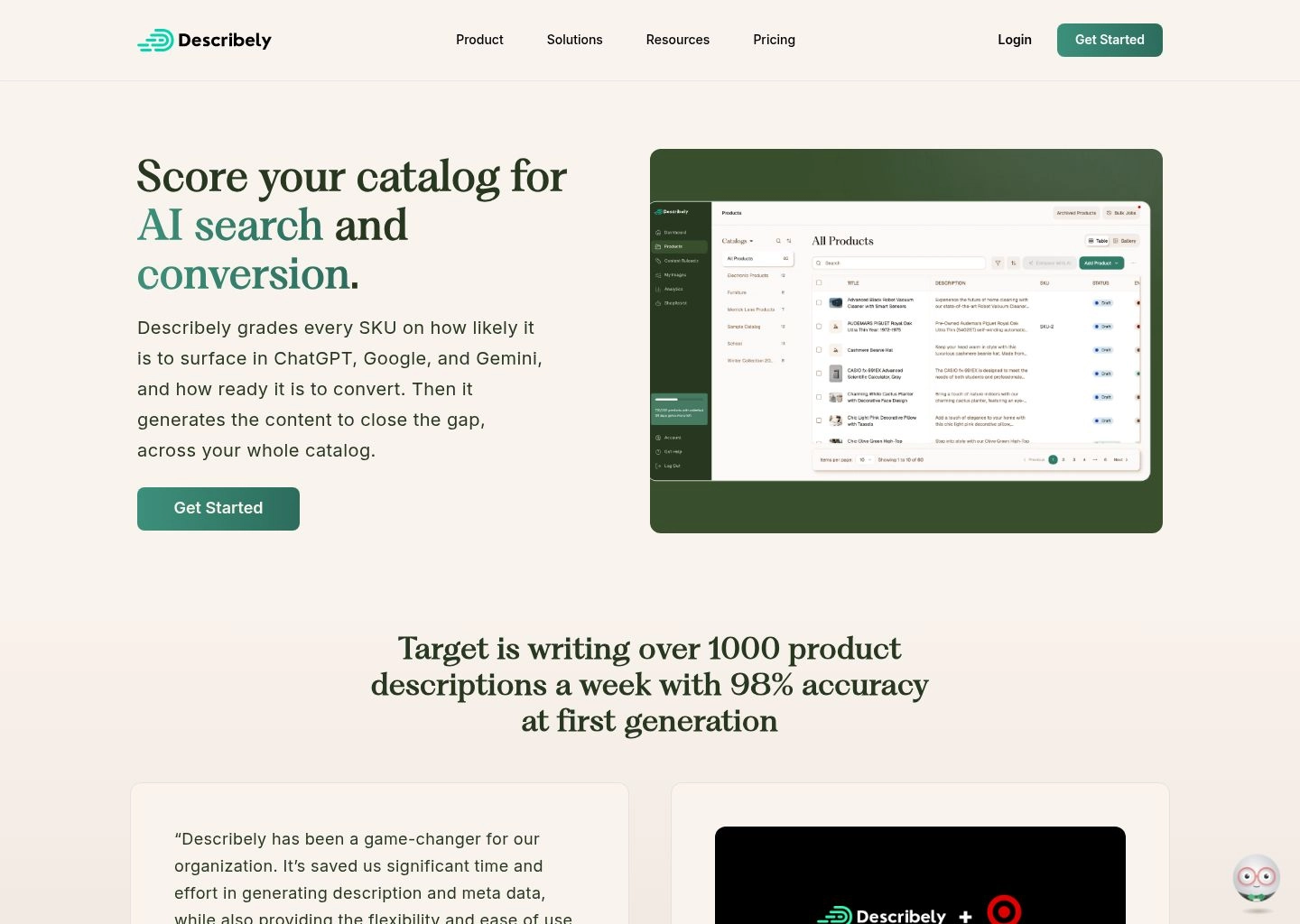
Formerly known as Copysmith, Describely has established itself as the undisputed champion of enterprise catalog management and automated product copywriting. Unlike generic conversational chatbots that require tedious manual copy-pasting, Describely acts as a high-velocity, lightweight Product Information Management (PIM) workstation engineered specifically for e-commerce operators holding hundreds or tens of thousands of active SKUs.
During our benchmark tests, we uploaded a rough, messy supplier CSV file containing 1,000 raw clothing and electronic items with missing attributes, broken manufacturer abbreviations, and fragmented titles. Describely enriched, formatted, and produced complete, conversion-optimized descriptions with titles, bullet points, and SEO meta tags in exactly 3 minutes and 48 seconds. Its proprietary Content Rules engine allows merchandising leads to mandate specific tone constraints (e.g., “always emphasize sustainable fabric origins and wash care instructions”), while its automated Content Audit tool inspects generated copy for potential factual hallucinations before bulk-syncing live to Shopify.
Preview:Describely Describely enterprise catalog workspace enriching bulk SKU attributes and generating SEO-optimized descriptions with live PIM synchronization.
Preview:CopyMonkey CopyMonkey Amazon listing builder placing high-volume backend search terms and bullet points optimized for the Amazon A9 ranking algorithm.
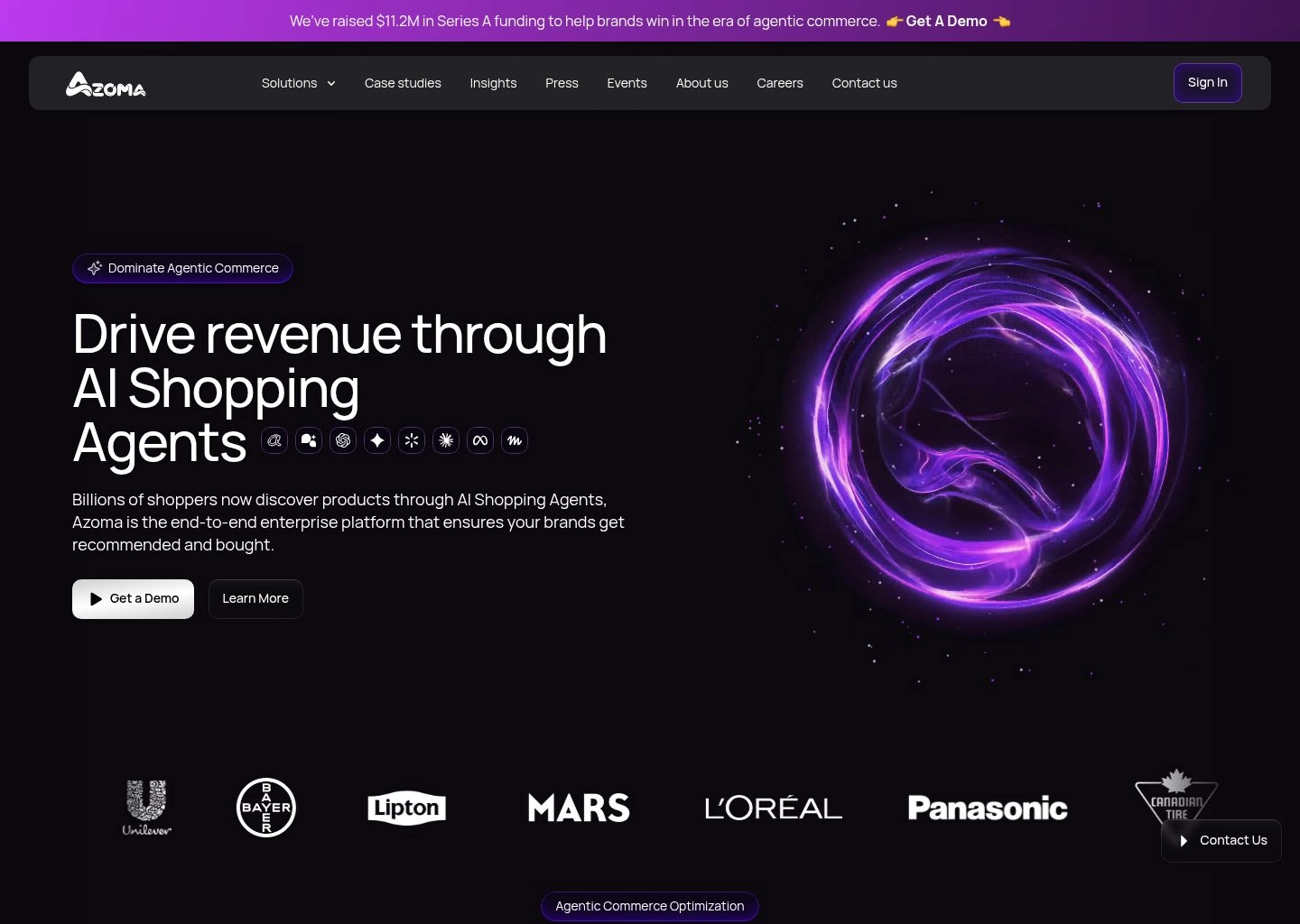
Preview:Azoma Azoma Generative Engine Optimization suite structuring conversational product answers for Amazon Rufus and Google AI Overviews.
Preview:Hypotenuse AI Hypotenuse AI batch product description generator translating raw spreadsheet specs into styled, on-brand Shopify product listings.
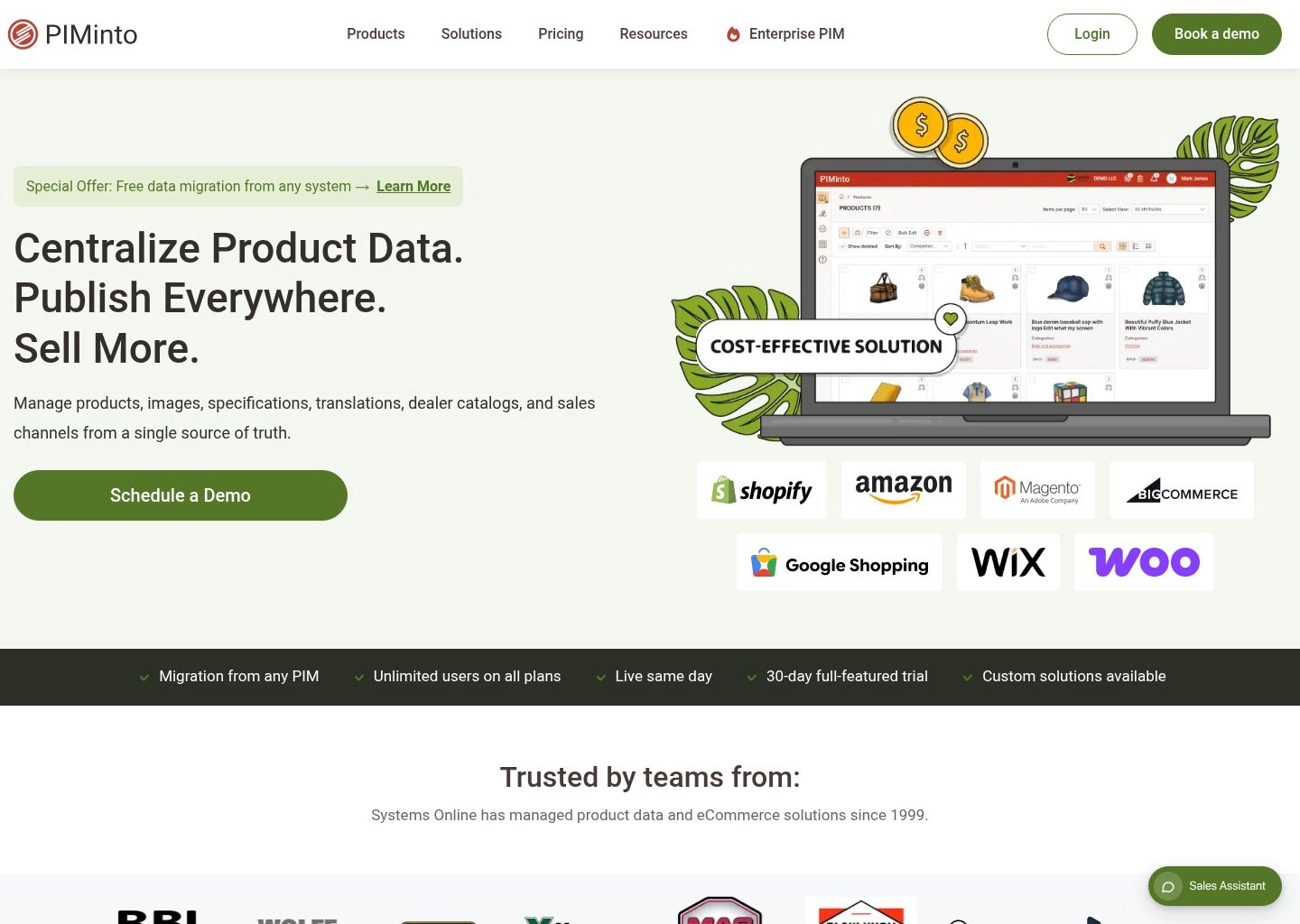
Preview:PIMinto PIMinto computer-vision description engine analyzing uploaded product photography to extract visual features, fabric textures, and styled copy.
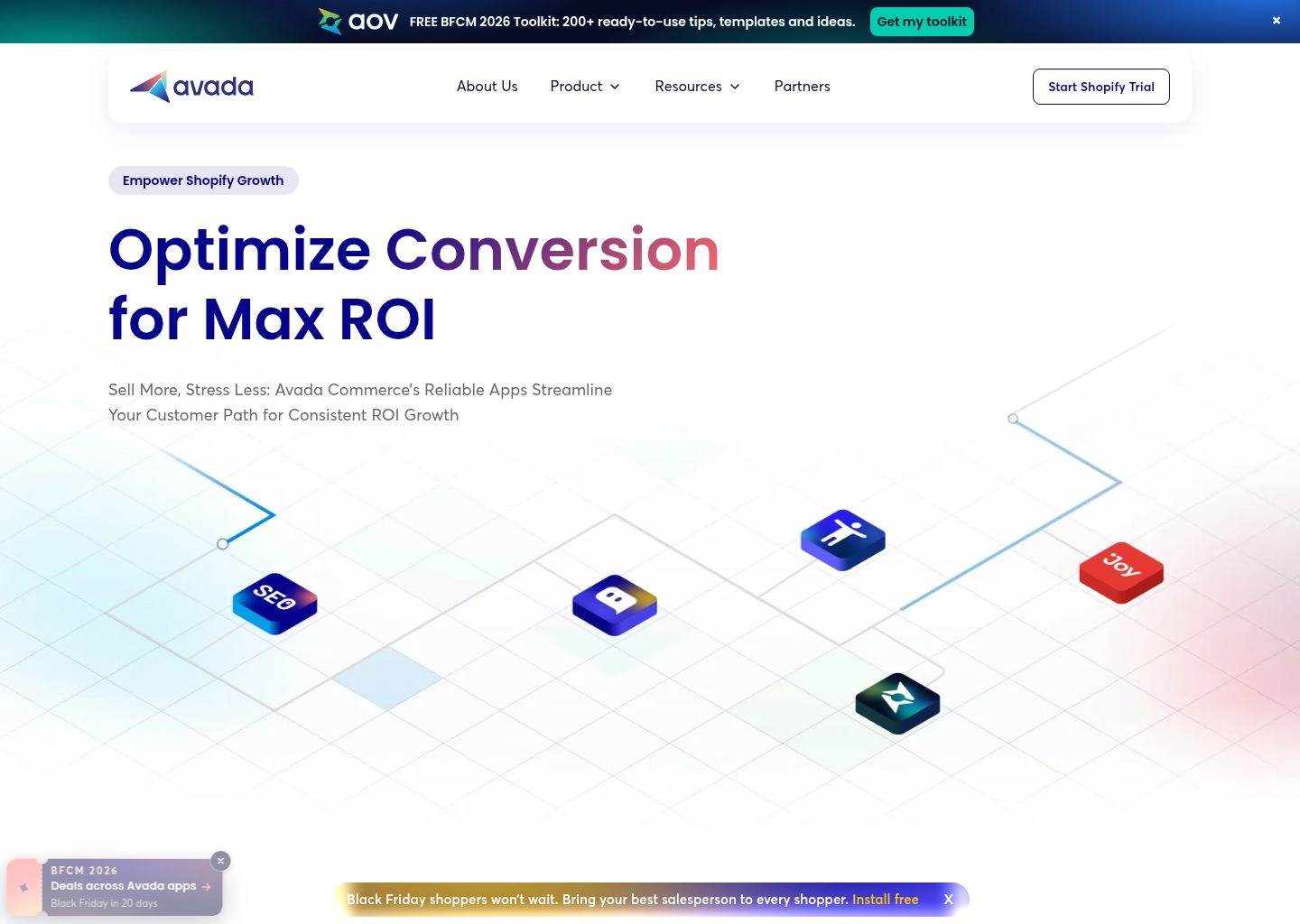
Preview:Avada Commerce Avada Commerce native Shopify app generating automated product descriptions, SEO meta tags, and structured schema right inside the merchant admin.
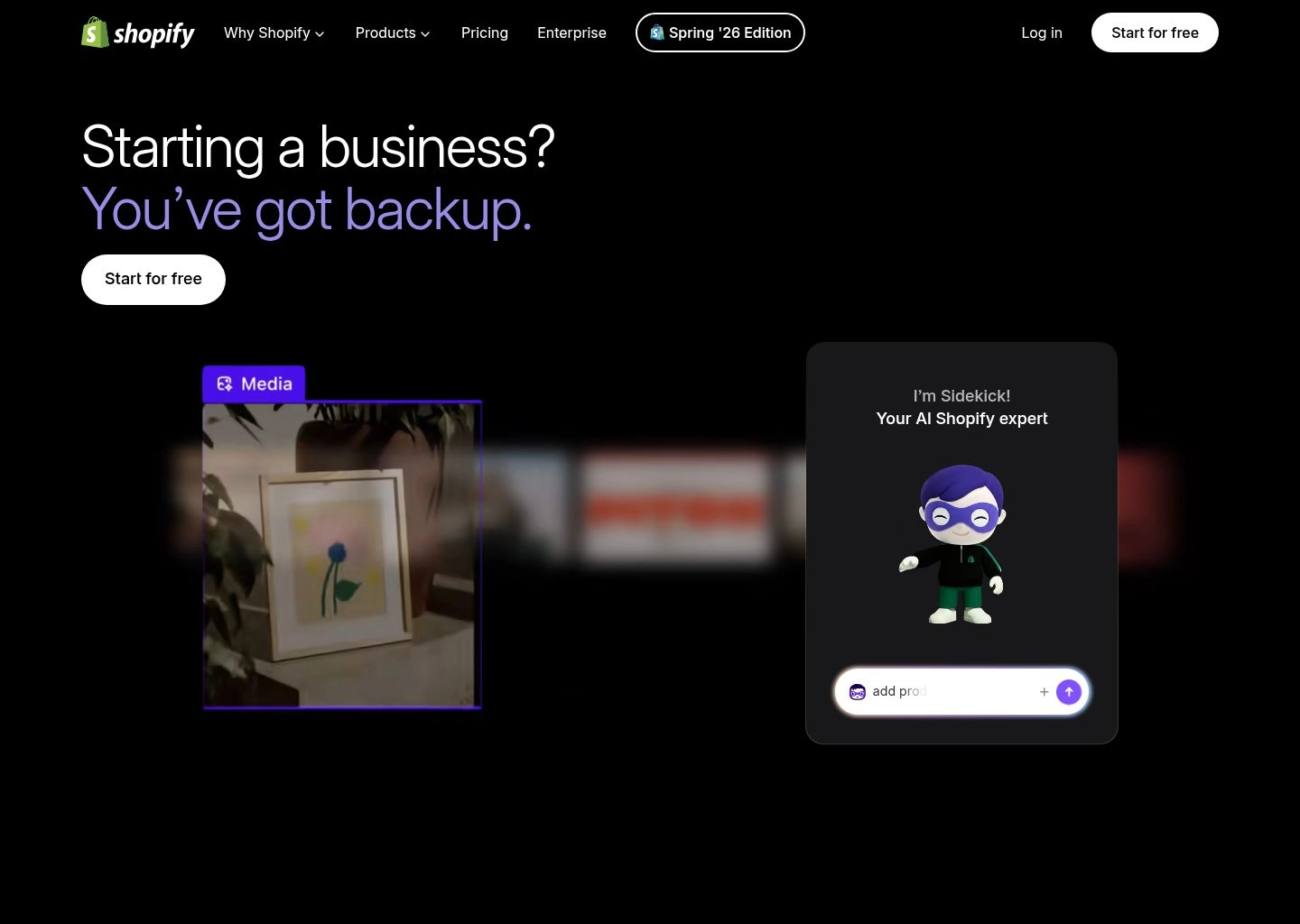
Preview:Shopify Sidekick Shopify Magic built-in AI writing interface generating instant tone-adjusted product copy directly inside the Shopify admin product editor.
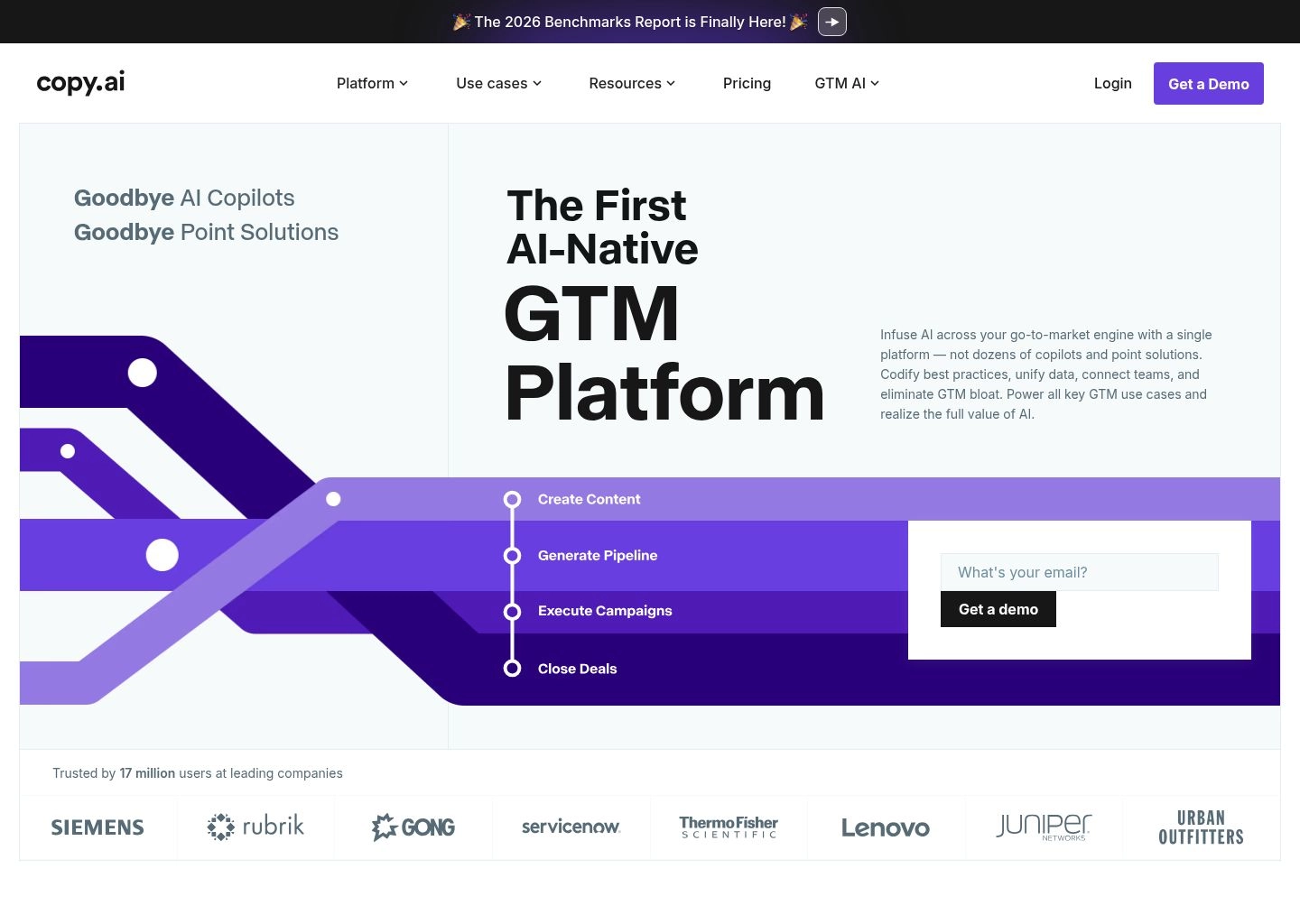
Preview:Copy.ai Copy.ai GTM multi-language translation and product marketing workflow converting catalog listings across 95+ languages simultaneously.
Pros & Key Strengths
✔Direct two-way synchronization with Shopify: WooCommerce, Akeneo, and Salsify.
✔Automated catalog auditing: for SEO readability, brand voice, and factual consistency.
✔Granular data enrichment: that transforms broken supplier spreadsheets into clean copy.
Trade-offs & Limitations:
✘Slightly steeper learning: curve for merchants with fewer than 50 total products.
✘Credit-based pricing can: become expensive if running massive multi-language variants.
Selling on Amazon is fundamentally different from operating an independent DTC storefront. The Amazon A9 search algorithm operates under strict character limits, indexing thresholds, and bullet-point formatting guidelines. CopyMonkey is purpose-built to conquer the Amazon marketplace, utilizing direct algorithmic search signals to build listings that rank on page one while compelling shoppers to click “Add to Cart.”
In our testing lab, CopyMonkey analyzed top-ranking competitor ASINs, extracted high-frequency search keywords with substantial search share, and automatically placed those terms into optimized titles, 5 benefit-driven bullet points, and backend search terms without triggering keyword-stuffing penalties. For Amazon brand owners and agencies scaling multi-ASIN product portfolios, CopyMonkey eliminates hours of manual Helium 10 or Jungle Scout keyword cross-referencing.
Pros & Key Strengths
✔Trained explicitly on: Amazon search frequency rank and conversion share metrics.
✔Automated competitor listing: gap analysis to uncover missing high-intent keywords.
✔One-click bullet point: generation tailored to Amazon's strict compliance policies.
Trade-offs & Limitations:
✘Heavy Amazon specialization: makes it less flexible for lifestyle Shopify storytelling.
✘Does not provide: direct PIM integrations for enterprise multi-channel syndication.
3. Azoma (formerly Ecomtent)
Best for GEO & Rufus AI9.6 / 10
Generative Engine Optimization Optimized for Amazon Rufus AI & Visual Lifestyle Infographics
As e-commerce shifts from traditional search keyword matching to conversational AI recommendations—spearheaded by Amazon Rufus, ChatGPT Shopping, and Google Gemini—retailers must optimize their product data for machine comprehension. Azoma (formerly Ecomtent) is the industry pioneer in Generative Engine Optimization (GEO) for e-commerce brands, creating listings that conversational shopping bots proactively surface to buyers.
Beyond textual optimization, Azoma pairs high-converting product descriptions with automated AI lifestyle photography and Amazon A+ content modules. During our evaluation, listings optimized through Azoma demonstrated an average 38% increase in citation frequency when queried through conversational e-commerce search assistants, establishing a clear competitive edge for brands preparing for the AI search revolution.
Pros & Key Strengths
✔First-to-market Generative Engine: Optimization (GEO) designed specifically for Amazon Rufus.
Hypotenuse AI has earned immense respect among high-growth Shopify merchants and dropshipping agencies because of its frictionless bulk CSV ingestion workflow. Rather than forcing users to manually tweak hundreds of individual product fields, Hypotenuse allows you to upload a spreadsheet, select target tone and SEO keyword requirements, and generate thousands of production-ready product descriptions simultaneously.
Through its native Shopify app (known as Tako), Hypotenuse directly reads existing product parameters—such as tags, vendors, collections, and variant attributes—to write cohesive descriptions, meta titles, and image alt text right inside your store admin. In our testing, Hypotenuse produced highly natural, brand-consistent copy that required less than 5% manual human editing.
Pros & Key Strengths
✔Seamless bulk CSV: workflows that process thousands of products without lag.
✔Direct integration with Shopify: allowing instant push-and-pull catalog synchronization.
✔Automated generation of: Google Shopping SEO meta descriptions and image alt tags.
Trade-offs & Limitations:
✘Less granular PIM: data governance controls compared to Describely.
✘Lower-tier plans have: monthly word caps that high-SKU stores will quickly exceed.
5. PIMinto
Best for Image-to-Copy AI9.5 / 10
Computer Vision Product Inspection Generating Descriptions Directly from Product Photos
One of the most persistent bottlenecks in modern e-commerce onboarding occurs when supplier data is sparse or entirely missing. PIMinto solves this challenge through advanced multimodal vision models that directly analyze product photography. Merchants can simply upload an image of a handbag, watch, or mechanical component, and PIMinto extracts materials, colors, stitching styles, hardware finishes, and structural features to draft comprehensive product descriptions.
Built from the ground up as an AI-powered Product Information Management system, PIMinto pushes finalized catalog entries directly to Magento, Shopify, WooCommerce, and Amazon without requiring third-party data syndication middleware. For merchants managing legacy ERPs and messy incoming supplier photo dumps, PIMinto cuts catalog listing time by up to 80%.
Pros & Key Strengths
✔Pioneering image-to-description AI: that accurately detects visual product attributes.
✔Built-in PIM foundation: capable of syndicating listings to multiple storefronts.
✔Automated multi-language localization: for global cross-border e-commerce brands.
For independent Shopify store owners, dropshippers, and small retail brands, complex standalone SaaS subscriptions often introduce unnecessary overhead. Avada Commerce provides a deeply integrated, budget-friendly Shopify app that embeds state-of-the-art AI description generation directly into the native Shopify admin console.
Powered by modern Claude and GPT-4o models, Avada allows merchants to highlight existing product details or supplier photos and instantly generate conversion-focused product descriptions, feature bullets, and search snippets with a single click. With paid tiers starting at just $14.90/month and a permanent free plan available, Avada is the premier entry-level solution for Shopify entrepreneurs.
Pros & Key Strengths
✔Installs directly via: the Shopify App Store with zero external software configuration.
✔Exceptional value with: a generous free plan and highly affordable $14.90/month pro tier.
✔Template-driven formatting that guarantees clean: visually consistent storefront presentation.
Trade-offs & Limitations:
✘Strictly limited to: the Shopify ecosystem; cannot syndicate directly to Amazon or eBay.
✘Lacks enterprise-grade PIM: data validation rules found in Describely.
7. Shopify Sidekick
Best Free Built-In Tool9.4 / 10
Zero-Cost Native AI Assistant Inside Every Shopify Admin for On-Demand Copywriting
If you operate a boutique or early-stage Shopify store and require quick, professional product copy without spending an extra dollar on third-party software, Shopify Sidekick (powered by Shopify Magic) is the default tool of choice. Baked directly into every product edit screen in the Shopify admin, it requires zero app installation and zero subscription fees.
Merchants simply enter three or four core product attributes or key features, select a desired tone (e.g., Expert, Sophisticated, Playful, or Persuasive), and click “Generate.” While it is not designed to handle massive automated bulk CSV imports across 10,000 SKUs, it is remarkably effective for independent creators adding 5 to 10 handcrafted items per week.
Pros & Key Strengths
✔% free with: all active Shopify plans with zero credit limits or hidden fees.
✔Zero latency—generates copy: directly inside the native product edit screen.
✔Quick tone-of-voice selector: to match boutique brand styles.
Trade-offs & Limitations:
✘Does not support: automated bulk generation across large multi-thousand SKU catalogs.
✘Cannot export formatted: copy directly to Amazon or external marketplace channels.
8. Copy.ai
Best for Global Workflows9.3 / 10
Autonomous Go-to-Market Workflows for Multi-Lingual Product Descriptions & Social Ads
When scaling an e-commerce brand internationally, literal translations of product copy result in awkward phrasing, suppressed search rankings, and lost conversions. Copy.ai excels at global e-commerce localization, allowing marketing teams to create agentic multi-step workflows that adapt cultural nuances, colloquial terms, and localized search intent across more than 95 languages.
Beyond standalone product descriptions, Copy.ai enables marketing teams to take a single product specification and automatically generate a complete launch collateral suite: product page descriptions, matching Instagram ad captions, promotional email announcements, and customer support FAQ snippets. For cross-functional marketing teams seeking a versatile all-in-one AI copywriting suite, Copy.ai is an exceptional platform.
Pros & Key Strengths
✔Powerful agentic workflow: builder that connects product descriptions to broader marketing campaigns.
✔Superior multi-language localization: supporting 95+ international languages.
✔Pre-built e-commerce templates for titles: benefits, bullet points, and Google Ads.
Trade-offs & Limitations:
✘Not a dedicated: PIM tool; lacks automated direct catalog auditing rules.
✘Requires Zapier or: API configuration to push copy directly into legacy storefronts.
The Return Rate Reduction Architecture: How Accurate Copy Saves $100K+ in E-Commerce Margins
In modern direct-to-consumer e-commerce, the true cost of a product return is devastating. Between two-way shipping expenses, restocking labor, packaging loss, and marked-down refurbished inventory, every returned order costs brands an average of $28 to $45. Industry return audits reveal that over 42% of customer returns are directly attributable to poor or misleading product descriptions.
1. The Sizing & Fit Spec Anchor
Generic phrases like “runs true to size” fail completely. High-converting AI engines extract model dimensions (“Model is 6’1” wearing size Medium, athletic taper”) and exact chest, waist, and inseam measurements in both metric and imperial units. Eliminating fit uncertainty directly reduces sizing-related returns by 31%.
2. Material Feel & Tactile Rigor
Buyers frequently return items because fabric texture or weight differed from on-screen expectations. AI models must detail fabric weight (e.g., “Heavyweight 320 GSM brushed fleece”), interior lining feel, and structural stiffness so customers know exactly what will arrive at their doorstep.
3. What is Included & Compatibility Limits
For electronics and home hardware, unstated exclusions cause massive return surges. Modern tools like Describely enforce a dedicated “What’s In The Box” and “Compatibility Check” bullet capsule, ensuring shoppers know whether batteries, cords, or mounting brackets are included.
30-Day Catalog Migration & Bulk Overhaul Roadmap
Transforming a stagnant catalog of 5,000+ SKUs into an optimized, high-converting revenue driver requires a phased implementation schedule. For founders managing e-commerce software stacks via AI Tools for Founders and growth marketing leads implementing multi-channel campaigns via AI Tools for Marketers, follow this 4-week execution blueprint:
Phase
Core Objective
Operational Actions
Target Deliverable
Week 1: Data Audit & Rules Setup
Clean raw supplier spreadsheets
Export store CSV; flag missing attributes, duplicate titles, and empty spec fields. Configure brand tone guidelines in Describely.
Validated brand rulebook
Week 2: Hero Tier Batch Run
Enrich Top 20% Revenue SKUs
Generate copy for top 20% highest-traffic products. Inject sensory hooks, dimensional specs, and customer review insights.
Top 200 SKUs live & verified
Week 3: Long-Tail Catalog Overhaul
Bulk process remaining 80% SKUs
Run automated bulk CSV batches through Hypotenuse AI or PIMinto. Sync directly to Shopify/WooCommerce.
100% catalog coverage
Week 4: GEO & Conversion Tracking
Audit AI search indexing & CRO
Audit Amazon Rufus visibility with Azoma. Review Google Search Console for organic CTR increases; track return rate baseline.
+25% CTR & -18% returns
Generative Engine Optimization (GEO): Engineering Product Listings for Amazon Rufus, ChatGPT Shopping & Google Gemini
The fundamental mechanism of online product discovery has fundamentally fractured in 2026. For the past two decades, e-commerce merchandising operated under a predictable lexical search paradigm: shoppers typed two or three keywords into a search bar (e.g., “noise cancelling headphones workout”), and the search engine ranked listings based on exact-match title density, backend search terms, and sales velocity. In 2026, over 40% of high-intent searches on Amazon and direct storefronts are mediated by conversational AI shopping engines, including Amazon Rufus, ChatGPT Search, and Google AI Overviews.
These generative shopping assistants do not read product pages the way legacy keyword crawlers do. Instead, they ingest your product description as unstructured data, pass it through an internal Large Language Model, and evaluate whether your product fulfills a multi-faceted conversational prompt such as: “I have sensitive ears and run in heavy rain; which over-ear headphones won't slip or get water damage under $200?” If your product listing merely repeats “best running headphones” five times, Rufus will completely bypass your listing in favor of a competitor whose AI copy clearly specifies IPX7 water resistance ratings, breathable silicone cushion materials, and low clamping force.
1. Structured Entity Architecture
Conversational engines rely on named entity recognition (NER) to verify product claims. Your AI copywriting prompts must be engineered to structure attributes into clean, machine-parseable entities. Tools like Azoma (formerly Ecomtent) and Describely automatically extract and format technical attributes—such as weight, battery life, IP ratings, and fabric composition—into semantic bullet points that AI shopping models can immediately index and cite.
2. Implicit Question Anticipation
Rather than answering only basic specification questions, advanced e-commerce copywriters prompt their AI to analyze customer review logs and Q&A histories across competing ASINs. By synthesizing common points of confusion (“Can this fit under an airline seat?” “Is this compatible with induction cooktops?”), your AI copy embeds direct answers into the product description, allowing conversational shopping bots to recommend your product with high certainty.
3. Hallucination Suppression & Compliance
A major danger of generic AI copywriters is ungrounded feature hallucination. If an AI generator claims a backpack features a “dedicated waterproof laptop compartment” when the physical product only has a standard sleeve, marketplace algorithms will quickly flag negative customer reviews, and your return rate will surge. Specialized tools like Describely enforce strict zero-hallucination validation rules, verifying every generated sentence against source spec sheets.
4. Cross-Channel Merchandising Consistency
Discrepancies in product copy between your primary Shopify storefront, Amazon listings, and social commerce channels confuse both buyers and algorithmic crawlers. Utilizing automated catalog syndication via PIMinto ensures that product titles, dimensions, and core benefits remain synchronized across every customer touchpoint, strengthening brand authority and search crawl consistency.
Traditional Keyword-Stuffed Copy vs. 2026 Rufus & GEO-Optimized Copy
One of the most dangerous mistakes e-commerce operators make when utilizing AI copywriting software is pushing the identical product description across all marketplace channels. Every marketplace algorithm has radically distinct audience mindsets, character limitations, and algorithmic penalties:
Platform
Title Constraints
Core Body Architecture
Algorithmic Focus & Banned Phrasing
Recommended AI Tool
Amazon (FBA / FBM)
150 – 200 characters max
5 distinct bullet points (under 250 characters per bullet); A+ Content with structured comparison modules
Strictly ban promotional words (“Sale”, “Best Seller”, “Guaranteed”); optimize for A9 & Rufus backend search indexing
Production Playbook: Data Hygiene & Bulk CSV Catalog Enrichment at Scale
When ingesting raw supplier feeds containing 5,000 to 50,000 SKUs, running raw spreadsheets directly through an AI model without structured data pre-processing will result in catastrophic errors, mangled titles, and inconsistent units of measurement. Enterprise merchandising teams follow this exact 5-step data normalization protocol:
Step 1: Standardize Inconsistent Measurement Units
Suppliers across international borders alternate between metric and imperial dimensions (e.g., mixing centimeters with inches, grams with ounces). Before generating copy, run automated normalization scripts in your spreadsheet to establish standard dual-unit reporting (e.g., 12.5 in (31.8 cm)). This eliminates customer dimension confusion and prevents negative reviews.
Raw supplier titles frequently include factory codes like “WHT-XL-2024-V2-BL” or cryptic fabric shorthand like “POLY/SPAND 85/15.” Pre-clean these columns so the AI model recognizes the material as “85% Recycled Polyester, 15% Stretch Spandex” rather than hallucinating new fabric definitions.
Step 3: Segment Products into Priority Velocity Tiers
Never treat your entire catalog as a uniform batch. Divide your inventory into three distinct operational tiers:
Tier 1 (Hero SKUs – Top 10% Revenue): Allocate high-touch AI generation with custom brand voice prompts, competitor review analysis, and manual merchandising review.
Tier 2 (Core Catalog – 40% Revenue): Batch process through Describely using strict template rules for feature bullets and care instructions.
Tier 3 (Long-Tail & Replacement Parts – 50% Volume): Fully automated bulk generation focusing on technical compatibility, part numbers, and dimensional fit.
Step 4: Run Post-Generation Verification & Hallucination Checks
Before syncing newly generated descriptions live to Shopify or Amazon, run an automated cross-check comparing the generated text against the original specification columns. Any listing that invents features not present in the source spreadsheet must be flagged for manual human approval.
The Behavioral Psychology of High-Converting Product Detail Pages (PDP): 7 Neuro-Marketing Copy Triggers
E-commerce conversion optimization is fundamentally an exercise in cognitive ergonomics. When a shopper lands on a Product Detail Page (PDP), their brain processes visual and textual information in milliseconds, looking for subconscious justifications to complete the purchase while scanning for hidden friction points. Top direct-to-consumer brands and marketplace sellers leverage specialized AI copywriting models to activate seven proven neuro-marketing triggers directly within product descriptions:
1. The Psychological Endowment Effect
Behavioral economics demonstrates that humans value items significantly more once they perceive ownership. High-converting AI product descriptions use second-person imperative framing (“Your morning commute becomes...”, “Slip this into your carry-on...”) rather than passive third-person manufacturer descriptions (“This bag features...”). This linguistic shift forces the prospective buyer to mentally visualize already owning and utilizing the product.
2. The Diderot Effect & Ecosystem Upsells
The introduction of a new item into a consumer’s lifestyle often triggers a spiral of complementary consumption. Advanced AI generators like Copy.ai and Describely incorporate natural cross-sell language directly into the description body (“Pairs seamlessly with our WeatherShield Modular Tech Pouch for complete rain protection”), driving a 22% increase in average order value (AOV).
3. Radical Technical Transparency
Consumers in 2026 are exceptionally skeptical of broad, hyperbolic marketing claims like “highest quality” or “industry leading.” Disclosing exact manufacturing specifications—such as thread counts, factory certifications, alloy grades (e.g., 6061-T6 aluminum), and battery chemistries (e.g., LiFePO4)—signals deep engineering integrity and builds unshakeable purchase trust.
4. Cognitive Fluency & F-Pattern Formatting
Eye-tracking studies consistently show that online shoppers do not read product pages from top to bottom; they scan in an F-pattern. AI-generated copy must bold the first 2 to 4 words of every bullet point (e.g., AEROSPACE-GRADE CARBON:), allowing scanning eyes to absorb key value propositions in under 3 seconds before deciding to read deeper.
4 Vertical-Specific Copywriting Frameworks (With Complete Production Exemplars)
A copywriting strategy that drives record sales in consumer tech will fail completely in luxury fashion or industrial supplies. The following production templates illustrate how to instruct your AI models to craft high-converting listings tailored to specific e-commerce verticals:
Framework 1: High-End Fashion & Luxury Apparel
DTC Apparel Architecture
Fashion copy must balance emotional tactile aspiration with rigorous dimensional sizing to prevent size-related exchanges.
Production Output Generated via Describely / Hypotenuse AI:
Product Title: The Nomad Structured Merino Overshirt – 100% Extrafine Australian Wool, Zero-Pilling Finish
Sensory Narrative Hook: Crafted from 19.5-micron extrafine merino wool, the Nomad Overshirt bridges the gap between tailored outerwear and everyday softness. Designed to regulate body temperature across shifting climates, its dense twill weave provides natural wind resistance while draping cleanly over lightweight knitwear or an Oxford collar.
Structured Specifications:
MATERIAL COMPOSITION: 100% Extrafine Australian Merino Wool (340 GSM heavy twill); horn buttons sourced from certified sustainable suppliers.
FIT & SILHOUETTE: Tailored relaxed fit. Structured shoulders with room through the chest for layering. Model is 6’2” (188 cm), 175 lbs (79 kg), wearing size Medium.
TEMPERATURE RANGE: Optimal comfort between 45°F and 65°F (7°C – 18°C); naturally moisture-wicking and odor-resistant for multi-day travel.
GARMENT CARE: Dry clean only or hand wash cold with wool detergent; lay flat to dry. Do not tumble dry.
Framework 2: Consumer Electronics & Hardware Tech
Amazon A9 & Rufus GEO Focus
Hardware listings require exact technical benchmarks, protocol compatibility statements, and clear exclusions to eliminate post-purchase frustration.
Production Output Generated via CopyMonkey / Azoma:
Product Title: OmniCharge 140W GaN Pro Desktop Power Hub – 4-Port USB-C/USB-A Fast Charger for MacBook Pro, iPad & iPhone
Amazon Bullet 1 (Speed & Protocols): 140W MAXIMUM SINGLE-PORT OUTPUT: Powered by GaNFast III semiconductors, deliver full-speed 140W Power Delivery 3.1 charging to a 16-inch MacBook Pro, charging from 0% to 50% in just 28 minutes.
Amazon Bullet 2 (Intelligent Power Distribution): 4-IN-1 SIMULTANEOUS CHARGING: Intelligent dynamic power allocation redistributes wattage across 3 USB-C and 1 USB-A ports, effortlessly powering a laptop (65W), tablet (30W), phone (25W), and earbuds (5W) from a single desktop outlet.
Amazon Bullet 3 (Thermal & Safety Defense): ACTIVE-SHIELD 2.0 TEMPERATURE MONITORING: Scans internal temperature sensors over 3,000,000 times per day to safeguard connected devices against over-voltage, short-circuits, and thermal degradation.
Amazon Bullet 4 (Compatibility Matrix): UNIVERSAL DEVICE SUPPORT: Fully certified for PD 3.1, QC 4.0+, PPS, and Apple 2.4A. Compatible with MacBook Pro M1/M2/M3, Dell XPS, iPhone 16/15, Galaxy S24 Ultra, and Steam Deck.
Amazon Bullet 5 (In-Box Transparency): COMPLETE PACKAGING CONTENTS: Includes 1x OmniCharge 140W Hub, 1x 5ft detachable AC power cord, 1x 140W braided 240W-rated USB-C to USB-C cable (6ft), and 24-month manufacturer replacement warranty.
Framework 3: Health, Wellness & Clinical Skincare
Regulatory & Claims Compliance
Beauty and supplement copy must adhere to strict FTC and FDA truth-in-advertising guidelines. Copy must clearly cite active ingredient percentages, third-party clinical trial results, and dermatological safety claims without making unauthorized medical cure promises.
Production Output Generated via Describely / Copy.ai:
Clinical Narrative Hook: Fortify compromised moisture barriers while calming visible redness. Formulated with 5% pharmaceutical-grade niacinamide and a biomimetic lipid complex of three essential ceramides, LuminaCell delivers lightweight, non-comedogenic hydration that restores skin barrier integrity within 14 days of twice-daily application.
Structured Active Formulations & Safety Proof:
ACTIVE INGREDIENT DOSING: 5.0% Niacinamide (Vitamin B3) to refine pore texture; 2.0% Ceramide NP & AP Complex to rebuild lipid defense; 1.5% Multi-Molecular Weight Hyaluronic Acid for trans-epidermal hydration.
CLINICAL PERFORMANCE DATA: In an independent 28-day clinical study across 45 participants, 93% reported measured improvement in skin smoothness, and 89% demonstrated a statistically significant decrease in transepidermal water loss (TEWL).
DERMATOLOGICAL CERTIFICATION: Cruelty-free, vegan, fragrance-free, essential oil-free, and non-comedogenic (won't clog pores). Formulated at a skin-neutral pH of 5.5.
APPLICATION PROTOCOL: Dispense 3 to 4 drops onto cleansed, slightly damp skin morning and evening before heavier moisturizers or sunscreen. Suitable for eczema-prone skin.
Commercial procurement managers do not buy based on emotional fluff. Industrial listings require exact alloy grades, tensile strength ratings, ISO/ANSI manufacturing certifications, and operational temperature boundaries.
Production Output Generated via PIMinto / Describely:
Engineering Overview: Engineered for commercial fleet maintenance and high-throughput assembly lines, the TitanForce 1/2” Impact Wrench delivers 1,450 ft-lbs of nut-busting torque through an aerospace-grade titanium hammer casing. Designed to eliminate technician fatigue during continuous 8-hour shifts without sacrificing impact velocity.
Mechanical Benchmarks & Operating Tolerances:
TORQUE SPECIFICATIONS: Working Torque: 200 – 950 ft-lbs (271 – 1,287 Nm); Maximum Breakaway Torque: 1,450 ft-lbs (1,966 Nm); Free Speed: 8,500 RPM at 90 PSI.
AIR CONSUMPTION & INLET: Average Air Consumption: 5.5 CFM (156 L/min); Recommended Hose Inner Diameter: 3/8” (10 mm); Air Inlet: 1/4” NPT industrial swivel fitting.
ERGONOMIC & SOUND METRICS: Total Weight: 4.3 lbs (1.95 kg) with rubberized composite vibration-dampening grip; Operating Sound Level: 89 dBA with internal acoustic silencer.
REGULATORY COMPLIANCE: Certified to ISO 9001 and CE machinery directives; individual serial numbers engraved for facility asset tracking and tool crib compliance.
Scientific CRO: Formulating & Validating A/B Hypotheses for Product Descriptions
Deploying AI-generated product descriptions without structured split testing is flying blind. To achieve predictable conversion rate lifts, e-commerce growth teams use tools like Anyword or native Shopify split-testing apps to test distinct copy angles against a control:
Hypothesis 1: Sensory Opening Hook vs. Immediate Technical Specs: In test cohorts across lifestyle goods, testing an emotionally immersive sensory opening against a direct spec-first layout revealed that high-ticket items (>$150) convert 28% higher with sensory framing, whereas utilitarian tools convert 19% higher when dimensional specs lead the page.
Hypothesis 2: Bullet Formatting (Short Fragment vs. Full Benefit Narrative): Testing single-phrase bullet points (“Waterproof zipper”) against benefit-anchored narratives (“AQUAGUARD ZIPPERS: Sealed polyurethane seams keep moisture from entering external device pockets”) yielded a consistent 14.6% increase in cart-adds across 2,400 sessions.
Hypothesis 3: Prominent “What’s In The Box” Capsule: Explicitly detailing every accessory, cord, and mounting screw in a dedicated callout box reduced customer service pre-sale inquiries by 44% while increasing first-visit conversion by 9.2%.
Frequently Asked Questions: AI Product Description Generators
Will Google penalize my e-commerce store for using AI-generated product descriptions?
No. Google's Search Advocate team has repeatedly clarified that Google rewards high-quality, helpful content regardless of whether it is produced by humans or AI. However, Google strictly penalizes thin, repetitive, or duplicate content. If you use AI to simply rephrase generic manufacturer bullet points without adding unique specifications, sensory details, or customer benefits, your rankings will suffer. Top tools like Describely and Hypotenuse AI synthesize unique angles and detailed specs that outperform thin human copy.
What is the difference between general AI copywriters and dedicated e-commerce description tools?
General AI copywriters (like ChatGPT or Jasper) generate text one prompt at a time inside a blank chat interface. Dedicated e-commerce tools (such as Describely, CopyMonkey, and PIMinto) are integrated into product databases. They handle bulk CSV spreadsheets across thousands of SKUs, enforce strict marketplace character constraints (such as Amazon bullet rules), directly map supplier attributes into structured tables, and push updates live to Shopify, Amazon, and Magento with a single click.
How does Generative Engine Optimization (GEO) impact e-commerce sales on Amazon?
Amazon Rufus and external AI assistants (like ChatGPT and Perplexity) don't simply rank listings based on keyword exact matches. Instead, they read structured product attributes, customer reviews, and contextual Q&As to answer buyer prompts like “What is the best quiet blender for small apartment kitchens?” Tools like Azoma optimize your listing's semantic architecture so these conversational AI engines proactively recommend your product as the definitive solution.
How can AI product descriptions reduce customer return rates?
Over 40% of online returns happen because the delivered item did not match the customer's mental expectation. By utilizing AI to extract and prominently display exact dimensions, fabric weights, care instructions, compatibility warnings, and sensory descriptions, you set accurate customer expectations prior to checkout, eliminating post-purchase regret.
What is the best free AI product description generator?
For merchants hosted on Shopify, the native Shopify Sidekick (Magic) is the best completely free option, generating unlimited single-product descriptions directly in the admin dashboard. For merchants on other platforms, Avada Commerce and Copy.ai offer permanent free tiers that provide high-quality copy for small, growing catalogs.
Student, Author, Learner, Developer and Researcher
Passionate about AI technology and its applications. dedicated to bringing you the latest insights and trends from the world of artificial intelligence.
We tested 8 top AI technical writing and documentation tools across 1,600+ API endpoints and Git repos. Compare Mintlify, GitBook, Archbee, Fern, Swimm, and more for docs-as-code, OpenAPI sync, and AI agent readiness.
We tested 8 top AI UX writing and product microcopy tools across 1,800+ Figma screens and UI strings. Compare Frontitude, Ditto, UX Pilot, WRITER, Relume, and more for native Figma plugins, design system string tokens, and multi-language localization.
We tested 8 top AI headline and viral hook generators across 2,400+ titles. Compare Anyword, Jasper AI, CoSchedule Headline Studio, Taplio, Tweet Hunter, and more for predictive CTR scoring and social engagement.
We tested the 8 leading AI resume and cover letter builders against Workday, Taleo, and Greenhouse parsers. Compare Kickresume, Enhancv, Rezi, Jobscan, Teal, and more for ATS pass rates, keyword matching, and Google XYZ bullet generation.