
Top 20 Best Kiro Alternatives in 2026
Editorial analysis comparing key features, free tier limits, pricing spectrums, and real-world trade-offs.
Executive Summary & Buying Decision
We compared 8+ agentic IDEs and coding tools to find the best alternatives to Kiro by AWS. Options range from 19 free & freemium tools to paid solutions starting around $0 – $100/mo. Choose Kiro for spec-driven development and AWS-native integrations; choose Cursor for the most polished AI IDE experience; choose Claude Code for the best terminal-native coding agent.
Baseline Tool Overview

Kiro
Spec-driven agentic IDE by AWS — build what you mean, not just what you say
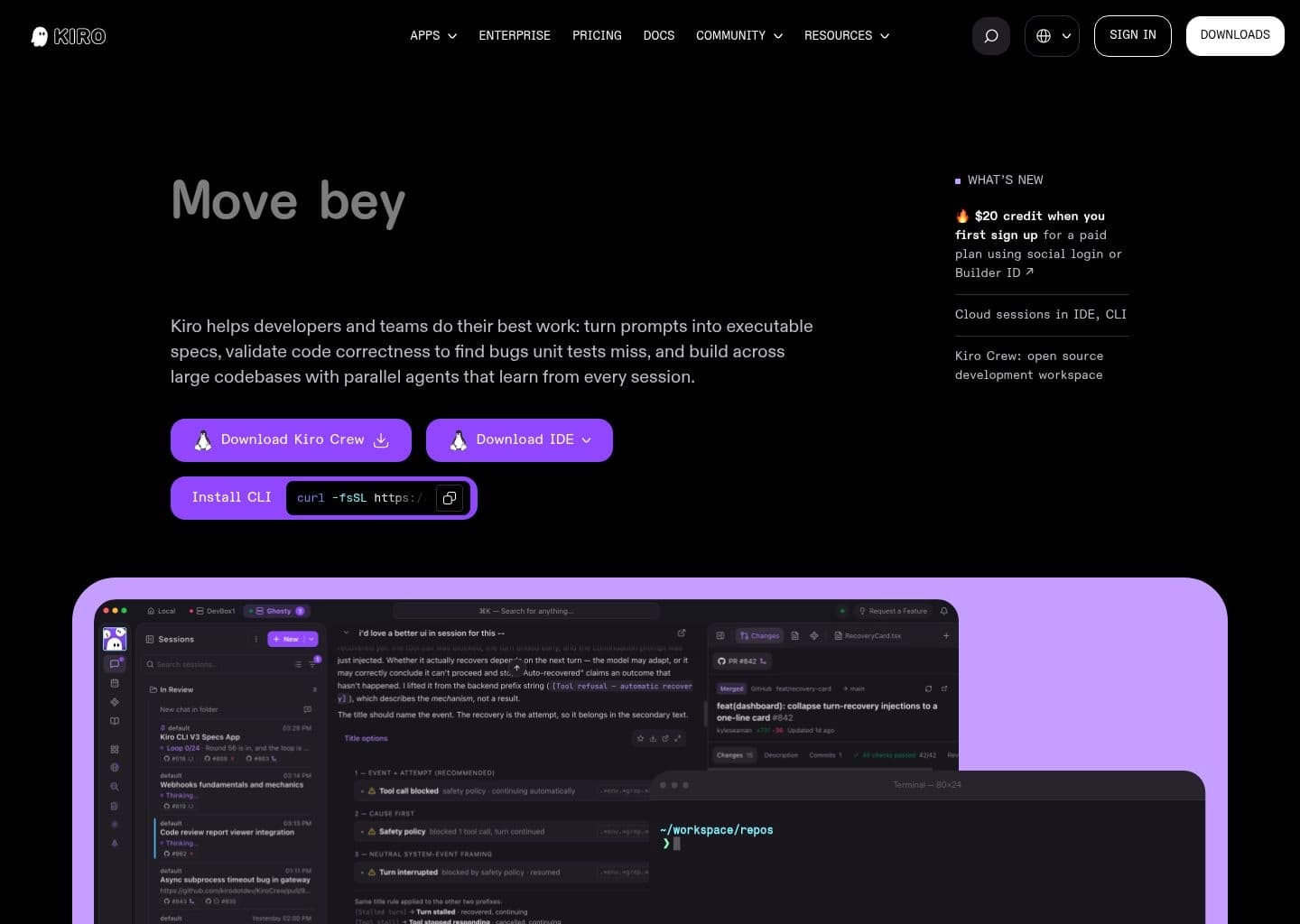
Developers and teams who want to go beyond ad-hoc AI coding assistance to structured, spec-driven development where parallel agents implement and verify code systematically
- Pricing Model:Freemium
- Starting Price:Free — Pro $19/user/mo · Pro+ $39 · Pro Max $79 · Power $199
- Free Tier / Limits:Free tier with limited credits and model access (some models restricted). No Free tier in AWS GovCloud. All paid plans include $20 credit on first upgrade via social login or Builder ID.
- Spec-driven development — converts natural language prompts into structured specs with requirements, architectural design, and sequenced tasks before parallel agents build
- Hooks — automated agent triggers on file save, commit, or CI/CD events to enforce standards, generate docs, write tests, and run workflows autonomously
- Steering files — project-level persistent context about architecture, conventions, and constraints that guides all agent behavior consistently across sessions
- Parallel agents — multiple specialized AI agents work concurrently across the codebase, dramatically accelerating implementation of complex tasks
Top Recommendations by Use Case

Cursor
Cursor has the most polished AI IDE experience with the largest user base, best Tab completions via Supermaven tech, and a mature agent mode — the default choice for most developers.

Claude Code
Claude Code by Anthropic provides the best free terminal-native coding agent experience, especially powerful since Kiro itself uses Claude models under the hood.

GitHub Copilot
GitHub Copilot Enterprise has the most mature enterprise procurement track record and the deepest integration with the GitHub ecosystem where most enterprise code lives.

Warp
Warp provides the broadest developer platform combining AI terminal, standalone agent CLI, and cloud SDLC agent factories — a different but complementary approach to Kiro.
Why Teams Migrate from Kiro

Credit system is complex and unpredictable for heavy spec-driven builds
Kiro's credit-based pricing means large spec-driven builds with parallel agents consume credits faster than simple edits. Power users may exhaust a $79/month Pro Max plan on a single complex feature build.
Cursor's Pro plan at $20/month includes unlimited Cursor Tab usage and 500 fast requests per month — simpler and more predictable pricing for most coding workflows.
Compare vs Cursor
Spec-driven workflow has a learning curve for developers used to chat-based copilots
Kiro's spec-driven approach (Quick Spec, Full Spec, Specs panel) is a fundamentally different workflow from traditional chat-based coding assistants. Teams switching from Copilot or Cursor need to learn a new mental model.
Cline's Plan/Act mode bridges the gap — Plan mode gives spec-like structure while remaining familiar to chat-based copilot users, with no new IDE or workflow to learn.
Compare vs Cline
Built on Code OSS, not full VS Code — some Marketplace extensions unavailable
Kiro uses Code OSS and the Open VSX Registry. Some proprietary VS Code Marketplace extensions are not available, which can be a blocker for teams with existing VS Code extension dependencies.
Cursor is built on VS Code and uses the full VS Code extension Marketplace — all existing VS Code extensions work without any compatibility issues.
Compare vs CursorHead-to-Head Comparison Matrix
| Software Tool | Pricing Model | Free Tier Scope | Target Persona / Best For | Rating | Head-to-Head |
|---|---|---|---|---|---|
 KiroBaseline | Free / $19/mo Pro / $79/mo Pro Max | Limited credits, restricted model access | Spec-driven agentic development on AWS | 4.6 | Full Review |
Free / $20/mo Pro | 2,000 completions/month | Best all-around agentic IDE for any developer | 4.9 | Compare | |
Included with Claude API/Pro | Included in claude.ai Pro subscription | Best terminal-native coding agent from Anthropic | 4.8 | Compare | |
Free / $20/mo Build | Core terminal + limited agents | AI terminal + cloud SDLC agent infrastructure | 4.7 | Compare | |
Free / $10/mo | 2,000 completions + 50 chat/month | Enterprise GitHub-native coding with broadest IDE support | 4.7 | Compare |




Deep-Dive Alternative Profiles
Click any tool card to expand its complete interface & pricing evaluation

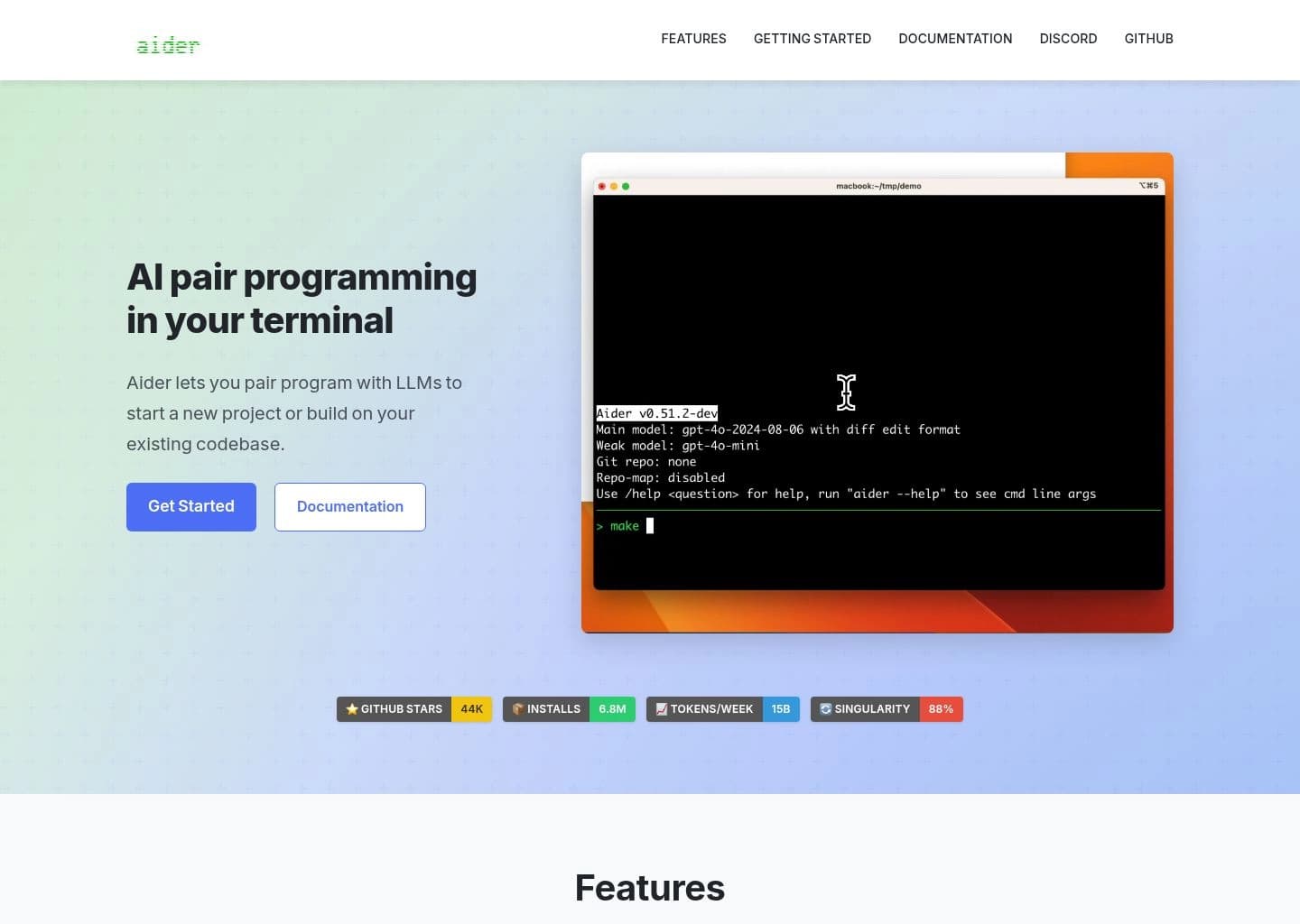
Aider focuses on "Free, open-source AI pair programming that lives in your terminal", providing an agile and dedicated approach compared to Kiro.
Key Capabilities
- Terminal-based AI pair programming with natural language chat and code edits
- Repository mapping using tree-sitter and PageRank to surface relevant code context
- Automatic git commits with AI-generated, sensible commit messages for every change
- Support for 100+ programming languages including Python, JavaScript, Rust, Go, and Ruby
Pricing & Best Match

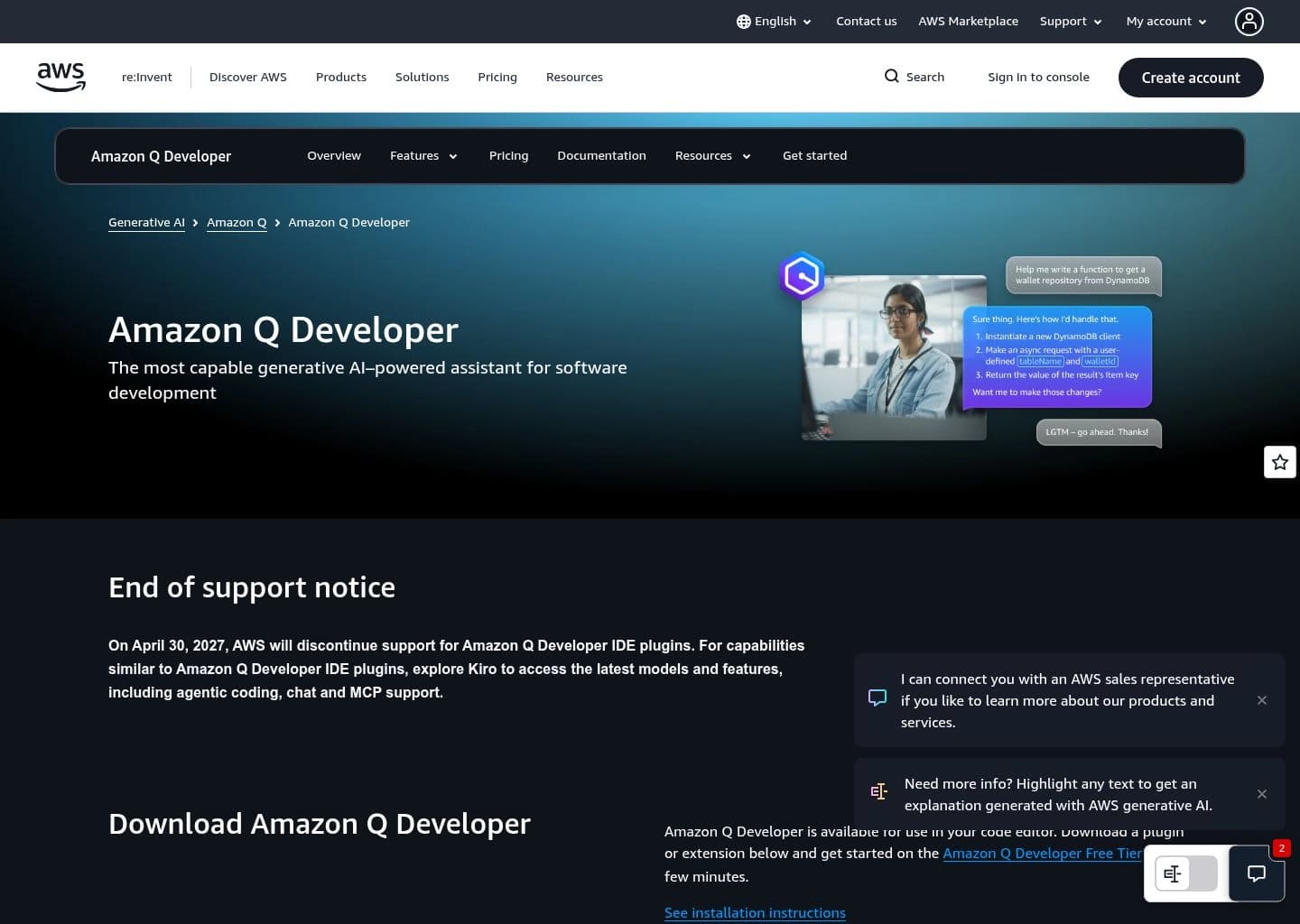
Amazon Q Developer focuses on "AWS's AI coding assistant — deprecated in favor of Kiro (EOS April 2027)", providing an agile and dedicated approach compared to Kiro.
Key Capabilities
- Inline AI code completions in VS Code, JetBrains, Eclipse, and Visual Studio
- Chat-based assistant trained on AWS documentation and public open-source code
- Autonomous agents for multi-step tasks like feature implementation and refactoring
- Automated Java 8-to-17 and .NET Framework-to-.NET 8 code transformation
Pricing & Best Match







Google's agentic AI IDE and CLI — Gemini 3, scheduled tasks, free during preview

The open platform for cloud coding agents — autonomous, transparent, and in your control




Frequently Asked Questions
Spec-driven development is Kiro's core innovation. Instead of reacting to one-shot prompts, Kiro converts your natural language description into a structured spec containing requirements, an architectural design, and a sequenced task list. Parallel specialized agents then implement across the codebase while property-based tests verify the code matches the original specification — catching edge cases and ensuring intent is preserved.
Know another alternative to Kiro?
Help the community by submitting other similar tools you've used. Your contribution helps others make better decisions.