

Kiro
Spec-driven agentic IDE by AWS — build what you mean, not just what you say
Gallery
6 items
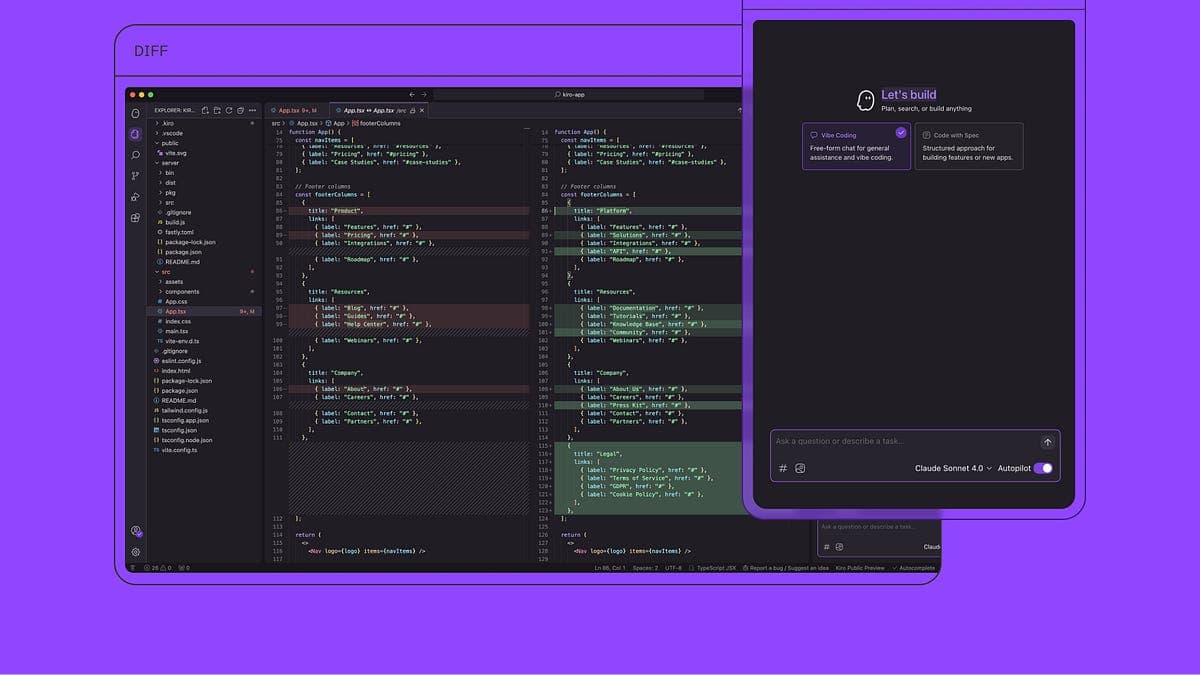
About Kiro
In my developer testing of Kiro (AWS's spec-driven agentic IDE), its architecture enforces a strict "specification-first" paradigm: it drafts comprehensive architectural requirements and testing specs before generating executable code. This structured planning phase practically eliminates the hallucinated edge-case bugs common in conversational code bots. Developers looking for quick, spontaneous single-line autocomplete will find the formal spec-drafting phase overly deliberate for simple scripts. For complex full-stack cloud applications where architectural discipline matters, it represents a major leap forward in agentic engineering.
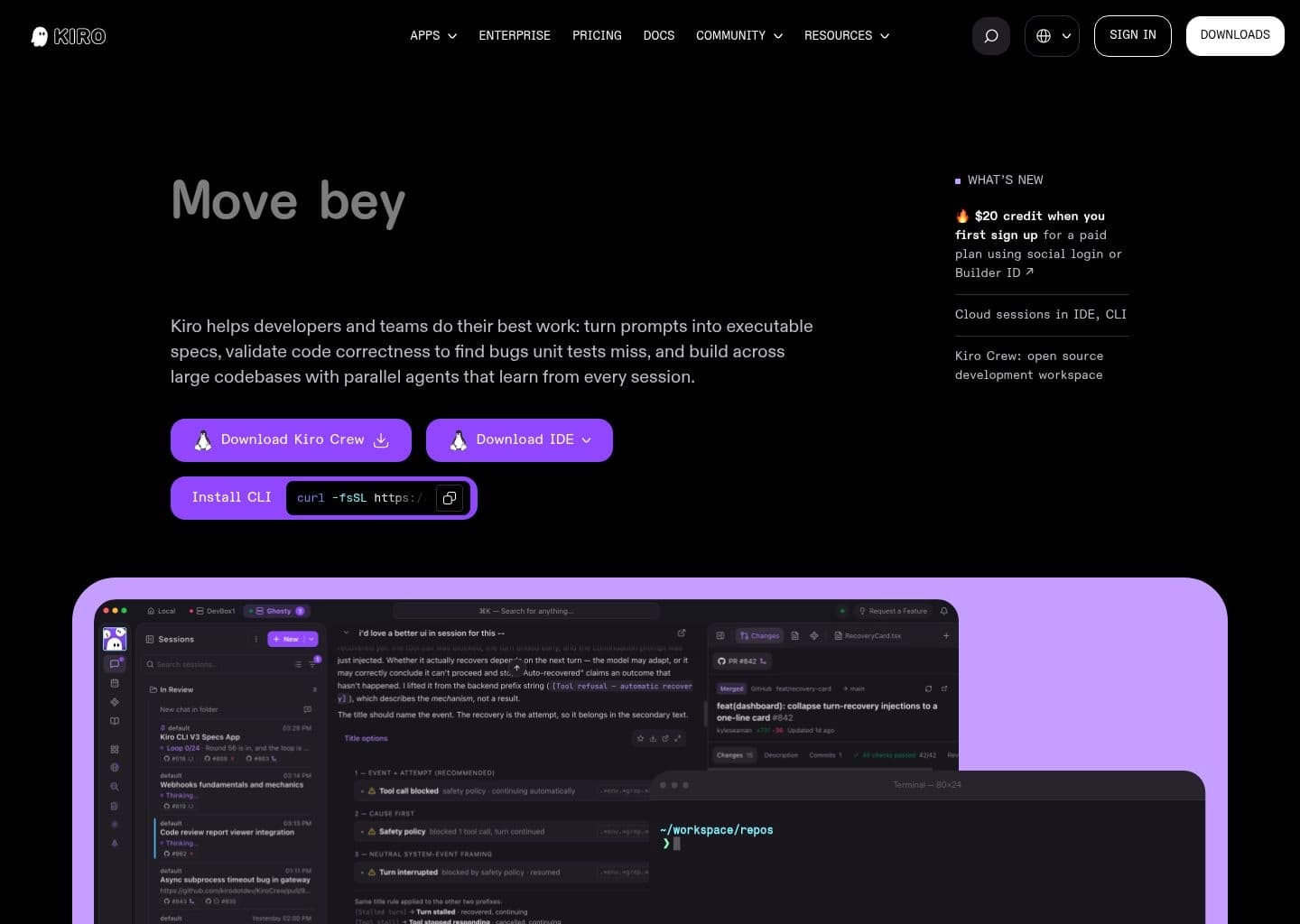
Kiro is AWS's agentic development environment, introduced at AWS re:Invent 2025 and released as the official successor to Amazon Q Developer IDE plugins (which reach end-of-support April 30, 2027). Built and operated by AWS on Code OSS (compatible with Open VSX extensions and VS Code settings), Kiro is available as an IDE (macOS, Windows, Linux), CLI, web interface, and mobile app \u2014 all powered by a unified agent harness that shares the same .kiro/ configuration, specs, and steering files across every surface.
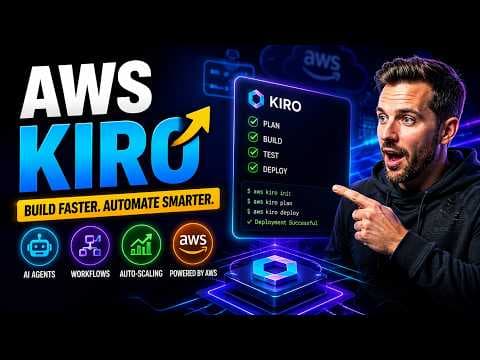
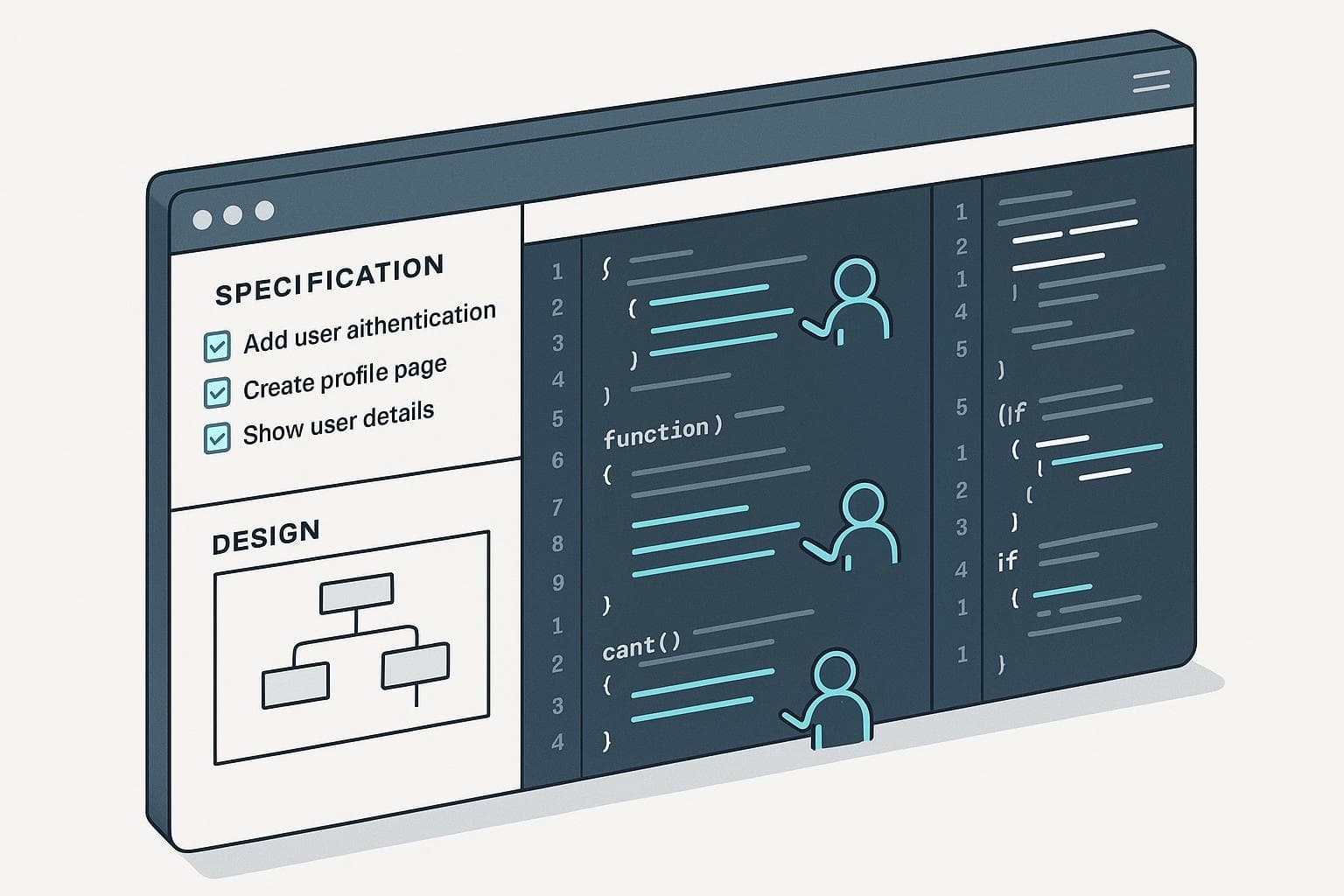
Kiro's defining innovation is spec-driven development: instead of reacting to one-shot prompts like traditional coding assistants, Kiro converts natural language descriptions into structured specifications containing requirements, architectural designs, and sequenced task lists. Parallel specialized agents then implement across the codebase simultaneously, while property-based tests verify that the resulting code actually matches the original specification \u2014 catching edge cases that unit tests miss. Three workflow modes let developers choose their level of structure: vibe mode for quick fixes, Quick Spec to clarify intent before building, and Full Spec for complex tasks that surface architectural trade-offs before parallel agents begin.
Beyond specs, Kiro offers Hooks (automated agent triggers on file save, commit, or CI/CD events), Steering files (persistent project-level context about architecture and conventions), Kiro Crew (open-source collaborative workspace), MCP support for external tool connections, Agent Client Protocol (ACP) compatibility, and AGENTS.md/Skills.md support. Models available include the full Claude lineup (Opus 5, Sonnet 5, Haiku 4.5), GPT-5.6 variants (Sol, Terra, Luna), and open-weight models (DeepSeek 3.2, MiniMax M2.5, Qwen3 Coder Next). The Auto mode intelligently routes each request to the optimal model for quality, latency, and cost.
Key Features
- Spec-driven development — converts natural language prompts into structured specs with requirements, architectural design, and sequenced tasks before parallel agents build
- Hooks — automated agent triggers on file save, commit, or CI/CD events to enforce standards, generate docs, write tests, and run workflows autonomously
- Steering files — project-level persistent context about architecture, conventions, and constraints that guides all agent behavior consistently across sessions
- Parallel agents — multiple specialized AI agents work concurrently across the codebase, dramatically accelerating implementation of complex tasks
- Property-based testing integration — verifies code correctness against the original specification, catching edge cases that unit tests miss
- Multi-surface unified agent — IDE (macOS/Windows/Linux), CLI, web interface, and mobile app all share the same .kiro/ configuration and agent harness
- Kiro Crew — open-source collaborative development workspace for team-based agentic projects with shared context and parallel agent coordination
- Broad model support — Claude (Opus 5, Sonnet 5, Haiku 4.5), GPT-5.6 (Sol, Terra, Luna), DeepSeek 3.2, and more; Auto mode routes intelligently per task
Pros
- Only AWS-native agentic IDE — built and operated by AWS with the same security, reliability, and compliance standards trusted by millions of customers
- Spec-driven development solves vibe coding's core problem: generating code that actually matches your intent, verified by property-based tests
- Parallel agents work concurrently across the codebase — dramatically faster than single-agent coding tools for complex multi-file tasks
- Broadest frontier model roster of any AWS developer tool — Claude Opus 5, Sonnet 5, GPT-5.6 (Sol/Terra/Luna), DeepSeek, and Auto routing
- Unified agent harness across IDE, CLI, web, and mobile — one .kiro/ config works everywhere
- Hooks enable fully automated SDLC workflows — documentation, tests, and standards enforcement on every file save or commit without interrupting flow
Cons
- New product — released July 2025, less battle-tested than Cursor, Windsurf, or VS Code for large complex production codebases
- Credit-based pricing model can be unpredictable — complex spec-driven builds consume credits faster than vibe coding
- Spec-driven workflow has a learning curve; developers accustomed to chat-based copilots need to adapt to structured specs
- Built on Code OSS, not full VS Code — some proprietary VS Code Marketplace extensions may not be available via Open VSX
- Kiro Enterprise pricing is custom and sales-gated — no transparent list price for large team deployments
- AWS GovCloud requires paid subscription with IAM Identity Center — no free tier in that environment
Pricing
Kiro uses a credit-based Freemium model with five tiers and no daily or weekly rate limits. Credits are consumed fractionally per request \u2014 simple edits use fewer credits than complex spec-driven builds.
Free tier includes limited credits with a restricted model selection (no Free tier in AWS GovCloud). Pro is $19/user/month, Pro+ is $39/user/month, Pro Max is $79/user/month, and Power is $199/user/month \u2014 each offering progressively more credits and model access. All paid plans include a $20 credit on first upgrade via social login or Builder ID (not IAM Identity Center). Add-on credits cost $0.04 each, available in packs from $5 (125 credits) to $100, rolling over for 12 months from purchase date.
Enterprise pricing is custom via AWS sales and includes IAM Identity Center SSO, AWS PrivateLink VPC endpoints, admin governance controls, usage dashboards, cost management, IP indemnity, compliance features, and overage controls managed by admins. All active paid Kiro subscriptions also provide access to Amazon Q Developer IDE plugins during the transition window through April 30, 2027.
Claim Verified Creator Badge
Are you the founder of Kiro? Display this listing's verified badge on your website to show your customers that your product has been vetted and listed on AI Central Resources.
<a href="https://www.aicentralresources.com/tool/kiro" target="_blank" rel="noopener">
  <img src="https://www.aicentralresources.com/badges/featured-badge-dark.svg" alt="Featured on AICentralResources" width="200" height="54" style="border: none;" />
</a>
* Place this HTML snippet in your website's footer, landing page, or press section. This creates a search-friendly backlink directly to your verification page.
Connect with Kiro
Frequently Asked Questions
Kiro is AWS's purpose-built agentic development environment (IDE, CLI, Web, and mobile app). It introduced spec-driven development: instead of reacting to individual prompts, Kiro converts natural language descriptions into structured specifications with requirements, architectural designs, and sequenced tasks, then uses parallel agents to implement them with property-based test verification. It is the official successor to Amazon Q Developer IDE plugins, which reach end-of-support April 30, 2027.
Specs are structured documents generated by Kiro from your natural language description. They include requirements, an architectural design, and a sequenced task list. Kiro's parallel agents then implement based on those specs, with property-based tests verifying the code matches what you specified. Quick Spec lets you clarify intent before building; Full Spec surfaces architectural trade-offs and constraints before parallel agents begin.
Hooks are automated agent triggers that fire on events like file save, commit, or CI/CD pipeline steps. Once configured, they run autonomously to enforce coding standards, generate documentation, write unit tests, optimize code, or run custom workflows — all without breaking your development flow.
Kiro Free tier is available with limited credits and model access (no Free tier in GovCloud). Pro is $19/user/month, Pro+ is $39/user/month, Pro Max is $79/user/month, and Power is $199/user/month, all based on a credit system. Add-on credits cost $0.04 each in packs from $5 to $100. Enterprise pricing is custom via AWS sales. All paid plans also provide access to Amazon Q Developer IDE plugins during the transition window through April 2027.
Kiro supports a broad model roster including Anthropic's Claude (Opus 5, Opus 4.8, Sonnet 5, Sonnet 4.6, Sonnet 4.5, Haiku 4.5), OpenAI's GPT-5.6 in three variants (Sol, Terra, Luna), and open-weight models including DeepSeek 3.2, MiniMax M2.5, GLM-5, and Qwen3 Coder Next. The default Auto mode intelligently routes each request to the optimal model for quality, latency, and cost.
Similar AI Tools to Kiro
View all alternatives of Kiro

Amazon Q Developer
AWS's AI coding assistant — deprecated in favor of Kiro (EOS April 2027)

Augment Code
AI coding agent with deep Context Engine for large enterprise codebases


GitHub Copilot
AI pair programmer for code completion, chat, and autonomous coding agents

Compared with Kiro
Direct head-to-head feature matrices, pricing, and category breakdowns