
SAN FRANCISCO — In a major democratization of autonomous agent technology, OpenAI has officially begun rolling out its background agent runtime, colloquially known as Dots, to all mainstream ChatGPT Plus ($20/month) and Pro subscribers worldwide. Previously restricted to private enterprise pilots and frontier research partners, the release transforms ChatGPT from a passive conversational assistant into an active, asynchronous worker capable of executing multi-hour, multi-step digital workflows completely in the background without user intervention.
Unlike conventional chatbots that require an open browser tab and immediate token-by-token interaction, OpenAI's Dots agent runs inside an ephemeral, sandboxed cloud container. Equipped with a headless Chromium browser instance, a secured Python virtual execution environment, and encrypted OAuth connectors to major web services (including Gmail, Google Calendar, GitHub, Notion, and Slack), Dots can conduct deep multi-source research, synthesize competitive intelligence, reconcile financial spreadsheets, and notify users via push alert or email once their long-running objective is fully satisfied.
30-Second Executive Verdict & Direct Answer
Direct Answer: OpenAI has brought persistent, asynchronous cloud agents to all $20/month ChatGPT Plus tiers, allowing users to delegate complex multi-hour workflows to isolated virtual sandboxes that execute 24/7 without keeping local applications or devices awake.
Knowledge Workers & Executives: Offload administrative drudgery—such as flight booking research, cross-inbox filtering, and weekly slide updates—to background agents that execute while you sleep.
Enterprise Security Teams: Dots enforces deterministic permission boundaries; agents operate inside ephemeral cloud micro-VMs that wipe memory upon task completion and mandate human click confirmation for destructive actions in ChatGPT.
AI Industry Landscape: Direct competitive escalation against Google's Gemini macOS computer use and Anthropic's Claude computer use, emphasizing cloud infrastructure over local screen capture.
How OpenAI Dots Solves the 'Waiting Screen' Friction
Until today, the primary limitation of consumer AI assistants has been synchronous blocking: if a user tasked an LLM with compiling a 40-page market report across 15 web sources, the user had to keep the browser tab active, watching tokens stream while hoping connection dropouts or rate limits didn't abort the halfway completed query.
OpenAI's Dots paradigm completely decouples task initiation from task execution:
- Task Delegation: A user prompts ChatGPT with a high-level goal, such as: "Monitor 12 competitor pricing pages every 6 hours, extract tier pricing shifts into a Google Sheet, and ping my Slack if any changes exceed 10%."
- Stateful Cloud Orchestration: OpenAI provisions an ephemeral Firecracker micro-VM dedicated to the session. The agent breaks down the instruction into directed acyclic graph (DAG) tasks, executing browser navigations, API calls, and Python transformations in the cloud.
- Interactive Checkpoints: If the agent encounters a step requiring financial commitment (e.g., entering credit card details or submitting a formal booking), it pauses execution, takes a cryptographic snapshot of the session state, and sends an actionable push notification to the user's mobile app: "Ready to book flight UA421 for $482. Confirm payment to proceed."
- Completion & Artifact Delivery: Upon conclusion, the agent packages its output into formatted artifacts (interactive tables, downloadable CSVs, or markdown summaries) and delivers them directly into the user's chat transcript.
Architectural Comparison: OpenAI Dots vs. Anthropic & Google Agents
The race to dominate computer-using AI agents has diverged into two radically different architectural philosophies: Local Desktop Control (Anthropic Claude & Google Gemini) versus Headless Cloud Sandboxing (OpenAI Dots).
| Capability Dimension | OpenAI Dots (ChatGPT Plus) | Google Gemini (macOS) | Anthropic Claude Computer Use |
|---|---|---|---|
| Execution Location | Cloud Micro-VM (Headless) | Local Background Virtual Display | Local OS (Takes Screen Focus) |
| Local Device Independence | 100% (Runs with laptop closed) | Partial (Mac must be awake) | 0% (Machine must stay active) |
| Desktop App Integration | Web & Cloud SaaS APIs Only | Native macOS Apps (Keynote, Xcode) | Full OS Desktop Applications |
| Security Sandbox | Hard Cloud Isolation Boundary | macOS Permission Entitlements | Host OS Permissions |
| Subscription Pricing | $20 / month (Plus Included) | $20 / month (Google One AI) | Usage-based API ($3-$15/MTok) |
Security & Enterprise Governance Protocols
Deploying autonomous agents capable of performing web actions on behalf of users introduces severe safety risks, notably prompt injection vulnerabilities and unintended financial transactions. OpenAI has integrated a multi-layered guardrail protocol into Dots:
- Read/Write Privilege Partitioning: By default, Dots agents are granted read-only web crawling privileges. Any action that modifies external state—such as sending emails, deleting files, or submitting form data—requires explicit human verification.
- Credential Isolation: Third-party credentials (passwords, API tokens) are never exposed to the LLM context window. Instead, authentication is negotiated via an out-of-band OAuth proxy that injects temporary bearer tokens directly into the headless browser session.
- Strict Network Egress Filtering: Agent sandboxes are barred from communicating with unindexed IP addresses or known cryptocurrency/malware domains, neutralizing common prompt extraction and data exfiltration payloads.
Key Strengths & Advantages
- • Zero Hardware Dependency: Executes entirely on OpenAI cloud infrastructure, saving battery and compute on local laptops.
- • Asynchronous Persistence: Run multi-hour background jobs overnight and receive polished synthesis reports by morning.
- • Unmatched Value: Included directly inside the standard $20/month Plus subscription with no surge pricing.
Current Constraints & Limitations
- • No Local File System Access: Cannot interact with local offline files or native proprietary desktop apps.
- • Strict Monthly Task Caps: Plus subscribers are allotted 40 background agent hours per month before queuing limits apply.
- • Web Navigation Brittleness: Dynamic anti-bot captchas can occasionally stall headless browser workflows.
Primary Source Verification & Feature Documentation
Review OpenAI's official product announcements and agent architecture safety documentation.
Explore AI Models & Autonomous Tools
Benchmark, compare, and discover verified tools powering the new wave of frontier reasoning and autonomous software engineering.
Related Tags

AUTHORED BY
Hamza Khaliq
Student, Author, Learner, Developer and Researcher
Covering the latest AI developments and industry news.
More news you might like

Anthropic Mathematician Claims Claude Co-Authored Proof of Riemann Hypothesis in Lean 4
Anthropic mathematician Levent Alpöge has published a 239MB Lean 4 formalization claiming a proof of the Riemann Hypothesis co-authored with Claude, now under global peer audit.
NVIDIA AI Open-Sources Nemotron-Labs-Sigma: Continuous Diffusion Language Models at 3B & 8B
NVIDIA has open-sourced Nemotron-Labs-Sigma, a continuous diffusion language model family across 14 checkpoints at 3B/8B scales, delivering 3.5x speculative decoding speedups in pure PyTorch.
Alibaba Transitions Next-Gen Qwen Pretraining to In-House T-Head Silicon Amid Export Caps
Alibaba has begun full pretraining runs of next-generation Qwen models on its custom T-Head Zhenwu AI accelerators, achieving 92% MFU efficiency under U.S. export caps.
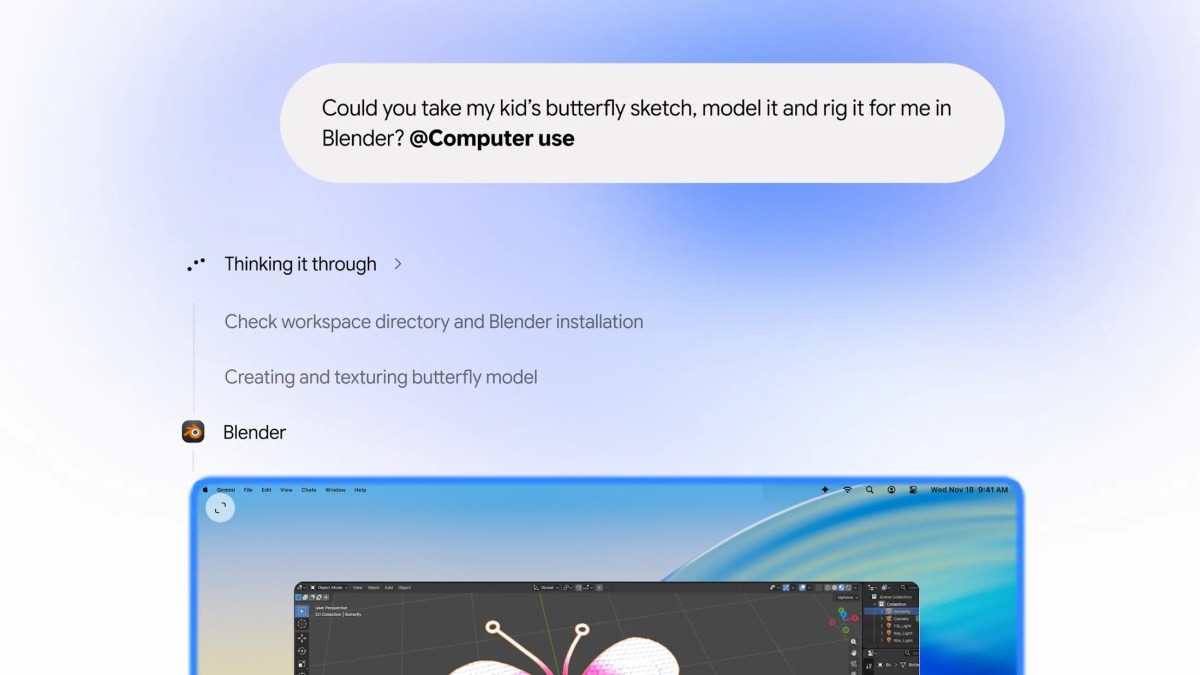
Google Deploys Computer Use for Gemini Desktop on macOS with Isolated Virtual Screens
Google has launched computer use for the Gemini macOS desktop app on Apple Silicon, operating inside isolated background virtual displays with live chat previews.