

OpenAI Codex
OpenAI's autonomous coding agent for pull requests, refactors, and reviews
Gallery
7 items



About OpenAI Codex
OpenAI Codex has one of the more unusual histories in AI: the name first launched in August 2021 as a GPT-3 descendant fine-tuned on public code, powering the original version of GitHub Copilot and introducing the HumanEval benchmark, before OpenAI deprecated that model in March 2023. The name sat retired for two years until OpenAI revived it in April-May 2025 for something fundamentally different: an autonomous software engineering agent rather than a simple code-completion model. Codex CLI arrived first, followed a month later by a cloud-based agent that could enter a repository, make changes, run tests, and prepare a pull request for review, each task running in its own preloaded cloud sandbox.
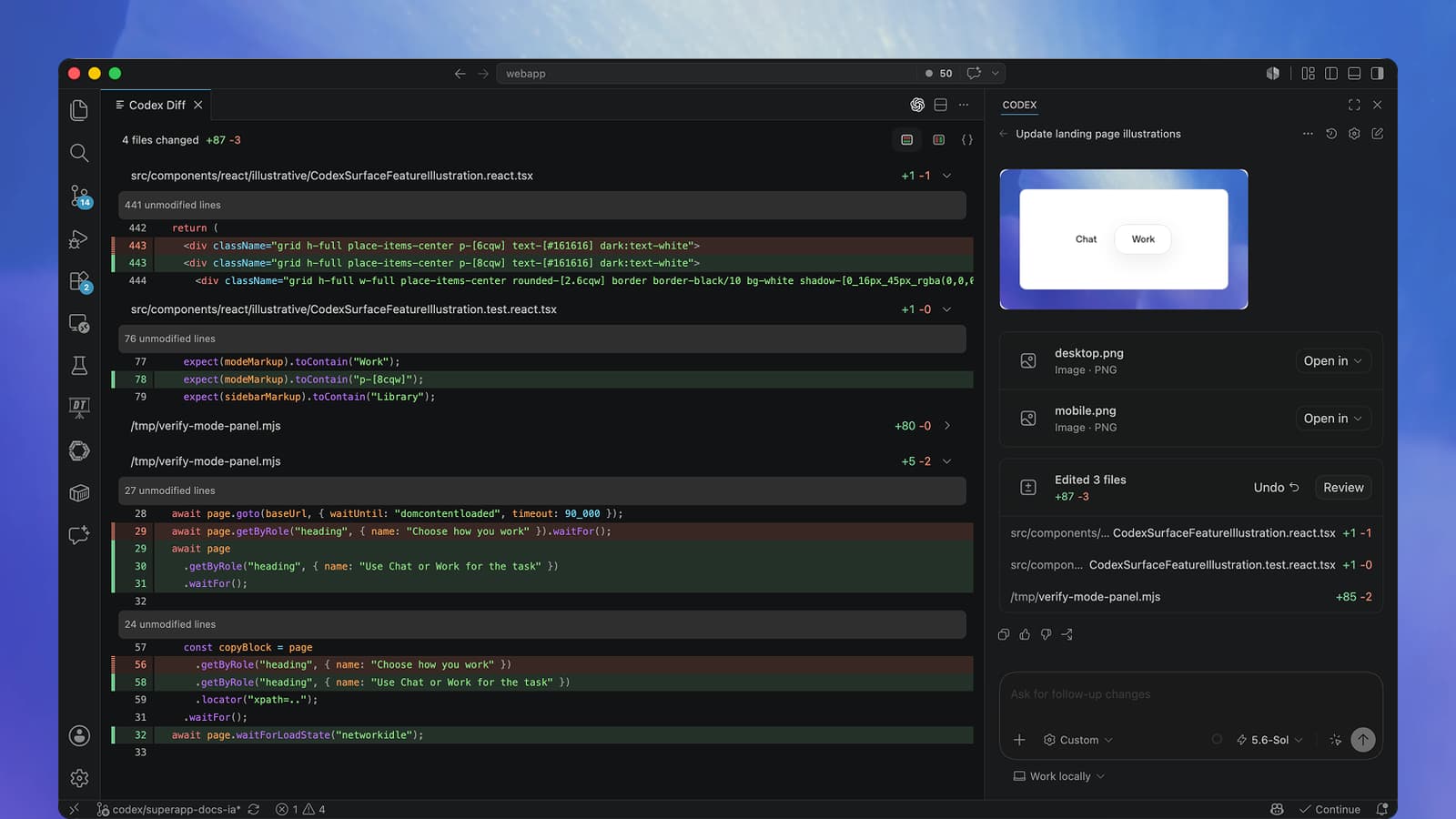
Today's Codex is designed as a command center for agentic coding, built to drive real engineering work end to end, from routine pull requests to complex refactors and migrations, powered by OpenAI's frontier coding models including the GPT-5.6 family (Sol, Terra, and Luna tiers). Built-in worktrees and cloud environments let multiple Codex agents work in parallel across projects, and teams can use Skills to teach Codex their specific coding standards and workflows so it contributes more consistently with less supervision. Codex can also be scheduled for always-on background work like issue triage, alert monitoring, and CI/CD tasks, and its automated code review is designed to catch high-signal issues, including tricky backward-compatibility bugs, before they reach production. In March 2026, OpenAI added Codex Security, a dedicated agent for identifying and fixing software vulnerabilities.
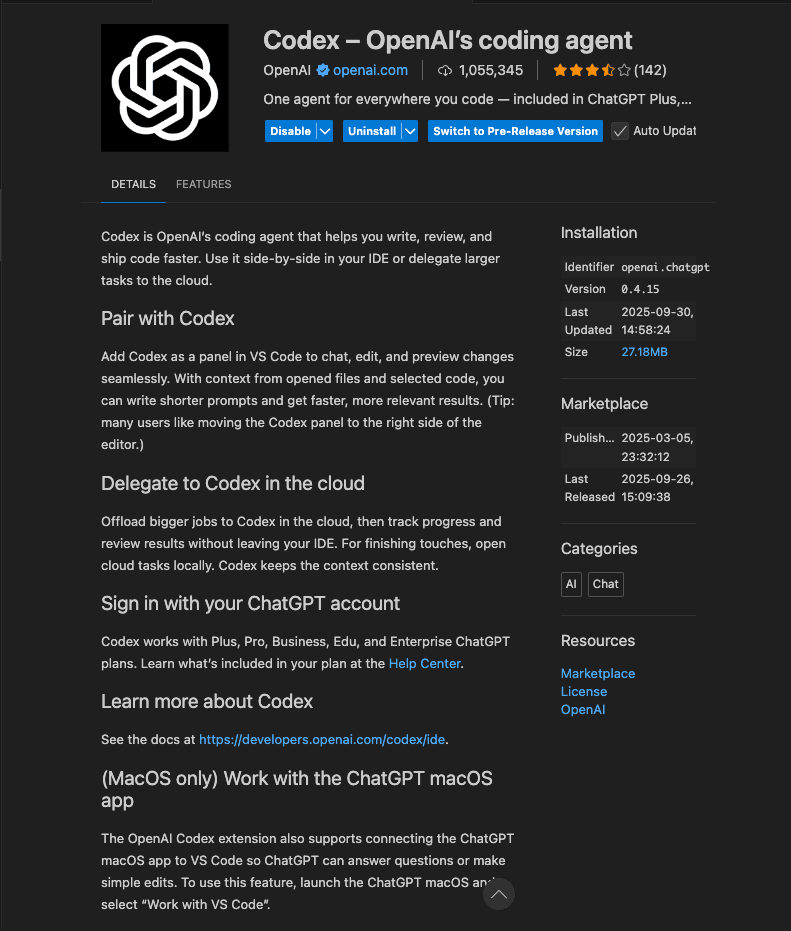
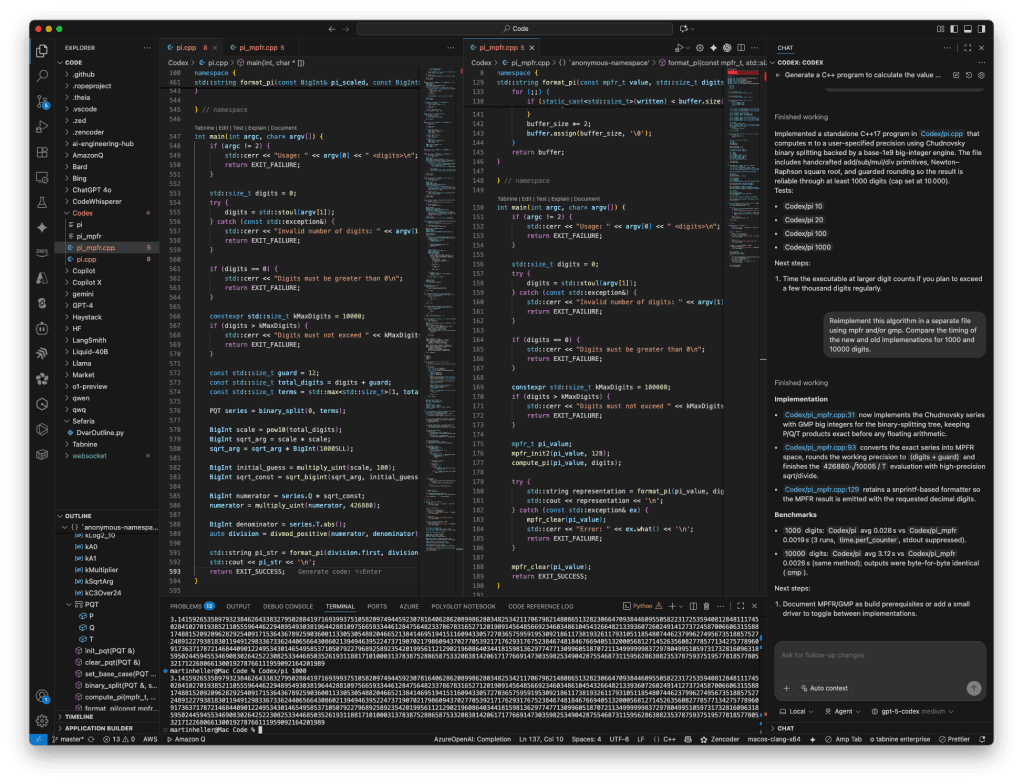
Codex is the same agent everywhere a developer works: ChatGPT, a dedicated IDE extension, the terminal-based CLI, and the ChatGPT desktop app for macOS and Windows, all connected through a single ChatGPT account. By March 2026, Codex had grown to more than 2 million weekly active users, and companies including Duolingo, Cisco Meraki, Ramp, Harvey, and Sierra report substantial cuts to iteration time and expanded engineering capacity from adopting it. OpenAI positions Codex as evolving into a broader enterprise agent platform beyond just software development, with access bundled entirely into ChatGPT plans rather than sold as a separate subscription.
Key Features
- Autonomous coding agent that completes pull requests, refactors, and bug fixes end to end
- Built-in worktrees and cloud sandbox environments for running multiple agents in parallel
- Skills system for teaching Codex team-specific coding standards and workflows
- Scheduled background tasks for issue triage, alert monitoring, and CI/CD automation
- High-signal automated code review that catches bugs and compatibility issues
- Consistent agent available across ChatGPT web, IDE extension, CLI, and desktop app
- Powered by OpenAI's frontier coding models, including the GPT-5.6 model family
- Codex Security agent for identifying and fixing software vulnerabilities
Pros
- Bundled into existing ChatGPT plans, so many users already have some level of access at no extra cost
- Consistent agent experience across ChatGPT, IDE, CLI, and desktop, all tied to one account
- Parallel agents and built-in cloud sandboxes let teams tackle multiple engineering tasks simultaneously
- Skills system lets teams encode their own standards so Codex needs less supervision over time
- Backed by OpenAI's frontier coding models and adopted by engineering teams at companies like Duolingo, Ramp, and Cisco Meraki
Cons
- Token-based credit pricing (since April 2026) makes monthly costs harder to predict than flat per-seat pricing
- Heavy parallel or fast-mode usage can push real spend to $100 to $200 per developer per month even on mid-tier plans
- The Codex brand has been recycled and repositioned multiple times since 2021, which can create confusion about what current Codex actually is
- No standalone subscription; access is entirely tied to a ChatGPT plan rather than a dedicated developer product
Pricing
Codex has no standalone subscription; access is bundled into ChatGPT plans. Free ($0/month) includes limited trial access via a lighter Codex model with restricted daily limits. Go costs $8/month for light, local use only (no cloud task delegation). Plus costs $20/month and includes Codex on the web, CLI, IDE extension, and iOS, covering typical daily use. Pro splits into two tiers since April 9, 2026: Pro 5x at $100/month and Pro 20x at $200/month, offering 5x and 20x higher usage than Plus respectively. Business costs $20/user/month billed annually ($25/month billed monthly), with standard seats including Codex within usual plan limits; OpenAI stopped offering new pay-as-you-go Codex-only Business seats as of June 24, 2026, though existing seats continue working. Enterprise, Edu, and Gov plans use custom pricing. Since April 2, 2026, usage across Plus, Pro, and Business shifted from per-message limits to token-based credits (roughly $0.04 each), metered on a rolling 5-hour window plus a weekly cap; Enterprise, Edu, Health, and Gov plans moved to the same system on April 23, 2026. API-key usage bypasses ChatGPT plan credits entirely and bills directly at standard OpenAI API token rates. Real-world usage for active developers commonly runs $100 to $200 per month depending on model choice, parallel agents, and fast-mode usage.
Claim Verified Creator Badge
Are you the founder of OpenAI Codex? Display this listing's verified badge on your website to show your customers that your product has been vetted and listed on AI Central Resources.
<a href="https://www.aicentralresources.com/tool/openai-codex" target="_blank" rel="noopener">
  <img src="https://www.aicentralresources.com/badges/featured-badge-dark.svg" alt="Featured on AICentralResources" width="200" height="54" style="border: none;" />
</a>
* Place this HTML snippet in your website's footer, landing page, or press section. This creates a search-friendly backlink directly to your verification page.
Connect with OpenAI Codex
Frequently Asked Questions
Codex is OpenAI's AI coding agent, available in ChatGPT, a dedicated CLI, IDE extensions, and the ChatGPT desktop app, that completes real engineering tasks like pull requests, refactors, code reviews, and automations, working across parallel cloud environments.
The original Codex launched in August 2021 as a GPT-3 descendant that powered the first version of GitHub Copilot, but OpenAI deprecated that model in March 2023. The name was revived in April-May 2025 for a completely different product: today's autonomous coding agent spanning CLI, cloud, IDE, and desktop.
Codex is bundled into ChatGPT plans rather than sold separately: Free ($0), Go ($8/mo), Plus ($20/mo), Pro ($100/mo for 5x usage or $200/mo for 20x usage), Business ($20/user/month billed annually), and custom Enterprise/Edu pricing. Since April 2026, usage within these plans is metered by token-based credits rather than flat per-message limits.
Codex agents work inside their own cloud sandbox environment, preloaded with your repository, where they can read code, make edits, run commands and tests, and prepare a pull request for human review, all without needing local setup.
Yes. Codex supports Skills, which let teams teach it their coding standards, workflows, and conventions so it applies them consistently across tasks and requires less supervision over time.
Similar AI Tools to OpenAI Codex
View all alternatives of OpenAI Codex




OpenHands
The open platform for cloud coding agents — autonomous, transparent, and in your control

Compared with OpenAI Codex
Direct head-to-head feature matrices, pricing, and category breakdowns