AICentralResources vs Product HuntTool Evaluation vs Launch Discovery (2026)
AICentralResources is purpose-built for AI tool evaluation — re-validated reviews, side-by-side comparison, and a listing written by a person for every tool. Product Hunt is a product launch platform — community-voted upvotes, launch-day buzz, and discovery for founders and early adopters. These platforms serve fundamentally different user needs. AICentralResources is where you evaluate and shortlist. Product Hunt is where products announce their arrival.
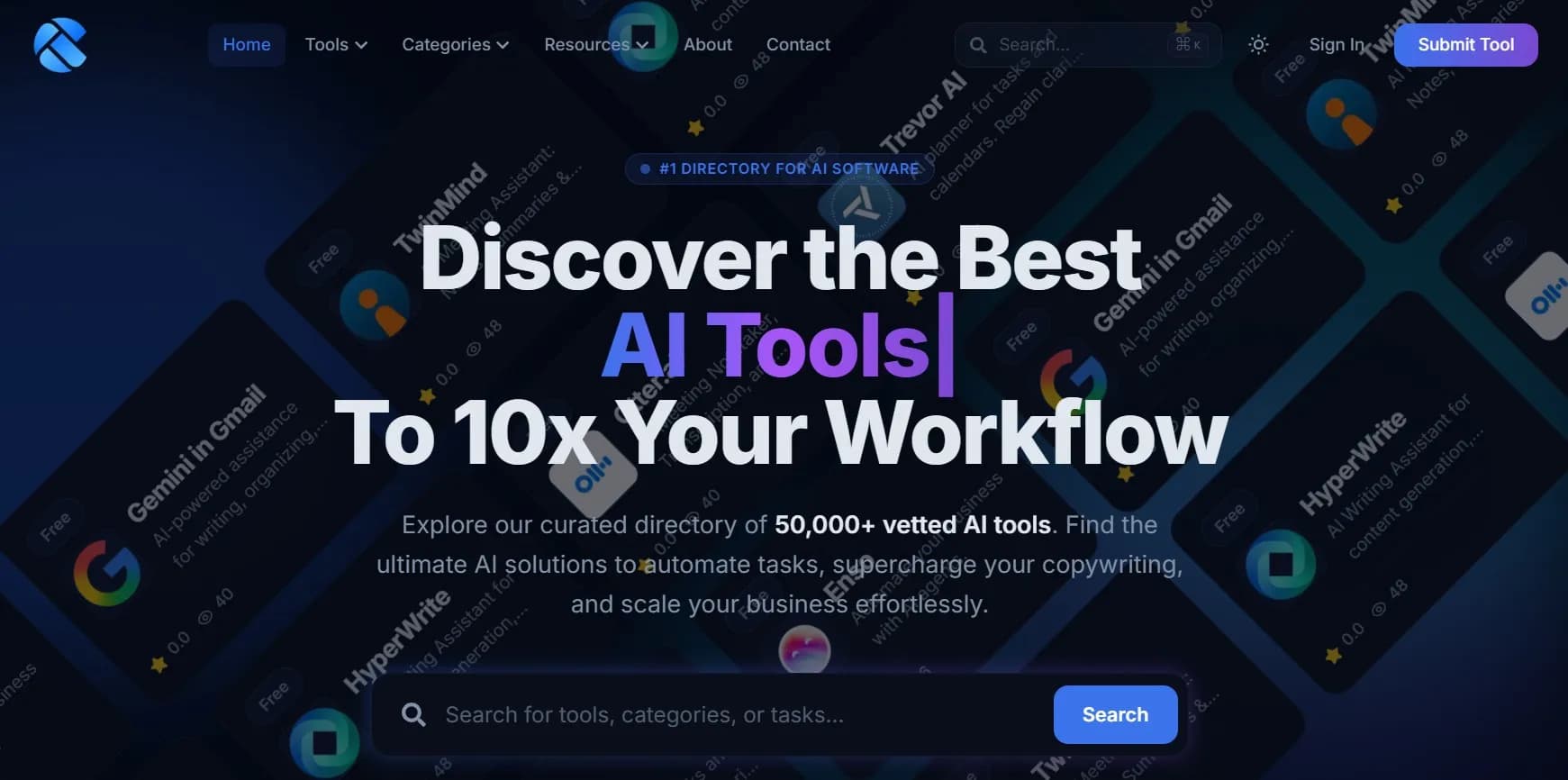
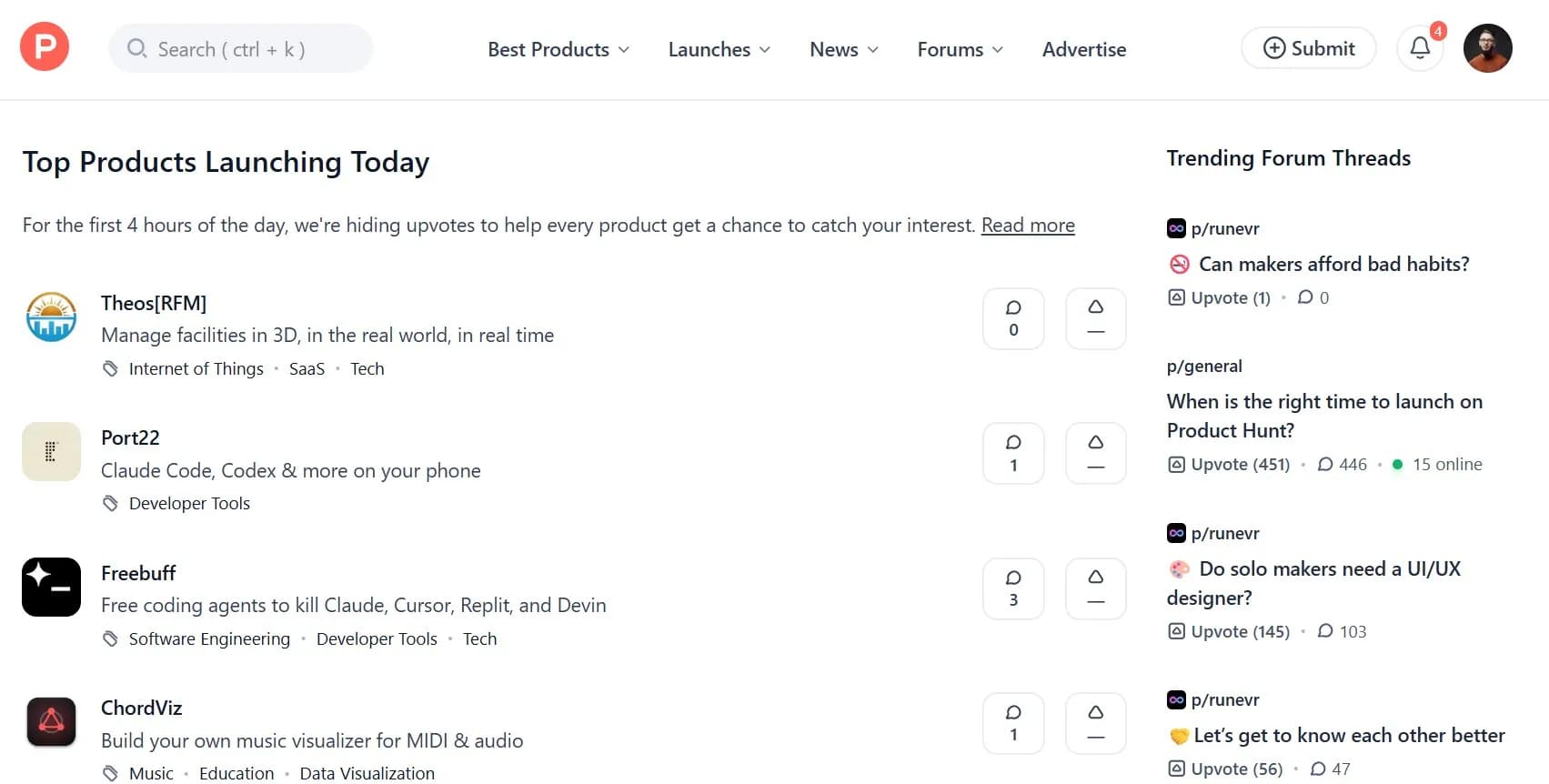
Browse the DirectoryAICentralResources vs Product Hunt Homepage Preview
Side-by-side website layout and launch interface comparison (2026).
List Your Product Beyond Launch Day
Product Hunt buzz fades after 24 hours. AICentralResources gives your AI software a permanent, search-indexed listing page with our Free ($0) Submission route.
Quick Comparison Table
Feature-by-feature breakdown at a glance.


Data as of March 2026. Verify current details at each platform.
Core Purpose & Who Each Serves
These platforms serve fundamentally different moments in the AI tool lifecycle.
Built for Evaluation
AICentralResources
AICentralResources exists to help users find, evaluate, and compare AI tools for sustained use. Every tool listing is manually reviewed, scored, and re-validated when major product changes occur.
The built-in side-by-side comparison tool lets users shortlist candidates and evaluate them in a structured view without opening multiple browser tabs. Every listing is written and reviewed rather than scraped — including less-hyped, niche tools that never get a Product Hunt launch moment but solve real operational problems.
The target user is someone past the discovery phase — they know AI tools exist, and now they need to choose the right one for a specific workflow.
Built for Launch Discovery
Product Hunt
Product Hunt is a product launch platform. Its core mechanic is the daily leaderboard — upvotes from the community determine which products reach “Product of the Day,” “Week,” and “Month.” For founders, a successful launch generates traffic, backlinks, press coverage, and early adopter signups.
For users, Product Hunt surfaces what’s new and exciting in tech — AI tools are one of its most active categories. But the platform is designed for early adopters tracking what’s newly shipping, not for structured post-launch evaluation.
The target user is an early adopter or founder tracking what’s newly shipping — not someone who needs a structured evaluation of tools they’re considering paying for.
The Core Difference
Product Hunt is optimized for launch day. AICentralResources is optimized for decision day. After the launch buzz fades, Product Hunt listings receive minimal ongoing traffic. AICentralResources listings are re-validated and maintained, meaning a tool evaluated 18 months after launch reflects the current version — not the MVP that launched on Product Hunt.
Verdict
These platforms are not competitors in the traditional sense — they serve different moments in the AI tool lifecycle. Product Hunt captures the arrival. AICentralResources supports the evaluation. Power users of AI tools should use both: Product Hunt to track what’s new, AICentralResources to evaluate what’s worth adopting.
Review Quality & Trust Signals
Editorial depth vs community-driven social proof.
AICentralResources Review Quality
- Manual editorial testing across four scored dimensions: use-case fit, feature depth, pricing transparency, reliability
- Ongoing re-validation — listings are updated when tools ship major changes
- Scoring criteria publicly stated; evaluation is transparent
- No upvote inflation or launch-day gaming — reviews reflect actual usage
Product Hunt Review Quality
- Community upvotes: high counts signal early interest, not verified quality
- Maker comments and community discussion add context but are not neutral — makers are present in their own launch thread
- Reviews are launch-day concentrated: most engagement happens on Day 1 and decays rapidly
- No standardized scoring criteria; no re-validation after launch
- High upvotes can be driven by founder networks, not organic quality signals
Verdict
AICentralResources’ editorial review system is better suited for evaluating whether a tool is worth adopting. Product Hunt’s community signals are best interpreted as early social proof, not a quality guarantee. A high Product Hunt rank means people were excited about the launch — it doesn’t mean the tool is still actively maintained, priced competitively, or better than alternatives.
Post-Launch Value
This is where the platforms diverge most starkly.
AICentralResources Post-Launch
- Tool listings are maintained and re-validated indefinitely
- Traffic to tool pages is driven by organic search and direct visits — consistent over time
- Users arriving are in evaluation mode; they’re comparing options
- Tools that improve over time are reflected in updated reviews
Product Hunt Post-Launch
- Launch-day traffic spike is the primary ROI event for founders
- Top 5 finishes generate sustained but declining long-tail traffic (~100–500 visits/month)
- Comments and ratings freeze after launch day energy dissipates
- Old pages reflect launch-day MVP state, not current product maturity
- Not designed for post-launch tool discovery or ongoing evaluation
Verdict
For tools that have existed for 6+ months, AICentralResources is the more reliable information source. Product Hunt pages are time-stamped documents of launch day — AICentralResources pages are living evaluations.
Who Should Use Each?
Use AICentralResources if:
- You’re evaluating AI tools for a specific use case and need structured, comparable data
- You want re-validated reviews that reflect a tool’s current state, not its launch-day MVP
- You need to compare multiple candidates side-by-side before making a decision
- You’re a professional or team making a purchasing or adoption decision
- You want to find tools not limited to those that had a launch moment
Use Product Hunt if:
- You’re an early adopter who wants to find new tools before they become widely known
- You’re a founder looking to launch your product to the tech community
- You follow the startup/maker ecosystem and want to know what’s newly shipping
- You’re interested in investor and press attention signals (upvotes = visibility)
- You want launch-day community feedback and founder engagement
Frequently Asked Questions
Not specifically. Product Hunt is a product launch platform covering all technology categories. AI tools are one of its most active categories, but the platform is not AI-focused by design.
Product Hunt has community comments and upvotes, not editorial reviews. Feedback is concentrated on launch day and is not re-validated over time.
AICentralResources is better for finding and evaluating established tools. Its listings are re-validated after launch, making them more reliable for tools that have evolved since their initial release.
Browsing Product Hunt is free. Paid launch promotion options are available for product makers.
No. Product Hunt does not offer a built-in side-by-side tool comparison feature. AICentralResources has this built in.
Product Hunt lists thousands of AI products across 40+ AI-related subcategories, but AI tools represent a subset of the broader product catalog.
Yes. Both platforms list free tools. AICentralResources has a dedicated pricing filter to find free-only tools across the whole catalogue.
AI Tool Evaluation, Not Just Discovery
Hand-reviewed listings, re-validated reviews, and a built-in comparison tool. Free for all users.
Try AICentralResources FreeKeep Exploring
More head-to-head comparisons and alternative guides.

AICentralResources vs Futurepedia
Compare catalog size, review re-validation, and comparison cooling vs the popular discovery platform.

AICentralResources vs Future Tools
Manual evaluation depth vs Matt Wolfe’s personal expert curation.

AICentralResources vs TopAI.tools
Editorial-only review reliability vs 120-category technical filtering.

AICentralResources vs There’s An AI For That
Evaluation depth vs TAAFT’s massive newsletter scale and task-based search.

AICentralResources vs AlternativeTo
AI-specialist evaluation directory vs general software alternative finder.
Best Futurepedia Alternatives
The top 6 free AI directory alternatives for broader coverage & comparisons.
Best Future Tools Alternatives
Explore alternatives that offer daily updates and re-validated reviews.
Best TopAI.tools Alternatives
Find directories offering editorial-only scoring without crowdsourced noise.