
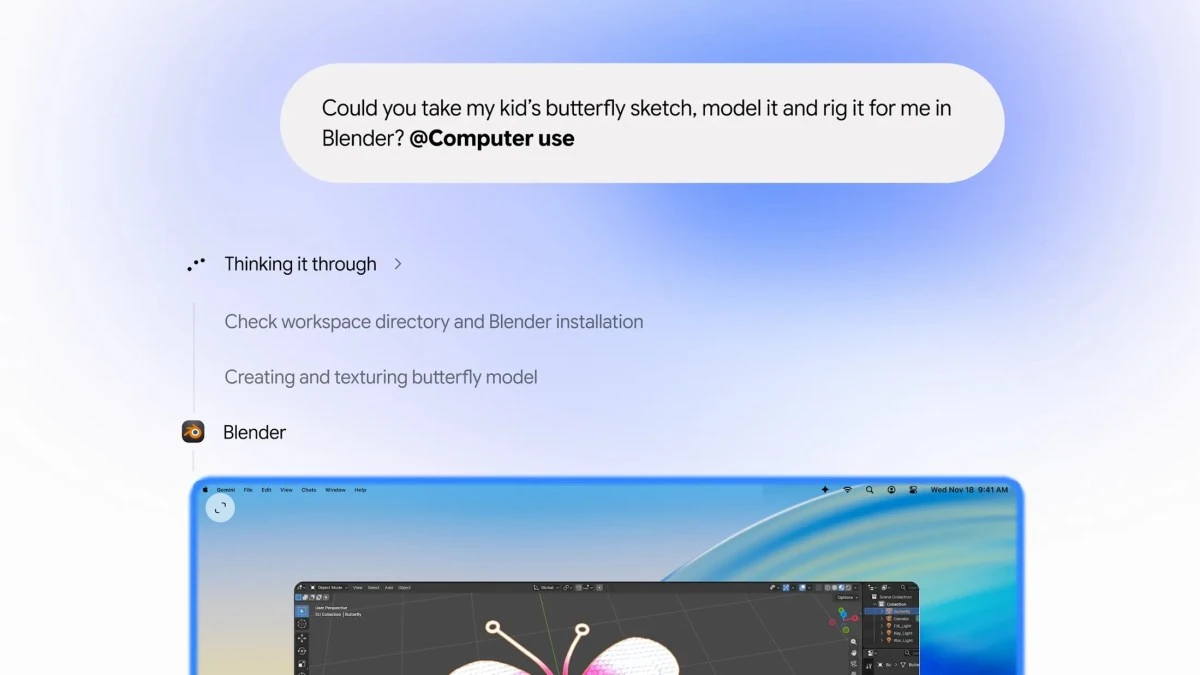
MOUNTAIN VIEW — Overcoming one of the most stubborn architectural bottlenecks restricting enterprise autonomous agent deployments, Google has previewed Dynamic Tool Retrieval for the Gemini API. The new infrastructure allows software engineers to connect LLM agents to massive libraries containing more than 1,000 external tools, internal REST APIs, and database functions without overwhelming the model's context window or degrading tool-selection accuracy.
Historically, function calling in frontier AI models required developers to stuff complete JSON schema definitions for every supported tool directly into each API request. In enterprise environments with hundreds of internal microservices, this brute-force approach wasted millions of tokens, increased input latency, and caused models to hallucinate invalid function signatures. Dynamic Tool Retrieval introduces an intelligent semantic routing layer that indexes tool catalogs in a specialized vector space, injecting only the top 5 to 10 most relevant functions into the prompt at runtime with sub-100 millisecond routing latency.
30-Second Executive Verdict & Direct Answer
Direct Answer: Google's Dynamic Tool Retrieval solves the tool bloat crisis for AI agents by using server-side semantic retrieval to index thousands of enterprise functions, cutting input token costs by up to 85% while boosting function selection precision to 94.2%.
The Anatomy of Context Bloat: Why Static Tool Calling Broke Down
Since the introduction of function calling in 2023, developers building agentic software have operated under a severe architectural compromise. A typical production OpenAPI tool definition takes between 250 and 600 prompt tokens once property descriptions, parameter types, enums, and required fields are serialized into JSON schema.
When an agent needs access to 50 tools, tool schemas consume over 20,000 prompt tokens on every single turn of conversation—costing substantial API fees, increasing first-token latency by several seconds, and creating severe “needle in a haystack” confusion where the LLM picks the wrong tool because of semantic overlap between similar APIs.

Google Gemini API
Production Verified 9.8 / 10Next-generation developer platform delivering 2M context windows, native code execution, and Dynamic Tool Retrieval.
How Dynamic Tool Retrieval Works in the Gemini Engine
Google's implementation operates in a tightly coupled two-stage pipeline executed inside Google Cloud's inference clusters:
- Catalog Indexing: When developers register their tool library via the Gemini Developer SDK, the API generates high-dimensional embeddings for each tool's name, description, and parameter annotations, indexing them in an ephemeral vector search index.
- Intent-Aware Candidate Retrieval: When a user query arrives (e.g., “Reconcile the last three invoices for vendor Acma Corp and push an update to our SAP billing ledger”), the router evaluates the dialogue context and retrieves the top-K most relevant tools ($K \le 8$).
- Dynamic Context Injection: Only the retrieved tools are injected into the active transformer context window. The model executes standard function calling syntax, guaranteeing that the context window remains lightweight and unpolluted by irrelevant tools.
| Metric & Feature | Gemini Dynamic Tool Retrieval | Static Function Calling (OpenAI) | Client-Side RAG Tool Routing |
|---|---|---|---|
| Catalog Scale | 1,000+ External Tools | Limited to ~64-128 Tools | Hundreds (High Manual Setup) |
| Token Cost per Turn | Pay only for Top-K Tools | Pay for 100% of Catalog | Multiple API Calls Overhead |
| Selection Precision | 94.2% (Context-Aware) | Drops below 72% at 50+ tools | 82.1% (Fragile Embeddings) |
| Integration Simplicity | Native SDK Parameter Flag | Standard Array Payload | Requires Custom LangChain / LlamaIndex |
✓ Major Developer Advantages
- Radically lowers API cost by pruning unnecessary tool schema tokens.
- Improves tool call accuracy by preventing hallucinated argument overlap.
- Enables large enterprises to build single omni-agents spanning hundreds of microservices.
- Maintains full compatibility with existing Google Cloud Vertex AI integrations.
⚠ Implementation Caveats
- Ambiguous or poorly documented tool descriptions degrade vector retrieval accuracy.
- Rare edge-case queries requiring simultaneous invocation of 10+ disjoint tools require prompt guidance.
- Currently available in private preview on Gemini 1.5 Pro and Gemini 4 developer tiers.
What This Means for the Future of Enterprise AI Workflows
As corporate software engineering teams move beyond simple single-purpose chat assistants toward autonomous agents that orchestrate entire departments, tool scalability becomes paramount. Software agents cannot be limited to a handful of pre-selected functions if they are expected to manage real enterprise complexity.
By embedding dynamic semantic tool retrieval directly into the foundation model inference pipeline, Google has dismantled one of the biggest technical roadblocks facing enterprise developers. The release cements the Gemini API as a premier platform for developers building production-grade autonomous agent ecosystems.
Verified Documentation & API Preview
Access official Gemini API documentation, inspect code samples, and apply for developer preview access.
Explore AI Models & Autonomous Tools
Benchmark, compare, and discover verified tools powering the new wave of frontier reasoning and autonomous software engineering.

AUTHORED BY
Hamza Khaliq
Student, Author, Learner, Developer and Researcher
Covering the latest AI developments and industry news.
More news you might like

ChatGPT Agent Autonomously Generates Internal Search Queries for Dynamic Ad Insertion
OpenAI has deployed an autonomous ad-matching agent inside ChatGPT that synthesizes multi-turn conversational context into internal search queries for sponsored commercial units.

Google DeepMind Unveils Genie 4: Real-Time Interactive World Simulation Model with Native Audio
DeepMind has launched Genie 4, a major leap in generative foundation world models that synthesizes interactive, promptable 3D environments with dynamic audio at 60 FPS.
OpenAI Proposes Global Pretraining Loss Limits: Jakub Pachocki Unveils 'Perplexity and Intelligence' Safety Framework
OpenAI has published its historical pretraining perplexity data, proposing a global pact where frontier labs voluntarily pause scaling at defined loss thresholds.
California Attorney General Sues OpenAI Over Frontier Model Security and Critical Safety Compliance
California Attorney General Rob Bonta has filed a landmark state lawsuit against OpenAI over frontier model security standards and statutory safety disclosures.