Lucidworks
AI-powered enterprise search and discovery — 391% Forrester ROI, go live in weeks
Gallery
6 items


About Lucidworks
I tested Lucidworks' AI-powered search and discovery engine across massive enterprise catalog queries to evaluate semantic recall and merchandising intelligence. Its deep neural search maps complex shopper intent accurately, surfacing relevant products even on misspelled or vague queries. However, implementing and tuning relevance algorithms across complex multi-source catalogs requires dedicated data engineering talent. Available through custom enterprise contracts, it represents a gold standard for global retailers where search accuracy directly dictates millions in revenue.
Lucidworks is an AI-powered enterprise search and discovery platform founded in 2007 in San Francisco by Grant Ingersoll and Yonik Seeley, pioneers of Apache Solr and Apache Lucene. Under CEO Michael Sinoway (who succeeded Will Hayes in 2022), Lucidworks has raised over $227M from investors including Francisco Partners, Sixth Street Partners, Silver Lake, Founders Equity Partners, and Top Tier Capital Partners. With approximately 238 employees and $75M in revenue (August 2025), Lucidworks serves more than 400 enterprise customers across commerce, manufacturing, financial services, healthcare, government, and technology — including Lenovo, Morgan Stanley, Red Hat, REI, American Express, New Pig, and Splunk.
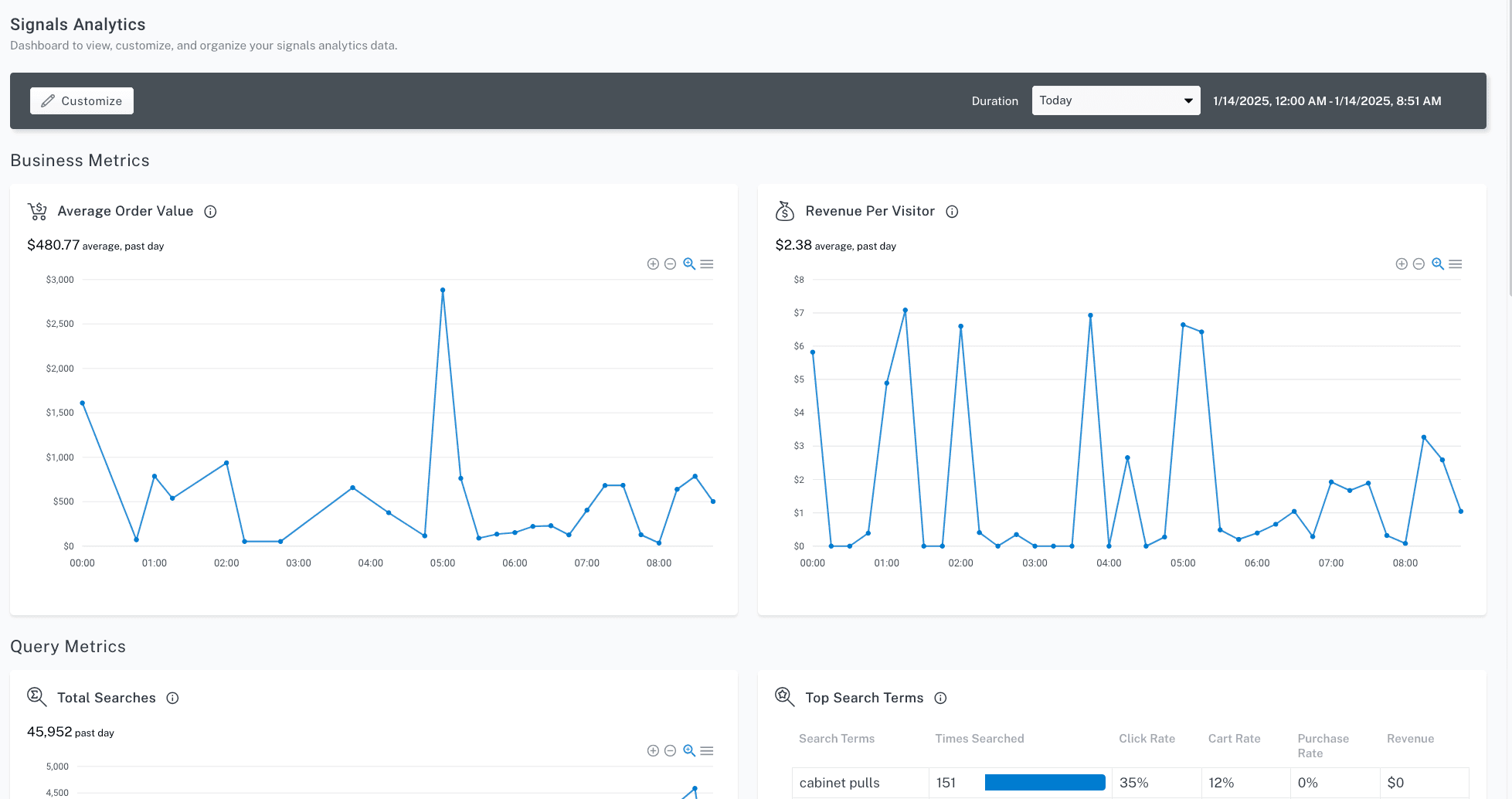
The Lucidworks Platform delivers AI-native enterprise search across three deployment models: SaaS (fully managed), Self-Hosted (full control), and Hybrid-SaaS (combined flexibility). Its core capabilities include Neural Hybrid Search (combining semantic and keyword search), AI Modules (Browse, Personalization, Recommendations, Searchahead), AI Boosters (chunking, classification, summarization, keyword extraction, data enrichment), and four no-code Studios: Commerce Studio for merchandising, Analytics Studio for search performance insights, Agent Studio for building Q&A and guided selling agents, and UI Studio for front-end customization. Four AI Agents — Q&A Agent, Conversational Q&A Agent, Guided Selling Agent, and Merchandiser Insights Agent — enable teams to deploy agentic search experiences without writing code.
Lucidworks was among the first enterprise search companies to deploy LLMs in production (2018) and deep learning recommenders (2019). An independent Forrester Total Economic Impact study found customers achieve 391% ROI with payback in under six months. Lenovo increased annual revenue contribution by 95% and improved search relevance by 55%. Lucidworks was recognized as a Leader in the Everest Group Enterprise Search Products PEAK Matrix Assessment 2026 and is a Google Cloud Partner.
Key Features
- Neural Hybrid Search — combines semantic vector search with keyword search for superior relevance that understands user intent beyond exact keyword matches
- Lucidworks Studios — four no-code business user interfaces: Commerce Studio (merchandising), Analytics Studio (search insights), Agent Studio (AI agents), and UI Studio (front-end)
- AI Agents — pre-built Q&A Agent, Conversational Q&A Agent, Guided Selling Agent, and Merchandiser Insights Agent deployable without engineering support
- AI Boosters — modular AI capabilities including chunking, classification, summarization, keyword extraction, and data enrichment for RAG and agentic workflows
- Signals Beacon — behavioral signal collection and analysis layer that learns from real user interactions to continuously improve search relevance and personalization
- Lucidworks Packages — pre-built fast-start templates for B2C and B2B commerce with 25% less development time, 30% less launch risk, and 15% higher conversion
- Flexible deployment — SaaS (managed), Self-Hosted (full control), or Hybrid-SaaS (combined), with out-of-the-box connectors for major enterprise data sources
- MCP Server — Lucidworks MCP Server enables AI agents to search, browse, and retrieve enterprise data within agentic workflows
Pros
- 391% ROI measured by Forrester — with payback in less than six months across commerce, manufacturing, financial services, and government deployments
- Pioneer in enterprise AI search — deployed LLMs in production in 2018 and deep learning recommenders in 2019, ahead of the market
- Lenovo 95% revenue uplift and 55% search relevance improvement — among the strongest documented ROI outcomes in enterprise search
- Three deployment models (SaaS, Self-Hosted, Hybrid) — the only major enterprise search platform offering this level of deployment flexibility
- No-code Studios enable business teams to take control — 15 hours/week saved by analysts, 13% boost in conversions from Commerce and Analytics Studio
- Everest Group PEAK Matrix Leader 2026 and Google Cloud Partner — externally validated enterprise AI search leadership
Cons
- Custom pricing only — no self-serve free trial or published rate card; all plans require sales engagement
- Complexity scales with scope — enterprise deployments with custom connectors and self-hosted models require significant implementation effort
- $47M ARR on $227M raised suggests a relatively long path to profitability compared to Algolia's $100M ARR
- Primarily suited for mid-market and enterprise; smaller teams or developers may find Algolia or Elasticsearch more accessible
- Community and developer ecosystem smaller than Elasticsearch or Algolia — fewer third-party integrations and tutorials available
- Self-hosted deployment requires in-house infrastructure expertise and ongoing maintenance overhead
Pricing
Lucidworks uses custom enterprise pricing with no published rate card. Three deployment models are available: SaaS (fully managed, continuously updated), Self-Hosted (on-premises or private cloud, full control), and Hybrid-SaaS (self-hosted platform with access to additional SaaS features).
Lucidworks Packages are pre-scoped fast-start bundles for B2C or B2B that include pre-built templates, access to Studios, and expert services. These are designed to reduce launch risk and time to value compared to a fully custom implementation.
All commercial arrangements require a sales engagement and demo via lucidworks.com/demo. Lucidworks also offers a free ROI calculator at lucidworks.com and a Forrester Total Economic Impact study showing customers achieve 391% ROI over three years. Professional services, training via LucidAcademy, and client success offerings are available as add-ons at all tiers.
Claim Verified Creator Badge
Are you the founder of Lucidworks? Display this listing's verified badge on your website to show your customers that your product has been vetted and listed on AI Central Resources.
<a href="https://www.aicentralresources.com/tool/lucidworks" target="_blank" rel="noopener">
  <img src="https://www.aicentralresources.com/badges/featured-badge-dark.svg" alt="Featured on AICentralResources" width="200" height="54" style="border: none;" />
</a>
* Place this HTML snippet in your website's footer, landing page, or press section. This creates a search-friendly backlink directly to your verification page.
Frequently Asked Questions
Lucidworks is an AI-powered enterprise search and discovery platform founded in 2007 in San Francisco. It helps enterprises transform data into intelligent search experiences for ecommerce, customer service, knowledge management, and workplace search. Its platform includes Neural Hybrid Search, no-code Studios (Commerce, Analytics, Agent, UI), AI Agents, AI Boosters, and Signals for behavioral learning — deployed as SaaS, self-hosted, or hybrid.
Lucidworks was founded in 2007 by Grant Ingersoll and Yonik Seeley. The company has raised $227M+ from Francisco Partners, Sixth Street Partners, Silver Lake, Founders Equity Partners, and Top Tier Capital Partners. Michael Sinoway is the current CEO, succeeding Will Hayes in 2022. The company generates approximately $75M in revenue with 238 employees and 400+ enterprise customers.
Lucidworks Neural Hybrid Search combines semantic vector-based search (which understands meaning and intent) with traditional keyword search (which matches exact terms). The hybrid approach delivers better relevance than either method alone — reducing zero-result queries, surfacing long-tail products, and understanding natural language queries that keyword-only search would miss.
Forrester's independent Total Economic Impact study found Lucidworks customers achieve 391% ROI over three years, with payback beginning in less than six months. Specific customer results include Lenovo increasing annual revenue contribution by 95% and search relevance by 55%, and New Pig dramatically reducing no-results queries with Neural Hybrid Search.
Lucidworks is trusted by Lenovo, Morgan Stanley, American Express, Red Hat, REI, Splunk, New Pig, Crate & Barrel, Northwell Health, and Cisco, among 400+ global enterprise customers across commerce, manufacturing, financial services, healthcare, government, and technology verticals.
Similar AI Tools to Lucidworks
View all alternatives of Lucidworks

Dynamic Yield
Mastercard's enterprise AI personalization and experimentation platform, Experience OS

Google Gemini API
Build with Google's multimodal Gemini models via API and AI Studio
Nosto
AI-powered ecommerce personalization, search, and merchandising for growing brands

Algolia
The AI search and retrieval platform — agentic, generative, and instant search for 18,000+ organizations

Vue.ai
Enterprise AI orchestration — composable hubs, 30:60:90 go-live, committed outcomes
Compared with Lucidworks
Direct head-to-head feature matrices, pricing breakdowns, and real-world performance benchmarks