

Intercom Fin
The highest performing AI Customer Agent for service, sales, and ecommerce
Gallery
6 items


About Intercom Fin
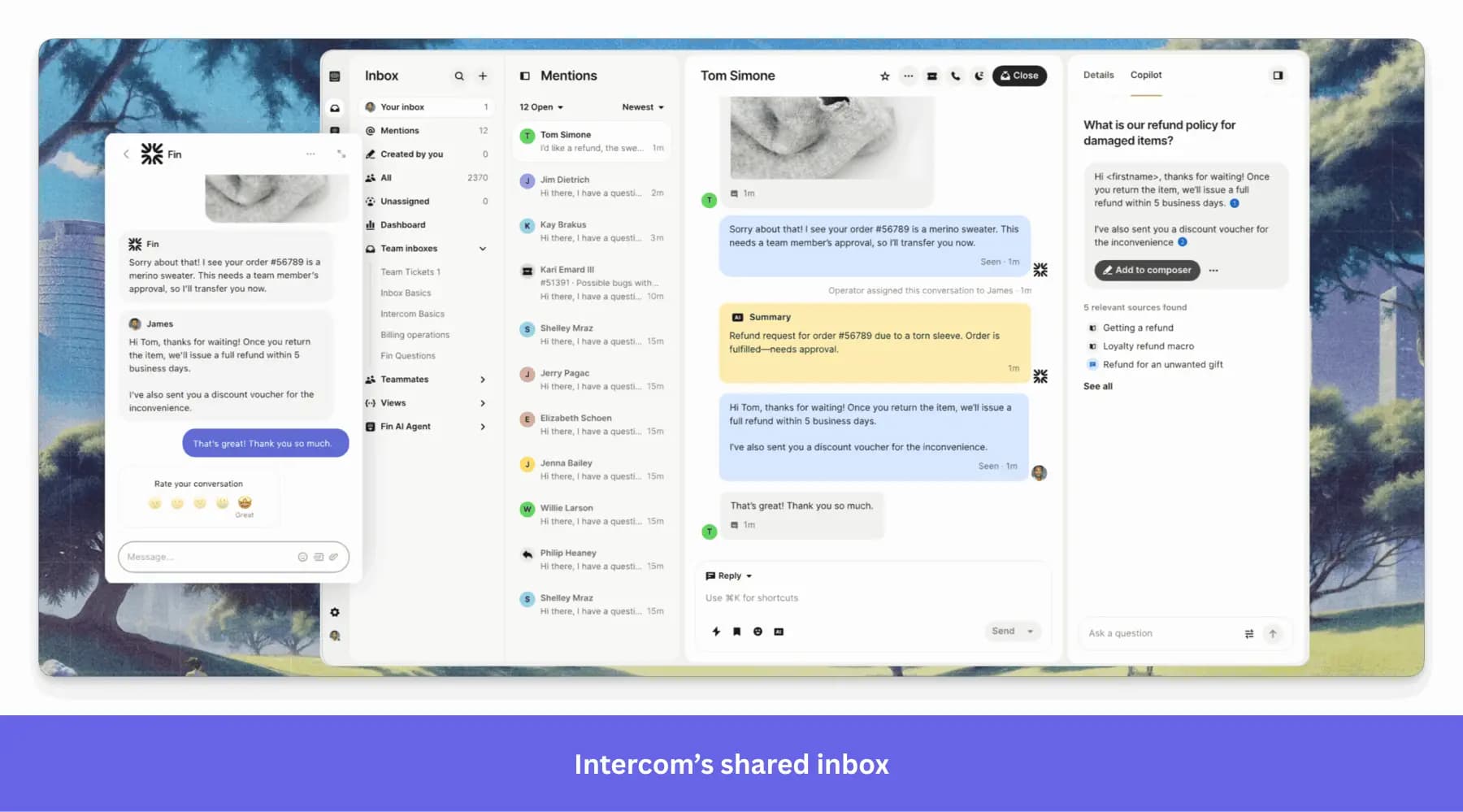
Intercom Fin is an AI customer agent that resolves support, sales, and ecommerce conversations across every channel a business uses, including live chat, email, voice, Slack, and social messaging. Rather than being a simple FAQ bot, Fin is trained on a company's own help center content, policies, and procedures, and can take real actions on connected systems such as processing refunds, updating orders, or pulling live data from tools like Shopify, Salesforce, and Stripe. It runs on Intercom's proprietary Apex 1.0 and Apex Flash models, which the company built specifically for customer experience use cases rather than relying on general-purpose foundation models.
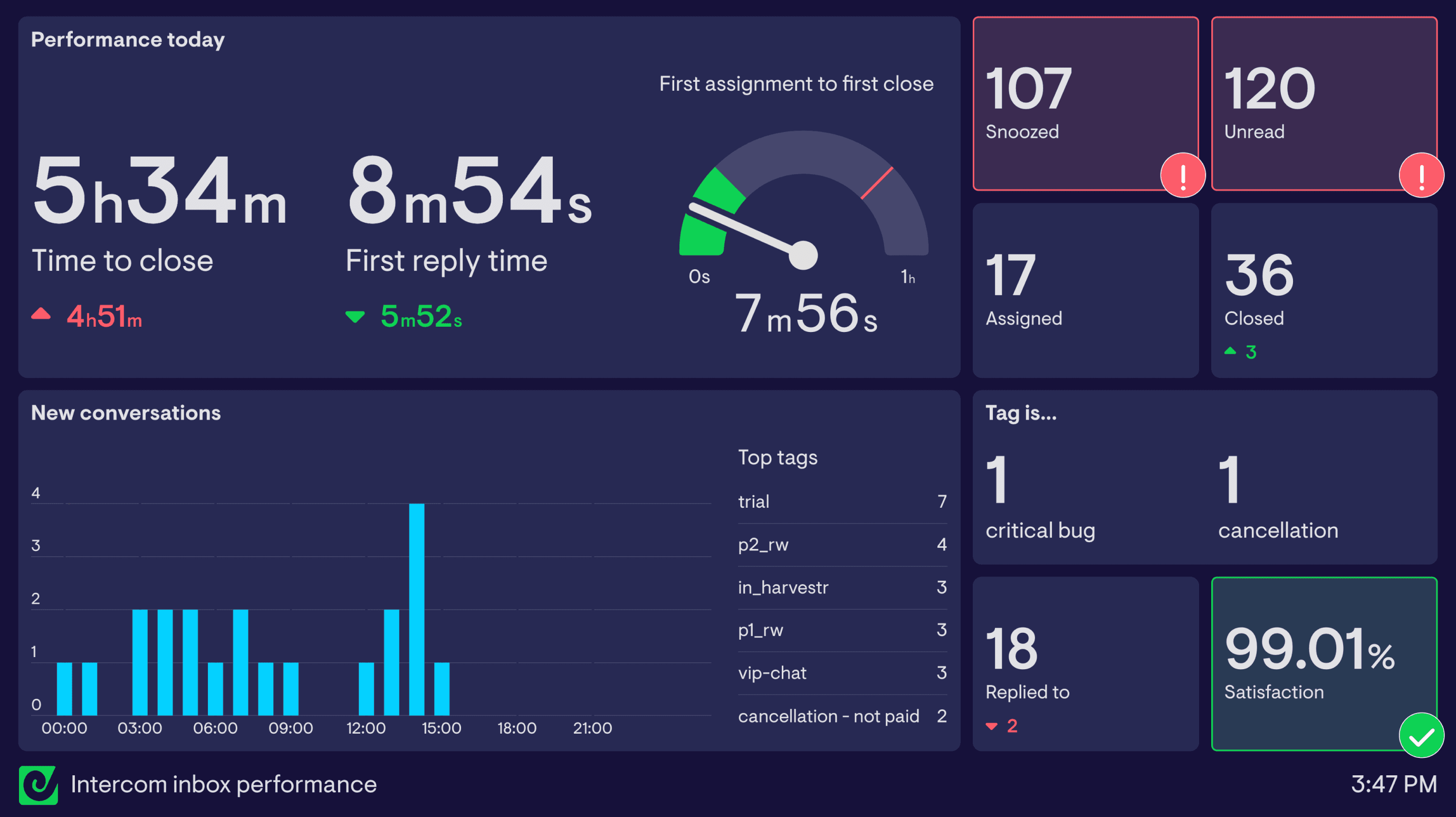
Fin is configurable entirely without engineering support: teams can set tone, behavior, and knowledge sources themselves, test changes with a built-in simulation and regression suite, and monitor performance through analytics that surface resolution rates, emerging topics, and one-click improvement recommendations. It is natively built into the Intercom helpdesk but can also be deployed standalone on top of an existing helpdesk such as Salesforce, HubSpot, or Freshdesk, typically going live in under an hour. Enterprise-grade trust and security features include SOC 2, ISO 27001, ISO 42001, HIPAA-eligible configurations, SSO, and regional data residency options.
Fin uses an outcome-based pricing model, charging $0.99 per resolution, procedure handoff, or disqualification, with lead qualifications billed at $9.99, so the intent is that customers primarily pay when the AI actually resolves a conversation. It is used by over 12,000 companies including Anthropic, Synthesia, and Rocket Money, and is built for support, sales, and product teams ranging from small startups to large regulated enterprises. Fin (formerly the corporate entity behind Intercom) is currently in the process of being acquired by Salesforce, announced in 2026, though its product and pricing remain unchanged for now.
Key Features
- No-code configuration of tone, behavior, and knowledge without engineering resources
- Trained on custom Apex 1.0 and Apex Flash models built specifically for customer experience
- Handles Service, Sales, and Ecommerce roles within a single Customer Agent
- Takes real actions on external systems via API, Data Connectors, and MCP integrations
- Native support across chat, email, voice, Slack, and social channels
- Works with Intercom's own helpdesk as well as Salesforce, HubSpot, and Freshdesk
- Procedures engine for resolving complex, multi-step workflows
- Full testing suite with simulations and regression testing before changes go live
- Analytics and Insights dashboards showing resolution rates, topics, and improvement recommendations
Pros
- Pay-per-outcome pricing means costs are tied to resolutions rather than a flat subscription
- Works across chat, email, voice, Slack, and social from a single configured agent
- Deep integrations let it take real actions in Shopify, Salesforce, Stripe, and other business systems
- Fully self-service configuration for tone, knowledge, and behavior without needing engineering help
- Enterprise-grade security certifications including SOC 2, ISO 27001, and HIPAA-eligible options
Cons
- Outcome-based pricing at $0.99 per resolution can become expensive and hard to forecast at high ticket volume
- Full platform value requires adopting the Intercom helpdesk and seat plans, not just the AI agent
- Advanced capabilities like SSO, HIPAA support, and SLAs are locked to the Expert tier
- Real-world resolution rates in independent case studies run lower (roughly 42-50%) than the headline marketing figures
- Ongoing Salesforce acquisition creates some uncertainty around long-term product roadmap and pricing
Pricing
Fin AI Agent is billed at $0.99 per outcome (a resolution, procedure handoff, or disqualification) across every Intercom plan, with lead qualifications billed at $9.99 and a minimum commitment of 50 outcomes per month. On top of Fin usage, Intercom offers three seat-based plans: Essential (entry-level plan for individuals and small businesses with Fin, Messenger, shared inbox, and a public help center), Advanced (adds multiple team inboxes, workflow automation, round robin assignment, and 20 free Lite seats), and Expert (adds SSO, HIPAA support, SLAs, and multibrand support with 50 free Lite seats), all with custom per-seat pricing shown after configuration. Fin can also be used standalone on an existing helpdesk (Salesforce, HubSpot, Freshdesk, and others) at the same $0.99 per outcome with no seats required. Add-ons include Pro ($99/month for 1,000 conversations of AI analysis), Copilot ($29 per agent/month), and Proactive Support Plus ($99/month for 500 outbound messages). Early-stage startups can access up to 93% discounts through Intercom's Early Stage Program.
Claim Verified Creator Badge
Are you the founder of Intercom Fin? Display this listing's verified badge on your website to show your customers that your product has been vetted and listed on AI Central Resources.
<a href="https://www.aicentralresources.com/tool/intercom-fin" target="_blank" rel="noopener">
  <img src="https://www.aicentralresources.com/badges/featured-badge-dark.svg" alt="Featured on AICentralResources" width="200" height="54" style="border: none;" />
</a>
* Place this HTML snippet in your website's footer, landing page, or press section. This creates a search-friendly backlink directly to your verification page.
Connect with Intercom Fin
Frequently Asked Questions
Fin AI Agent is priced at $0.99 per outcome (a resolution, procedure handoff, or disqualification), with lead qualifications billed at $9.99. There is a minimum monthly commitment of 50 outcomes, and Intercom plans (Essential, Advanced, Expert) add per-seat fees on top for teams that use the full helpdesk.
Yes, Fin can run as a standalone AI agent on top of an existing helpdesk, including Salesforce, HubSpot, Freshdesk, and others, at the same per-outcome pricing with no seats required.
Fin runs on Intercom's proprietary Apex 1.0 and Apex Flash models, which are custom trained specifically on customer experience interactions rather than being general-purpose foundation models.
Fin can handle service, sales, and ecommerce conversations, connect to third-party systems via API, Data Connectors, or MCP to take real actions like processing refunds or updating accounts, and works across chat, email, voice, Slack, and social channels.
Yes, Fin holds SOC 2, ISO 27001, ISO 42001, ISO 27701, AIUC-1 certifications and supports HIPAA-eligible configurations, SSO via Okta, Azure AD, or OneLogin, SCIM, and regional data residency in the US, EU, or Australia.
Similar AI Tools to Intercom Fin
View all alternatives of Intercom Fin
Ada
Enterprise AI agents that autonomously resolve 80%+ of customer service inquiries

Zendesk AI
Self-improving AI agents, Copilot, and quality assurance built into Zendesk's customer service platform

Freshdesk (Freddy AI)
AI-powered customer service platform with Freddy AI agents, Copilot, and Insights for faster resolutions

Tidio
AI customer service platform combining live chat, help desk, and the Lyro AI agent


Chatbase
Build AI agents that resolve customer support, sales, and product questions everywhere
Compared with Intercom Fin
Direct head-to-head feature matrices, pricing, and category breakdowns