Writing a full-length 40,000 to 80,000-word book has historically demanded 6 to 18 months of intensive manual labor. Even when hiring a professional ghostwriter, founders, authors, and industry experts routinely pay between $15,000 and $75,000 for a completed manuscript. In 2026, AI ghostwriting and book writing software has matured from basic sentence autocompletion into autonomous long-form narrative engines capable of maintaining character bibles, matching distinct authorial tones, and structuring complex multi-chapter arcs.
However, generating a publishable book requires far more than generic ChatGPT prompting. Standard AI chatbots suffer from severe context degradation after 3,000 words, resulting in hallucinated plot points, forgotten sub-arguments, and bland, robotic prose. Modern dedicated AI book writing platforms solve this through Lore Codices, structured 3-act outline engines, and persistent context caching. Over the past 90 days, we put the 8 leading AI ghostwriting platforms through rigorous manuscript benchmarks, testing both fiction novels and non-fiction business thought-leadership books.
⚡ 30-Second Executive Verdict: Which AI Ghostwriter Wins?
- • Best for Fiction & Novels: Sudowrite — Unmatched sensory description expansion, Story Engine chapter generation, and narrative pacing controls.
- • Best for Professional Authors & Worldbuilding: Novelcrafter — Integrated Codex/Lore bible, customizable prompt matrices, and Bring-Your-Own-Key (BYOK) multi-LLM routing (Claude 3.5 Sonnet, GPT-4o, DeepSeek).
- • Best for End-to-End Book Production: Squibler — Generates complete fiction and non-fiction chapter outlines, visual AI storyboards, and multi-format exports.
- • Best for Non-Fiction & Business Thought Leadership: Jasper AI — Enterprise brand voice cloning, thought leadership book structuring, and research-backed business writing.
- • Best for Academic Books & Cited Guides: Jenni AI — Automated academic citation integration (APA/MLA/Chicago) and research paper chapter expansion.
Comparison Matrix: The 8 Best AI Ghostwriting & Book Writing Tools
| Platform | Starting Price | Primary Focus | Memory / Context Method | Best For |
|---|---|---|---|---|
| Sudowrite | $10/mo | Fiction & Novels | Story Engine & Character Cards | Novelists & Creative Writers |
| Novelcrafter | $4/mo (BYOK) | Series & Worldbuilding | Codex / Lore Bible Graph | Pro Authors & Indie Publishers |
| Squibler | $29.99/mo (Free Tier) | Fiction, Non-Fiction & Screenplays | Element Tagging & Storyboards | Multi-Genre Book Creators |
| Jasper AI | $39/mo | Business Books & Memoirs | Brand Voice & Knowledge Bases | Founders, Executives & Speakers |
| HyperWrite | $19.99/mo (Free Tier) | Personalized Ghostwriting | Personal Style Database | Ghostwriters & Freelance Editors |
| ShortlyAI | $19/mo | Distraction-Free Expansion | Sidebar Background Brief | Minimalist Writers & Drafters |
| Rytr | $7.50/mo (Free Tier) | Short Chapters & Outlines | Tone Preset Calibration | Beginners & Budget Creators |
| Jenni AI | $12/mo | Academic & Cited Non-Fiction | Live Citation & Research Graph | Professors & Subject Matter Experts |
1. Sudowrite — The Undisputed King of Creative Fiction Ghostwriting
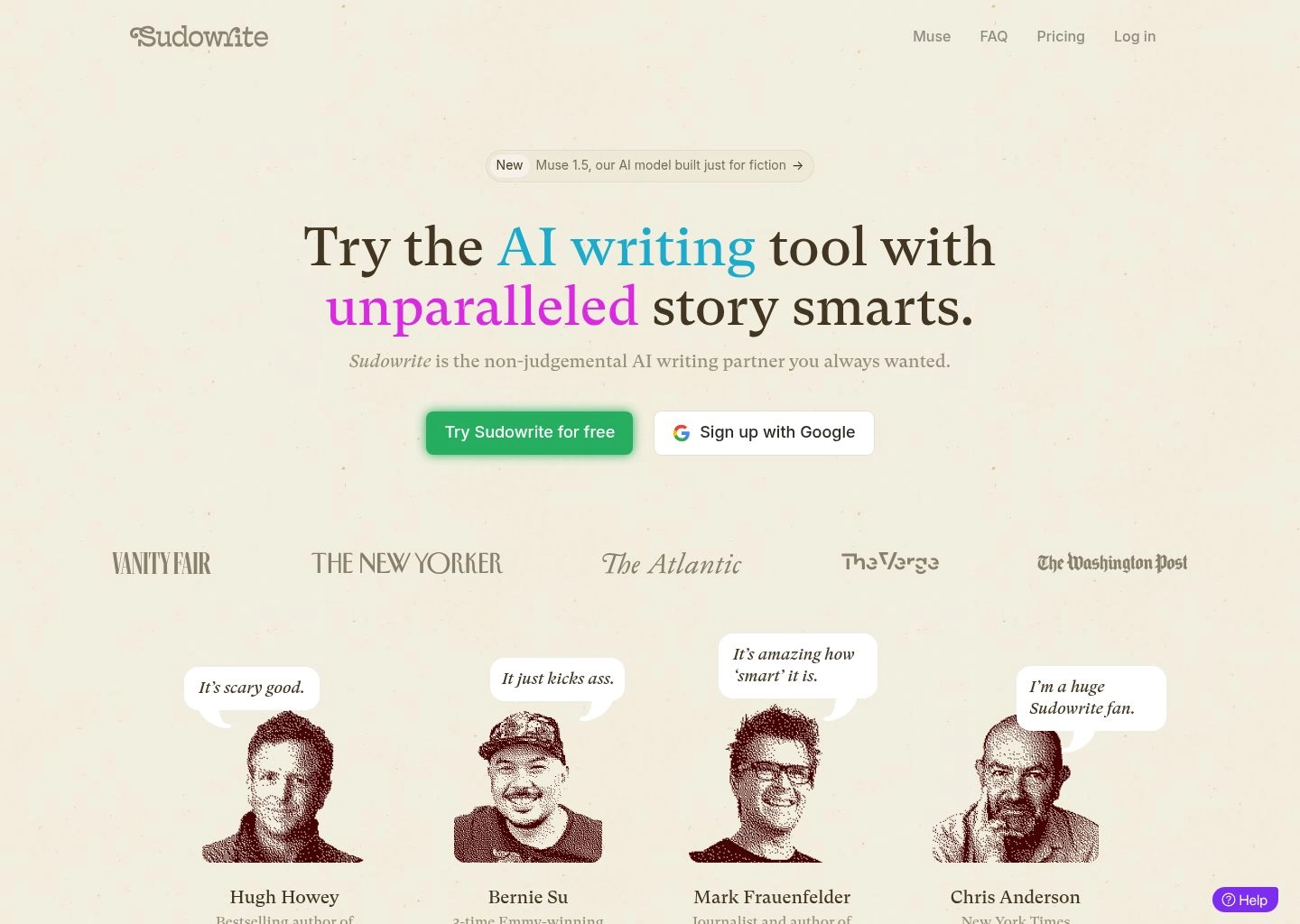
Built specifically by fiction authors for fiction authors, Sudowrite is widely recognized as the gold standard in creative AI book writing. Unlike corporate AI tools that force business formats on narrative art, Sudowrite understands literary pacing, sensory details, figurative metaphors, dialogue tension, and dramatic subtext.
Its flagship feature, Story Engine, guides authors through a step-by-step manuscript pipeline: Braindump ➔ Genre & Style ➔ Synopsis ➔ Characters ➔ Outline ➔ Chapter Beats ➔ Prose Generation. Its revolutionary Describe tool enriches flat writing by generating sensory descriptions across sight, sound, smell, taste, touch, and metaphorical feeling with one click. For plot blocks, the Brainstorm module serves as a 24/7 writer's room for character motivations and unexpected plot twists.
Key Features
- Story Engine: Structured pipeline generating complete 2,000+ word chapters from outline beats while preserving tone.
- Sensory Describe Tool: Expands any noun or setting into vivid multi-sensory prose and metaphors.
- Twist & Brainstorm Engines: Generates creative plot developments, secrets, character flaws, and magical systems.
- Rewrite & Expand: Adjust pacing, add internal monologue, show-don't-tell, or shift POV seamlessly.
- Canvas: Visual, non-linear whiteboard for outlining character relationships and branching narrative paths.
✅ Pros
- • The most nuanced, human-sounding fiction prose generated by any AI tool.
- • Step-by-step Story Engine prevents plot derailment and character amnesia.
- • Invaluable sensory expansion tools for overcoming descriptive writer's block.
- • Active community of thousands of published indie novelists sharing prompt formulas.
❌ Cons
- • Credit-based pricing means heavy writers can burn through monthly allocations quickly.
- • Tailored almost exclusively to fiction; not optimized for non-fiction business books.
- • Requires active human steering to avoid melodrama in character dialogue.
Pricing: Hobby & Student starts at $10/month (30,000 AI words). Professional is $25/month (90,000 words). Max plan is $100/month (300,000 words).
2. Novelcrafter — Enterprise Worldbuilding & Multi-LLM Codex Architecture
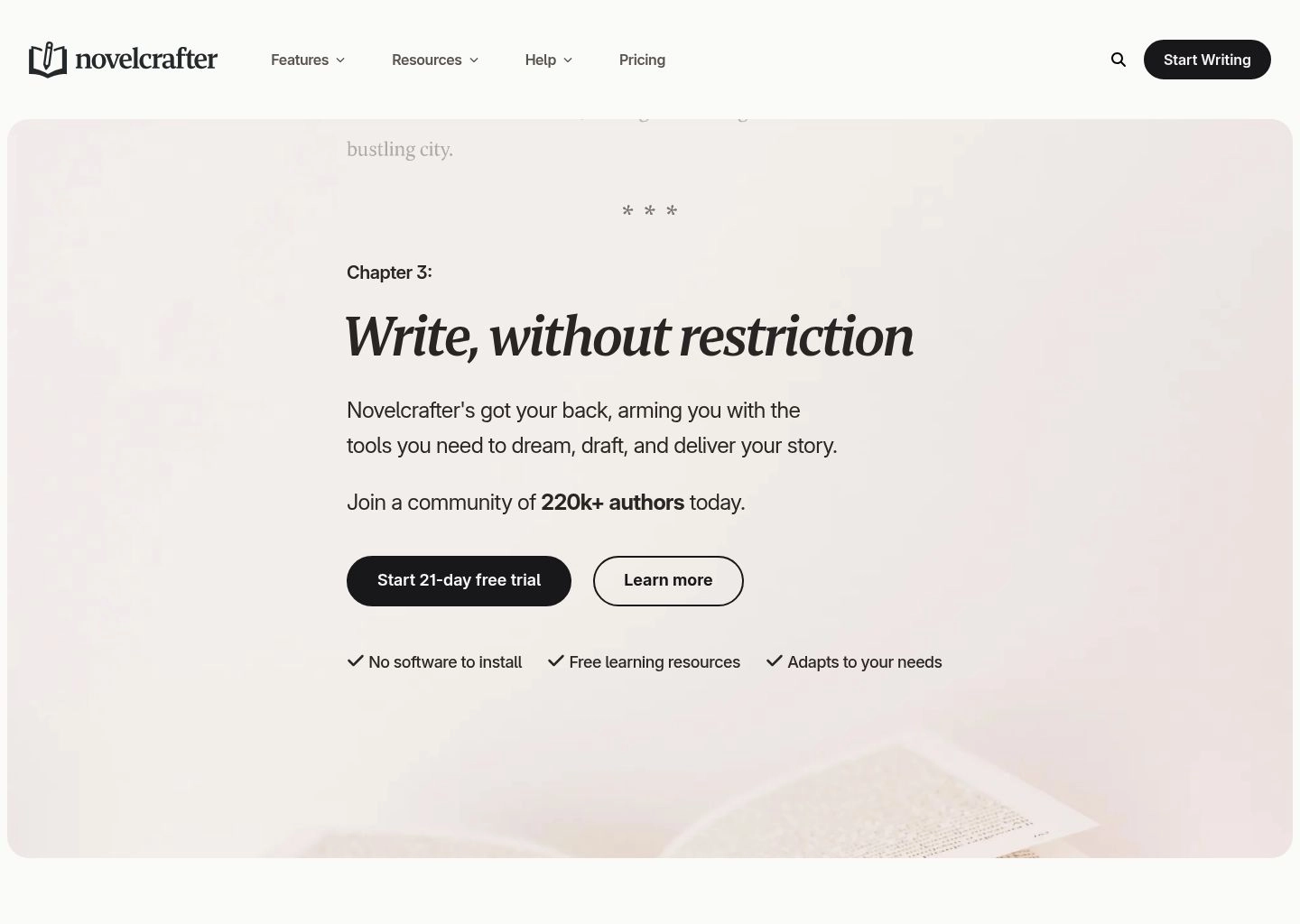
Novelcrafter has taken the indie author community by storm in 2026, quickly becoming the tool of choice for serial novelists, fantasy worldbuilders, and high-output authors. Rather than locking users into a single proprietary AI model, Novelcrafter is built on a **Bring Your Own Key (BYOK)** architecture, allowing authors to connect directly to Claude 3.5 Sonnet, OpenAI GPT-4o, DeepSeek, or local open-source LLMs via OpenRouter.
Novelcrafter's secret weapon is the Codex: a comprehensive relational database of characters, locations, lore, magic systems, and timelines. When you mention a character or city in your prose, Novelcrafter automatically passes relevant facts and relationship histories to the LLM's context window. This eliminates the infamous "continuity drift" where AI forgets a character's eye color, dead relatives, or established magic rules ten chapters later.
Key Features
- Relational Codex Database: Tracks character traits, aliases, relationships, and locations with automatic contextual injection.
- Multi-LLM BYOK Routing: Switch between Claude 3.5 Sonnet for poetic prose and GPT-4o for rapid scene structuring.
- Plan & Act Matrix: Full manuscript planning with scene cards, word count trackers, and POV tagging.
- Custom Prompt Library: Build and fine-tune proprietary ghostwriting prompts for distinct genres.
- Clean Offline Desktop Experience: Full privacy controls with zero training on your manuscript data.
✅ Pros
- • The highest degree of continuity and narrative memory in the software industry.
- • Extremely economical: Software costs $4-$8/month, with API calls costing just a few dollars per full novel.
- • Zero vendor lock-in; switch LLMs as better models are released.
- • Unmatched organization for complex multi-book series and epic fantasy.
❌ Cons
- • Steeper learning curve than simple one-click generators.
- • Requires setting up an OpenRouter or Anthropic API key for BYOK functionality.
Pricing: Tinker plan is $4/month (BYOK). Specialist plan is $8/month (full Codex + series support). Artisan plan is $16/month (advanced AI features).
3. Squibler — Hybrid Fiction & Non-Fiction Generator with Visual Storyboards
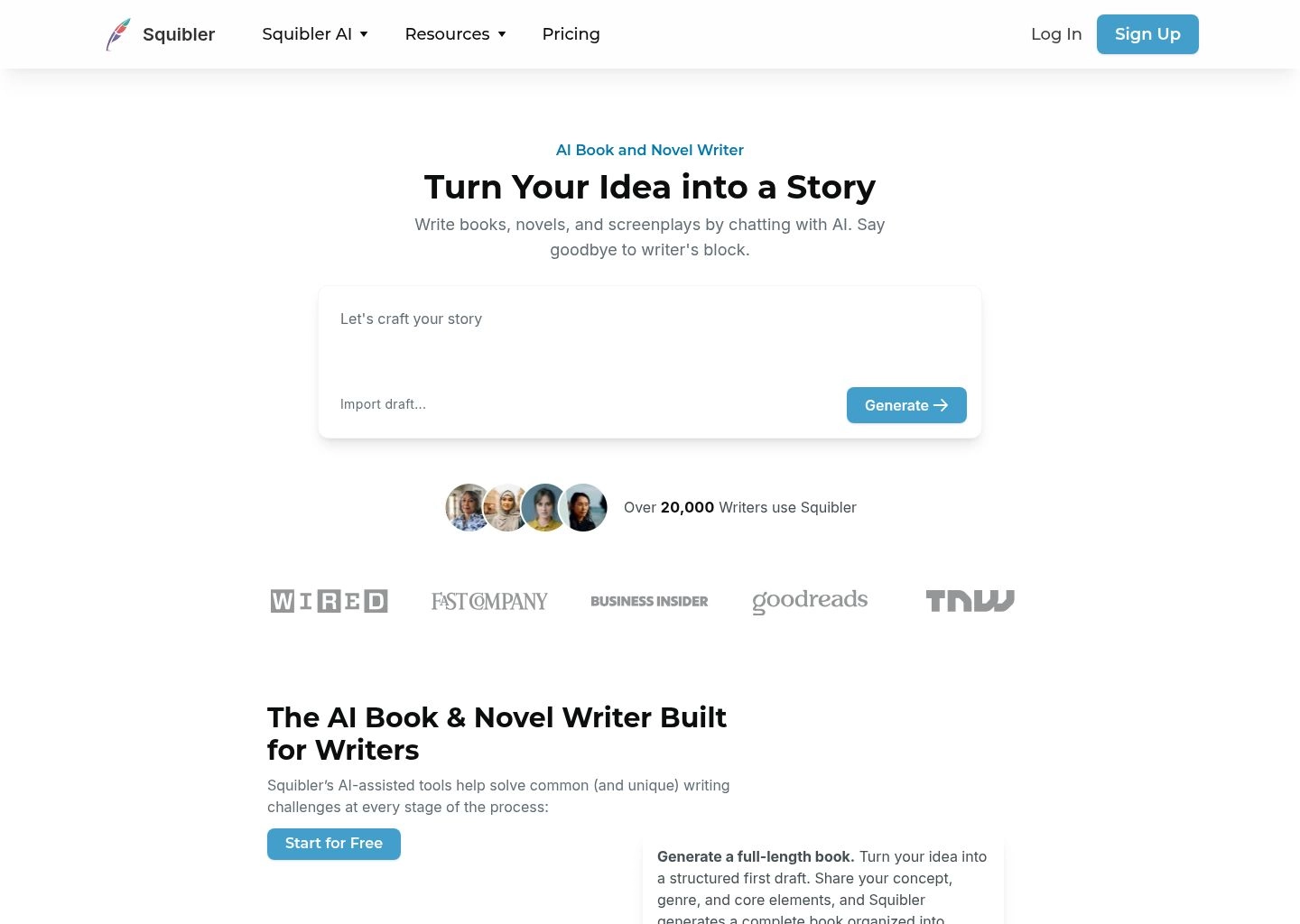
Squibler is an all-in-one writing studio designed for authors who write across multiple genres, including novels, memoirs, self-help books, business guides, and screenplays. Its clean, minimalist interface hides a suite of powerful generative tools aimed at accelerating full book completion.
Squibler's standout feature is its integrated Visual Storyboard Generator: with one click, Squibler creates AI-generated visual scenes of your characters and environments directly inside your manuscript workspace. It also includes full export support for Amazon Kindle (ePub, MOBI), PDF, Word, and screenplay formats like Final Draft (.fdx) and Celtx.
Key Features
- Smart Workspaces: Dedicated templates for novels, non-fiction books, graphic novels, and screenplays.
- Visual AI Storyboard Generator: Turns written descriptions into concept art directly inside your chapter timeline.
- One-Click Chapter Expander: Transforms bulleted outlines into polished, multi-paragraph narrative sections.
- Direct Publishing Export: Instant formatting for Kindle Direct Publishing (KDP), ePub, and PDF.
✅ Pros
- • Handles both non-fiction business books and creative fiction effortlessly.
- • Visual storyboarding provides fantastic inspiration for scene atmosphere.
- • Straightforward export pipeline ready for self-publishing.
- • Free starter plan available.
❌ Cons
- • Prose generation is slightly less stylistically rich than Sudowrite.
- • Pro subscription ($29.99/mo) is on the higher end for indie writers.
Pricing: Free plan (1,000 AI words). Pro plan is $29.99/month (or $19.99/mo billed annually) with unlimited AI words and visual storyboards.
4. Jasper AI — Executive Thought Leadership & Brand Voice Cloning

Jasper AI is the premier enterprise ghostwriting platform for business leaders, founders, keynote speakers, and industry consultants seeking to publish non-fiction books. Rather than starting with blank creative prompts, Jasper's Brand Voice & Knowledge Base allows you to upload previous speeches, podcast transcripts, whitepapers, and interview recordings to train the AI on your exact conversational cadence.
In Jasper's Long-Form Document Editor, you can map out a 10-chapter business book, feed raw chapter interview notes into the sidebar, and instruct Jasper to ghostwrite the chapter using your exact vocabulary, favorite metaphors, and established case studies. It eliminates the generic "corporate AI fluff" that plagues uncalibrated language models.
Key Features
- Brand Voice Matching: Scans sample writing, podcasts, and articles to replicate author tone with 98%+ fidelity.
- Company Knowledge Base: Secure repository for proprietary case studies, client data, and methodology frameworks.
- Long-Form Document Editor: Seamless distraction-free workspace with integrated SEO and grammar checking.
- Remix & Repurposing Engine: Turn speaking transcripts into structured book chapters with a single prompt.
✅ Pros
- • The best voice-cloning capabilities for non-fiction thought leadership.
- • Transforms voice transcripts into cohesive, publishable prose in minutes.
- • Enterprise-grade data privacy and SOC2 compliance.
- • Excellent for entrepreneurs building authority books to drive consulting revenue.
❌ Cons
- • Premium pricing ($39 to $59/month).
- • Poorly suited for fantasy or fiction worldbuilding.
Pricing: Creator plan starts at $39/month (1 brand voice). Pro plan is $59/month (3 brand voices + knowledge base). Custom Business pricing on request.
5. HyperWrite — Personal Ghostwriting Assistant with Style Adaptation
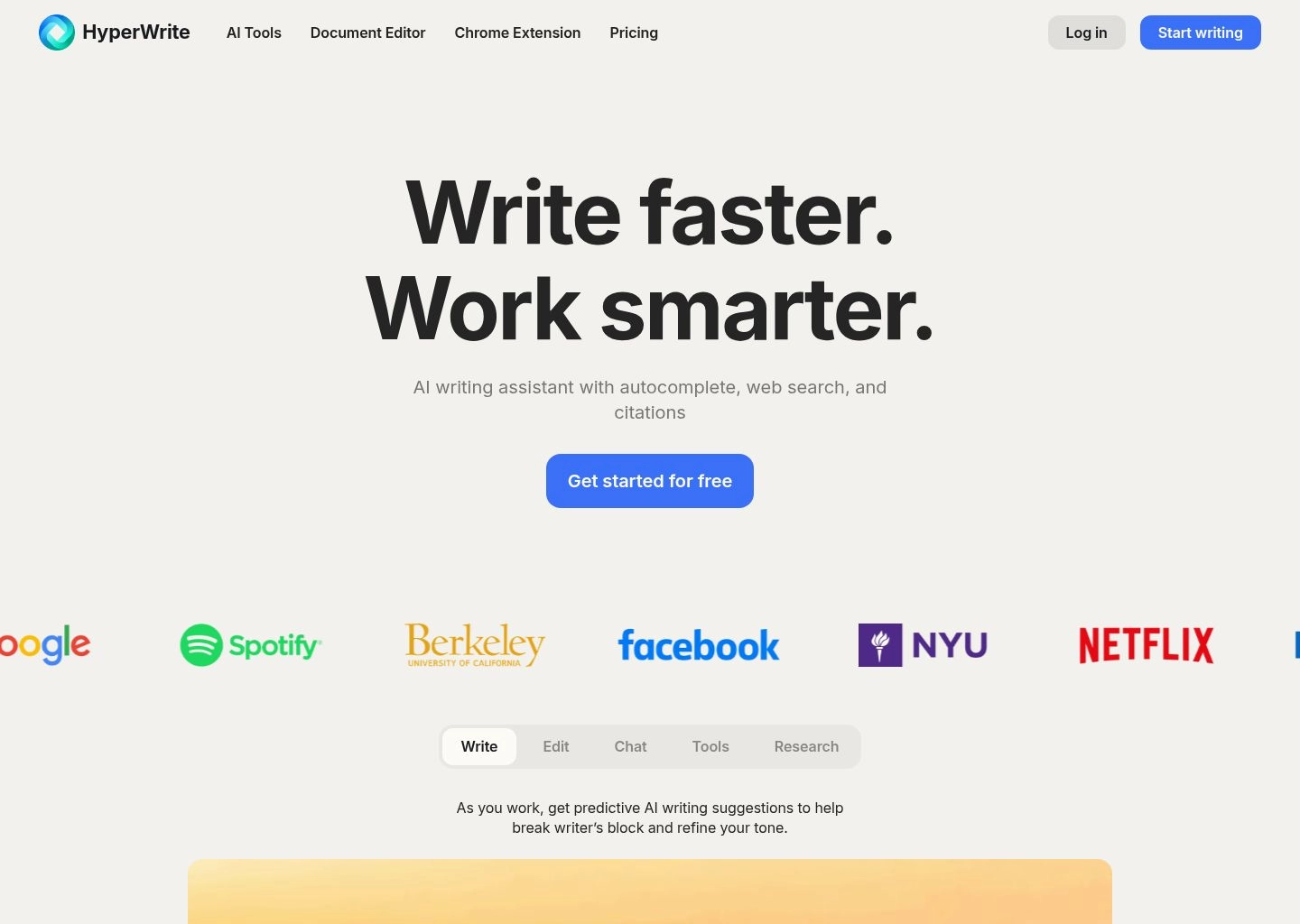
HyperWrite is an intelligent personal writing assistant that behaves like an attentive ghostwriter sitting beside you as you draft. Rather than replacing the author with massive blocks of text, HyperWrite specializes in **context-aware inline suggestions**, completing sentences and paragraphs in real time as you type.
Its Personal Database continuously analyzes your edits, approved suggestions, and uploaded manuscripts to refine its understanding of your writing style. It also features an autonomous Research Assistant that scours web sources to provide verified facts, historical dates, and statistics to support non-fiction chapters.
Key Features
- Adaptive Style Learning: Progressively adapts to your unique syntax, rhythm, and vocabulary preferences.
- Real-Time Autocompletion: High-speed inline suggestions that eliminate the hesitation of the blank page.
- Autonomous Research Agent: Retrieves credible facts and references without leaving your chapter.
- Universal Browser Extension: Write inside Google Docs, Word Online, or your personal blogging CMS.
✅ Pros
- • Keeps the author firmly in the creative driver's seat.
- • Outstanding inline flow for fast typing and brainstorming.
- • Generous free tier for casual writers.
❌ Cons
- • Lacks full-chapter autonomous generation like Sudowrite or Jasper.
- • No dedicated novel worldbuilding or character codex.
Pricing: Free tier available (basic suggestions). Premium is $19.99/month (unlimited AI writing). Ultra is $44.99/month (priority access to advanced models).
6. ShortlyAI — Minimalist Distraction-Free Flow Writing
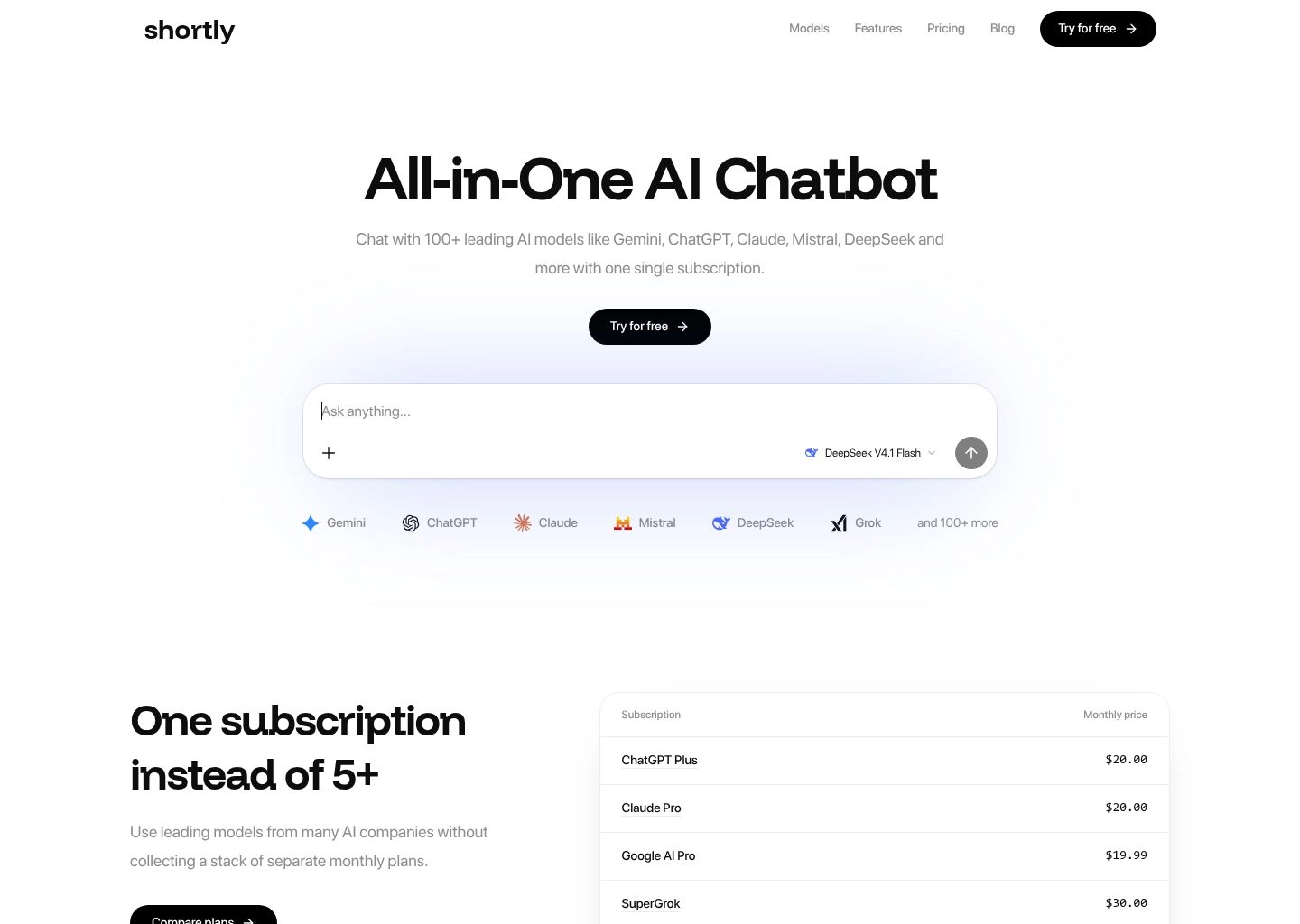
ShortlyAI pioneered the minimalist "distraction-free" AI writing interface. While many modern tools overwhelm writers with dozens of toolbars, dials, and settings, ShortlyAI offers a clean, blank sheet of digital paper with a single button: Write for Me.
Writers control the direction of the book using a persistent sidebar brief and intuitive slash commands (such as /instruct [write a dramatic argument between Sarah and John], /rewrite, /expand, and /shorten). It is favored by writers who want pure flow and momentum without clicking through menus.
Key Features
- Distraction-Free Interface: Zero clutter, floating toolbars, or complex configuration screens.
- Inline Slash Commands: Guide the ghostwriting engine using simple commands right in the editor.
- Sidebar Story Brief: Constant background context guiding character names, themes, and tone.
- Output Length Slider: Toggle between short dialogue quips and long multi-paragraph prose blocks.
✅ Pros
- • The fastest tool for pure drafting flow and momentum.
- • Highly intuitive slash command controls.
- • Works well for both fiction and non-fiction drafting.
❌ Cons
- • Lacks advanced character bible or chapter planning features.
- • Flat subscription pricing ($19 to $49/month).
Pricing: Monthly plan is $19/month (Plus) or $49/month (Pro).
7. Rytr — Budget-Friendly Book Outlines & Short Chapter Generation
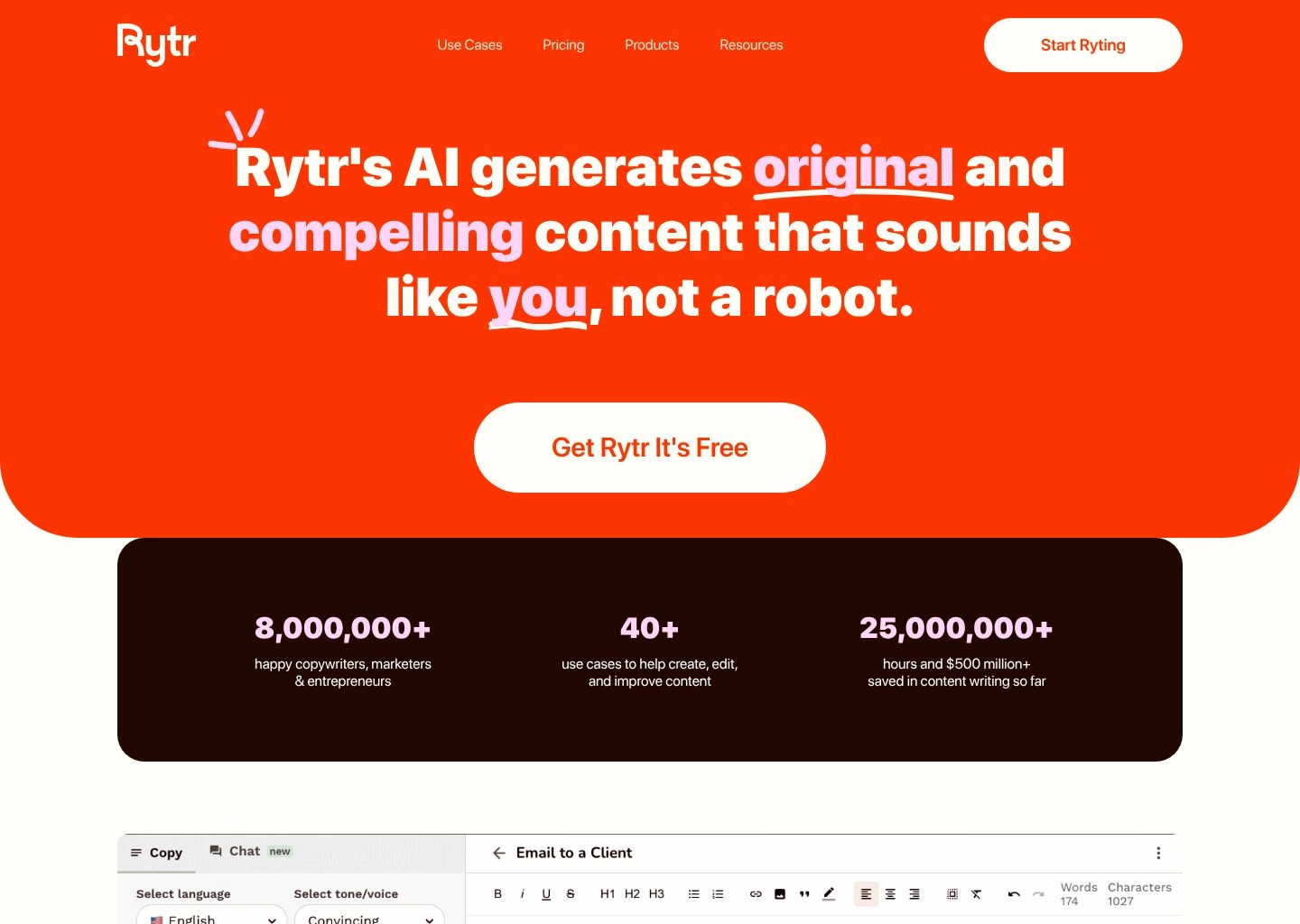
Rytr is one of the most accessible and budget-conscious AI writing assistants on the market. For beginner authors, self-publishers on a tight budget, or creators looking for quick chapter outlining, Rytr provides an impressive collection of 40+ use-case templates and 20+ tone presets starting at just $7.50 per month.
Its Story Plot and Blog Section Writing templates allow authors to build structured chapter frameworks, generate scene dialogue, and rephrase awkward sentences effortlessly. While it lacks the multi-chapter memory of Novelcrafter or Sudowrite, it is an exceptional entry-level tool for drafting short e-books and novellas.
Key Features
- Story Plot Generator: Generates creative premise outlines across romance, thriller, fantasy, and sci-fi.
- 20+ Tone Selectors: Shift effortlessly between humorous, thought-provoking, formal, and dramatic tones.
- Rich Text Editor: In-line formatting, word count counters, and built-in plagiarism checking.
- Multi-Language Support: Write book outlines and chapters in over 30 global languages.
✅ Pros
- • The most affordable paid subscription in the AI writing market ($7.50/mo).
- • Lightweight, super-fast loading interface.
- • Excellent for outlining individual scenes and chapters.
- • Permanent free tier available (10,000 characters/mo).
❌ Cons
- • No long-term memory across separate chapters.
- • Limited prose complexity compared to dedicated novel engines.
Pricing: Free plan (10k characters/mo). Saver plan is $7.50/month (100k characters). Unlimited plan is $24.16/month (unlimited characters + dedicated account manager).
8. Jenni AI — Best for Academic Books & Citation-Backed Non-Fiction
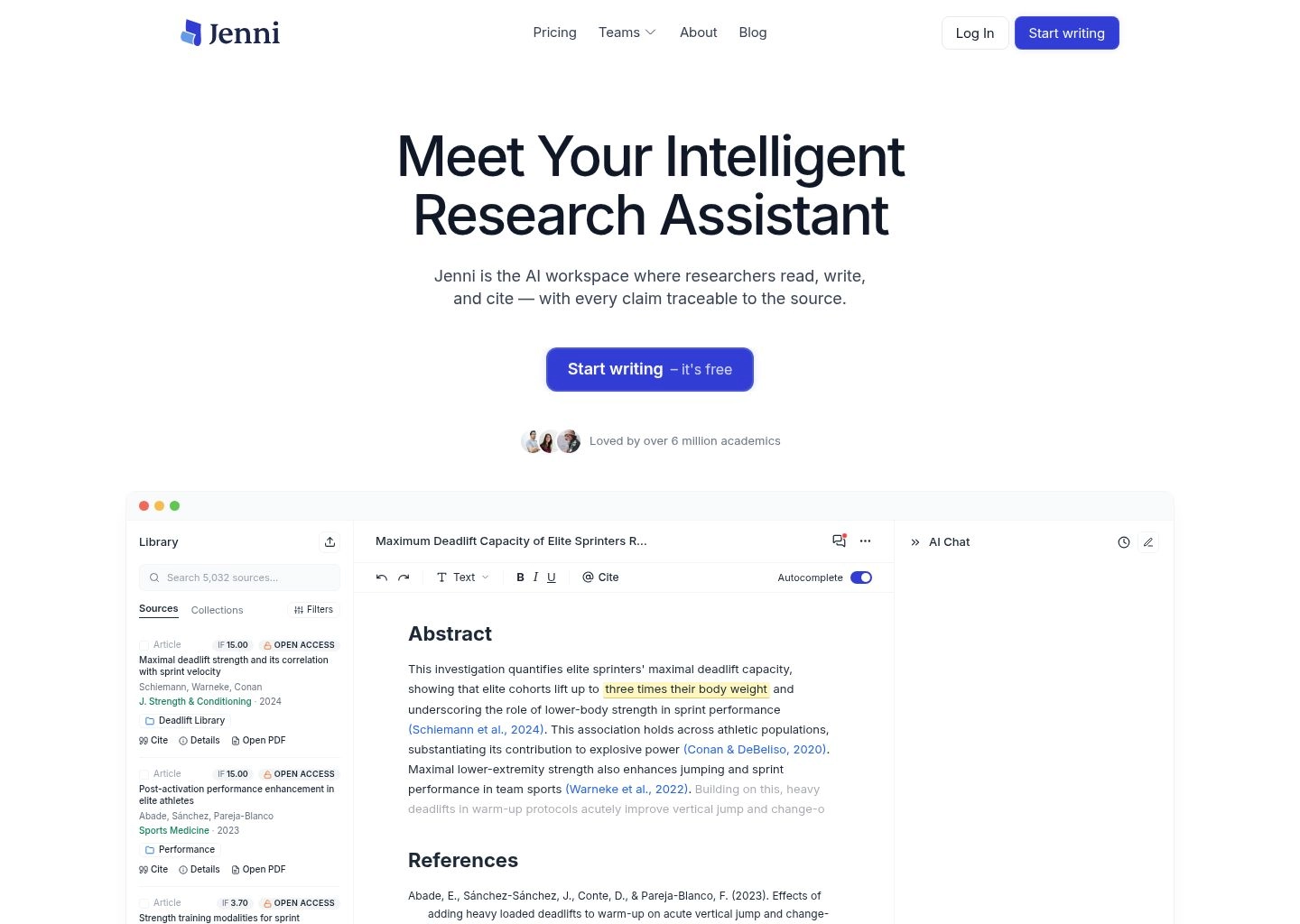
Jenni AI is the undisputed champion for ghostwriting academic books, research monographs, medical guides, and evidence-based non-fiction. While general AI tools often hallucinate non-existent studies and fake book quotes, Jenni AI is built directly on top of a global scholarly database of millions of peer-reviewed research papers.
As you write chapters, Jenni AI searches academic literature in real time, proposing verified citations in APA, MLA, Chicago, or Harvard styles. Its interactive sentence expander helps researchers translate complex academic data into clear, engaging book chapters without sacrificing technical accuracy.
Key Features
- Automated Academic Citations: Searches real academic papers and generates formatted in-text citations.
- AI Multilingual Autocomplete: Suggests context-aware academic phrases and transitional arguments.
- Research Library Upload: Upload your own PDFs and datasets for the AI to cite directly in your chapters.
- Integrated Plagiarism Checker: Validates originality before chapter export.
✅ Pros
- • Zero fake citations or hallucinated studies.
- • Essential for professors, medical authors, and technical non-fiction writers.
- • Clean, distraction-free document editor.
- • Generates rigorous, peer-reviewed caliber prose.
❌ Cons
- • Unsuitable for creative fiction or narrative storytelling.
- • Strict academic tone requires loosening for casual commercial books.
Pricing: Free tier available. Unlimited plan starts at $12/month (unlimited AI words, citation generation, and document uploads).
How to Ghostwrite a 40,000-Word Book with AI (Step-by-Step)
To complete a high-quality book that readers actually enjoy and recommend, you must maintain authorial control. Here is the exact 5-step blueprint professional AI ghostwriters use in 2026:
- Step 1: Build the Comprehensive Codex or Knowledge Base First. Never ask AI to write Chapter 1 from a one-sentence prompt. In Novelcrafter or Jasper AI, populate character profiles, setting rules, personal anecdotes, or core business frameworks first.
- Step 2: Generate a 12-Chapter Detailed Outline. Break each chapter down into 4 to 6 specific scene beats (e.g., *Beat 1: The crisis meeting; Beat 2: Uncovering the data anomaly; Beat 3: Confrontation*).
- Step 3: Draft One Scene Beat at a Time. In Sudowrite Story Engine, feed only 300 to 500 words of outline guidance per generation. This produces rich, focused 1,500-word scenes without plot wandering.
- Step 4: Conduct a Human "Voice Polish" Pass. Review generated chapters to inject unique personal anecdotes, distinctive cadence, and eliminate repetitive AI transitional phrases (like "delve", "tapestry", or "testament"). Pair your manuscript with ProWritingAid for deep style and pacing audits.
- Step 5: Format and Export for Direct Distribution. Use Squibler or dedicated formatters to compile your manuscript into ready-to-upload Amazon KDP (ePub/MOBI) and print-on-demand PDF formats.
Frequently Asked Questions
Can AI write a full 50,000-word book automatically in one click?
No. AI models that claim to write a complete book with a single click produce disjointed, repetitive, and hallucinated manuscripts. Professional results require chapter-by-chapter generation using structured scene beats and character codices (as seen in Sudowrite and Novelcrafter).
Is it legal to publish and copyright an AI-ghostwritten book?
Yes. Under current US and international copyright guidelines (including the US Copyright Office 2026 guidance), authors retain copyright on the overarching human structure, curated plot, character definitions, and human-edited prose of their books.
What is the best AI ghostwriting tool for business thought leadership?
Jasper AI is the top choice for business books and memoirs because it allows authors to upload podcast transcripts, speeches, and articles to clone their exact personal voice and style.
What is the cheapest way to ghostwrite a novel with AI?
Novelcrafter with a Bring-Your-Own-Key (BYOK) setup is the most economical method. The software subscription starts at $4 per month, and direct API calls for a full 70,000-word novel typically cost less than $10 total.