

Consensus AI
AI-powered academic search engine — find answers from 220M+ peer-reviewed papers with citations
Gallery
4 items

About Consensus AI
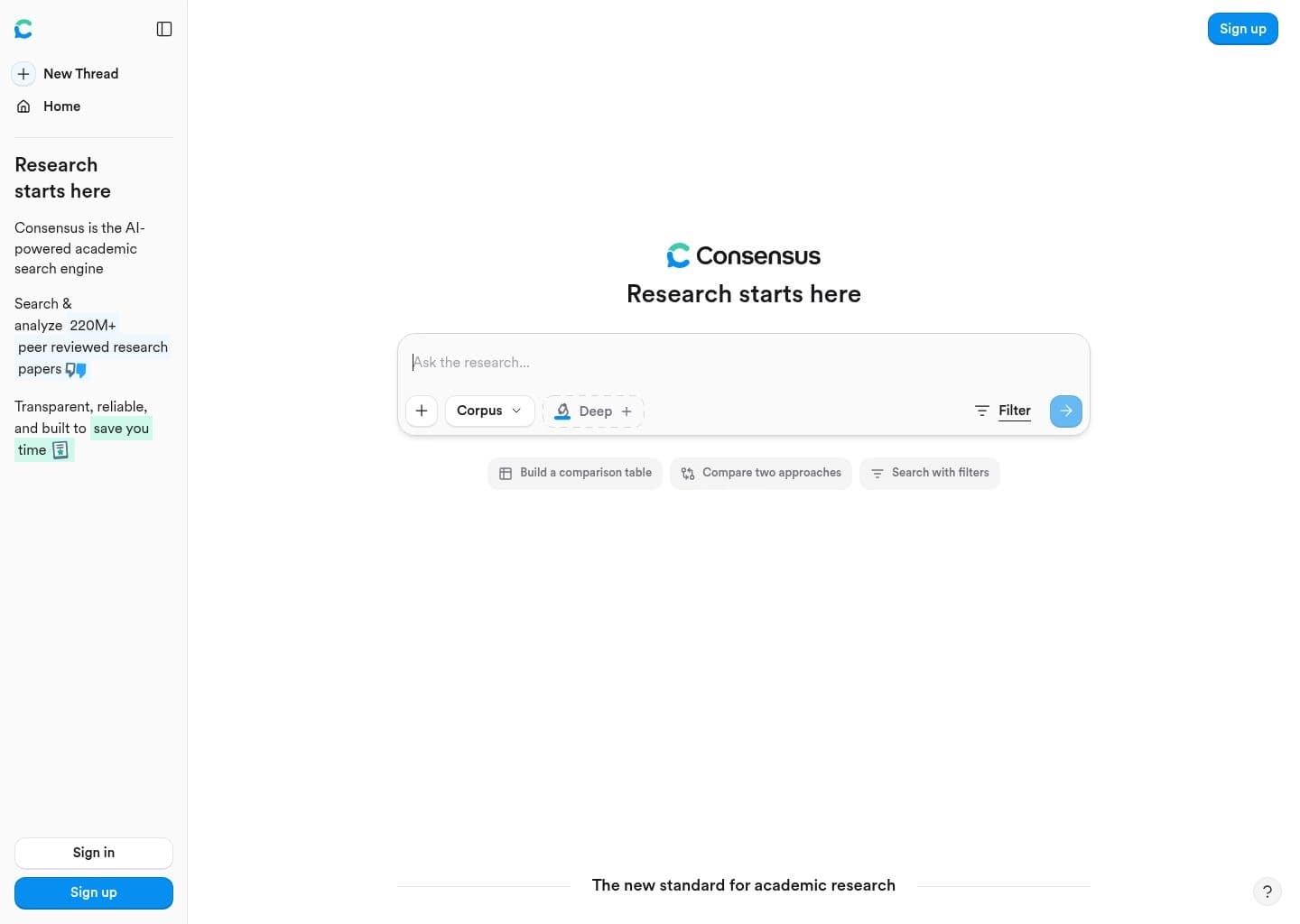
Consensus AI is an AI-powered academic search engine that searches a database of over 220 million peer-reviewed scientific papers and returns synthesized, evidence-backed answers with inline citations — not a list of blue links, and not hallucinated responses from general web content. Founded in 2022 and backed by $30M in funding from Union Square Ventures, Draper Associates, DJ Patil, and Nat Friedman, Consensus has grown to serve 5+ million researchers, students, doctors, and fact-checkers globally.
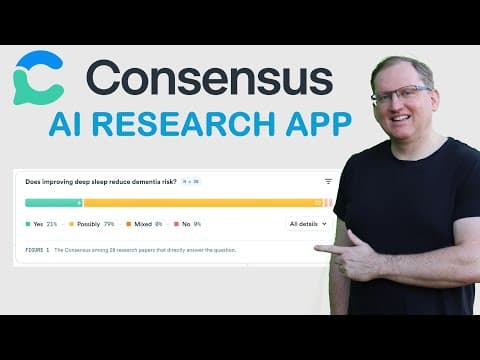
What makes Consensus distinct from general AI assistants like ChatGPT or Perplexity is its strict source discipline: every answer is grounded in peer-reviewed literature from Semantic Scholar, OpenAlex, PubMed, and ArXiv — no blogs, no forums, no unverified sources. Its signature Consensus Meter shows at a glance the percentage of studies that support, contradict, or are mixed on a given research question. Deep Search generates comprehensive literature review reports in minutes, while Scholar Agent (built on GPT-5) runs multi-step agentic research pipelines across the full corpus. Study Snapshots summarize methodology and limitations of individual papers, and Medical Mode adds responsible guardrails for health-related queries.
Consensus is the right tool for academic researchers, students writing theses, healthcare professionals validating clinical evidence, journalists fact-checking claims, and any professional who needs fast, trustworthy access to scientific literature without the hallucination risk of general-purpose chatbots.
Key Features
- 220M+ peer-reviewed paper corpus from Semantic Scholar, OpenAlex, PubMed, and ArXiv
- Consensus Meter — shows percentage of studies that support, contradict, or are mixed on a claim
- Deep Search — generates full literature review reports in minutes with inline citations
- Scholar Agent — multi-step agentic research pipeline built on GPT-5 for complex queries
- Study Snapshot — AI summary of each paper's conclusions, methodology, and limitations
- Citation export in APA, MLA, Chicago, and BibTeX formats for direct academic use
- Medical Mode with responsible guardrails for health and clinical research queries
- Advanced search filters by study design, sample size, journal quality, and publication year
- Monthly database updates to ensure currency of scientific literature coverage
- Free tier available — no credit card required to start searching
Pros
- 220M+ paper corpus — one of the broadest peer-reviewed academic search databases available
- Consensus Meter gives instant visual signal on scientific agreement — unique feature
- Zero hallucination risk — every answer anchored to peer-reviewed citations
- Scholar Agent on GPT-5 enables complex multi-step literature research agentic workflows
- 5M+ active users — most widely adopted AI academic search engine globally
- Free tier is genuinely useful, not artificially crippled
- Medical Mode adds safety layer for clinical and health research queries
Cons
- Coverage limited to academic literature — not useful for news, market research, or general web search
- Deep Search and Scholar Agent locked behind paid plans
- Database updates monthly — not real-time like web search tools
- Less useful for niche or very recent research not yet indexed in major academic databases
- No direct PDF full-text access — links out to source publications
Pricing
Consensus offers a free plan with limited searches per month, paper summaries, and Consensus Meter access — enough to evaluate the platform without a credit card.
The Premium plan runs approximately $9.99–$15/month (billed annually at lower rates) and unlocks unlimited searches, Deep Search literature reviews, Study Snapshots, saved history, citation exports, and faster AI synthesis.
A Pro/Teams plan is available for research groups and organizations at approximately $65/month per seat or higher, adding collaboration features, usage analytics, and API access. Student discounts are available with a verified academic email address. Pricing is subject to change — verify current rates at consensus.app.
Claim Verified Creator Badge
Are you the founder of Consensus AI? Display this listing's verified badge on your website to show your customers that your product has been vetted and listed on AI Central Resources.
<a href="https://www.aicentralresources.com/tool/consensus-ai" target="_blank" rel="noopener">
  <img src="https://www.aicentralresources.com/badges/featured-badge-dark.svg" alt="Featured on AICentralResources" width="200" height="54" style="border: none;" />
</a>
* Place this HTML snippet in your website's footer, landing page, or press section. This creates a search-friendly backlink directly to your verification page.
Connect with Consensus AI
Frequently Asked Questions
Consensus only searches peer-reviewed academic papers — never blogs, forums, or general web content. Every answer is grounded in verified scientific literature with citations, eliminating hallucination risk. ChatGPT and Perplexity search the open web and may return unverified or hallucinated information.
The Consensus Meter is Consensus's signature feature — it shows the percentage of studies that support, contradict, or are mixed on a given yes/no research question. It gives researchers an instant visual signal of where the scientific community stands on a topic without reading dozens of papers.
Consensus searches over 220 million peer-reviewed scientific papers from Semantic Scholar, OpenAlex, PubMed, and ArXiv, updated monthly. This makes it one of the broadest academic search corpora available in any AI research tool.
Yes — Consensus has a genuinely useful free plan with limited monthly searches, Consensus Meter, and basic paper summaries, no credit card required. Premium plans from approximately $9.99/month unlock unlimited searches, Deep Search, Study Snapshots, and citation exports.
Deep Search is Consensus's advanced literature review feature that generates a comprehensive, cited research report on any topic in minutes — scanning thousands of relevant papers and synthesizing them into a structured document. It is available on Premium and Pro plans.
Similar AI Tools to Consensus AI
View all alternatives of Consensus AI
Elicit
AI research assistant for systematic literature reviews — screen papers, extract data, and synthesize evidence at scale

Scite.ai
AI citation intelligence platform — Smart Citations classify 1.2B+ statements as supporting, contrasting, or mentioning

Paperpal
AI academic writing assistant for researchers — grammar, citations, plagiarism checks, and Overleaf support

Jenni AI
AI academic writing assistant for students and researchers — citations, autocomplete, and research in one workspace

Writefull
AI academic writing platform trained on peer-reviewed journals — TeXGPT, Overleaf integration, and zero data storage

Compared with Consensus AI
Direct head-to-head feature matrices, pricing, and category breakdowns